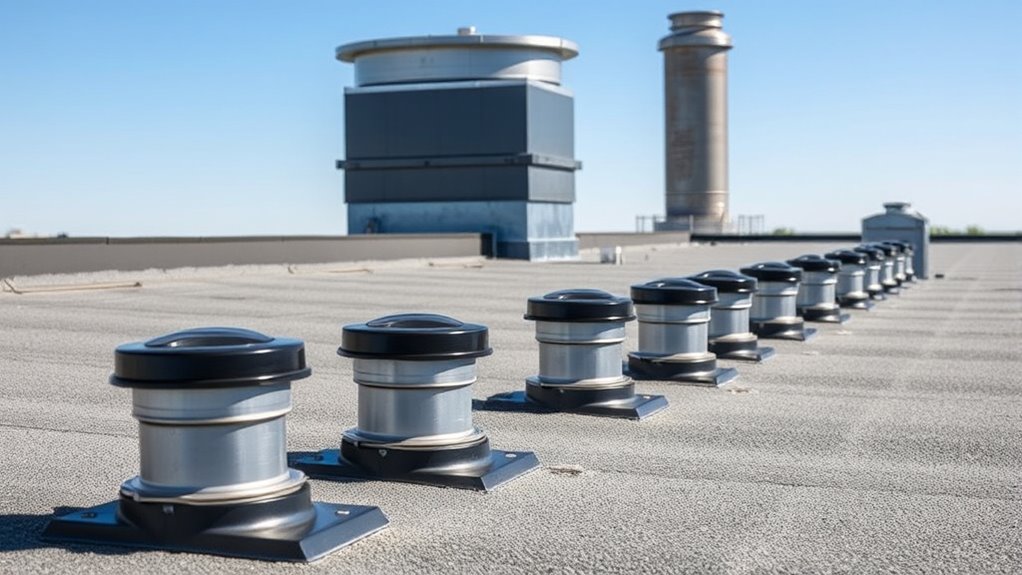

To guarantee roof penetrations and exhaust stacks meet code requirements, you should focus on proper sizing, placement, and flashing techniques that create a watertight seal. Vent stacks must be positioned to facilitate effective airflow and moisture control, while flashing materials should integrate seamlessly with your roof surface. Consistent inspection and maintenance are essential to prevent leaks and damage. Continuing will help you master strategies to keep your roof safe, durable, and compliant.

Get backup power and energy gear delivered free with Prime
- Fast, free delivery on millions of items
- Prime Video, Amazon Music and more included
- Member-only deals all year
Key Takeaways
- Proper sizing and placement of exhaust stacks are essential for effective ventilation and moisture control.
- Use appropriate flashing techniques and materials to ensure a watertight seal around roof penetrations.
- Follow local building codes and manufacturer guidelines for vent stack height, location, and clearance.
- Regular inspection and maintenance of flashing and vents prevent leaks and structural damage.
- Integrate flashing seamlessly with roofing materials to enhance water resistance and overall roof durability.

Are you aware of the essential safety and building code requirements for roof penetrations and exhaust stacks? If not, you could be risking structural integrity, safety hazards, or costly repairs down the line. Proper installation isn’t just about fitting pipes or vents through the roof; it’s about adhering to ventilation standards and ensuring effective flashing techniques. These elements are critical in preventing leaks, water damage, and ensuring long-term durability of your roof system.
When it comes to ventilation standards, you need to prioritize airflow efficiency and moisture control. Exhaust stacks, for example, must be correctly sized and positioned to facilitate proper ventilation. This reduces the risk of dangerous buildup of gases or excess humidity that can compromise your building’s interior environment. You should consult local codes and manufacturer guidelines to determine the appropriate dimensions and placement. Ventilation requirements often vary depending on the type of structure and purpose, but the goal remains the same: effective air exchange without compromising roof integrity.
Flashing techniques play a pivotal role in sealing roof penetrations. The goal with flashing is to create a watertight barrier around pipes, vents, or exhaust stacks where they pass through the roof. Using proper flashing materials—such as metal or flexible membrane—along with correct installation methods, ensures water doesn’t seep into your building. It’s crucial to keep flashing tightly sealed and well-integrated with the roof surface to prevent leaks. When installing flashing, you need to consider the slope of your roof and the type of material you’re working with. Overlapping flashing layers properly and securing them with high-quality fasteners will prevent movement or deterioration over time.
In addition, you should pay attention to the way flashing is integrated with the roofing material itself. Sealants and weatherproof membranes can further enhance the barrier, especially around irregular or complex penetrations. Regular inspections are vital to catch any signs of wear or damage early, allowing you to perform maintenance before issues escalate. Proper flashing techniques not only ensure water tightness but also contribute to the overall safety of the installation, preventing hazards like water infiltration or structural weakening.
Ultimately, understanding and implementing the correct ventilation standards and flashing techniques will help you meet safety regulations and extend the lifespan of your roof system. Don’t overlook these details—skimping on quality or neglecting proper procedures can lead to leaks, mold growth, or even roof failure. Invest in knowledgeable installation practices and adhere strictly to building codes, and you’ll maintain a safe, durable, and efficient roof for years to come.
Frequently Asked Questions
What Are the Common Materials Used for Roof Penetrations?
You typically use materials like metal or rubber for roof penetrations. Metal flashings, such as aluminum or galvanized steel, provide durability and weather resistance, while rubber or flexible membrane flashings offer better sealing around irregular shapes. Sealant materials like high-quality roofing sealants or elastomeric compounds are essential to guarantee a watertight seal. Properly installing roof flashing and sealant materials helps prevent leaks and protects your roof’s integrity over time.
How Does Weather Affect Exhaust Stack Durability?
Weather critically impacts your exhaust stack’s durability. Harsh conditions like rain, snow, and UV rays can cause wear and corrosion over time. To combat this, you should apply effective weatherproofing techniques and choose materials with high corrosion resistance, such as stainless steel or galvanized steel. Regular inspections and maintenance help guarantee your exhaust stack remains intact and functional, even in severe weather, extending its lifespan and preventing costly repairs.
Are There Specific Building Codes for Different Industries?
Yes, there are specific building codes for different industries. You should follow industry standards and safety protocols to guarantee compliance. These codes address unique needs, like ventilation or structural requirements, depending on your sector. By adhering to these regulations, you protect workers and maintain legal compliance. Always check local codes and industry guidelines to stay current, and consult experts for tailored solutions that meet your specific industry demands.
How to Prevent Leaks Around Roof Penetrations?
To prevent leaks around roof penetrations, you should carefully install flashing to create a waterproof barrier. Apply a high-quality flash sealant around the edges of the flashing for extra protection. Make certain the flashing is properly integrated into the roofing material and overlaps correctly. Regularly inspect and maintain these areas, reapplying sealant as needed. Proper flashing installation and sealant use are key to keeping leaks at bay.
What Maintenance Is Required for Exhaust Stacks?
You need to regularly inspect your exhaust stacks for damage or corrosion and guarantee proper sealing techniques are maintained. Follow inspection protocols to check for cracks, rust, or leaks, and reseal any compromised areas promptly. Keep the flashing and sealant in good condition, and clean the stacks to prevent debris buildup. Performing these maintenance tasks helps prevent leaks and ensures your exhaust system functions effectively and safely.
Conclusion
Now that you understand the essentials of roof penetrations and exhaust stack requirements, you’re better equipped to handle these installations safely and efficiently. Just remember, neglecting proper guidelines can turn your project into a headache, like trying to fix a leaky faucet with a hammer. Always double-check your work, follow code regulations, and keep safety top of mind. With these tips, your roof will stand tall and proud, even if it’s not quite a castle in the sky.
Fall Picks
fall essentials
As an affiliate, we earn on qualifying purchases.