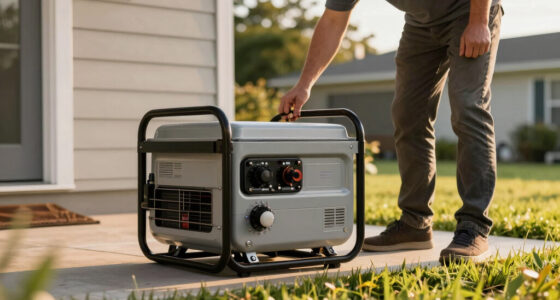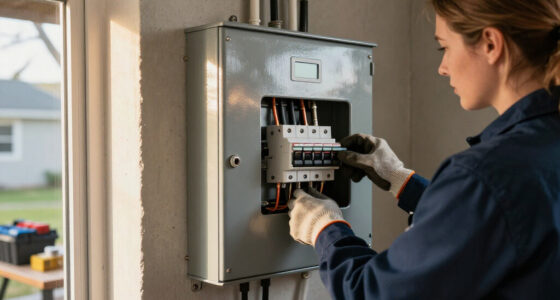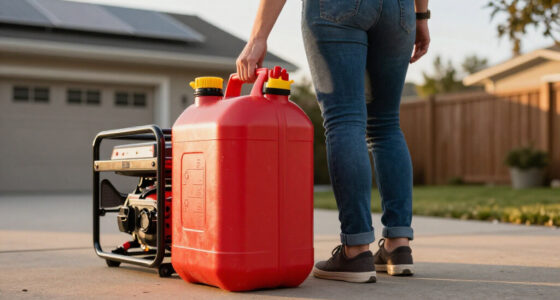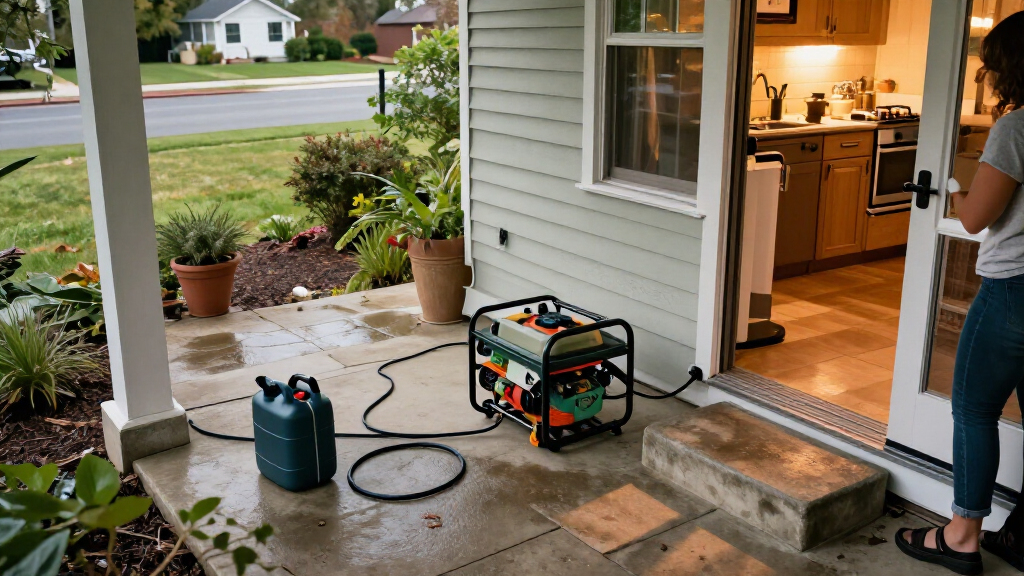
For most households seeking inverter generators for home backup, I’d put the WEN DF680iX first for its high output and dual-fuel flexibility. The Generac iQ5200 DF is a strong alternative for buyers who want a midrange dual-fuel option, while the EGO POWER+ Nexus suits those who prefer battery power and can work within its runtime limits. The main tradeoff is between higher output and fuel flexibility on one side, and quieter, fuel-free operation on the other. Smaller generators can cover selected essentials, but they are not a substitute for sizing around your home’s starting loads. Read on for the full breakdown and help matching a pick to your backup plan.

Get backup power and energy gear delivered free with Prime
- Fast, free delivery on millions of items
- Prime Video, Amazon Music and more included
- Member-only deals all year
Complete the kit

Key Takeaways
- The WEN DF680iX leads for broad backup capability: its 6,800-watt rating and dual-fuel design give it the widest output-and-fuel combination in this group.
- Dual fuel is a recurring advantage, not a guarantee of more power: the WEN DF680iX and Generac iQ5200 DF offer fuel choice, but buyers should check output ratings for each fuel type.
- The EGO POWER+ Nexus fills a different role: as a battery power station, it avoids generator fuel and exhaust, but stored energy and recharge planning limit long outages.
- Several compact picks are better for essentials than whole-home coverage: the Generac GP2500i and GP3300i prioritize lower output and easier handling over running many household loads at once.
- Repeated Oxseryn entries share nominal output classes: the 4,400-watt and 5,000-watt listings should be compared by exact model details, not wattage labels alone.
| WEN DF680iX 6800-Watt Dual-Fuel Portable Inverter Generator |  | Best Overall for Higher-Load Home Backup | Engine: 224cc dual-fuel | Gasoline output: 6,800 surge watts; 5,100 rated watts | Propane output: 6,000 surge watts; 4,500 rated watts | VIEW LATEST PRICE | See Our Full Breakdown |
| Oxseryn 4400-Watt Gas-Powered Inverter Generator |  | Best Value for Essential-Load Backup | Peak output: 4,400 watts | Running output: 3,400 watts | Fuel: Gasoline | VIEW LATEST PRICE | See Our Full Breakdown |
| EGO POWER+ PST3040 Nexus Portable Power Station, 3000W |  | Best Quiet Indoor-Friendly Backup | Continuous power: 2,000W | Peak power: 3,000W | Battery compatibility: EGO 56V ARC Lithium batteries | VIEW LATEST PRICE | See Our Full Breakdown |
| Oxseryn 5000W Gas-Powered Inverter Generator |  | Best for More Output in a Portable Gas Unit | Peak output: 5,000 watts | Running output: 4,000 watts | Engine: 223cc 4-stroke OHV | VIEW LATEST PRICE | See Our Full Breakdown |
| Generac GP3300i 3,300-Watt Gas-Powered Portable Inverter Generator |  | Best for Simple, Lower-Load Backup | Running power: 2,500 watts | Starting power: 3,300 watts | Fuel: Unleaded gasoline | VIEW LATEST PRICE | See Our Full Breakdown |
| Generac iQ5200 DF 5,200-Watt Dual-Fuel Portable Inverter Generator |  | Best Dual-Fuel Choice | Gasoline output: 5,200 starting watts; 3,900 running watts | Propane output: 4,700 starting watts; 3,500 running watts | Fuel types: Gasoline and propane | VIEW LATEST PRICE | See Our Full Breakdown |
| AIVOLT 4200W Gas Inverter Generator |  | Best Lightweight Backup Capacity | Output: 4,200 starting watts; 3,300 running watts | Fuel: Gasoline | Runtime: Up to 16 hours at 25% load | VIEW LATEST PRICE | See Our Full Breakdown |
| Generac GP2500i 2,500-Watt Gas-Powered Portable Inverter Generator |  | Best Compact Essentials Backup | Output: 2,500 starting watts; 2,200 running watts | Fuel and tank: Unleaded gasoline; 0.95-gallon tank | Runtime: Up to 8 hours at 25% load | VIEW LATEST PRICE | See Our Full Breakdown |
| Oxseryn 4400-Watt Gas-Powered Inverter Generator |  | Best RV-Ready Midrange Pick | Output: 4,400 peak watts; 3,400 running watts | Fuel and engine: Gasoline; 4-stroke, 208 cc | Fuel tank: 2 gallons | VIEW LATEST PRICE | See Our Full Breakdown |
| Oxseryn 5000-Watt Portable Inverter Generator |  | Best for Higher Running Output | Output: 5,000 peak watts; 4,000 running watts | Fuel: Gasoline | Runtime: Up to 6 hours at 50% load | VIEW LATEST PRICE | See Our Full Breakdown |
| Evernexta 4000W Gas-Powered Inverter Generator |  | Best for Moderate Backup Loads | Engine: 208cc, 4-stroke | Fuel: Gasoline | Starting wattage: 4,000 watts | VIEW LATEST PRICE | See Our Full Breakdown |
| inverter generators for home backup | Outlets | Warranty | Weight | Fuel tank |
|---|---|---|---|---|
| WEN DF680iX 6800-Watt Dual-Fue | 120V/240V L14-30R, two 120V receptacles, TT-30R, 12V DC, and two 5V USB ports | Three-year limited warranty | — | 2.9 gallons |
| Oxseryn 4400-Watt Gas-Powered | Two 120V AC, one 30A RV, and one 12V DC | One year | 57 pounds | 2 gallons |
| EGO POWER+ PST3040 Nexus Porta | Three 120V AC | Two-year manufacturer warranty | 30.9 pounds | — |
| Oxseryn 5000W Gas-Powered Inve | One 12V DC, two 120V AC, and one 30A RV | One-year manufacturer warranty | 59 pounds | 2 gallons |
| Generac GP3300i 3,300-Watt Gas | Two 120V 20A household outlets, one 120V 30A L5-30R twist-lock, and two USB-A ports | Three-year residential limited warranty | 59.5 pounds | 1.06 gallons |
| Generac iQ5200 DF 5,200-Watt D | One 120V 30A L5-30R, two 120V 20A GFCI, one USB-A, and one USB-C | 3-year residential / 2-year commercial limited warranty | 107 lbs | — |
| AIVOLT 4200W Gas Inverter Gene | TT-30R RV outlet, two 5-20R household outlets, and two USB ports | 2 years | — | — |
| Generac GP2500i 2,500-Watt Gas | Two 120V 20A household outlets and one USB-A port | — | 46.6 lbs | — |
| Oxseryn 4400-Watt Gas-Powered | Two 120V AC outlets, one 12V DC outlet, and one RV port | 1 year | — | 2 gallons |
| Oxseryn 5000-Watt Portable Inv | One outlet total, including a 30A outlet | — | — | 2 gallons |
| Evernexta 4000W Gas-Powered In | One 30A outlet, two 120V AC outlets, one 12V DC port | — | 55 lb | — |
More Details on Our Top Picks
WEN DF680iX 6800-Watt Dual-Fuel Portable Inverter Generator
For buyers who want one portable inverter generator to cover more than a few essentials, I’d put the WEN DF680iX first. Its 5,100 rated watts on gasoline and 240V L14-30R outlet make it better suited to broader home-backup needs than the Generac GP3300i, which is limited to 2,500 running watts and 120V output. Propane operation adds a practical alternative when gasoline is scarce or long-term storage is a concern, though rated output drops to 4,500 watts on that fuel. Electric start, CO shutdown, and low-oil and low-fuel protection reduce some operating hassle, while low-distortion inverter power suits sensitive electronics. The tradeoff is size and fuel planning: its 2.9-gallon tank runs up to 6.1 hours at half load, and a parallel kit is sold separately.
Pros:- Dual-fuel operation offers gasoline and propane options
- 5,100 rated gasoline watts and a 120V/240V L14-30R outlet support higher-load backup
- Electric start with recoil backup, plus CO, low-oil, and low-fuel shutdown protection
- Low total harmonic distortion is suitable for sensitive electronics
Cons:- Gasoline run time is up to 6.1 hours at half load, so extended outages require refueling
- Parallel connection kit is sold separately
- Its higher output and wheeled frame are less compact than smaller backup options
Best for: Households seeking portable backup for several essential circuits or 240V loads, with the flexibility to keep propane as an alternate fuel.
Not ideal for: Buyers who need long unattended run time from a small tank, or who want to expand output with parallel units without buying an extra kit.
- Engine:224cc dual-fuel
- Gasoline output:6,800 surge watts; 5,100 rated watts
- Propane output:6,000 surge watts; 4,500 rated watts
- Fuel tank:2.9 gallons
- Run time:Up to 6.1 hours at half load on gasoline; up to 9 hours at half load on a 20-pound LPG tank
- Noise level:64 dB at quarter load
- Starting method:Electric start with recoil backup
- Outlets:120V/240V L14-30R, two 120V receptacles, TT-30R, 12V DC, and two 5V USB ports
- Warranty:Three-year limited warranty
Our verdict“Choose the WEN DF680iX if you need substantial portable backup capacity and value having propane as a second fuel.”
Oxseryn 4400-Watt Gas-Powered Inverter Generator
The Oxseryn 4400 makes sense for a household that needs a middle ground between small portable power and a heavier, higher-output machine. Its 3,400 running watts exceed the Generac GP3300i’s 2,500, giving more room to run several modest loads at once, while the 30A RV outlet adds a connection option for compatible equipment. The stated run time of up to 14 hours at 25% load is attractive for light demand, but it is not a promise of all-day operation at higher loads. Compared with the 4,000-running-watt Oxseryn 5000, this model gives up capacity while weighing two pounds less. Its open-frame design may be louder than enclosed generators, and gasoline is the only listed fuel, so buyers cannot switch to propane during a supply pinch.
Pros:- 3,400 running watts provide more capacity than the Generac GP3300i
- 30A RV outlet supports compatible RV or transfer equipment
- Up to 14 hours of stated run time at 25% load
- Low-oil shutdown, overload protection, and cold-start technology
Cons:- Open-frame construction may be louder than enclosed inverter generators
- Gasoline-only operation offers no alternate-fuel option
- One-year warranty is shorter than the three-year coverage listed for the WEN DF680iX and Generac GP3300i
Best for: Budget-conscious homeowners who need portable power for a refrigerator, lights, communications, and other modest loads, and who can manage gasoline refueling.
Not ideal for: Households seeking quieter operation, propane flexibility, or enough rated output for heavier home loads.
- Peak output:4,400 watts
- Running output:3,400 watts
- Fuel:Gasoline
- Fuel tank:2 gallons
- Run time:Up to 14 hours at 25% load
- Weight:57 pounds
- Outlets:Two 120V AC, one 30A RV, and one 12V DC
- Features:ECO mode, overload protection, low-oil shutdown, and cold-start technology
- Warranty:One year
Our verdict“Pick the Oxseryn 4400 if you want more running capacity than a compact 120V unit without moving up to the larger Oxseryn 5000.”
EGO POWER+ PST3040 Nexus Portable Power Station, 3000W
The EGO POWER+ PST3040 is the clearest choice here for buyers who value quiet, fume-free power over long outage runtime. Unlike the gasoline-powered Generac GP3300i, this battery station can be used indoors and avoids engine exhaust, making it useful for electronics, lights, and smaller appliances when outdoor generator placement is not workable. Its 2,000W continuous output is the figure to plan around; the 3,000W peak rating does not mean it can sustain that load. It also produces less continuous power than any of the gas inverter generators in this batch. The main catch is the battery system: EGO 56V ARC Lithium batteries are compatible but not included, and available runtime depends on the battery capacity and load. I’d choose it for quiet essential-device backup, not whole-home coverage.
Pros:- Battery operation avoids gasoline exhaust and engine noise
- Pure sine wave output is suited to sensitive electronics
- Compatible with EGO 56V ARC Lithium batteries
- Three AC outlets, four USB ports, and a runtime display
Cons:- Batteries are sold separately, so the unit is not a complete backup setup by itself
- 2,000W continuous output is well below the gas-powered options in this roundup
- Runtime depends on battery capacity and connected load
Best for: Apartment or townhome residents and electronics-focused households who need quiet, indoor-usable backup for modest loads and already own compatible EGO batteries.
Not ideal for: Buyers who need extended outage power, high continuous wattage, or a complete ready-to-run package with batteries included.
- Continuous power:2,000W
- Peak power:3,000W
- Battery compatibility:EGO 56V ARC Lithium batteries
- Battery included:No
- Outlets:Three 120V AC
- USB ports:Four
- Weight:30.9 pounds
- Dimensions:13.26 × 14.51 × 18.33 inches
- Warranty:Two-year manufacturer warranty
Our verdict“Choose the EGO Nexus for quiet, indoor-friendly backup of smaller loads, especially if you already own compatible EGO batteries.”
Oxseryn 5000W Gas-Powered Inverter Generator
If the Oxseryn 4400 is a fit for lighter backup, the Oxseryn 5000 is the step up for households that need more room to run several essential devices together. Its 4,000 running watts give it a 600-watt advantage over the 4400 model, which can matter when refrigerator startup or multiple appliances compete for capacity. The 30A RV outlet also broadens connection options, while inverter output is described as suitable for sensitive electronics. The cost of that extra capacity is not just weight: this model is rated at 70 dBA from 23 feet, and its two-gallon tank is specified for up to 10 hours at only 25% load. Compared with the dual-fuel WEN DF680iX, it lacks propane and 240V output, so it is better for portable 120V loads than broader home integration.
Pros:- 4,000 running watts exceed the Oxseryn 4400’s 3,400 watts
- 30A RV outlet plus household and 12V DC connections
- Inverter output is described as suitable for sensitive electronics
- 59-pound frame and built-in fuel gauge support handling and fuel checks
Cons:- 70 dBA noise rating may be intrusive near a home
- Two-gallon tank may require refueling during extended or heavier-load use
- Gasoline-only operation and 120V outlets offer less fuel and connection flexibility than the WEN DF680iX
Best for: Homeowners who need up to 4,000 running watts for essential 120V loads and want an open-frame unit they can move between home and RV use.
Not ideal for: Buyers who need 240V home-backup connections, propane operation, quiet placement near living areas, or long run time under substantial load.
- Peak output:5,000 watts
- Running output:4,000 watts
- Engine:223cc 4-stroke OHV
- Fuel tank:2 gallons
- Run time:Up to 10 hours at 25% load
- Noise level:70 dBA at 23 feet
- Weight:59 pounds
- Outlets:One 12V DC, two 120V AC, and one 30A RV
- Warranty:One-year manufacturer warranty
Our verdict“Choose the Oxseryn 5000 over the 4400 when the extra 600 running watts matter more than quieter operation or dual-fuel flexibility.”
Generac GP3300i 3,300-Watt Gas-Powered Portable Inverter Generator
The Generac GP3300i is a straightforward pick for buyers who want a familiar gasoline inverter generator for a short list of essentials rather than broad household coverage. Its 2,500 running watts sit below the Oxseryn 4400’s 3,400 watts, so I’d reserve it for prioritized loads such as a refrigerator, router, lights, and device charging rather than running several high-draw appliances. Economy Mode can help reduce fuel use and noise at lighter loads, and CO monitoring with automatic shutdown adds a safety layer. The 120V 30A twist-lock outlet provides a connection beyond the two household receptacles, but this unit has no 240V outlet or propane option. Its 1.06-gallon tank also means frequent fuel checks during extended backup, and recoil-only starting is less convenient than the WEN DF680iX’s electric start.
Pros:- Clean inverter power with less than 3% total harmonic distortion
- CO monitoring and automatic shutdown
- Economy Mode can reduce fuel use and noise at lighter loads
- Three-year residential limited warranty
Cons:- 2,500 running watts are lower than the Oxseryn 4400 and 5000
- Small 1.06-gallon tank limits time between fuel checks
- Recoil-only start, with no propane option or included wheel kit
Best for: Homeowners who need a manageable 120V generator for a few prioritized essentials and prefer CO monitoring and a residential warranty.
Not ideal for: Households seeking 240V support, dual-fuel flexibility, electric start, or enough continuous output for multiple larger appliances.
- Running power:2,500 watts
- Starting power:3,300 watts
- Fuel:Unleaded gasoline
- Fuel tank:1.06 gallons
- Run time:Up to 7 hours at 25% load; 4.5 hours at 50% load
- Weight:59.5 pounds
- Outlets:Two 120V 20A household outlets, one 120V 30A L5-30R twist-lock, and two USB-A ports
- Starting method:Recoil pull-start
- Warranty:Three-year residential limited warranty
Our verdict“Pick the Generac GP3300i if your backup plan is limited to a few 120V essentials and you value its safety features over higher output.”
Generac iQ5200 DF 5,200-Watt Dual-Fuel Portable Inverter Generator
The Generac iQ5200 DF is the strongest fit here for households that want fuel flexibility alongside useful backup capacity. On gasoline it delivers 3,900 running watts, while propane provides a second option for fuel storage and can run longer at the stated loads. Its under-3% THD output suits sensitive electronics, and the electric start avoids pull-starting when the power is out. Compared with the lighter AIVOLT 4200W, this Generac offers propane capability and more output, but weighs nearly twice as much at 107 pounds. Wheels and a folding handle help with moving it, though they do not make it a one-person carry. The optional parallel kit can raise combined running output to 7,800 watts, but adds a separate purchase and another unit to manage.
Pros:- Runs on gasoline or propane, giving households a second fuel option
- 3,900 running watts on gasoline and 3,500 on propane
- Electric start and COsense carbon monoxide shutdown
- Under-3% THD output for sensitive electronics
Cons:- At 107 pounds, it is substantially heavier than the AIVOLT 4200W
- Parallel kit is optional, so higher combined output requires extra equipment
- Runtime depends on fuel and load, and is limited to the stated figures
Best for: Homeowners who want gasoline and propane options, electric starting, and enough output for several essential circuits or appliances.
Not ideal for: Anyone who needs a generator they can lift into a vehicle alone, or who expects to connect two units without buying a separate parallel kit.
- Gasoline output:5,200 starting watts; 3,900 running watts
- Propane output:4,700 starting watts; 3,500 running watts
- Fuel types:Gasoline and propane
- Total harmonic distortion:Less than 3%
- Runtime:At 50% load: up to 9 hours on gasoline or 11 hours on a 20 lb propane tank; at 25% load: up to 15 hours on gasoline or 20 hours on propane
- Outlets:One 120V 30A L5-30R, two 120V 20A GFCI, one USB-A, and one USB-C
- Weight:107 lbs
- Start and safety:Electric start with included 12V battery; COsense shutdown
- Warranty:3-year residential / 2-year commercial limited warranty
Our verdict“Choose the iQ5200 DF if dual-fuel flexibility and electric starting matter more to your home backup plan than low weight.”
AIVOLT 4200W Gas Inverter Generator
The AIVOLT 4200W balances practical backup output with a comparatively manageable 54.3-pound weight. Its 3,300 running watts give it more headroom than the Generac GP2500i for running multiple modest loads, while the TT-30R outlet is useful for RV connections. The stated runtime reaches 16 hours at 25% load, which favors light, steady use rather than heavy appliance demand. Clean output under 3% THD, low-oil shutdown, and overload protection add useful safeguards for backup use. The tradeoff is that this is gasoline-only, unlike the dual-fuel Generac iQ5200 DF, and its open-frame design offers less protection from weather than an enclosed unit. It is a compelling middleweight option, but parallel expansion requires an optional kit.
Pros:- 3,300 running watts in a 54.3-pound package
- Up to 16 hours of runtime at 25% load, as stated
- TT-30R RV outlet plus household and USB outlets
- Under-3% THD with low-oil shutdown and overload protection
Cons:- Runs on gasoline only
- Open-frame construction provides less weather protection than an enclosed generator
- Parallel kit is optional
Best for: Homeowners who need more than small-appliance backup, want a built-in RV outlet, and need a generator light enough to reposition without handling a 100-pound machine.
Not ideal for: Buyers who want propane as a backup fuel, a weather-protected enclosed design, or higher output for large simultaneous loads.
- Output:4,200 starting watts; 3,300 running watts
- Fuel:Gasoline
- Runtime:Up to 16 hours at 25% load
- Tank capacity:2.6 gallons
- Total harmonic distortion:Less than 3%
- Noise level:68 dB
- Weight and dimensions:54.3 lbs; 20.28 × 14.76 × 18.19 inches
- Outlets:TT-30R RV outlet, two 5-20R household outlets, and two USB ports
- Warranty:2 years
Our verdict“Pick the AIVOLT if you want a lighter, mid-capacity gasoline generator with an RV outlet and can store it under cover.”
Generac GP2500i 2,500-Watt Gas-Powered Portable Inverter Generator
The Generac GP2500i makes the most sense when portability and quiet operation matter more than broad household coverage. At 46.6 pounds and a stated 53 dB(A) at 25% load, it is easier to move and less intrusive than the open-frame AIVOLT 4200W, but its 2,200 running watts narrow the number of loads you can run at once. That output can support selected essentials such as communications and small electronics; it is not the right choice for several power-hungry appliances. Under-3% THD and COsense shutdown add reassurance for electronics and outdoor operation. The compromise is basic starting and fuel convenience: it uses a recoil pull-start and gasoline only. Compared with the iQ5200 DF, it is far lighter, but gives up substantial capacity, electric start, and propane capability.
Pros:- 46.6-pound design with a built-in carry handle
- Stated noise level of 53 dB(A) at 25% load
- Under-3% THD and COsense carbon monoxide shutdown
- Up to 8 hours of runtime at 25% load
Cons:- 2,200 running watts limit simultaneous household loads
- Recoil pull-start instead of electric or remote start
- Gasoline-only fuel and no built-in TT-30R RV outlet
Best for: People seeking a portable, relatively quiet generator for a few essential devices, short outages, or occasional backup use.
Not ideal for: Households that need to run several large appliances, want electric start, or need a built-in RV outlet.
- Output:2,500 starting watts; 2,200 running watts
- Fuel and tank:Unleaded gasoline; 0.95-gallon tank
- Runtime:Up to 8 hours at 25% load
- Noise level:53 dB(A) at 25% load
- Total harmonic distortion:Less than 3%
- Weight:46.6 lbs
- Outlets:Two 120V 20A household outlets and one USB-A port
- Starting method:Recoil pull-start
- Safety and warranty:COsense automatic shutdown; 3-year residential limited warranty
Our verdict“Choose the GP2500i for portable, quieter backup of a few essentials, not for powering much of a household.”
Oxseryn 4400-Watt Gas-Powered Inverter Generator
The Oxseryn 4400W offers a useful middle ground for buyers who want more running capacity than the Generac GP2500i without stepping up to the heavier Generac iQ5200 DF. It supplies 3,400 running watts and includes an RV port alongside AC and 12V DC outlets, making it more adaptable for a mixed home-and-RV role. Its stated runtime of up to 14 hours at 25% load can suit light backup duty, though that figure should not be read as runtime under heavier household demand. The 56-pound weight is manageable for its output class. The main compromises are its open-frame, gasoline-only design and a noise specification of under 72 dBA at 23 feet, which is less reassuring for close residential use than the GP2500i’s stated 53 dB(A) at 25% load. Its warranty is one year.
Pros:- 3,400 running watts for more load capacity than compact generators
- Includes an RV port, two AC outlets, and a 12V DC outlet
- Up to 14 hours at 25% load in ECO mode, as stated
- 56-pound weight keeps it relatively portable for its output
Cons:- Open-frame construction offers less weather protection
- Gasoline-only operation
- Noise is specified as under 72 dBA at 23 feet, and the warranty is one year
Best for: RV owners who also want moderate home backup capacity and can run the generator outdoors, away from living spaces.
Not ideal for: Buyers who prioritize lower stated noise, propane fuel flexibility, or a longer warranty for regular backup use.
- Output:4,400 peak watts; 3,400 running watts
- Fuel and engine:Gasoline; 4-stroke, 208 cc
- Fuel tank:2 gallons
- Runtime:Up to 14 hours at 25% load
- Noise level:Under 72 dBA from 23 feet
- Weight and dimensions:56 lbs; 19 × 15.6 × 19.1 inches
- Outlets:Two 120V AC outlets, one 12V DC outlet, and one RV port
- Voltage:120 volts
- Warranty:1 year
Our verdict“Choose this Oxseryn for moderate backup and RV use if portability matters more than fuel flexibility or a quieter stated noise level.”
Oxseryn 5000-Watt Portable Inverter Generator
For buyers focused on running capacity, the Oxseryn 5000W leads this group with 4,000 running watts and a 30A outlet. That makes it a stronger candidate for larger combined loads than the 3,400-watt Oxseryn 4400W, while its roughly 60-pound weight remains far below the Generac iQ5200 DF’s 107 pounds. The tradeoffs are more apparent for extended outages: the stated runtime is up to six hours at 50% load, and the two-gallon tank means frequent refueling may be part of heavier use. Its under-5% THD is a looser specification than the under-3% figure listed for the Generac and AIVOLT models, so buyers with especially sensitive equipment may prefer those alternatives. It is also an open-frame gasoline unit, specified at 70 dB from 23 feet.
Pros:- 4,000 running watts and 5,000 peak watts
- Includes a 30A outlet
- Electric start and ECO mode
- 59.5-pound weight is lighter than the dual-fuel Generac iQ5200 DF
Cons:- Up to 6 hours of runtime at 50% load means more frequent refueling
- Under-5% THD is a less strict specification than the under-3% alternatives
- Open-frame design is specified at 70 dB from 23 feet
Best for: Homeowners who need higher 120V running output and a 30A connection, and who can refuel regularly during an outage.
Not ideal for: People who need long unattended runs, propane capability, lower stated noise, or the tighter THD specification listed by several alternatives.
- Output:5,000 peak watts; 4,000 running watts
- Fuel:Gasoline
- Runtime:Up to 6 hours at 50% load
- Fuel tank:2 gallons
- Total harmonic distortion:Less than 5%
- Noise level:70 dB at 23 feet
- Outlets:One outlet total, including a 30A outlet
- Weight and dimensions:59.5 lbs; 19 × 15.6 × 19 inches
- Starting system and warranty:Electric start; 2-year warranty
Our verdict“Pick the Oxseryn 5000W when higher running output and a 30A outlet take priority over longer refueling intervals and a tighter THD specification.”
Evernexta 4000W Gas-Powered Inverter Generator
I’d put the Evernexta H4500iDR on the shortlist for households that need to run a few essentials rather than power a whole home. Its 3,400 running watts and 30A outlet offer more headroom than the Generac GP2500i, while the under-3% THD rating suits sensitive electronics. That output can support a refrigerator, lights, and selected smaller devices, though buyers should check appliance starting demands and avoid stacking large loads.
The tradeoff is its open-frame design, which may be louder than an enclosed model such as the Generac GP3300i. Its two-gallon tank is also listed for up to 6.5 hours at half load, so extended outages call for refueling breaks. ECO mode and low-oil and overload protection add useful safeguards, but this is still a gas-only option with no stated dual-fuel flexibility.
Pros:- 3,400 running watts provide more capacity than compact options such as the Generac GP2500i.
- Under 3% THD is suitable for sensitive electronics.
- 30A outlet plus two 120V AC outlets and a 12V DC port support varied connections.
- ECO mode, overload protection, and low-oil shutdown add practical operating safeguards.
Cons:- Open-frame construction may be louder than enclosed inverter generators.
- The stated runtime is up to 6.5 hours at 50% load, requiring regular refueling during longer outages.
- Gasoline-only operation offers less fuel flexibility than dual-fuel models such as the WEN DF680iX.
Best for: Households seeking a portable gas generator for a refrigerator, lighting, and selected electronics, with a 30A outlet for compatible backup connections.
Not ideal for: Buyers who need quiet operation near living spaces, long run times between refueling, or dual-fuel capability for greater fuel flexibility.
- Engine:208cc, 4-stroke
- Fuel:Gasoline
- Starting wattage:4,000 watts
- Running wattage:3,400 watts
- Total harmonic distortion:Under 3%
- Fuel tank capacity:2 gallons
- Runtime:Up to 6.5 hours at 50% load
- Outlets:One 30A outlet, two 120V AC outlets, one 12V DC port
- Weight:55 lb
Our verdict“Choose the Evernexta if you want moderate home-backup capacity and a 30A outlet in a portable gas unit, and can accept open-frame noise and periodic refueling.”
How We Picked
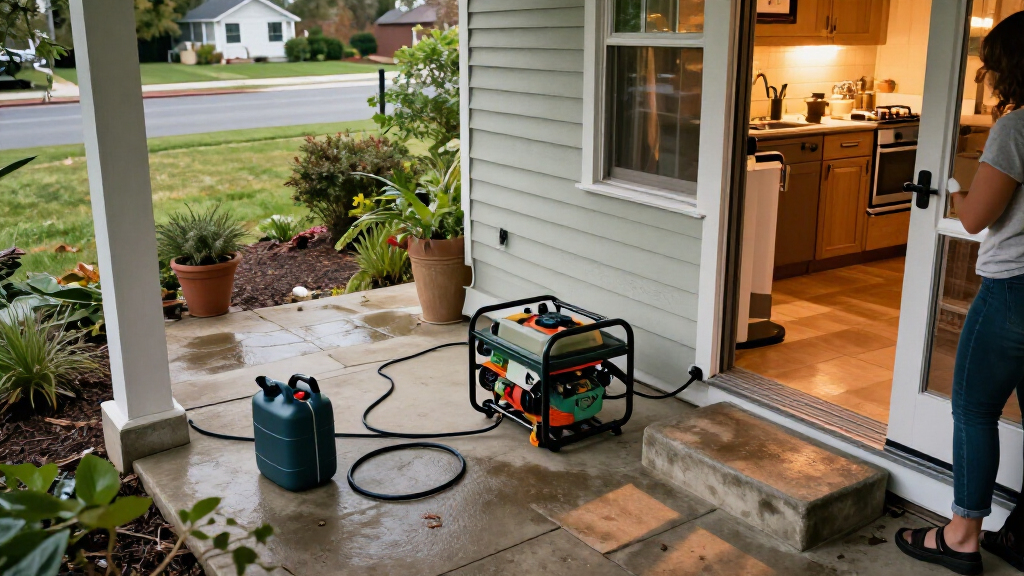
I ranked these options for home-backup usefulness, not recreational portability alone. The main criteria were rated output and starting-load headroom, fuel flexibility, the difference between generator and battery operation, and how clearly each option fits a defined backup plan. I also weighed portability, practical usability, and the implications of maintaining a fuel-powered machine against having a battery system ready to use.
The WEN DF680iX ranks first because its listed output and dual-fuel capability make it the broadest fit among the generator options here. The Generac iQ5200 DF follows as a midrange dual-fuel alternative, while the EGO Nexus earns a distinct place for buyers prioritizing battery operation over extended fuel-based runtime. Lower-output Generac models rank better for targeted essentials than broad backup. The repeated Oxseryn listings are not treated as interchangeable: buyers should verify exact model numbers, specifications, and included features before choosing between them.
| inverter generators for home backup | Runtime |
|---|---|
| WEN DF680iX 6800-Watt Dual-Fue | — |
| Oxseryn 4400-Watt Gas-Powered | — |
| EGO POWER+ PST3040 Nexus Porta | — |
| Oxseryn 5000W Gas-Powered Inve | — |
| Generac GP3300i 3,300-Watt Gas | — |
| Generac iQ5200 DF 5,200-Watt D | At 50% load: up to 9 hours on gasoline or 11 hours on a 20 lb propane tank; at 25% load: up to 15 hours on gasoline or 20 hours on propane |
| AIVOLT 4200W Gas Inverter Gene | Up to 16 hours at 25% load |
| Generac GP2500i 2,500-Watt Gas | Up to 8 hours at 25% load |
| Oxseryn 4400-Watt Gas-Powered | Up to 14 hours at 25% load |
| Oxseryn 5000-Watt Portable Inv | Up to 6 hours at 50% load |
| Evernexta 4000W Gas-Powered In | Up to 6.5 hours at 50% load |
Factors to Consider When Choosing Inverter Generators For Home Backup
Choosing a backup source starts with the loads you need to keep running, not the largest wattage printed on a product page. I’d plan around your household’s essential circuits, the length of an outage, and how you can safely operate and fuel the equipment. These broader checks can prevent paying for power you cannot use—or buying a unit that cannot start the appliances you depend on.
Size for Starting Loads, Not Just Running Watts
List the devices you actually need during an outage, then separate their running watts from their startup demand. Motors in refrigerators, pumps, and some heating equipment can draw a brief surge that exceeds normal operation. Adding every appliance in the house can push you toward an oversized unit, while counting only steady-state watts can leave a smaller one unable to start key equipment. Decide which loads can take turns and which must run together. If you plan to connect through a transfer switch, have a qualified electrician confirm the circuit and generator requirements. A short load plan is more useful than choosing by the biggest headline rating.
Match Fuel Choice to Your Outage Plan
Gasoline can be readily available, but it needs safe storage and can become harder to find during widespread outages. A dual-fuel model gives you another option, yet its usable output and runtime may differ by fuel, so check the specifications for both modes. Propane stores well when handled correctly, but tank size and supply can limit long-running loads. Think about how many hours you expect to operate each day and how you will replenish fuel without running the machine indoors or in an unsafe location. Avoid assuming that dual fuel means unlimited runtime or equal performance on both fuels. A realistic supply plan matters as much as the generator’s rating.
Choose Between Fuel-Powered Output and Battery Convenience
A fuel-powered generator can keep producing electricity as long as it has fuel and is operated within its limits, making it more suited to sustained outages. A battery power station avoids exhaust and fuel handling during use, but its stored energy runs down and must be replenished. Estimate energy use over a full day rather than comparing peak wattage alone. A battery unit may suit short outages, indoor-accessible backup needs, or a household with a reliable recharging plan; a generator may be more practical for extended operation. Some buyers may pair the two, using stored battery power for quiet periods and a generator to recharge or run larger loads. Check compatibility and charging requirements before relying on that arrangement.
Plan a Safe Location and Electrical Connection
Portable fuel generators produce exhaust and must operate outdoors, away from doors, windows, and air intakes, following the manufacturer’s instructions and local safety guidance. Never place one in a home, garage, or other enclosed space. A transfer switch installed by an electrician can feed selected household circuits while reducing the risk of unsafe backfeeding. Extension cords may work for limited appliances, but their rating and length need to suit the load. Also plan for weather protection that does not restrict ventilation. The connection method can shape which generator is practical, so settle it before purchase.
Treat Noise, Weight, and Maintenance as Backup Factors
A generator that is difficult to move, start, or maintain may be less useful when an outage arrives. Check the unit’s weight and handling features against where it will be stored and where it must operate; advertised portability does not make a large generator effortless to move. Noise can affect neighbors and household comfort, especially during overnight use, so compare published sound figures under similar conditions rather than relying on labels. Fuel-powered units also need the maintenance described by the manufacturer, including attention to fuel quality and storage. Battery systems avoid engine upkeep but still need charging and storage care. Choose the option you can realistically keep ready.
Pay for Capacity You Can Put to Work
Higher output is useful when it covers several essential loads or handles demanding startup surges, but extra capacity brings more equipment to store and manage. A smaller model can be a sensible choice if your plan is limited to a refrigerator, lights, communications, and a few other selected devices. Do not mistake peak watts for continuous output, or assume that a generator can power an entire home without a suitable connection and load plan. Compare rated output, surge capability, and fuel-specific ratings before stepping up. Spend more for capacity, fuel flexibility, or a connection setup you will use—not simply for a larger number. Recheck the exact model specifications, especially when listings repeat similar names and wattage classes.
Frequently Asked Questions
Can any generator in this roundup power my whole house?
Not automatically. Whole-house coverage depends on the home’s total demand, the generator’s continuous output, startup surges, and the electrical connection. Several options here are better suited to selected essentials than every household circuit running at once. Have an electrician review your intended loads and connection method before relying on a portable generator for home circuits. A clear list of priorities can reveal whether a smaller unit is enough or whether you need a higher-output setup.
Is the WEN DF680iX a better backup choice than the Generac iQ5200 DF?
The WEN DF680iX has the higher listed wattage, so it is the stronger candidate when your plan includes more simultaneous loads or larger startup demands. The Generac iQ5200 DF may make more sense if its output better matches your essential-load plan and you prefer that model’s size or feature set. Both offer dual-fuel operation, but fuel-specific output and runtime should be checked before deciding. I would compare their rated watts on the fuel you plan to use, not just their headline numbers. Either choice still requires safe outdoor operation and a suitable electrical connection.
Should I choose a battery power station or a fuel generator for an extended outage?
For an extended outage, the key question is how you will replenish energy over several days. A fuel generator can continue operating with a steady supply of fuel, while a battery power station must be recharged after its stored energy is used. The EGO POWER+ Nexus may suit shorter interruptions or a household with a practical recharging plan, but it does not offer the same fuel-based operating pattern as the WEN or Generac generators. Consider the loads, daily energy use, and access to fuel or charging before choosing. Some households may use a battery unit for quiet periods alongside a generator for longer operation.
How can I tell whether a 2,500- or 3,300-watt model is enough?
Start by identifying the appliances you must run at the same time and checking both their running and startup wattages. The Generac GP2500i and GP3300i are more appropriate for a restrained essentials plan than for powering many household circuits. If a refrigerator or pump has a high startup draw, a unit that appears adequate based on running watts alone may fall short. You can reduce the needed capacity by scheduling some loads rather than running them together. If the plan includes critical hardwired circuits, ask an electrician to verify that the generator and connection method can support them.
Why are there repeated Oxseryn 4,400-watt and 5,000-watt listings?
The roundup includes two listings in each of those wattage classes, but similar output labels do not prove that the products are identical. Model names, fuel details, rated versus peak output, outlets, and included equipment can vary between listings. Compare the exact model number and manufacturer specifications before treating one entry as a duplicate or choosing between them. For home backup, prioritize continuous output and outlet or connection needs over a headline wattage alone. If those details are unclear, seek confirmation from the seller or manufacturer before purchase.
Conclusion
For the best overall balance of output and fuel choice, I’d start with the WEN DF680iX, provided its size and operating needs fit your setup. The best value-style fit is the Generac GP3300i for buyers who only need selected essentials and do not need dual fuel; I’d choose it over the smaller GP2500i when the extra output matters. For a best premium-style alternative focused on fuel flexibility, consider the Generac iQ5200 DF if its midrange output better suits your load plan. The best option for beginners is the EGO POWER+ Nexus for those who want battery operation and understand its finite stored energy. For specific needs, choose a compact Generac for a modest essentials list, a dual-fuel generator for fuel flexibility, or the EGO for a fuel-free operating approach; verify exact output, runtime, and connection requirements before deciding.
Halloween Picks
halloween
As an affiliate, we earn on qualifying purchases.