If your vehicle won’t start, start by checking the battery’s voltage with a multimeter—look for at least 12.6 volts—and inspect for corrosion or loose connections. Then, verify fuel levels, listen for the fuel pump sound, and make sure the ignition switch and starter motor work properly. Confirm sensors and wiring are intact. If these basics don’t solve the issue, it’s time to explore further diagnostics, which you’ll find explained next.

Get backup power and energy gear delivered free — and shop member deals
- Fast, free delivery on millions of items
- Access to Prime Big Deal Days deals on October 6–7
- Prime Video, Amazon Music and more included
Key Takeaways
- Verify the battery voltage is at least 12.6 volts and check for corrosion or loose connections.
- Ensure the fuel tank is full, listen for the fuel pump’s buzzing sound, and confirm fuel system operation.
- Inspect the ignition switch, starter motor, wiring, and spark plugs for proper function and damage.
- Confirm all electrical connections are secure, free of corrosion, and that keyless fob batteries are functional if applicable.
- Seek professional diagnosis if basic checks are inconclusive or if complex electrical or mechanical issues are suspected.
Basic No-Start Troubleshooting Checklist
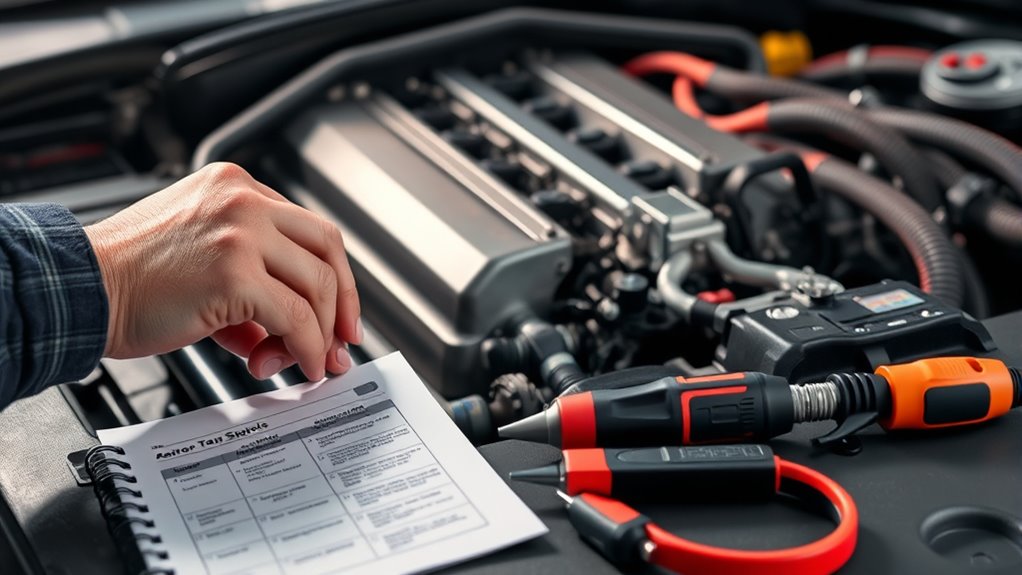
Ever wonder why your vehicle won’t start despite turning the key? It can be frustrating, but the first step is to go through a basic diagnostics checklist. One of the most common issues is a dead or weak battery. Start with a battery inspection to determine if your battery has enough charge. You can do this with a multimeter or a battery tester, checking for at least 12.6 volts when the engine is off. If the voltage is lower, your battery might be drained or nearing the end of its lifespan. Sometimes, a simple jump-start can get you moving, but if the battery repeatedly fails to hold a charge, it’s time to replace it. Also, inspect the battery terminals for corrosion or loose connections, as these can prevent proper power flow and cause starting problems.
Next, consider your fuel system. Even if your battery is healthy, an issue with the fuel system can keep your car from starting. Check if you’re running low on fuel—sounds basic, but it’s often overlooked. If you have enough fuel, listen for the fuel pump when you turn the ignition to the “on” position. You should hear a faint buzzing sound indicating the pump is working. If you don’t, the fuel pump might be faulty or there could be an electrical issue preventing it from activating. Confirm that the fuel filter isn’t clogged and that the fuel lines are clear. Fuel delivery is critical; without it, the engine won’t start or run smoothly. If your vehicle has a keyless ignition, ensure the fob’s battery is functional, as this can also impact the fuel system’s activation.
While focusing on the battery inspection and fuel system, don’t forget other basics like checking the ignition switch, starter motor, and associated wiring. Sometimes, a loose or broken wire can mimic a dead battery or fuel system failure. Also, consider the condition of your spark plugs and ignition coils, as these components work together to ignite the fuel-air mixture. But starting with the battery and fuel system is a quick way to identify the most common culprits. Additionally, understanding sound vibrations and how they influence engine components can sometimes help diagnose issues related to electrical or mechanical malfunction. Remember, if these areas check out but your vehicle still refuses to start, it’s best to seek professional help. Persistent issues could involve more complex electrical or mechanical problems that require specialized diagnosis. Keep these basics in mind, and you’ll be better prepared to troubleshoot or communicate effectively with a mechanic.
Frequently Asked Questions
Can a Dead Battery Cause a No-Start Condition?
Yes, a dead battery can cause a no-start condition. When your battery’s health is poor or it’s completely dead, it can’t supply the power needed to start your engine. Additionally, alternator failure prevents your battery from charging properly, leading to a dead battery over time. If your vehicle won’t start, check the battery’s condition first, and consider testing the alternator to rule out charging issues.
How Do I Check if the Fuel Pump Is Working?
To check if your fuel pump is working, listen for a humming sound from the tank when you turn the key to the “on” position. If you don’t hear it, verify the fuel pump relay is functioning and inspect the electrical wiring for damage or loose connections. You can also use a multimeter to test the relay and wiring for proper voltage, ensuring the fuel pump receives power.
What Are Signs of a Faulty Ignition Switch?
About 10% of no-start issues stem from a faulty ignition switch. If your vehicle won’t start, notice if the dashboard lights flicker or don’t turn on, indicating possible ignition switch problems. You might also experience the engine not turning over or losing power suddenly. These symptoms point to a malfunctioning ignition switch affecting your vehicle’s electrical system, and addressing it promptly can prevent further electrical issues or breakdowns.
Is It Necessary to Reset the ECU During Diagnostics?
You don’t always need an ECU reset during diagnostic procedures, but it can help clear error codes and guarantee accurate readings. Resetting the ECU can be especially useful if you’ve made repairs or replaced components, as it allows the system to recalibrate. Follow your vehicle’s specific guidelines, and only reset the ECU if the diagnostic procedures recommend it. This step can save you time and improve diagnostic accuracy.
How Do I Test Spark Plug Functionality?
To test spark plug functionality, start with a spark plug inspection by removing each plug and checking for signs of wear, fouling, or damage. Testing spark plugs involves connecting them to the ignition system and cranking the engine to observe for a strong, blue spark. If the spark is weak or absent, replace the plugs. Regular testing spark plugs helps guarantee your engine fires correctly and runs smoothly.
Conclusion
Remember, when diagnosing a no-start issue, patience and methodical checks are your best tools. By following this basic checklist, you can often pinpoint the problem before calling in a professional. Keep in mind the saying, “A stitch in time saves nine”—addressing small issues early can prevent bigger, costlier repairs later. Stay calm, stay thorough, and you’ll get your engine back on the road in no time.
Fall Picks
fall essentials
As an affiliate, we earn on qualifying purchases.