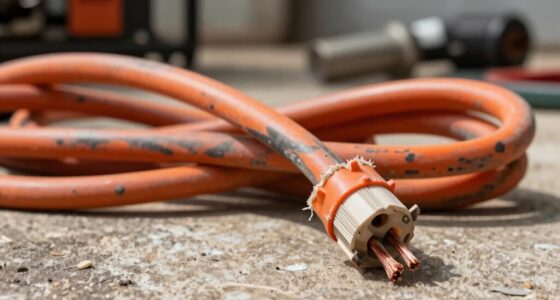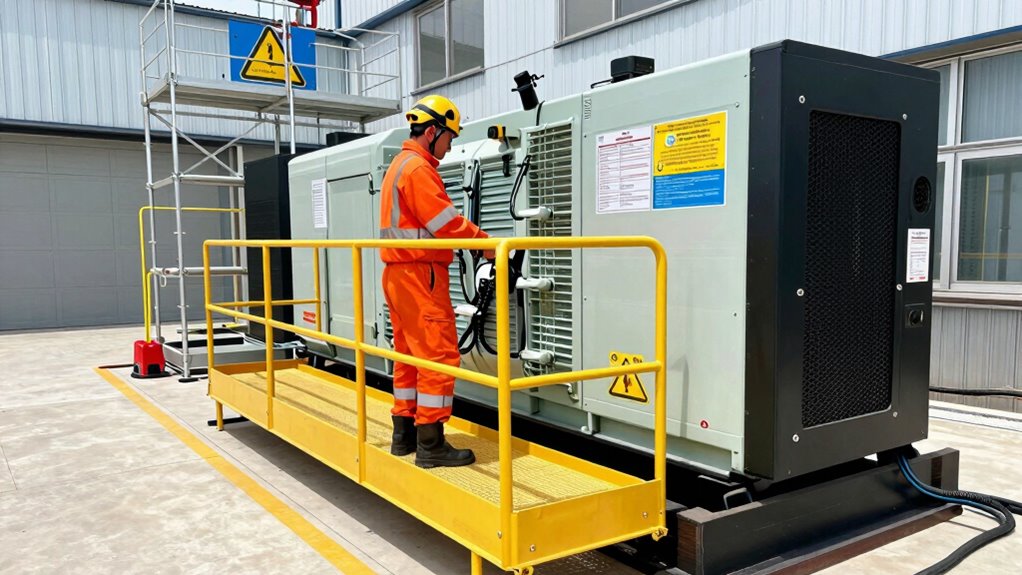

To plan safe technician access around a generator, you should design clear pathways free of clutter and tripping hazards, ensuring all essential components are easily reachable. Install proper lighting, safety signage, and barriers around hazardous zones. Use stable platforms or scaffolding for high or awkward areas and organize tools nearby to prevent unnecessary movement. Regular safety audits help identify potential issues and keep access routes clear, making maintenance safer and more efficient. Keep exploring for detailed strategies to optimize safety and access.

Get backup power and energy gear delivered free with Prime
- Fast, free delivery on millions of items
- Prime Video, Amazon Music and more included
- Member-only deals all year
Key Takeaways
- Design clear, unobstructed pathways around the generator for ease of access and routine maintenance.
- Install adequate lighting and safety signage to improve visibility and awareness of hazards.
- Use barriers, guardrails, or fencing to secure hazardous zones and prevent accidental contact.
- Ensure vital components are accessible without awkward maneuvering, utilizing platforms or ladders as needed.
- Conduct regular safety audits to identify and eliminate potential access or safety hazards.
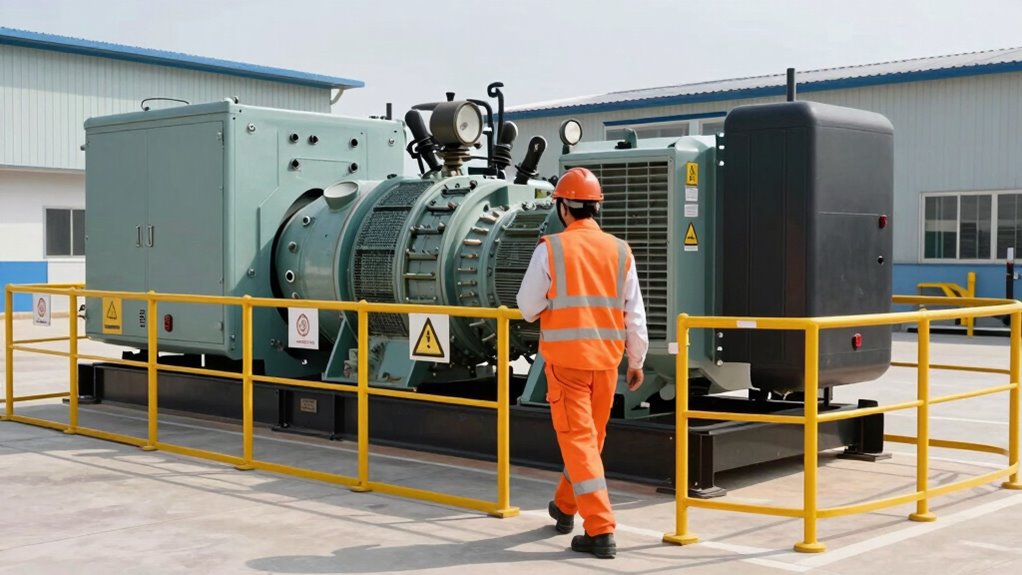
Ensuring safe technician access around a generator is essential to prevent accidents and maintain reliable operation. When planning access, you need to consider the practical aspects of equipment maintenance and adhere to strict safety protocols. Proper planning reduces the risk of injuries, equipment damage, and operational downtime, making it a vital part of your maintenance strategy.
Start by evaluating the generator’s location and layout. You should identify clear pathways that allow technicians to reach all necessary components comfortably without obstruction. Make sure the area around the generator is free of clutter, debris, and any tripping hazards. Adequate space not only facilitates safe movement but also enables technicians to perform inspections, repairs, or routine maintenance efficiently. During this assessment, take note of any potential pinch points or tight spaces that could compromise safety or hinder access. Incorporating proper lighting and safety signage can significantly enhance overall safety and visibility during maintenance activities.
Evaluate generator layout to ensure clear, unobstructed pathways for safe, efficient maintenance access.
Incorporate safety protocols into your planning from the outset. This includes ensuring proper lighting around the generator so technicians can see clearly during maintenance tasks, especially in low-light conditions. Installing guardrails, barriers, or safety fencing around hazardous areas can prevent accidental falls or contact with moving parts. Additionally, establish lockout/tagout procedures to ensure the generator is completely de-energized before any technician begins work. Communicate these protocols clearly to all personnel involved, and make sure everyone understands their importance. Regular safety audits help verify that access routes remain unobstructed and that safety measures are consistently followed. Conducting risk assessments periodically can help identify and mitigate potential hazards before they lead to incidents. Incorporating training programs for staff on safety procedures further enhances overall safety compliance.
Equipment maintenance should be integrated into your access plan as well. Design your setup so that technicians can easily reach vital components such as control panels, fuel sources, and cooling systems. Regularly scheduled inspection points should be accessible without requiring awkward maneuvering or disassembly. Use platforms, ladders, or scaffolding where necessary, but ensure they meet safety standards and are stable. Keep tools and replacement parts organized and within reach to minimize unnecessary movement during maintenance. Considering the layout of the equipment can help streamline maintenance tasks and improve safety. Furthermore, addressing the environmental conditions** around the generator, such as ensuring proper drainage and ventilation, can prevent additional hazards and prolong equipment lifespan. Establish clear signage indicating the presence of high-voltage areas or moving parts, and train your team on emergency procedures** and safe operational practices. Conduct regular safety audits to verify that access routes remain unobstructed and that safety measures are consistently followed.
Frequently Asked Questions
What Safety Gear Is Essential for Technicians Working Near Generators?
You need to wear essential safety gear like personal protective equipment, including gloves, safety glasses, and hearing protection, when working near generators. Make certain you’ve received proper safety training to understand potential hazards and safety procedures. This gear helps protect you from electrical shocks, fumes, and noise. Always inspect your PPE before use and follow safety protocols to guarantee your safety and the safety of others around the generator.
How Often Should Safety Inspections Be Conducted Around Generator Access Points?
You should conduct safety inspections around generator access points at least once a week—more if the generator faces harsh weather or heavy use. Regular generator maintenance is vital to prevent disasters. During inspections, check access control systems to guarantee only authorized personnel can enter. Don’t underestimate the importance of these frequent checks; they’re your best defense against unexpected failures, keeping technicians safe and the generator running smoothly.
Are There Specific Environmental Considerations for Generator Access Areas?
Yes, you should consider environmental impact and noise pollution when planning generator access. You need to choose locations that minimize noise disturbance to nearby areas and prevent environmental contamination from fuel or oil leaks. Installing sound barriers can reduce noise pollution, and ensuring proper drainage helps prevent environmental hazards. Regular maintenance and monitoring are essential to keep the area environmentally safe while allowing safe technician access.
How to Coordinate With Emergency Services During Maintenance?
During maintenance, you must prioritize seamless emergency communication and access control, ensuring you coordinate with emergency services like you’re orchestrating a symphony. Contact local responders beforehand, share detailed access plans, and establish clear communication channels. Keep emergency contact info handy and inform them of your schedule. This way, in a crisis, help arrives swiftly, and everyone stays safe, turning potential chaos into coordinated calm.
What Signage Is Recommended to Ensure Technician Safety Around Generators?
You should use clear, visible signage indicating “Authorized Personnel Only” and “High Voltage” around the generator. Place signs at all entry points and along pathways leading to the equipment. Incorporate emergency protocols into signage, like contact info for emergency services and safety instructions. Proper signage placement helps alert technicians to potential hazards, ensuring they follow safety procedures and prevent accidents during maintenance.
Conclusion
By planning your technician access with care, you’re building a safety net that catches every potential hazard before it strikes. Think of it as choreographing a delicate dance around a powerful performer—every step must be precise and deliberate. When you prioritize safety, you create a fortress of protection around your generator, ensuring smooth operations without a stumble. With vigilance and preparation, you turn a risky terrain into a well-orchestrated symphony of safety and efficiency.
Columbus Day / Indigenous Peoples' Day Picks
long weekend sales
As an affiliate, we earn on qualifying purchases.