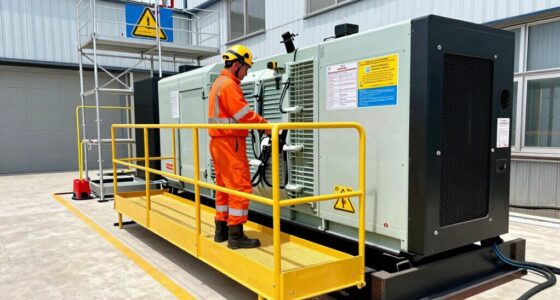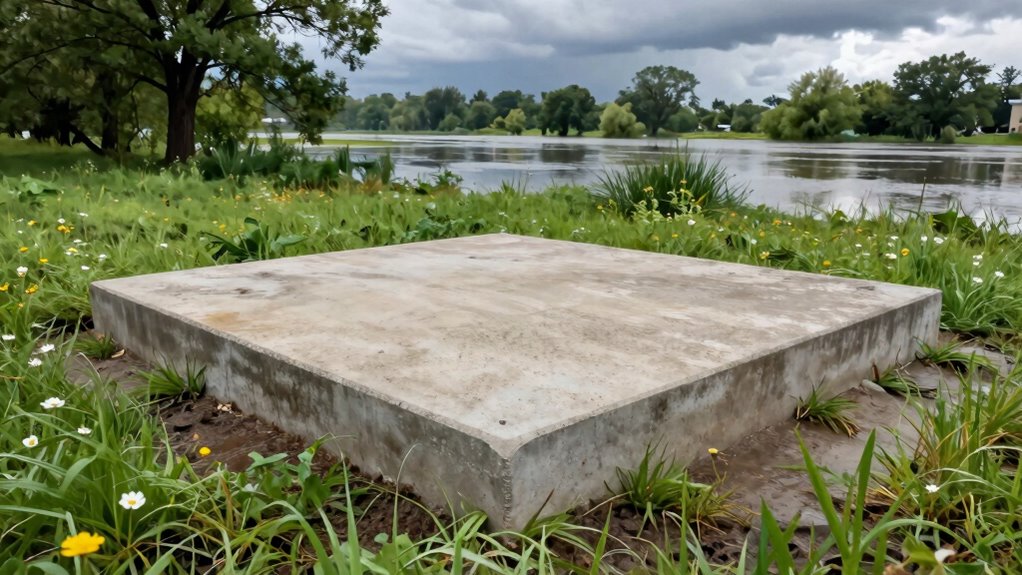

Elevating your generator pad is essential in flood zones to prevent water from infiltrating and damaging your equipment. Proper elevation reduces the risk of flooding, corrosion, and electrical shorts, ensuring your generator stays operational when storms hit. Incorporating a slope or drainage features helps direct water away, protecting your investment. Ignoring these standards can lead to costly repairs and outages. Keep an eye out for more tips on how to maximize your generator’s protection during severe weather.
Key Takeaways
- Proper elevation prevents floodwaters from reaching and damaging the generator during storm events.
- Elevating the pad complies with local building codes and floodplain management standards.
- Higher elevation reduces the risk of water infiltration, corrosion, and electrical failures.
- It ensures continuous generator operation during floods, maintaining emergency power supply.
- Combining elevation with effective drainage enhances overall flood protection and system reliability.
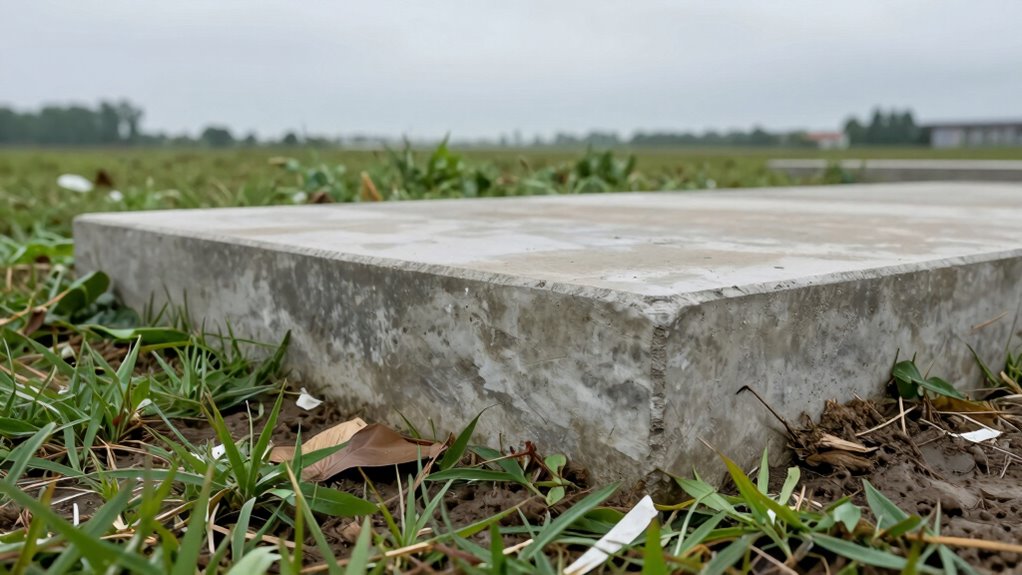
Generator pad drainage is another essential aspect to consider alongside elevation. Good drainage helps prevent water from pooling around or underneath your generator, which can cause corrosion, electrical shorts, or even complete failure. When you build your generator pad, it’s important to incorporate a slight slope or drainage system that directs water away from the equipment. Proper drainage design not only protects your generator from immediate water damage but also reduces long-term wear caused by moisture exposure. In flood zones, neglecting generator pad drainage can be a costly mistake, as standing water can infiltrate the pad’s base, undermining its stability and causing uneven settling. Ensuring effective drainage aligns with your overall goal of maintaining the generator’s reliability when you need it most. Elevation standards in flood zones are often dictated by local building codes and floodplain management guidelines. These standards specify the minimum height your generator pad must reach above the base flood elevation (BFE), which is the level considered most likely to be flooded during a storm. Meeting these standards isn’t just about compliance; it’s about safeguarding your investment and ensuring operational readiness. If you ignore elevation standards, you risk installing your generator in a vulnerable position, which could lead to water damage, shutdowns, and costly repairs. Properly elevating your generator pad according to these guidelines, combined with good drainage practices, ensures your emergency power system remains functional when water levels threaten to rise. Additionally, understanding floodplain management principles can help you make informed decisions about site elevation and protective measures. Incorporating site-specific assessments can further optimize your setup for maximum protection.
A well-designed elevation and drainage system can significantly reduce the risk of water infiltration and protect your generator during severe weather events.

Porch Shield Waterproof Universal Generator Cover 32 x 24 x 24 inch - for Most Generators 5000-10000 Watt, Black
Compatible - More sizes for 5000w -10000w gas generator or inverter generator.
As an affiliate, we earn on qualifying purchases.
Frequently Asked Questions
How Does Flood Zone Designation Affect Generator Pad Elevation Requirements?
Your flood zone designation directly impacts your generator pad elevation requirements. Flood zone mapping determines if you need higher elevation standards to prevent flood damage. If your zone allows, you might qualify for an elevation variance, lowering or adjusting the height requirements. Always check local regulations, as stricter zones demand higher elevations, ensuring your generator stays operational during floods and minimizes potential damage.
What Materials Are Best for Building Flood-Resistant Generator Pads?
You might think concrete or gravel are enough, but for flood-resistant generator pads, you need materials with superior durability like reinforced concrete or pressure-treated, corrosion-resistant steel. Ironically, the most “ordinary” materials often withstand floods better when combined with proper construction techniques—like elevating the pad and sealing joints. These choices guarantee your generator stays protected, even when floodwaters rise unexpectedly, giving you peace of mind in any flood zone.
How Often Should Generator Pads Be Inspected for Flood Damage?
You should inspect your generator pad for flood damage at least twice a year, especially before and after storm seasons. Follow a regular maintenance schedule and use thorough inspection techniques, like checking for cracks, erosion, or water pooling. Pay close attention to the pad’s elevation and condition, guaranteeing it remains flood-resistant. Promptly address any issues to prevent further damage and guarantee your generator stays operational during emergencies.
Can Generator Pad Elevation Influence Insurance Premiums?
If your generator pad is elevated, your insurance premiums might decrease because it reduces flood risk. For example, a business in a flood-prone area with a raised generator pad could qualify for lower rates, knowing generator safety and emergency preparedness are enhanced. Elevating your generator pad shows proactive flood mitigation, reassuring insurers that you’re minimizing potential damage. This simple step can save you money and improve your overall flood resilience.
Are There Specific Codes or Standards Governing Generator Pad Elevation?
Yes, there are specific codes and standards governing generator pad elevation. You should follow local building codes, NFPA 110, and the NEC, which specify requirements for electrical grounding and load capacity. These standards make certain your generator remains operational during floods and safety is maintained. Proper elevation helps prevent water damage, while grounding and load capacity considerations ensure reliable power delivery and compliance with safety regulations.
Porch Shield Waterproof Universal Generator Cover 38 x 28 x 30 inch - for Most Generators 5500-15000 Watt, Black
Compatible - More sizes for 5500w -15000w gas generator or inverter generator.
As an affiliate, we earn on qualifying purchases.
Conclusion
In the end, thinking about generator pad elevation is like planting a sturdy anchor in a stormy sea. It keeps your essential power source safe and secure, no matter how high the floodwaters rise. By paying attention to elevation, you’re building a fortress that can withstand nature’s unpredictable moods. Don’t leave your backup power vulnerable—elevate with purpose, and stay resilient when floodwaters threaten to upset your plans.

GenArmor Generator Covers While Running, 100% Waterproof Heavy Duty Tarps Generator Tent, Portable Outdoor Generator Enclosure for Most 4000w~13000w Generators, Black, Standard
100% Waterproof Protection: A patented innovation from GenArmor independent design lab, ensuring the safety of your generator covers...
As an affiliate, we earn on qualifying purchases.

Hudson Generator Box, SD Aluminum Generator Enclosure with Ventilation, Heat Dissipation & Reduce Noise, Accommodates The Maximum Size of 39.4"x32"x31.7", White
【Efficient Ventilation, Goodbye Overheating】Still dealing with your generator overheating during long hours of operation? Our generator enclosure features...
As an affiliate, we earn on qualifying purchases.