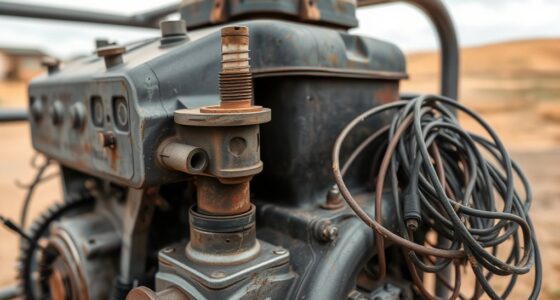
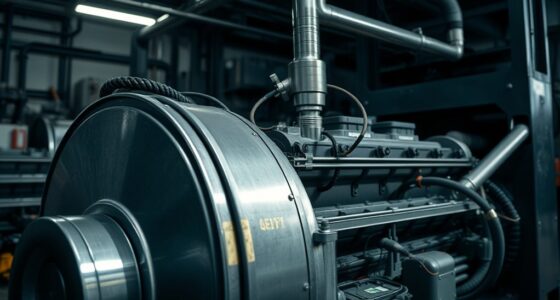
If your generator is overheating, start by checking the oil levels and quality, making sure they’re within the recommended range and not dirty, as low or degraded oil causes friction and heat build-up. Inspect the cooling system, including fans, radiators, and coolant levels, removing any debris or obstructions that could block airflow. Look for leaks, corrosion, or damaged hoses. Address these issues promptly, and you’ll find more tips to keep your generator running smoothly.
Prime for Young Adults — start your free trial
Fast free delivery, streaming and member deals for eligible 18–24 year olds.
As an affiliate, we earn on qualifying purchases.
Key Takeaways
- Check and maintain proper oil levels and quality to reduce friction and heat buildup.
- Inspect cooling system components such as fans, radiators, and coolant levels for blockages or leaks.
- Ensure airflow is unobstructed by cleaning cooling fins, vents, and removing debris from the cooling area.
- Test and repair faulty thermostats or malfunctioning fans that may cause overheating.
- Schedule regular cooling system maintenance, including flushing coolant and replacing worn hoses, to prevent overheating.

Overheating problems can seriously disrupt your generator’s performance and potentially cause costly damage. If you notice your generator shutting down unexpectedly or emitting excessive heat, the first step is to check the oil levels. Oil is essential for lubricating moving parts and reducing friction, which helps prevent overheating. Low oil levels can lead to increased friction and heat buildup, pushing your generator toward failure. Make it a habit to regularly inspect and top off the oil as recommended by the manufacturer. Using the correct type of oil guarantees peak lubrication and heat dissipation. If the oil appears dirty or degraded, consider draining and replacing it to maintain proper engine performance.
Beyond oil levels, your cooling system plays a crucial role in preventing overheating. Many generators are equipped with a cooling system that circulates coolant or air to dissipate heat generated during operation. If this system isn’t functioning properly, heat can accumulate quickly, causing the generator to overheat. Start by inspecting the cooling system components, such as fans, radiators, or coolant levels, depending on your model. A clogged radiator or blocked airflow can substantially impair heat dissipation. Remove any debris, dirt, or obstructions from cooling fins and vents to ensure unobstructed airflow. For liquid-cooled models, verify that coolant levels are adequate and that there are no leaks in hoses or the radiator. Faulty thermostats or malfunctioning fans can also contribute to overheating; if you suspect these issues, consider replacing or repairing the faulty parts.
Additionally, check for any signs of leaks or corrosion in the cooling system. Leaks can lead to low coolant levels, reducing the system’s ability to regulate temperature effectively. If you notice leaks or corrosion, it’s best to address these issues promptly before they develop into more serious problems. Proper maintenance of the cooling system extends beyond visual inspections. Regularly flushing and refilling coolant according to your generator’s service schedule ensures that the system functions efficiently. Inspecting and replacing worn or damaged hoses prevents coolant leaks and maintains peak flow. Incorporating proper cooling system maintenance can significantly reduce the likelihood of overheating and prolong your generator’s lifespan.
Frequently Asked Questions
Can Generator Overheating Cause Permanent Engine Damage?
Yes, generator overheating can cause permanent engine damage. When your cooling system fails, it leads to excessive heat, which shortens the generator’s lifespan and can warp or crack engine components. If you ignore overheating signs, you risk costly repairs or replacement. Regular maintenance of the cooling system helps prevent this, ensuring your generator runs smoothly and lasts longer without suffering irreversible damage.
How Often Should I Perform Maintenance to Prevent Overheating?
You should perform routine inspections and coolant checks every 50 to 100 hours of operation or at least once a month. Regular maintenance helps prevent overheating by ensuring your generator’s cooling system functions properly. Keep an eye on coolant levels, leaks, and radiator cleanliness. If you notice any issues, address them promptly to avoid damage. Consistent upkeep minimizes the risk of overheating and keeps your generator running smoothly and efficiently.
Are Aftermarket Cooling Systems Effective for Overheating Issues?
You get what you pay for, so aftermarket cooling systems can be effective if you choose quality upgrades. Many find that cooling system upgrades with reputable aftermarket parts improve airflow and heat dissipation, reducing overheating risks. However, not all aftermarket parts are created equal, so guarantee you select trusted brands and professional installation. Proper maintenance alongside these upgrades ensures your generator stays cool under pressure, keeping things running smoothly.
What Are the Environmental Factors That Contribute to Generator Overheating?
Environmental factors like airflow obstruction and high ambient temperature can cause your generator to overheat. If airflow is blocked by debris, leaves, or clutter around vents, heat can’t dissipate properly. Similarly, elevated ambient temperatures reduce cooling efficiency, making it harder for your generator to stay within safe operating limits. Make sure vents are clear and operate your generator in a shaded, cooler area to prevent overheating and maintain ideal performance.
Is It Safe to Run a Generator in Enclosed Spaces Despite Overheating?
No, it’s not safe to run a generator in enclosed spaces, even if it’s overheating. Proper ventilation requirements are essential to prevent dangerous buildup of carbon monoxide. You should guarantee exhaust placement directs fumes away from confined areas, and maintain adequate airflow. Running a generator without these precautions risks carbon monoxide poisoning, which can be fatal. Always operate your generator outdoors in well-ventilated areas to guarantee safety.
Conclusion
So, next time your generator starts to overheat, picture it sweating like a marathon runner after a sprint—probably wishing it had a cooling fan instead of a fiery temper. Remember, a little maintenance goes a long way; neglect it, and your trusty power source might just throw a tantrum, leaving you in the dark. Keep it cool, keep it running, and avoid turning your generator into a steaming, sputtering drama queen.
NFL season / tailgating Picks
team gear
As an affiliate, we earn on qualifying purchases.