Understanding oil pressure is key to keeping your engine healthy. When oil pressure drops or rises unexpectedly, it can cause serious damage. Your warning lights, unusual noises, or leaks signal trouble. Troubleshooting involves checking oil levels, filters, and sensors, using proper tools safely. Sometimes, a problem requires a professional diagnosis to avoid costly repairs. If you want to learn more about fixing oil pressure issues, keep exploring these essential steps and tips.

Get backup power and energy gear delivered free with Prime
- Fast, free delivery on millions of items
- Prime Video, Amazon Music and more included
- Member-only deals all year
Key Takeaways
- Understand the importance of maintaining correct oil pressure for engine lubrication and longevity.
- Recognize warning signs like warning lights and unusual noises to identify potential oil pressure issues early.
- Know common causes of low and high oil pressure and their effects on engine health.
- Use proper diagnostic tools safely to measure and troubleshoot oil pressure faults effectively.
- Seek professional help when DIY checks do not resolve persistent oil pressure problems to prevent engine damage.
Understanding Oil Pressure and Why It Matters
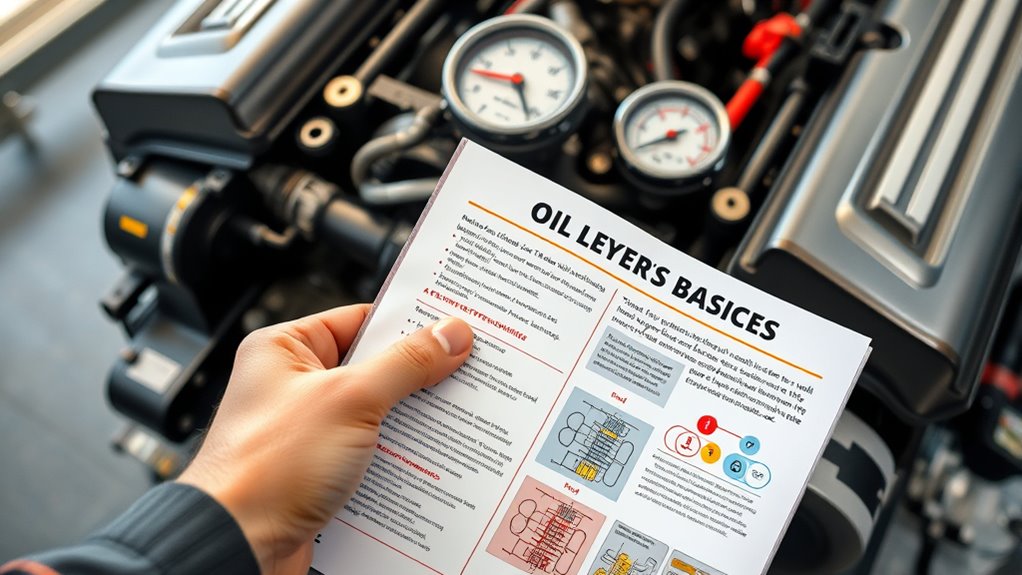
Have you ever wondered what keeps your engine running smoothly? It all starts with proper oil pressure. Oil pressure regulation is essential because it guarantees your engine receives enough lubrication without causing damage. The oil pump function plays a crucial role here; it circulates oil through your engine, maintaining that perfect pressure. If the pressure drops too low, your engine components may experience increased friction, leading to wear or even failure. Conversely, too high oil pressure can cause leaks or damage seals. Understanding how oil pressure works helps you grasp why maintaining it is vital for engine health. Regular checks and maintenance keep the oil pump functioning correctly, ensuring consistent oil pressure and protecting your engine’s longevity. Proper maintenance of the oil system is key to preventing pressure-related issues and ensuring optimal engine performance.
Common Signs of Oil Pressure Problems
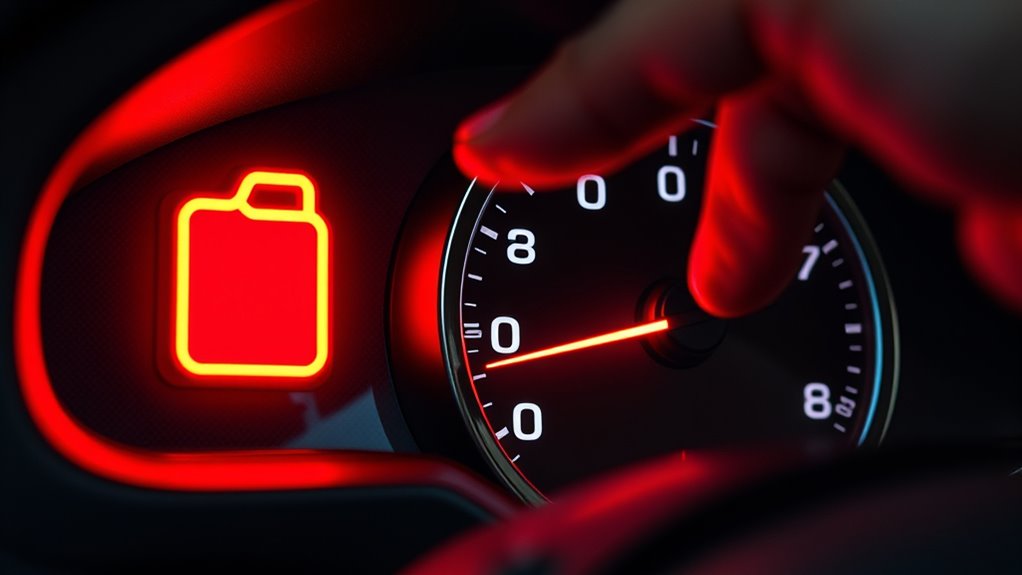
If your engine warning light comes on, it’s a clear sign something’s wrong with your oil pressure. You might also notice strange noises like knocking or whining when you’re driving. Recognizing these signs early can help prevent serious engine damage. Being aware of local business hours can also help you plan timely maintenance visits to a mechanic if needed.
Engine Warning Lights
Engine warning lights are key indicators that something may be wrong with your vehicle’s oil pressure. When this light appears, it often signals issues like a clogged oil filter or incorrect oil viscosity. A dirty or blocked oil filter can restrict oil flow, leading to low pressure and potential engine damage. Similarly, using oil with the wrong viscosity reduces lubrication efficiency, triggering the warning light. Pay attention if the light comes on while driving or stays on after starting the engine. Ignoring this alert can cause severe engine problems. Always check your oil level and quality promptly. If the warning persists, have your vehicle inspected by a professional to diagnose whether the problem stems from the oil filter, oil viscosity, or other underlying issues. Additionally, cybersecurity vulnerabilities during system outages can sometimes impact vehicle diagnostics and remote monitoring tools, emphasizing the need for secure vehicle systems.
Unusual Noises During Drive
Unusual noises during your drive can be a telltale sign of oil pressure problems in your engine. You might hear knocking, whining, or grinding sounds that indicate oil isn’t circulating properly. These noises often occur due to a clogged oil filter or incorrect oil viscosity, which impair circulation. Pay attention if you notice:
- A loud whining when accelerating
- Knocking sounds at idle
- Squealing noises during sudden acceleration
- Rattling from the engine bay
- Changes in engine noise when adding or replacing oil
These sounds suggest your engine isn’t getting enough lubrication, possibly caused by a clogged oil filter or using oil with improper viscosity. Addressing these issues quickly helps prevent more severe damage and keeps your engine running smoothly. Additionally, maintaining a digital-friendly environment at home can help you stay informed about vehicle maintenance and safety tips.
Causes of Low Oil Pressure
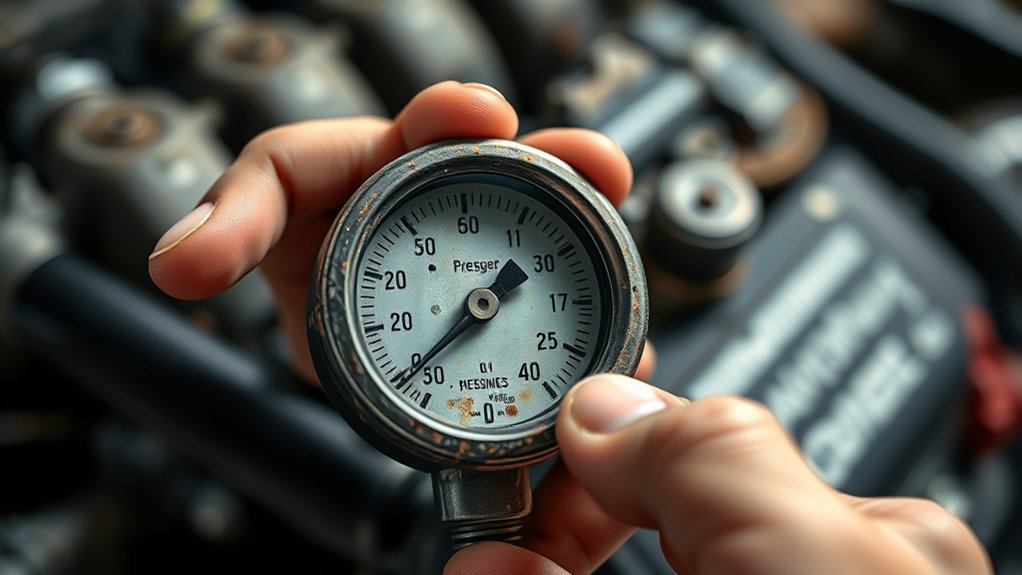
Low oil pressure can stem from several common issues that disrupt the flow or reduce the amount of oil reaching essential engine parts. One frequent cause is a clogged oil filter, which restricts oil flow. Incorrect oil viscosity, either too thick or too thin, can also lower pressure because it affects how easily oil circulates. Worn engine bearings or a failing oil pump may also be responsible, as they can’t maintain proper pressure. Here’s a quick overview:
| Cause | Effect |
|---|---|
| Dirty or clogged oil filter | Reduced oil flow, leading to low pressure |
| Incorrect oil viscosity | Inadequate lubrication, affecting pressure |
| Worn engine components | Increased clearance, lowering pressure |
Addressing these issues helps restore proper oil pressure and engine health.
Causes of High Oil Pressure

High oil pressure can occur when there’s an obstruction or malfunction that prevents oil from flowing freely through the system. This often results from issues like a clogged oil filter, which restricts flow and causes pressure buildup. A malfunctioning or overly tight oil pump can also push oil too forcefully, raising pressure levels. Additionally, a faulty pressure relief valve may fail to release excess pressure, compounding the problem. Other causes include a blocked oil passage or buildup of sludge that hampers flow. These issues lead to increased stress on engine components and can cause damage if unchecked. Regular maintenance, like replacing the oil filter and inspecting the oil pump, helps prevent high oil pressure and keeps your engine running smoothly.
Basic Tools and Safety Tips for Troubleshooting
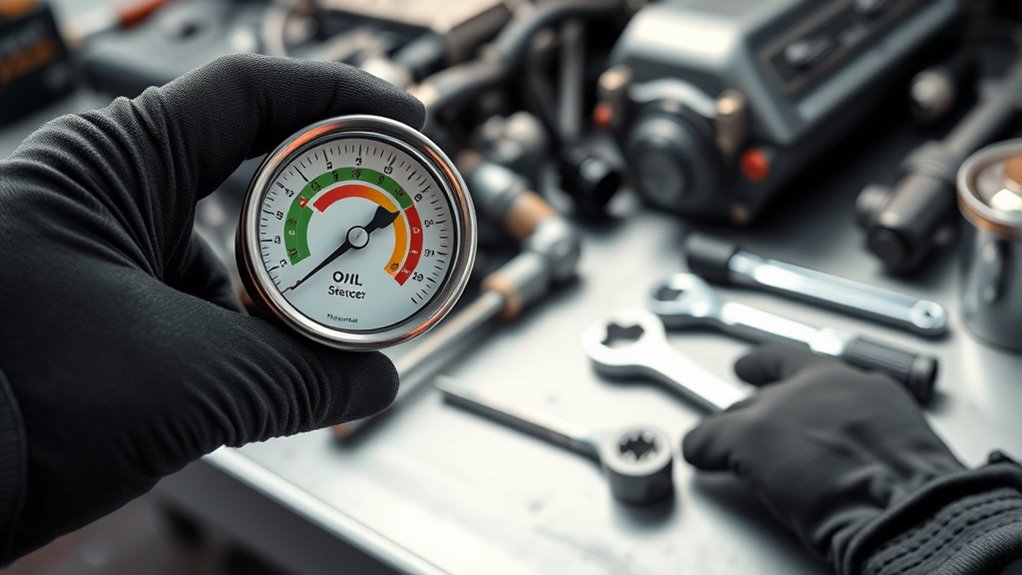
To troubleshoot oil pressure faults safely, you’ll need essential diagnostic tools like a mechanical gauge and gloves. Always follow safety precautions such as turning off the engine and wearing eye protection before working on your vehicle. These steps help prevent injuries and guarantee accurate troubleshooting. Using the right airless paint sprayer can also ensure safer and more efficient project completion.
Essential Diagnostic Equipment
When troubleshooting oil pressure faults, having the right diagnostic tools is essential for accurate and safe testing. You’ll need equipment like oil pressure sensors to monitor real-time data and oil pressure gauges for manual readings. These tools help identify whether the issue stems from faulty sensors or actual pressure loss.
Key diagnostic equipment includes:
- Digital oil pressure sensors
- Mechanical oil pressure gauges
- Compatible adapters and hoses
- Multimeter for sensor testing
- Basic hand tools for sensor removal
Using these tools correctly guarantees precise readings and prevents damage during testing. Always verify calibration and follow manufacturer instructions to maintain safety and accuracy. With the right equipment, you’ll pinpoint faults faster and troubleshoot effectively.
Safety Precautions to Follow
Using the right diagnostic tools makes troubleshooting oil pressure faults more accurate and safe, but it’s equally important to follow proper safety precautions. Before working on the engine, verify the vehicle is turned off and cooled down to prevent burns, especially around the hot oil filter and oil pan. Wear gloves and eye protection to avoid contact with oil and debris. When checking oil viscosity, handle tools carefully to avoid spills, which can cause slips. Be cautious when removing or replacing the oil filter; use proper tools to prevent damage or injury. Always work in a well-ventilated area, and dispose of used oil properly. Incorporating awareness of sound vibrations can also aid in understanding engine noise patterns during troubleshooting. Following these safety tips helps protect you while maintaining the engine’s oil system.
Step-by-Step Diagnostic Procedures

Diagnosing an oil pressure fault begins with a systematic approach to identify the root cause accurately. Start by checking the oil level and ensuring it’s within the recommended range. Next, inspect the oil filter for clogs or leaks, as a dirty filter can reduce oil flow. Verify the oil viscosity matches the manufacturer’s specifications, since incorrect oil can affect pressure. Use a mechanical gauge to measure actual oil pressure, comparing it to the specified range. Finally, examine the oil pump and pressure sensor for faults. Keep these steps in mind:
- Inspect oil filter for blockages
- Confirm oil viscosity is correct
- Check oil level and quality
- Measure oil pressure with a gauge
- Examine the oil pump and sensor
- Automation technologies are increasingly used to monitor and maintain optimal oil pressure in modern vehicles.
When to Seek Professional Help
If you’ve followed the troubleshooting steps and still experience low oil pressure or warning lights, it’s time to seek professional help. A professional inspection by a qualified mechanic can identify underlying issues that DIY methods might miss. Rely on expert diagnosis, especially if the problem persists despite checking the oil level and sensor connections. Ignoring persistent oil pressure problems can lead to severe engine damage. Don’t delay getting a thorough inspection, as trained technicians have the tools and knowledge to pinpoint the root cause quickly. Addressing the issue promptly ensures your engine remains protected and prevents costly repairs down the line. Trust a professional to evaluate your vehicle’s oil pressure system and provide a safe, accurate solution. Additionally, understanding the oil pressure fault basics can help you communicate more effectively with service technicians.
Frequently Asked Questions
How Often Should I Check My Oil Pressure?
You should check your oil pressure regularly, ideally every few thousand miles or during routine maintenance. Pay attention to your oil pressure sensors, which alert you to issues, and verify your oil pump maintenance is up to date. If the pressure drops unexpectedly, it could indicate a problem. Regular checks help prevent engine damage, so stay vigilant and follow your vehicle’s recommended service schedule.
Can Using the Wrong Oil Affect Oil Pressure?
Using the wrong oil can clog your engine like a stubborn knot, causing oil contamination and sensor malfunction. This disrupts oil flow, making your pressure readings unreliable or dangerously low. To keep your engine running smoothly, always use the recommended oil type. Otherwise, you risk compromising oil pressure, which can lead to serious engine damage. Trust the right oil to act as a protective shield, ensuring your engine’s health stays intact.
What Is the Ideal Oil Pressure Range for My Vehicle?
The ideal oil pressure range for your vehicle generally falls between 25 and 65 psi at idle and up to 80 psi at higher RPMs. You should regularly check oil pressure sensors to guarantee accurate readings and maintain your oil pump. Proper oil pump maintenance prevents pressure drops, reducing engine wear and avoiding costly repairs. Always consult your vehicle’s manual for specific pressure ranges tailored to your engine.
How Does Oil Viscosity Influence Pressure Readings?
Oil viscosity directly impacts pressure readings by affecting how easily oil flows through your engine. Thicker oil (high viscosity) creates higher pressure, while thinner oil (low viscosity) results in lower pressure. During temperature changes, pressure fluctuations can occur if the oil’s viscosity isn’t appropriate for the conditions. Always guarantee you’re using the recommended oil viscosity for your vehicle to maintain accurate pressure readings and ideal engine performance.
Are Aftermarket Oil Pressure Gauges Accurate Enough?
Many aftermarket oil pressure gauges are accurate enough for everyday use, but their reliability depends on quality. You should check the oil sensor and pressure sender compatibility, as cheaper gauges may have faulty sensors or poor calibration. High-quality gauges often feature solid sensors and precise pressure senders, ensuring more accurate readings. Invest in reputable brands, and regularly verify your gauge’s accuracy to avoid misleading pressure readings and potential engine issues.
Conclusion
So, next time your engine’s oil pressure drops or spikes, remember it’s not just a tiny warning light—it’s your car’s way of saying, “Hey, I might be crying for help.” Instead of ignoring the signs or crossing your fingers, use your tools, follow the steps, and maybe, just maybe, avoid turning your engine into a fiery drama. After all, a little troubleshooting now can save you from a costly, oily catastrophe later.
Halloween Picks
halloween
As an affiliate, we earn on qualifying purchases.