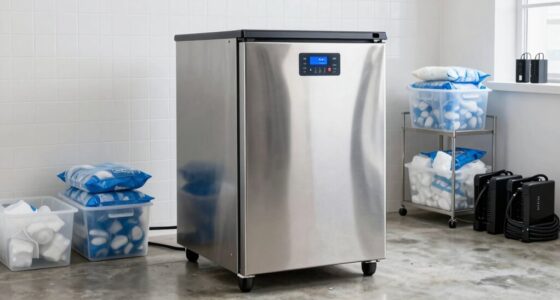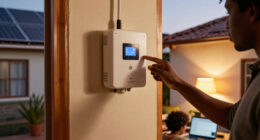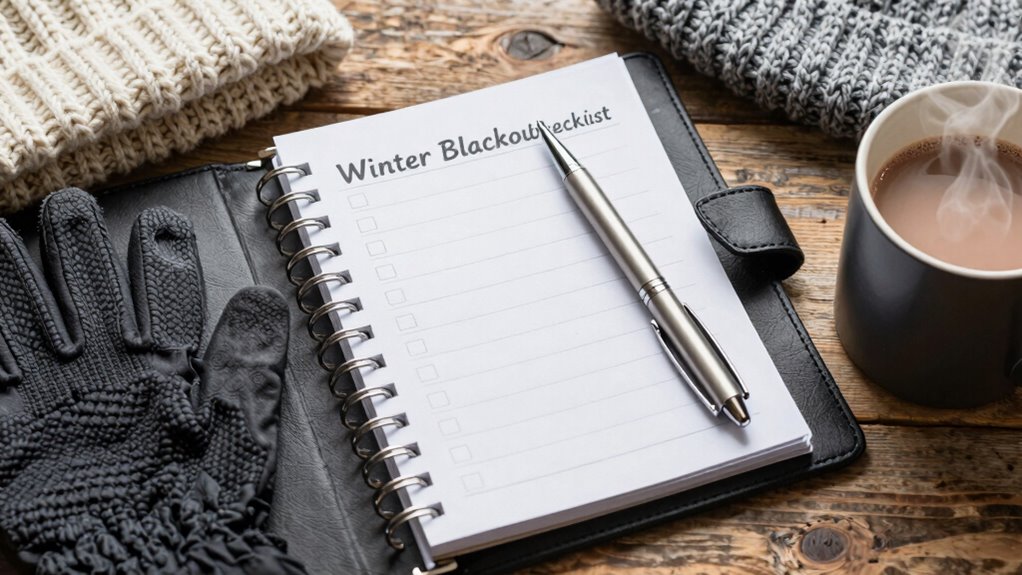

To build a winter blackout checklist, start by gathering emergency supplies like bottled water, non-perishable food, flashlights, batteries, warm clothing, and blankets. Make certain your home is well-insulated and draft-proofed, and insulate pipes to prevent freezing. Set up backup power sources such as generators or solar chargers, and keep phones charged with portable chargers. Develop communication and evacuation plans, and review safety steps regularly. Keep these tips handy; they hold the key to staying safe and warm during outages.

Get backup power and energy gear delivered free with Prime
- Fast, free delivery on millions of items
- Prime Video, Amazon Music and more included
- Member-only deals all year
Key Takeaways
- Identify and stock essential emergency supplies like water, non-perishable food, warm clothing, and blankets.
- Insulate your home and seal drafts to maintain heat and prevent pipe freezing.
- Ensure backup power options such as generators and solar chargers are functional and ready.
- Develop communication plans, including charging devices and establishing family meeting points.
- Review safety procedures for generator use, home insulation, and emergency response to stay prepared.
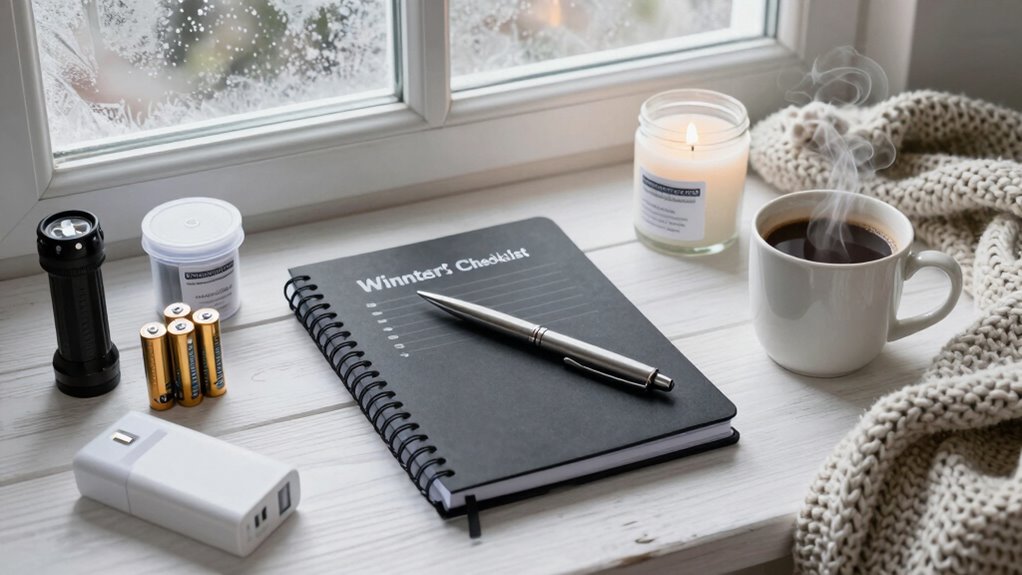
Preparing for winter power outages can be overwhelming, but creating a thorough blackout checklist makes the process manageable. When cold weather hits, losing power can disrupt your daily routine and put your safety at risk. That’s why planning ahead is essential. Start by gathering the right emergency supplies, which should include bottled water, non-perishable food, flashlights, batteries, a battery-powered radio, and a first aid kit. Stockpile enough essentials to last at least a few days, especially if severe storms or heavy snow could delay utility repairs. Don’t forget warm clothing, blankets, and hand warmers to keep your family comfortable during extended outages.
Prepare a blackout kit with water, food, flashlights, warm clothing, and essential supplies for winter outages.
Next, focus on your home’s insulation. Guarantee your house is properly insulated helps retain heat and reduces your reliance on power for heating. Seal drafts around windows and doors with weatherstripping or caulk, and add insulation to attics and walls if needed. These measures not only keep your living space warmer but also save you money on heating bills. Insulating pipes prevents them from freezing and bursting, which can cause significant damage and require costly repairs. Keep a supply of foam pipe covers or heat tape on hand for vulnerable areas. Additionally, understanding DIY tools and safety tips for home insulation can help you effectively and safely improve your home’s energy efficiency. Properly insulating your home can also prevent heat loss through air leaks, making your preparations even more effective. Recognizing the importance of battery maintenance and proper charger settings can ensure your backup power sources are ready when needed, especially during extended outages. Incorporating energy-efficient solutions like solar chargers can also be a smart addition to your emergency preparedness plan. Moreover, maintaining an awareness of grocery savings strategies can help you stock up economically on supplies, ensuring you’re prepared without overspending.
In addition to physical preparations, consider your backup power options. A generator can be a game-changer during prolonged outages, but it requires proper planning. Make sure you have enough fuel stored safely, and familiarize yourself with how to operate it correctly. Keep extension cords and power strips ready, and plan which appliances or devices are most critical to power during an outage. Remember, safety comes first—never run a generator indoors, and ensure proper ventilation to prevent carbon monoxide poisoning.
Create a plan for communication and evacuation if necessary. Keep your phone charged and have portable chargers available. Establish a meeting point for family members in case of separation. Make sure everyone knows the blackout plan and understands how to stay warm, safe, and connected. Regularly review and update your checklist, especially as seasons change or new equipment is added. By staying organized and prepared, you’ll reduce stress and protect your loved ones when winter storms threaten to cut your power. With these steps, you’ll be ready to handle winter outages confidently and comfortably.
Frequently Asked Questions
How Often Should I Review and Update My Blackout Checklist?
You should review and update your blackout checklist at least once a year, ideally before winter begins. During your review, check your emergency communication plans and make sure your devices have fresh batteries. Regularly practicing and maintaining your supplies helps you stay prepared. If there are significant changes in your household or technology, update your checklist more frequently, such as every six months, to stay ready for winter outages.
What Specific Tools Are Essential for Winter Blackout Preparedness?
Did you know that over 60% of winter blackouts last more than 24 hours? Essential tools include alternative heating sources like portable heaters or wood stoves, ensuring warmth when the power’s out. Emergency lighting, such as battery-powered lanterns and flashlights, is vital for visibility and safety. Keep these tools accessible, check their batteries regularly, and make sure you’re prepared to stay warm and safe during extended outages.
How Can I Ensure My Family Understands the Blackout Procedures?
You can guarantee your family understands blackout procedures through clear family communication and regular emergency training. Sit down together to discuss each step, answer questions, and practice drills so everyone feels confident. Use simple language and visual aids if needed. Reinforce the importance of the procedures during routine conversations, and schedule periodic emergency training sessions to keep everyone prepared and aware of what to do during a winter blackout.
Are There Any Legal Considerations for Emergency Power Sources?
Think of legal considerations like a safety net—you don’t want it to tangle when you need it most. You need to guarantee your emergency power sources meet legal compliance and safety regulations. Check local laws about generator installation, emissions, and noise levels. Obtain necessary permits and follow manufacturer instructions. Staying within legal bounds keeps your family safe and avoids costly fines, making sure your blackout plan is both effective and compliant.
How Do I Prioritize Items on My Winter Blackout Checklist?
You should prioritize items on your winter blackout checklist by first ensuring your emergency kit is stocked with essentials like food, water, blankets, and batteries. Next, focus on establishing a communication plan with family or neighbors to stay connected during power outages. These priorities help you stay safe and informed. Once secured, add other items like backup heat sources and necessary tools, but always keep communication and emergency supplies at the top.
Conclusion
By building a balanced, bold, and basic blackout checklist, you guarantee safety and simplicity during winter woes. Prepare proactively, pack properly, and plan prudently to prevent panic and problems. Remember, a prepared person is a protected person—so stay savvy, stay safe, and stay steady. With these steps in place, you’ll weather winter’s worst woes with confidence and calm, turning potential panic into prepared peace of mind.
Fall Picks
fall essentials
As an affiliate, we earn on qualifying purchases.