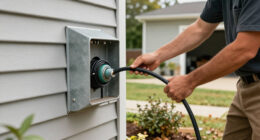
To stay safe during outages, always operate your generator outdoors in a well-ventilated area away from vents, windows, and doors. Never run it in an enclosed space to prevent dangerous carbon monoxide buildup. Keep it cool before refueling and store fuel safely outside, away from ignition sources. Use heavy-duty extension cords and avoid overloads. Regular maintenance and proper positioning reduce risks from noise, fumes, and electrical hazards. Continue exploring these safety tips for peace of mind during power outages.

Get backup power and energy gear delivered free with Prime
- Fast, free delivery on millions of items
- Prime Video, Amazon Music and more included
- Member-only deals all year
Key Takeaways
- Operate generators outdoors in well-ventilated areas, away from vents and windows to prevent carbon monoxide buildup.
- Store fuel in approved containers outside, away from ignition sources, and turn off the generator before refueling.
- Keep a fire extinguisher nearby and regularly inspect the generator for leaks, damage, or wear.
- Use heavy-duty outdoor-rated extension cords and avoid overloading appliances to prevent electrical hazards.
- Position the generator away from living spaces and neighbors, using barriers or mufflers to reduce noise pollution.
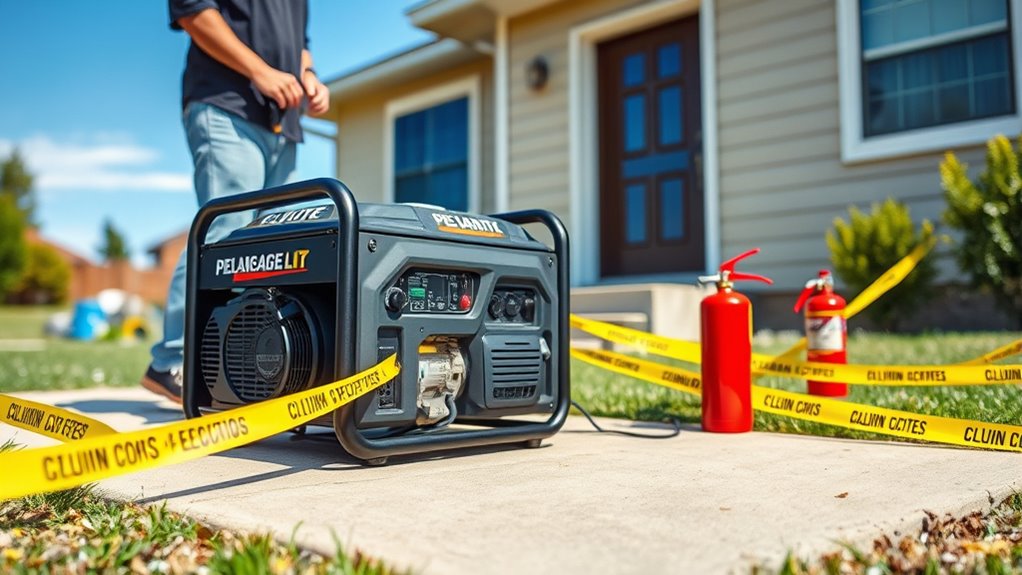
During power outages, using a generator can keep your essential appliances running, but safety must always come first. One of the most important considerations is how you manage fuel storage. You need to store fuel in approved containers, kept outside your home in a well-ventilated area, away from windows, doors, or any ignition sources. Never store large quantities of fuel indoors, as this considerably increases the risk of fire or carbon monoxide poisoning. Always check the expiration date on fuel and replace it as needed to prevent engine problems. When refueling your generator, turn it off and let it cool down first to avoid spills or accidents. Keep a fire extinguisher nearby, specifically rated for electrical or fuel fires, to respond quickly if needed.
Noise levels are another critical factor when operating a generator. Generators can be loud, often exceeding 60 decibels, which can disturb your household, neighbors, or nearby animals. To minimize noise pollution, position your generator as far from your living spaces and neighbors as possible, ideally behind a barrier like a shed or fence. This not only helps keep noise levels down but also provides an extra layer of safety by reducing exposure to exhaust fumes. Consider purchasing a generator with noise-reduction features or adding mufflers if you’re concerned about sound. Always remember that loud generators can be a nuisance, so being mindful of your surroundings helps maintain good neighborly relations and adheres to local noise ordinances.
Beyond fuel storage and noise levels, safety involves proper operation and maintenance. Never run a generator in enclosed spaces, such as garages or sheds, because the risk of carbon monoxide buildup is deadly. Always operate your generator outdoors in a well-ventilated area, away from windows and vents. Regularly inspect your generator for signs of wear, leaks, or damage, and follow the manufacturer’s instructions for maintenance. Use heavy-duty extension cords rated for outdoor use, and avoid overloading your generator by connecting too many appliances at once. When you’re done, let the generator cool before covering or storing it to prevent fire hazards. Additionally, understanding personal growth concepts like mental clarity and stress management can enhance your ability to handle emergencies calmly and effectively.
Frequently Asked Questions
Can I Run My Generator Indoors During an Outage?
You should never run your generator indoors during an outage. Indoor ventilation is inadequate, and doing so can lead to dangerous carbon monoxide risks. This deadly gas is odorless and can quickly cause poisoning, even if you don’t notice symptoms right away. Always operate your generator outside in a well-ventilated area, far from windows and doors, to keep your home safe and prevent carbon monoxide buildup.
What Type of Fuel Is Safest for Generator Use?
Imagine you’re running your generator during an outage; using gasoline is common but risky. Gasoline offers good fuel stability but increases fire risk if mishandled or stored improperly. For safer options, consider propane or natural gas, which burn cleaner, are more stable, and reduce fire hazards. Always store fuel in approved containers, keep it away from heat sources, and follow manufacturer safety instructions to prevent accidents.
How Often Should I Perform Maintenance on My Generator?
You should perform maintenance on your generator according to the manufacturer’s recommended maintenance schedule, typically every 50 to 100 hours of use or at least once a year. Regular inspection frequency includes checking oil levels, filters, and spark plugs before each use. Staying consistent with these inspections and maintenance tasks helps guarantee your generator runs smoothly, safely, and efficiently during power outages.
Is It Safe to Connect Generators Directly to My Home Wiring?
Don’t bite off more than you can chew by connecting your generator directly to your home wiring. It’s unsafe and can cause back-feeding hazards. Instead, use a transfer switch, which isolates your generator from utility lines, and make certain proper grounding requirements are met. This way, you stay safe, protect utility workers, and keep your home wiring intact. Always follow manufacturer instructions and local codes before making any connections.
What Precautions Should I Take if Using a Portable Generator Outdoors?
When using a portable generator outdoors, you should always guarantee proper ventilation to prevent carbon monoxide buildup. Place the generator at a safe distance, at least 20 feet away from your home and windows, to avoid fumes entering your living space. Keep it on a dry, flat surface and never operate it indoors or in enclosed areas. Regularly check cords and connections for damage to stay safe during use.
Conclusion
Think of your generator as a trusty steed in a storm—powerful, but needing careful handling. By following safety tips, you’re ensuring it serves you well without risking a fiery or toxic fate. Treat it like a loyal companion, respecting its strength and limits. When you do, you’ll navigate the outage safely and confidently, emerging on the other side with your home and loved ones protected—ready to face whatever comes next.
Halloween Picks
halloween
As an affiliate, we earn on qualifying purchases.