
Ensuring proper generator clearances isn’t just about meeting code; it’s about your safety, efficiency, and the longevity of your equipment. Adequate space prevents overheating, reduces fire hazards, and makes inspections easier, saving you money over time. It also helps lower noise levels and protects your surroundings. If you want your generator to run safely and last longer, understanding the full benefits of proper clearance is essential—keep going to discover all the important details.

Get backup power and energy gear delivered free with Prime
- Fast, free delivery on millions of items
- Prime Video, Amazon Music and more included
- Member-only deals all year
Key Takeaways
- Proper clearances enhance safety by reducing fire risks and allowing easier inspection and maintenance.
- Adequate space improves generator performance and fuel efficiency through better cooling and heat dissipation.
- Sufficient clearance minimizes noise transmission, creating a more comfortable environment and reducing neighbor disturbances.
- Clear access prevents debris buildup and ensures proper ventilation, extending the generator’s lifespan.
- Maintaining recommended clearances helps prevent overheating and wear, ultimately saving costs on repairs and replacements.
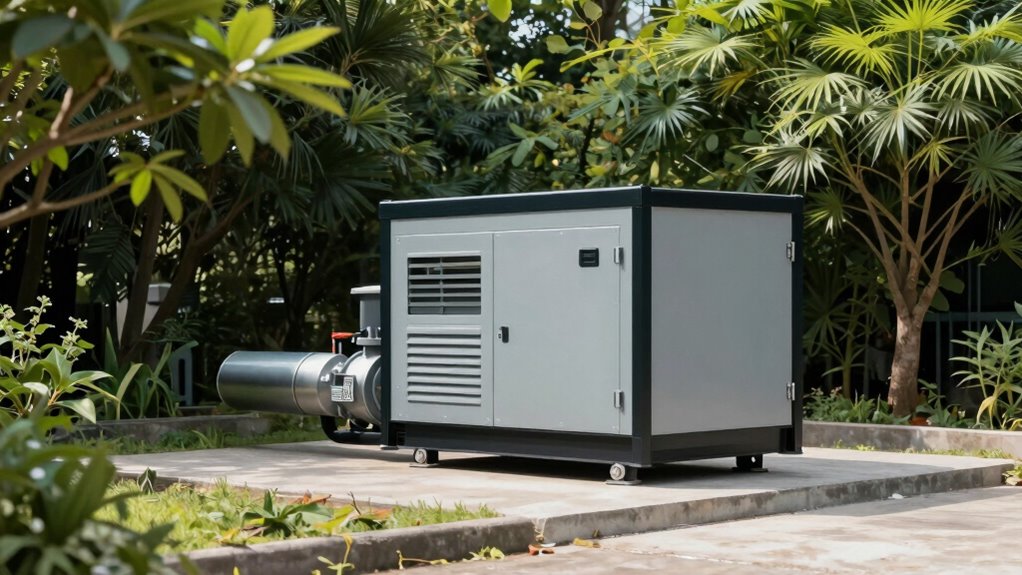
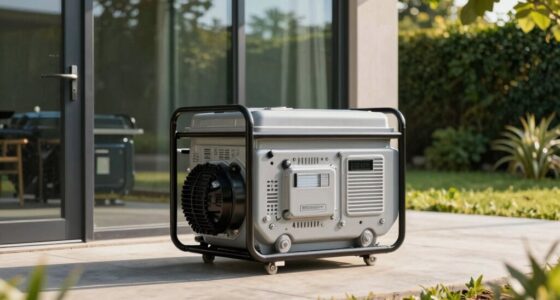
While building codes set minimum clearance requirements for generators, going beyond these standards can considerably enhance safety, performance, and longevity. You may think that meeting the basic clearance guidelines is enough, but increasing the distance around your generator offers tangible benefits. For one, it improves fuel efficiency. When your generator has ample space around it, it experiences better airflow, which helps keep it cool and operating at its best. Overheating can reduce fuel efficiency and cause unnecessary wear, ultimately leading to higher fuel consumption and more frequent maintenance. By providing extra clearance, you allow the generator to run smoothly, conserving fuel and saving you money over time. Proper clearance also promotes optimal air circulation, which is essential for maintaining consistent operating temperatures. Noise reduction is another essential factor that benefits from greater clearances. Generators produce noise during operation, and when they’re placed too close to your home or neighbors, that noise can become disruptive. Increasing the space around your generator acts as a buffer, helping to absorb and deflect sound waves. As a result, the noise levels decrease, making your environment more peaceful and reducing complaints from neighbors. This is particularly important if your generator runs frequently or during nighttime hours, where even moderate noise can disturb rest and daily life. Beyond these practical advantages, providing extra clearance also enhances safety. When a generator is too close to walls, structures, or flammable materials, the risk of fire or accidental injury increases. It is also important to consider proper ventilation when positioning your generator, as inadequate airflow can lead to dangerous fumes buildup. Ensuring sufficient clearance space allows for better heat dissipation, which can prevent overheating and potential hazards. Proper clearance can also help prevent fire hazards caused by overheating or accumulation of combustible debris. Adequate space allows for easier inspection, maintenance, and repairs, reducing the chance of mishaps. It also ensures proper ventilation, which is vital for preventing the buildup of dangerous fumes or overheating. Additionally, good airflow helps prevent the buildup of dirt and debris, which can clog vents and reduce efficiency. Proper clearance can prevent situations where sparks or heat might come into contact with combustible materials, giving you peace of mind that your setup is safer. Furthermore, increased clearance extends the lifespan of your generator. Heat and dirt are major enemies of mechanical parts, and good airflow helps prevent overheating and the accumulation of debris. With sufficient space, your generator stays cleaner and cooler, reducing wear and tear. This means fewer breakdowns and a longer operational life, saving you money on replacements and repairs.
Frequently Asked Questions
How Do Weather Conditions Affect Generator Clearance Requirements?
Weather impact and environmental factors considerably influence generator clearance requirements. Extreme temperatures, heavy snow, or high winds can cause debris buildup or pressure on units, so you need extra space for safety and maintenance. Rain and humidity may lead to corrosion, necessitating clearances that allow for proper ventilation and drainage. By considering these conditions, you guarantee your generator operates efficiently and safely, avoiding damage caused by weather-related environmental factors.
What Are the Safety Risks of Inadequate Generator Clearances?
Ignoring proper generator clearances can turn a small fire hazard into a blazing catastrophe and block your essential maintenance access, risking costly repairs or dangerous downtime. When clearance is insufficient, air circulation drops, overheating occurs, and the risk of fire skyrockets. Plus, restricted access makes routine checks nearly impossible, leaving problems unnoticed until they become emergencies. You must keep clearances adequate to prevent these hazards and guarantee safe, reliable operation.
How Do Generator Types Influence Clearance Considerations?
Generator types considerably influence clearance considerations because each has unique placement needs. For example, portable generators require ample clearance for ventilation and easy access, while standby generators need space for proper airflow and maintenance. By focusing on clearance optimization, you guarantee safe operation, prevent overheating, and facilitate maintenance. Your choice of generator type impacts how much space you need to maintain, making proper placement essential for safety and efficiency.
Are There Industry Standards Beyond Local Codes for Clearances?
You should consider industry standards beyond local codes for generator clearances, especially for maintenance accessibility and noise reduction. Organizations like the National Fire Protection Association (NFPA) and the National Electrical Manufacturers Association (NEMA) recommend clearances that promote safety and ease of service. Coincidentally, these standards often align with manufacturer guidelines, ensuring peak performance. Prioritizing these guidelines helps you maintain safety, reduce noise impact, and facilitate quick maintenance, even beyond legal requirements.
How Often Should Clearance Assessments Be Re-Evaluated?
You should re-evaluate generator clearances during regular maintenance scheduling, at least annually or whenever environmental conditions change. Frequent assessments help guarantee safety and ideal performance. By staying proactive, you reduce environmental impact and prevent potential hazards. Keep an eye on clearance conditions, especially after severe weather or site modifications, to maintain compliance and safety standards, ultimately protecting your equipment, personnel, and the environment.
Conclusion
You see, generator clearances aren’t just about ticking boxes—they’re your first line of defense against disaster. By giving your generator ample space, you’re not only complying with code but also preventing a potential catastrophe that could be as devastating as a wildfire. Think of clearances as the lifelines of safety, ensuring your home and loved ones stay protected. Don’t cut corners here; your peace of mind depends on it.
Columbus Day / Indigenous Peoples' Day Picks
long weekend sales
As an affiliate, we earn on qualifying purchases.