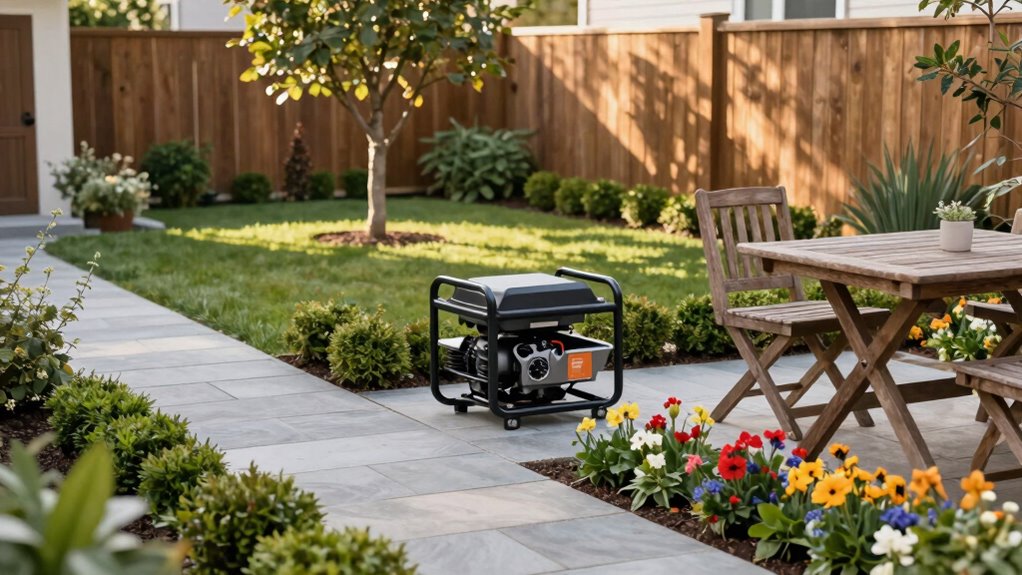

To plan generator placement in a small yard, choose a spot far from your house, windows, and doors—at least 20 feet away—to reduce noise and prevent fumes from entering your home. Use natural barriers like fences or shrubs to block sound, and make certain of proper ventilation to prevent overheating. Keep clear pathways for maintenance and follow local regulations for safety. If you want to know more about optimizing your setup, there’s plenty to take into account.

Get backup power and energy gear delivered free with Prime
- Fast, free delivery on millions of items
- Prime Video, Amazon Music and more included
- Member-only deals all year
Key Takeaways
- Place the generator at a safe, flat distance from the house and neighbors, ideally over 20 feet away.
- Use natural barriers or soundproof enclosures to minimize noise impact in limited space.
- Ensure proper ventilation and airflow to prevent overheating and comply with manufacturer guidelines.
- Position for easy access to facilitate maintenance, refueling, and emergency shut-off.
- Confirm placement adheres to local regulations, avoiding water sources and property boundaries.
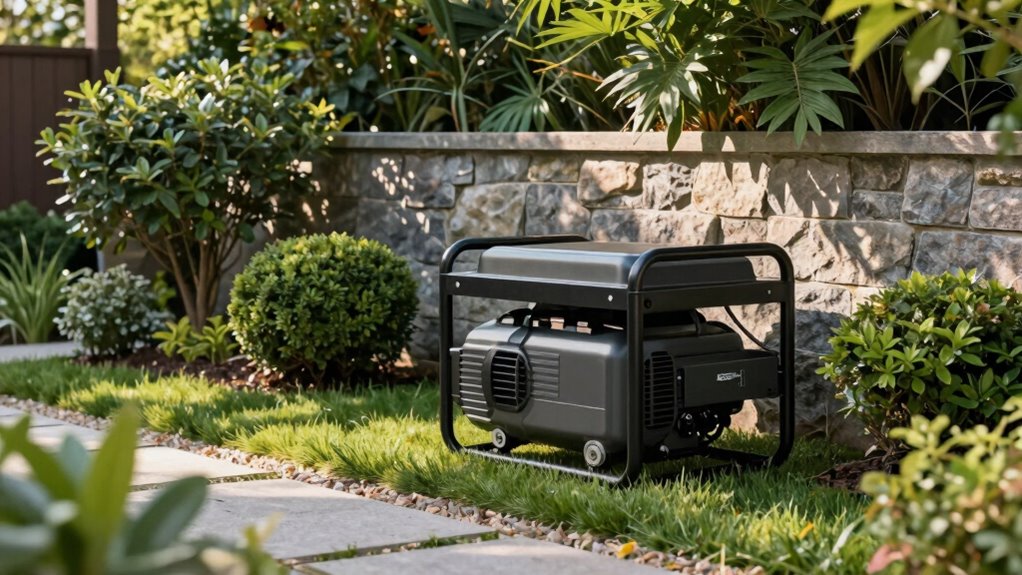
Are you wondering how to effectively place a generator in your small yard? Proper placement is key to guaranteeing safety, minimizing noise, and making the most of your limited space. First, consider noise reduction. Generators can be surprisingly loud, which might disturb your neighbors or disrupt your outdoor activities. To address this, position your generator as far away as possible from your house, outdoor seating areas, and neighboring properties. Using natural barriers like fences, shrubs, or trees can help muffle the sound further, creating a more peaceful environment. If your yard lacks natural barriers, consider investing in a soundproof enclosure designed for generators, but make sure it still allows for proper ventilation. Additionally, think about the generator’s power output to ensure it’s suitable for your needs and doesn’t require excessive space or ventilation.
Safety precautions are equally important in planning your generator placement. Always keep the generator on a flat, dry surface to prevent accidental tipping or electrical hazards. Never place it inside your garage, basement, or any enclosed space, even if it’s well-ventilated, because carbon monoxide poisoning is a real risk. Instead, position the generator outdoors, at least 20 feet away from your home, windows, and doorways to prevent harmful fumes from entering your living space. When setting it up, make certain the area is free from debris, leaves, or anything flammable that could ignite if sparks fly. Also, consider the proximity to water sources — avoid placing it near pools, hoses, or sprinklers to reduce the risk of electrical shock.
Plan for easy access to the generator for maintenance, refueling, and emergency shut-off. You’ll want a clear path that doesn’t require finding your way through tight spaces or obstacles. Keep extension cords organized and away from high-traffic areas to avoid trips or accidental disconnections. Additionally, check local regulations and manufacturer guidelines regarding safe distances and placement rules. Some areas have specific restrictions on how close generators can be to property lines or structures, so it’s best to be informed before finalizing your setup.
Frequently Asked Questions
How Do I Ensure Proper Ventilation for My Generator?
To guarantee proper ventilation for your generator, you need to install effective ventilation systems that promote good airflow and prevent dangerous exhaust buildup. Position your generator in a well-ventilated area, ideally outdoors, and keep it away from windows or vents. Focus on airflow optimization by creating open spaces around the unit and avoiding obstructions. Regularly check ventilation pathways to maintain safe operation and reduce the risk of carbon monoxide poisoning.
What Are the Noise Level Considerations in Small Yards?
You should consider noise levels when placing your generator in a small yard. To minimize disturbance, use sound insulation materials around the unit and install noise barriers like fences or screens. Position the generator away from your home and neighbors’ windows, and opt for locations with natural sound barriers like trees or shrubs. These steps help keep noise levels manageable while ensuring proper ventilation and safety.
How Close Can a Generator Be Placed to My Home?
You should place your generator at least 20 feet from your home to guarantee safety and reduce noise. Consider the fuel type, as gas-powered generators produce more fumes, requiring greater distance. Installation height matters too; elevating the generator on a sturdy platform helps prevent flooding and improves ventilation. Always follow local codes and manufacturer guidelines, and use proper exhaust routing to keep fumes away from your living space.
Are There Specific Permits Required for Generator Installation?
Yes, you need to check if permits are required for your generator installation. The permitting process varies depending on your local regulations, which you should review before starting. Typically, you’ll need to submit plans and get approval from your local building or zoning department. Failing to obtain the necessary permits can lead to fines or required removal, so it’s essential to follow the proper procedures for a safe, compliant setup.
How Can I Prevent Flooding Damage to My Generator?
To prevent flooding damage to your generator, you should elevate it above potential flood levels and guarantee proper drainage around the area. Store fuel safely in approved containers away from water sources. Keep a consistent maintenance schedule to check for corrosion or water intrusion, and consider installing a sump pump or gravel base for added protection. These steps help safeguard your generator and keep it operational during floods.
Conclusion
Remember, your small yard is like a garden waiting to flourish—carefully choosing where to place your generator is like planting a seed of preparedness. By thoughtfully positioning it, you nurture safety and efficiency, allowing your space to thrive without chaos. When you see your yard as a living thing, every decision takes on new significance. With patience and intention, you cultivate a safe haven that withstands life’s storms, turning your yard into a symbol of resilience and hope.
Columbus Day / Indigenous Peoples' Day Picks
long weekend sales
As an affiliate, we earn on qualifying purchases.