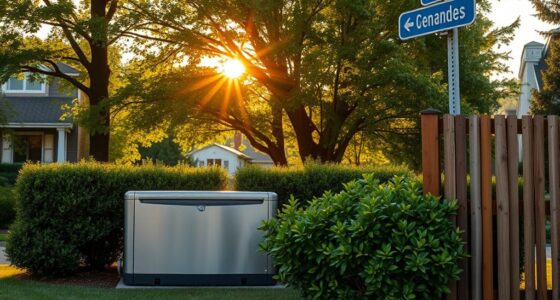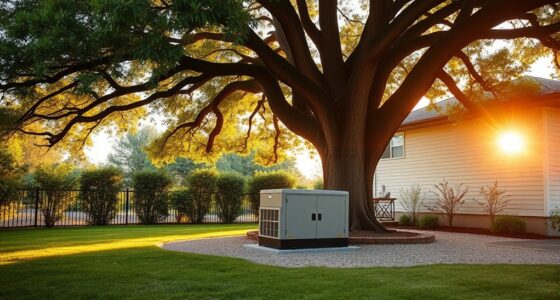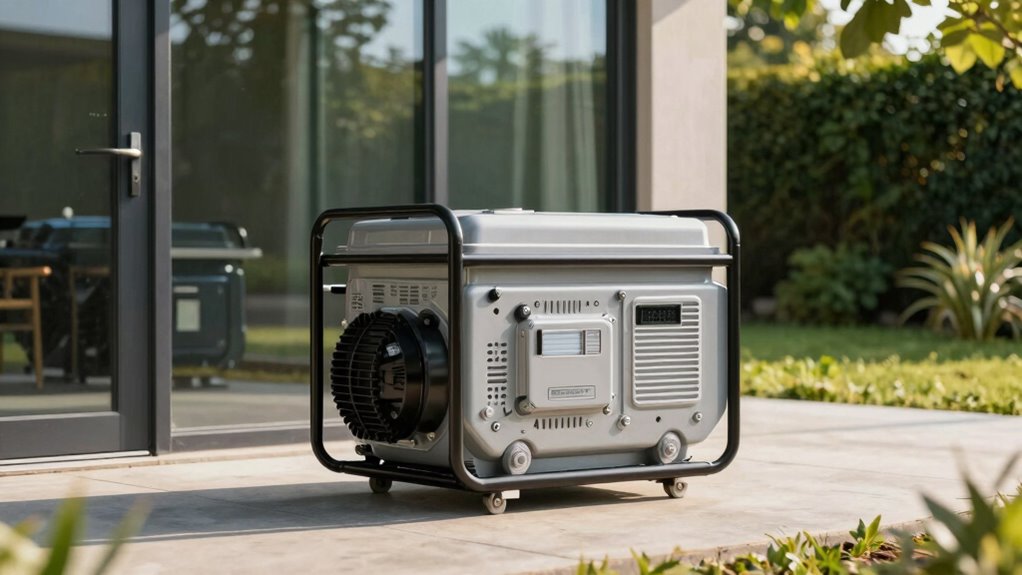

For safety and comfort, position your generator at least 10 to 20 feet away from doors and windows. Keeping it farther away helps reduce noise that can bother your home and neighbors. It also minimizes the risk of exhaust gases entering your living space, especially if wind blows fumes back toward the house. Proper placement guarantees safe operation and less disturbance. If you want to learn more about ideal setup and safety tips, keep exploring these guidelines.
Key Takeaways
- Position the generator at least 10 to 20 feet away from doors and windows to reduce noise and prevent exhaust entry.
- Keep the generator outside, maintaining a minimum of 20 feet from building openings to ensure proper ventilation and safety.
- Consider wind direction when placing the generator to blow exhaust gases away from doors, windows, and occupied areas.
- Check manufacturer guidelines and local regulations for specific distance recommendations for safety compliance.
- Balance safety and accessibility by placing the generator far enough to prevent hazards but close enough for convenient power access.
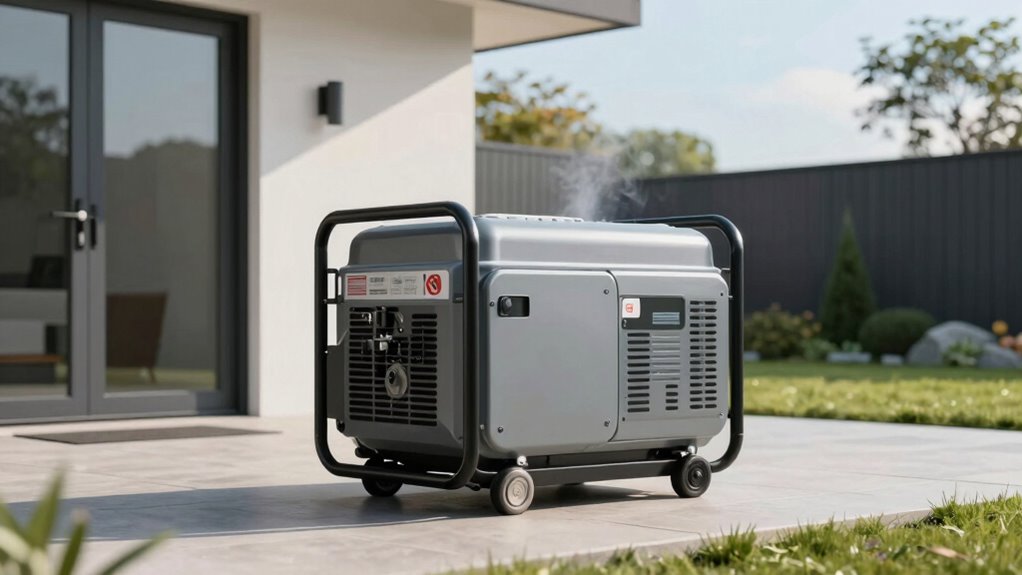
Have you ever wondered how close a generator can safely be placed to doors and windows? The answer isn’t one-size-fits-all, but understanding some key factors can help you make the right decision. The main considerations include noise levels and ventilation requirements, both of which greatly influence the safe distance you should maintain. Generators produce a considerable amount of noise, which can become a nuisance or even a health concern if placed too close to living or working spaces. To minimize noise disturbance, it’s best to position your generator at least 10 to 20 feet away from doors and windows, especially if it’s a loud model. If noise levels are a concern, consider choosing a quieter, inverter-type generator, which can often be placed closer without causing disruption. Still, even with quieter models, maintaining a safe distance helps ensure that the sound doesn’t penetrate indoor spaces or bother neighbors.
Ventilation requirements are equally critical. Generators emit exhaust gases that contain harmful substances like carbon monoxide, which can quickly accumulate in enclosed or poorly ventilated areas. To prevent the risk of poisoning, you must keep your generator outside and well away from any openings—doors, windows, vents—that lead into your home or building. The general rule is to position the generator at least 20 feet away, with the exhaust directed away from any openings. Proper ventilation not only protects your health but also ensures efficient operation of the generator, as overheating or carbon monoxide buildup can impair performance or cause damage. If you’re working in a space where airflow is restricted, increasing the distance even further is prudent. Additionally, recent advancements in AI-powered safety systems can help monitor exhaust emissions and alert you if levels become unsafe, adding an extra layer of protection. It’s also important to be aware of local regulations that may specify minimum distances for safety compliance.
Furthermore, considering wind direction during placement can significantly influence how both noise and exhaust gases travel, helping to protect your property and neighbors from potential hazards. Additionally, local regulations or manufacturer guidelines may specify minimum distances based on the generator’s size, capacity, and noise output. Always check these recommendations before installation. Remember that wind direction can influence how exhaust gases and noise travel; positioning the generator so that wind blows exhaust away from your home and noise away from neighbors can make a big difference. Ultimately, balancing noise levels and ventilation requirements involves positioning your generator thoughtfully—far enough away to keep noise and exhaust at safe levels, but close enough to access power conveniently. Taking these precautions not only protects your health and peace but also ensures your generator operates efficiently and safely over the long term.

Porch Shield Waterproof Universal Generator Cover 32 x 24 x 24 inch - for Most Generators 5000-10000 Watt, Black
Compatible - More sizes for 5000w -10000w gas generator or inverter generator.
As an affiliate, we earn on qualifying purchases.
Frequently Asked Questions
Can Generators Be Safely Installed Indoors?
Generators shouldn’t be installed indoors because poor indoor ventilation can lead to dangerous carbon monoxide buildup. You need proper ventilation to guarantee fumes escape safely. Also, consider noise mitigation; indoor installation can amplify noise, disturbing your space. If you must set up a generator indoors temporarily, ensure it’s in a well-ventilated area, away from doors and windows, and use carbon monoxide detectors to keep everyone safe.
What Are the Legal Regulations for Generator Placement?
Think of legal regulations for generator placement as a dance you must follow precisely. You should keep your generator outdoors, away from doors and windows, respecting local codes that often specify minimum distances. Proper fuel storage is essential for safety, and noise reduction measures help minimize disturbance. Always check your local laws, as they guide safe placement, ensuring you’re compliant and protecting your home and neighbors.
How Does Weather Affect Generator Placement Recommendations?
Weather impact heavily influences your generator placement considerations. In rainy or snowy conditions, you should position the generator in a sheltered spot to prevent water damage and guarantee proper ventilation. Extreme cold can affect its operation, so placing it in a warmer, protected area helps. Additionally, avoid placing it in windy locations to prevent debris from causing damage or blockages. Proper placement mitigates weather effects and ensures reliable operation.
Are There Specific Distance Guidelines for Residential vs. Commercial Generators?
Yes, there are specific distance guidelines for residential versus commercial generators. Residential generators should be placed at least 18-20 feet from doors and windows to minimize noise and meet ventilation requirements, ensuring safety and comfort. Commercial generators often require greater distances, typically 25-30 feet, due to higher noise levels and ventilation needs. Always check local codes and manufacturer recommendations to determine the appropriate placement for your specific generator type.
What Safety Measures Should Be Taken During Generator Installation?
During generator installation, you should prioritize safety by securing proper clearance and guaranteeing safe generator maintenance. For example, a homeowner installed their generator too close to the house, causing noise complaints and safety hazards. To prevent this, maintain appropriate distance, use noise control barriers, and regularly inspect and service your generator. Always follow manufacturer guidelines and local codes to ensure safety and efficient operation.
Porch Shield Waterproof Universal Generator Cover 38 x 28 x 30 inch - for Most Generators 5500-15000 Watt, Black
Compatible - More sizes for 5500w -15000w gas generator or inverter generator.
As an affiliate, we earn on qualifying purchases.
Conclusion
To guarantee safety and good ventilation, keep your generator at least 20 feet away from doors and windows. For example, imagine a homeowner who placed their generator just 10 feet from their living room window; carbon monoxide seeped inside during use, creating a dangerous situation. By maintaining the recommended distance, you prevent such hazards, safeguarding your family’s health. Remember, a little extra space today can prevent serious risks tomorrow.

GenArmor Generator Covers While Running, 100% Waterproof Heavy Duty Tarps Generator Tent, Portable Outdoor Generator Enclosure for Most 4000w~13000w Generators, Black, Standard
100% Waterproof Protection: A patented innovation from GenArmor independent design lab, ensuring the safety of your generator covers...
As an affiliate, we earn on qualifying purchases.

Hudson Generator Box, SD Aluminum Generator Enclosure with Ventilation, Heat Dissipation & Reduce Noise, Accommodates The Maximum Size of 39.4"x32"x31.7", White
【Efficient Ventilation, Goodbye Overheating】Still dealing with your generator overheating during long hours of operation? Our generator enclosure features...
As an affiliate, we earn on qualifying purchases.