For most households seeking a portable power station for home backup, I’d start with the BLUETTI Elite 100 V2: its 1,024Wh capacity and 1,800W output offer a useful balance for essential devices, while the EcoFlow Delta 3 Classic is another strong mid-size option and the Jackery HomePower 3600 Plus suits buyers who need much more stored energy. The main tradeoff is straightforward: compact units cost you runtime and appliance support, while larger stations are heavier and take more room. Battery capacity, continuous output, recharge options, and the loads you plan to run matter more than a single headline wattage. Read on for the full breakdown, including which models fit short outages, longer backup needs, and smaller budgets.

Get backup power and energy gear delivered free with Prime
- Fast, free delivery on millions of items
- Prime Video, Amazon Music and more included
- Member-only deals all year
Complete the kit


Key Takeaways
The 1,024Wh class is the clearest middle ground. The BLUETTI Elite 100 V2 and EcoFlow Delta 3 Classic pair that capacity with 1,800W output, giving them more household usefulness than the compact sub-300Wh models without the size commitment of multi-kilowatt-hour stations.
Capacity changes the job a station can do. The MARBERO M82’s 88Wh is suited to small electronics, while the Jackery HomePower 3600 Plus lists 3,584Wh and 3,600W for longer, heavier backup needs; these are not interchangeable choices.
LiFePO4 appears across several compact picks. The ALLWEI 300W, DaranEner 192Wh, and BLUETTI Elite 30 V2 list this battery chemistry, but their capacities and output still differ enough to affect runtime and supported loads.
A solar panel bundle is not the same as a complete backup plan. The ZeroKor and Jackery Solar Generator 1000 V2 include panels, but real-world solar recovery depends on sunlight, placement, and charging limits; grid charging and load planning still matter.
Large capacity and high output solve different problems. The BLUETTI Elite 300 lists 3,014Wh, while the Anker SOLIX S2000 lists 2,010Wh and 1,500W. Buyers should check both stored energy for runtime and output for whether a chosen appliance can start and run.
| MARBERO M82 Portable Power Station, 88Wh, 120W Surge |  | Best Compact Emergency Backup | Capacity: 88Wh | Output wattage: 80W | Surge wattage: 120W | VIEW LATEST PRICE | See Our Full Breakdown |
| ZeroKor 300W Portable Power Station with 60W Solar Panel | 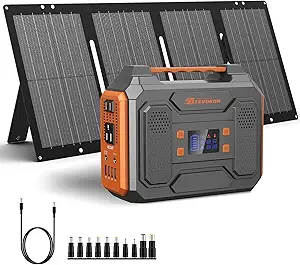 | Best Solar-Inclusive Starter Kit | Power station output: 300W | Solar panel output: 60W | Solar panel type: Monocrystalline | VIEW LATEST PRICE | See Our Full Breakdown |
| ALLWEI 300W Portable Power Station, 256Wh LiFePO4 Battery |  | Best for Longer-Life Small Backup | Battery capacity: 256Wh | Battery type: LiFePO4 (LFP) | Continuous output: 300W | VIEW LATEST PRICE | See Our Full Breakdown |
| DaranEner 192Wh Portable Power Station with LiFePO4 Battery |  | Best for Sensitive Small Electronics | Capacity: 192Wh | Battery type: LiFePO4 | AC output: 300W, 600W surge | VIEW LATEST PRICE | See Our Full Breakdown |
| Portable Power Station, 500W, 519.48Wh |  | Best Higher-Capacity Compact Home Backup | Capacity: 519.48Wh | AC output: 500W, two 110V pure sine wave outlets | Total output ports: 10 | VIEW LATEST PRICE | See Our Full Breakdown |
| BLUETTI Elite 30 V2 Portable Power Station, 288Wh, 600W |  | Best Compact UPS Backup | Capacity: 288Wh | Continuous output: 600W | Power Lifting Mode: Up to 1500W | VIEW LATEST PRICE | See Our Full Breakdown |
| LIBRIDS 640Wh Portable Power Station with 600W Output |  | Best Mid-Size LiFePO₄ Value | Capacity: 640Wh | Battery type: LiFePO₄ | Running output: 600W | VIEW LATEST PRICE | See Our Full Breakdown |
| BLUETTI Elite 100 V2 Portable Power Station, 1024Wh, 1800W |  | Best Quiet, Portable Home Backup | Battery capacity: 1024Wh | Battery type: LiFePO₄ | AC output: 1800W | VIEW LATEST PRICE | See Our Full Breakdown |
| EcoFlow Portable Power Station Delta 3 Classic 1024Wh 1800W AC |  | Best for Fast-Recharging Essentials | Battery capacity: 1024Wh | Battery type: LiFePO₄ | Continuous output: 1800W | VIEW LATEST PRICE | See Our Full Breakdown |
| Jackery HomePower 3600 Plus Portable Power Station, 3584Wh, 3600W |  | Best for Extended Home Backup | Battery capacity: 3584Wh | AC output: 3600W | Parallel output: 7200W | VIEW LATEST PRICE | See Our Full Breakdown |
| Jackery Explorer 300 Portable Power Station, 292Wh |  | Best Compact Pick | Capacity: 292Wh | Battery chemistry: LiFePO4 | Peak surge: 600W | VIEW LATEST PRICE | See Our Full Breakdown |
| BLUETTI Elite 300 Portable Power Station, 3014Wh |  | Best for Long-Run Home Backup | Battery capacity: 3,014Wh | Battery type: LiFePO4 | Cycle life: 6,000+ cycles | VIEW LATEST PRICE | See Our Full Breakdown |
| Anker SOLIX S2000 Portable Power Station, 2,010 Wh, 1,500 W |  | Best for Multiple Devices | Battery capacity: 2,010Wh | Battery type: LiFePO4 | Battery cycles: Up to 10,000 | VIEW LATEST PRICE | See Our Full Breakdown |
| Jackery Explorer 1000 v2 Portable Power Station |  | Best Mid-Capacity Balance | Battery capacity: 1,070Wh | Battery type: LFP | AC output: 1,500W | VIEW LATEST PRICE | See Our Full Breakdown |
| Jackery Solar Generator 1000 V2 with 200W Solar Panel |  | Best Solar-Ready Bundle | Battery capacity: 1,070Wh | Battery type: LFP | AC output: 1,500W | VIEW LATEST PRICE | See Our Full Breakdown |
| portable power stations for home backup | Weight | Battery type | Battery capacity |
|---|---|---|---|
| MARBERO M82 Portable Power Sta | 3.2 lbs | — | — |
| ZeroKor 300W Portable Power St | — | — | — |
| ALLWEI 300W Portable Power Sta | 6.4 lbs | LiFePO4 (LFP) | 256Wh |
| DaranEner 192Wh Portable Power | 5.73 lbs | LiFePO4 | — |
| Portable Power Station | 18 lbs | — | — |
| BLUETTI Elite 30 V2 Portable P | About 9.5 pounds | — | — |
| LIBRIDS 640Wh Portable Power S | — | LiFePO₄ | — |
| BLUETTI Elite 100 V2 Portable | 25 pounds | LiFePO₄ | 1024Wh |
| EcoFlow Portable Power Station | — | LiFePO₄ | 1024Wh |
| Jackery HomePower 3600 Plus Po | 77.2 pounds | — | 3584Wh |
| Jackery Explorer 300 Portable | 7.1 lb listed in specifications; approximately 7.5 lb in description | — | — |
| BLUETTI Elite 300 Portable Pow | 58 lb | LiFePO4 | 3,014Wh |
| Anker SOLIX S2000 Portable Pow | 35.7 lb | LiFePO4 | 2,010Wh |
| Jackery Explorer 1000 v2 Porta | 23.8 lb | LFP | 1,070Wh |
| Jackery Solar Generator 1000 V | 23.8 lb | LFP | 1,070Wh |
More Details on Our Top Picks
MARBERO M82 Portable Power Station, 88Wh, 120W Surge
The MARBERO M82 is best understood as a small device-charging reserve, not a way to run household appliances through an outage. Its 88Wh capacity and 80W output suit phones, a laptop within the output limit, and other low-draw electronics; eight ports make it easier to keep several devices connected. At 3.2 pounds, it is much easier to grab and move than the 18-pound, 519.48Wh power station in this lineup. That portability comes with a clear limit: it has far less stored energy and power than the ALLWEI 300W model, so it is a poor match for longer outages or a CPAP setup that needs extended runtime. I’d choose it for brief backup and light loads, with the SOS-capable light as a useful extra rather than a substitute for capacity.
Pros:- Light 3.2-pound body with an ergonomic handle is easy to move or store.
- Eight output ports allow several small devices to connect at once.
- Built-in three-level LED light includes an SOS mode.
- Battery management and automatic shutoff protections are included.
Cons:- 88Wh capacity is limited for extended home backup.
- 80W output rules out most appliances and higher-draw equipment.
- Solar charging requires a compatible panel.
Best for: People who want a lightweight emergency option for keeping phones and other low-wattage devices powered during brief outages.
Not ideal for: Households seeking to run appliances, support several devices for long periods, or power equipment that draws more than 80W.
- Capacity:88Wh
- Output wattage:80W
- Surge wattage:120W
- Output ports:8
- Weight:3.2 lbs
- Dimensions:6.5 x 4.6 x 3.1 inches
- Charging:AC, battery, and solar powered
- LED light runtime:Up to 68 hours
Our verdict“Choose the M82 for a compact reserve for phones and other small electronics, not for appliance backup or long outages.”
ZeroKor 300W Portable Power Station with 60W Solar Panel
The ZeroKor’s main advantage over the ALLWEI 300W and DaranEner 192Wh is straightforward: it includes a 60W monocrystalline solar panel, so buyers get a charging option in the box rather than sourcing one separately. Its 300W AC limit fits small electronics and modest loads, while AC, DC, and USB outputs offer flexibility for a basic outage kit. It can also recharge from a wall outlet or 12V car outlet, which gives buyers alternatives when solar conditions are poor. The biggest gap in the product information is its unspecified battery capacity; without that figure, it’s hard to estimate how long it will run a device or compare its backup endurance with models that list capacity. I’d favor it for buyers who value an included panel, but the panel’s junction box is not waterproof and the 300W ceiling excludes high-draw appliances.
Pros:- Includes a 60W monocrystalline solar panel.
- Recharges from an AC outlet, compatible solar panel, or 12V car outlet.
- Offers AC, DC, USB-A, and quick-charge USB outputs.
- Built-in light has reading and SOS modes, with multiple battery protections.
Cons:- Battery capacity is not specified, making runtime difficult to judge.
- 300W maximum output rules out higher-power appliances.
- Solar panel junction box is not waterproof.
Best for: First-time backup buyers who want a small 300W power station and a compatible solar panel included as a starting kit.
Not ideal for: Buyers who need predictable runtime for an outage plan, high-wattage appliances, or outdoor solar charging where the panel junction box may get wet.
- Power station output:300W
- Solar panel output:60W
- Solar panel type:Monocrystalline
- Solar conversion efficiency:20.5%
- AC outlets:2, 300W maximum
- USB ports:3, up to 5V/3A
- DC output:9V–12.6V, 10A maximum
- Recharging options:AC outlet, compatible 13V–23V solar panel, or 12V car outlet
Our verdict“Pick the ZeroKor if an included solar panel matters more than having a clearly stated battery capacity or higher appliance output.”
ALLWEI 300W Portable Power Station, 256Wh LiFePO4 Battery
The ALLWEI pairs a 256Wh LiFePO4 battery with 300W continuous output, giving it a more useful balance of stored energy and portability than the 88Wh MARBERO M82. Its battery is rated for 3,000 charge cycles, which favors repeat use over a unit chosen only for occasional emergency storage. A 60W USB-C PD port, car outlet, and other connections help cover a small mix of electronics; the stated ability to support CPAP machines still depends on the device’s draw and the required runtime. The tradeoff is that this remains a compact power station, not a household appliance backup: 300W continuous output limits what it can run, and the solar panel is sold separately. Unlike the ZeroKor, it specifies battery capacity, making runtime planning more grounded, though buyers must provide their own panel for solar charging.
Pros:- 256Wh capacity is substantially larger than the MARBERO M82’s 88Wh.
- LiFePO4 battery is rated for 3,000 charge cycles.
- Supports AC, car, solar, and combined AC-plus-solar charging.
- 60W USB-C PD output and multiple ports support a range of small electronics.
Cons:- 300W continuous output is too low for many household appliances.
- Solar panel is sold separately.
- Only one AC outlet is provided.
Best for: Buyers who want a portable, repeat-use backup for electronics and compatible low-draw devices, with a stated LiFePO4 cycle rating.
Not ideal for: Households needing to run high-power appliances or wanting a solar panel included with the power station.
- Battery capacity:256Wh
- Battery type:LiFePO4 (LFP)
- Continuous output:300W
- Peak output:600W
- AC outlets:1
- USB-C PD output:60W
- Weight:6.4 lbs
- AC recharge time:3.5–4 hours
- Solar recharge time:4–5 hours with a 100W panel
Our verdict“Choose the ALLWEI for a portable, cycle-rated backup with clearly stated capacity, provided your loads stay within 300W.”
DaranEner 192Wh Portable Power Station with LiFePO4 Battery
The DaranEner is a compact pick for buyers who value pure sine wave AC output and a long stated battery cycle life more than maximum stored energy. Its 300W output and 600W surge rating are in the same general output class as the ALLWEI 300W, but the DaranEner offers two AC outlets and a 60W USB-C PD port. That can make it easier to connect a small mix of devices without relying on adapters. Its 192Wh capacity is lower than the ALLWEI’s 256Wh, so it gives up some runtime despite a 3,500+ cycle rating. At 5.73 pounds, it remains easy to move around the home, but its output will not run high-draw appliances such as hair dryers or mini-fridges. Solar panels and car charging cables are also not included, so its multiple recharge options may require extra gear.
Pros:- Pure sine wave AC output suits compatible sensitive electronics.
- LiFePO4 battery is rated for 3,500+ cycles.
- Two AC outlets and multiple USB and DC outputs support up to six devices.
- 5.73-pound design includes a four-mode LED light with SOS.
Cons:- 192Wh capacity is lower than the ALLWEI 300W’s 256Wh.
- 300W output cannot run high-power appliances such as hair dryers or mini-fridges.
- Solar panels and car charging cables are not included.
Best for: People seeking a lightweight backup for sensitive electronics and several small devices, with pure sine wave AC and a stated LiFePO4 cycle life.
Not ideal for: Buyers who need more than 300W of continuous output, longer runtime than 192Wh can provide, or included solar and car-charging accessories.
- Capacity:192Wh
- Battery type:LiFePO4
- AC output:300W, 600W surge
- AC outlets:2
- USB-C output:60W PD
- USB-A outputs:2, up to 18W QC3.0 each
- Maximum simultaneous devices:6
- Weight:5.73 lbs
- Solar input:Up to 60W DC
Our verdict“Pick the DaranEner for portable, small-device backup with pure sine wave AC, but choose a higher-capacity model for longer runtimes.”
Portable Power Station, 500W, 519.48Wh
With 519.48Wh of capacity and a 500W pure sine wave inverter, this station is the strongest fit here for buyers who want to keep more small devices running or extend backup beyond what the 192Wh DaranEner can offer. Ten output ports, including USB-C PD, QC 3.0 USB-A, a car port, and wireless charging, make it useful for a crowded set of personal electronics. The added capacity comes with a real portability cost: at 18 pounds, it is far heavier than the ALLWEI or DaranEner. Its 500W ceiling still excludes appliances with higher rated draw, and the solar panel must be bought separately. The listed runtime is one hour, but actual runtime will depend on the connected load; I would not treat that figure as a guarantee for every setup. This is a step up in capacity, not whole-home backup.
Pros:- 519.48Wh capacity exceeds the smaller ALLWEI and DaranEner models.
- 500W pure sine wave inverter supports a wider range of modest loads than 300W units.
- Ten output ports include USB-C PD, QC 3.0 USB-A, DC, car, and wireless charging.
- Can recharge from a wall outlet, car charger, or compatible solar panel.
Cons:- 18-pound weight is substantially heavier than the other compact options here.
- Devices rated above 500W are outside its output limit.
- Solar panel is not included, and AC output may drain the battery when left on without a load.
Best for: Households wanting more stored energy than the 192Wh and 256Wh options provide for several small devices and modest loads.
Not ideal for: People prioritizing a lightweight grab-and-go unit, needing to run appliances above 500W, or expecting solar charging without buying a panel separately.
- Capacity:519.48Wh
- AC output:500W, two 110V pure sine wave outlets
- Total output ports:10
- USB-C output:PD, up to 60W
- USB-A outputs:3 QC 3.0 ports, up to 18W each
- Wireless charging:9V/1.1A, 10W
- Weight:18 lbs
- Wall recharge time:6–7 hours
- Recharge methods:Wall outlet, car charger, or compatible 100W or 200W solar panel
Our verdict“Choose this model if higher capacity and varied ports outweigh its 18-pound weight and 500W appliance limit.”
BLUETTI Elite 30 V2 Portable Power Station, 288Wh, 600W
The Elite 30 V2 suits buyers who want backup for a router, phone, or a few small essentials without storing a heavy unit. At about 9.5 pounds, it is easier to move and put away than the LIBRIDS 640Wh, though its 288Wh capacity means shorter runtimes and less flexibility during a long outage. Its up-to-10ms UPS transfer time can keep compatible essentials running through a brief interruption, while fast AC charging helps replenish the small battery between outages. The 600W continuous rating covers modest loads; the advertised 1500W is available only in Power Lifting Mode, so I would not treat it as ordinary output for demanding appliances. This is a portable, limited-runtime backup choice, not a substitute for a larger home battery.
Pros:- Lightweight 9.5-pound body is easy to move and store
- UPS transfer time of up to 10ms supports brief interruptions for essential electronics
- Can reach 80% charge in 45 minutes using AC
- AC, solar, car, lead-acid, and generator charging options
Cons:- 288Wh capacity provides limited runtime for home backup
- 1500W Power Lifting Mode is not the same as 1500W continuous output
- 600W continuous output excludes many demanding appliances
Best for: Apartment dwellers who want a lightweight UPS for a router, phones, and other low-power essentials.
Not ideal for: Households seeking hours of refrigerator backup or power for high-wattage appliances; its 288Wh capacity and 600W continuous output are limiting.
- Capacity:288Wh
- Continuous output:600W
- Power Lifting Mode:Up to 1500W
- Weight:About 9.5 pounds
- Total outlets:9
- AC charging:Up to 380W
- AC charge time:0–80% in 45 minutes; 0–100% in 70 minutes
- UPS transfer time:Up to 10ms
Our verdict“Choose the Elite 30 V2 for portable backup of small essentials, but pick the LIBRIDS 640Wh or a 1024Wh model for longer outage coverage.”
LIBRIDS 640Wh Portable Power Station with 600W Output
The LIBRIDS 640Wh offers a useful middle ground for buyers who need more reserve than the 288Wh BLUETTI Elite 30 V2 but do not want to step up to the 1024Wh BLUETTI Elite 100 V2. Its LiFePO₄ battery rated for 4000+ cycles and 10ms UPS make it a reasonable fit for recurring short outages and everyday electronics. Four AC outlets and eight total output ports also give it room to support several modest loads at once. The tradeoff is its 600W running limit: capacity alone does not make it suitable for high-draw appliances. Its metal enclosure is specified for dry conditions only, so I would keep it indoors and away from rain or moisture. AC charging takes about 1.5 hours, but its stated output remains a step below larger backup options.
Pros:- 640Wh capacity provides more reserve than the 288Wh Elite 30 V2
- LiFePO₄ battery rated for 4000+ cycles
- 10ms UPS switching and pure sine wave output suit sensitive electronics
- AC charging takes about 1.5 hours
Cons:- 600W running output limits appliance choices
- Not suitable for rain or moisture
- No stated expansion option for extending capacity
Best for: Households wanting a mid-size battery for routers, laptops, lighting, and several small devices during short outages.
Not ideal for: Buyers who need to run high-wattage appliances, or anyone planning to use a power station outdoors in wet conditions.
- Capacity:640Wh
- Battery type:LiFePO₄
- Running output:600W
- Surge output:1200W
- AC outlets:4
- Total output ports:8
- AC charging time:About 1.5 hours
- UPS switching time:10ms
Our verdict“Pick the LIBRIDS for moderate, dry-location backup of small electronics; choose a 1024Wh model when longer runtime or greater output matters more.”
BLUETTI Elite 100 V2 Portable Power Station, 1024Wh, 1800W
With 1024Wh of capacity and 1800W AC output, the Elite 100 V2 is a stronger home-backup candidate than the smaller BLUETTI Elite 30 V2: it can support a broader range of essential loads and has more stored energy for an outage. Its 25-pound weight and 30dB silent mode make it more manageable in a living space than the 77.2-pound Jackery HomePower 3600 Plus, though it cannot match that model’s much larger reserve or 3600W output. Rapid AC charging to 80% in about 45 minutes helps when outages are intermittent, and the 10ms UPS function suits connected essentials. I would still plan loads carefully: 1024Wh is not whole-home storage, and vehicle fast charging requires a separate BLUETTI Charger 1. Product information also lists conflicting surge and power-lifting figures, so I would rely on the stated 1800W rating when sizing appliances.
Pros:- 1024Wh capacity and 1800W AC output cover more than compact backup units
- Reaches 80% charge in about 45 minutes via AC
- 10ms UPS switchover supports backup for connected essentials
- 25-pound design with a 30dB silent mode is easier to live with indoors than a large wheeled unit
Cons:- 1024Wh is limited for prolonged or whole-home backup
- Vehicle fast charging requires a separate BLUETTI Charger 1
- Product information gives conflicting surge and power-lifting output figures
Best for: People who need a movable, relatively quiet backup for essential household devices and value fast recharge over whole-home capacity.
Not ideal for: Households seeking multi-day appliance backup, 240V operation, or clear, consistent surge and power-lifting specifications.
- Battery capacity:1024Wh
- Battery type:LiFePO₄
- AC output:1800W
- Weight:25 pounds
- Charging time:About 45 minutes to 80% via AC
- UPS switchover:10ms
- Silent mode noise:30dB
- Battery life:Over 4000 cycles to 80%
- Connectivity:Wi-Fi and Bluetooth
Our verdict“Choose the Elite 100 V2 for quiet, portable backup of selected essentials, not for the extended runtime or 240V capability of the Jackery HomePower 3600 Plus.”
EcoFlow Portable Power Station Delta 3 Classic 1024Wh 1800W AC
The DELTA 3 Classic pairs 1024Wh of storage with 1800W continuous output, making it a more capable appliance backup choice than the 600W LIBRIDS 640Wh. Its 3600W surge rating gives it headroom for startup surges, while X-Boost is listed to raise expandable output to 2600W; I would distinguish that feature from the standard continuous rating when checking appliance requirements. AC charging to 80% in 45 minutes and a sub-10ms UPS response are useful when power interruptions are brief or unpredictable. Optional solar charging is listed at about 2.5 hours with a 500W panel, but the panel is not included in the stated product details. Compared with the BLUETTI Elite 100 V2, this is a similarly sized capacity-and-output class, so ecosystem compatibility may matter: it does not work with Delta 2 or Delta 3 Series Smart Extra Batteries.
Pros:- 1800W continuous output with 3600W surge capacity
- AC charging reaches 80% in 45 minutes
- Sub-10ms UPS response supports connected sensitive electronics
- Optional 500W solar panel can recharge the unit in about 2.5 hours
Cons:- Not compatible with Delta 2 or Delta 3 Series Smart Extra Batteries
- Solar panels are optional, adding a separate requirement for solar recharging
- X-Boost output should not be confused with the 1800W continuous rating
Best for: Households that need 1800W-class backup, fast AC replenishment, and app control for selected appliances and electronics.
Not ideal for: Owners of Delta 2 or Delta 3 Series Smart Extra Batteries, or buyers who expect solar panels to be included.
- Battery capacity:1024Wh
- Battery type:LiFePO₄
- Continuous output:1800W
- Surge power:3600W
- X-Boost output:Up to 2600W
- AC charging time:0–80% in 45 minutes
- UPS switch time:Less than 10ms
- Solar recharge time:About 2.5 hours with an optional 500W panel
- App control:Yes
Our verdict“Choose the DELTA 3 Classic for fast-recharging 1800W-class backup, unless you need compatibility with EcoFlow’s listed Smart Extra Batteries.”
Jackery HomePower 3600 Plus Portable Power Station, 3584Wh, 3600W
The Jackery HomePower 3600 Plus is the clear capacity step-up in this group: its 3584Wh battery and 3600W output dwarf the 1024Wh BLUETTI Elite 100 V2 and EcoFlow DELTA 3 Classic. That extra reserve and output make it better suited to keeping more household essentials running, while expandability up to 21kWh per unit gives buyers a route to longer backup. It also supports 120V and, when units are connected in parallel, 240V operation—useful for a more capable setup than a single compact station. The tradeoff is portability: at 77.2 pounds, this is a wheeled unit to roll rather than a battery to carry. It has only two outlets, and solar panels are optional. I would shortlist it for planned home backup, not quick-moving or minimalist use.
Pros:- 3584Wh capacity and 3600W output exceed the two 1024Wh models in this group
- Expandable capacity up to 21kWh per unit
- Supports 120V and 240V operation when units are connected in parallel
- Wheels and telescopic handle help move the 77.2-pound unit
Cons:- 77.2-pound weight makes it impractical to carry
- Only two outlets are listed
- Solar panels are optional
Best for: Homeowners planning longer outages who want high output, expandable storage, and the option of 240V operation with parallel units.
Not ideal for: Renters or buyers who need a lightweight station to carry between rooms, or anyone who wants many built-in outlets without extra setup.
- Battery capacity:3584Wh
- AC output:3600W
- Parallel output:7200W
- Voltage:120V; 120V and 240V in parallel
- Expandable capacity:Up to 21kWh per unit or 43kWh with multiple units
- Charging options:Hybrid AC+DC, AC, solar, and gas generator
- Weight:77.2 pounds
- Battery cycle life:6000 cycles
- Warranty:5 years
Our verdict“Choose the HomePower 3600 Plus for higher-capacity, expandable household backup, provided its weight and two-outlet layout fit your setup.”
Jackery Explorer 300 Portable Power Station, 292Wh
I’d choose the Jackery Explorer 300 for keeping phones, a router, lights, or other modest loads running when a larger backup unit would be too much to store or move. Its 292Wh capacity and 300W rated output suit essentials, not sustained use of high-draw appliances. Compared with the BLUETTI Elite 300, it is far lighter and easier to carry, but offers only a fraction of the stored energy and appliance headroom. The 100W USB-C port and two AC outlets give a small household several ways to charge devices at once. LiFePO4 chemistry is listed, with a stated life of over 4,000 cycles. The tradeoffs are limited runtime for home backup, a solar panel sold separately, and inconsistent weight and dimension figures in the supplied product details.
Pros:- About 7.5 lb, with an integrated handle for easy repositioning
- Two AC outlets plus USB-C, USB-A, and a car port
- LiFePO4 battery listed for over 4,000 charge cycles
- Supports solar charging with compatible Jackery panels
Cons:- 292Wh capacity limits how long it can run home essentials
- Solar panel is sold separately
- Product details give conflicting weight and dimension measurements
Best for: Apartment dwellers or individuals who want a lightweight reserve for phones, a modem, LED lights, and other low-wattage essentials.
Not ideal for: Households seeking overnight appliance backup or power for a refrigerator, heater, or other substantial load; its 292Wh capacity and 300W output are restrictive.
- Capacity:292Wh
- Battery chemistry:LiFePO4
- Peak surge:600W
- AC outlets:2
- Ports:100W USB-C PD, 2 USB-A, 120W car port
- Weight:7.1 lb listed in specifications; approximately 7.5 lb in description
- Solar charging:80% in approximately 2.8 hours with a 100W panel or 7.5 hours with a 40W panel; panel not included
Our verdict“Choose the Explorer 300 for portable, low-load backup, but step up to a larger-capacity unit if you need meaningful household runtime.”
BLUETTI Elite 300 Portable Power Station, 3014Wh
For buyers who put stored energy and appliance capability ahead of easy lifting, the BLUETTI Elite 300 is the most backup-focused option in this group. Its 3,014Wh battery and 2,400W output offer substantially more headroom than the Anker SOLIX S2000, whose capacity and continuous output are lower. The TT-30 connection and 12V/30A DC output also make this model a stronger fit for RV-style loads than the Jackery Explorer 1000 v2. A stated 10ms UPS switch supports use with connected electronics, while charging can come from AC, solar, a car charger, lead-acid, or a generator. That capacity comes with a real mobility cost: at 58 lb, it is not a casual carry. Product data also lists only two power outlets, so outlet availability may constrain simultaneous connections.
Pros:- 3,014Wh capacity and 2,400W output provide more backup headroom than the Anker SOLIX S2000
- TT-30 RV outlet and 12V/30A DC output support RV-oriented loads
- 10ms UPS switching for connected electronics
- Supports AC, solar, car, lead-acid, and generator charging
Cons:- 58 lb weight makes repositioning difficult for many users
- Only two power outlets are listed
- Fast recharge claim is conditional: 0–80% in as little as 78 minutes
Best for: Homeowners or RV users who need a high-capacity battery, substantial output, and a TT-30 connection for backup loads.
Not ideal for: People who need a frequently moved station or many direct plug-in connections; it weighs 58 lb and lists only two power outlets.
- Battery capacity:3,014Wh
- Battery type:LiFePO4
- Cycle life:6,000+ cycles
- Output:2,400W
- Surge output:4,800W
- Outlets and RV connection:2 power outlets; TT-30 port
- UPS switching time:10ms
- Weight:58 lb
- Recharge time:0–80% in as little as 78 minutes
Our verdict“Pick the Elite 300 when higher capacity, strong output, and RV connections matter more than weight and outlet count.”
Anker SOLIX S2000 Portable Power Station, 2,010 Wh, 1,500 W
The Anker SOLIX S2000 stands out for households that need to keep several devices connected at once without moving up to the heavier BLUETTI Elite 300. Its eight outlets are a practical advantage for a router, lights, chargers, and other small loads, while 2,010Wh gives it much more stored energy than the Jackery Explorer 1000 v2. The 1,500W continuous output and 3,000W peak rating cover a broader mix of equipment than compact stations such as the Explorer 300. It also supports up to 400W of solar input and has UPS switchover under 10ms. The tradeoff is that its capacity and output still trail the Elite 300, and the supplied specs list no 12V DC port. Runtime depends on the connected appliance, use, and temperature, so the stated maximum should not be treated as a household-wide estimate.
Pros:- Eight outlets simplify powering several devices at once
- 2,010Wh LiFePO4 battery with up to 10,000 listed cycles
- 1,500W continuous output and 3,000W peak output
- Up to 400W solar input and UPS switchover under 10ms
Cons:- No 12V DC port
- Less capacity and output than the BLUETTI Elite 300
- Actual runtime varies with appliance, usage, and temperature
Best for: Households wanting multiple direct connections for electronics and essential low-to-medium loads, with solar recharge as an option.
Not ideal for: Buyers whose backup plan depends on a 12V DC connection or who need more capacity and output than 2,010Wh and 1,500W provide.
- Battery capacity:2,010Wh
- Battery type:LiFePO4
- Battery cycles:Up to 10,000
- Continuous output:1,500W
- Peak output:3,000W
- Outlets:8
- Solar input:Up to 400W
- UPS switchover:Under 10ms
- Weight:35.7 lb
Our verdict“Choose the SOLIX S2000 if outlet count and a mid-to-high-capacity balance matter more than RV-style DC output or maximum runtime.”
Jackery Explorer 1000 v2 Portable Power Station
I’d place the Jackery Explorer 1000 v2 between compact device backup and the heavier, higher-capacity stations in this roundup. Its 1,070Wh battery and 1,500W AC output offer more appliance flexibility than the Explorer 300, while its 23.8 lb weight is easier to manage than the Anker SOLIX S2000 at 35.7 lb. Three AC outlets, two USB-C ports, USB-A, and a car port give a household useful connection variety. The 3,000W surge rating adds headroom for brief startup demand, though it does not change the battery’s runtime limits. App-controlled charging includes a one-hour emergency mode, but that mode must be enabled; default charging is listed at 1.7 hours. Solar is an extra purchase and works only with Jackery panels, limiting flexibility compared with products that specify broader solar input options.
Pros:- 1,500W AC output with a 3,000W surge rating
- Seven total outlets across AC, USB, and DC connections
- 23.8 lb weight is lower than the Anker SOLIX S2000
- App-controlled charging includes an optional one-hour emergency mode
Cons:- 1,070Wh capacity provides less stored energy than the SOLIX S2000 or Elite 300
- Solar panel is sold separately and only Jackery panels are listed as compatible
- One-hour charging requires enabling emergency charging in the app
Best for: Households seeking a carryable station for routers, lights, device charging, and selected appliances, without the bulk of a 2,000Wh-plus model.
Not ideal for: Buyers needing extended backup for multiple appliances or open solar-panel compatibility; its capacity is moderate and solar charging is limited to Jackery panels.
- Battery capacity:1,070Wh
- Battery type:LFP
- AC output:1,500W
- Surge peak:3,000W
- Ports:3 AC, 2 USB-C, 1 USB-A, 1 DC car port
- Weight:23.8 lb
- Charging time:1 hour with emergency charging enabled; 1.7 hours by default
- Charge cycles:4,000 cycles while retaining over 70% capacity
- Solar panel:Not included; compatible only with Jackery solar panels
Our verdict“Choose the Explorer 1000 v2 for a manageable middle ground between portability and household backup output, not for long-duration whole-home coverage.”
Jackery Solar Generator 1000 V2 with 200W Solar Panel
This bundle is the more straightforward choice for buyers who want a solar panel included rather than sourcing one separately. The Explorer 1000 V2 power station matches the standalone model’s 1,070Wh capacity, 1,500W AC output, and 3,000W surge peak, while the included 200W panel gives it a defined starting point for recharging away from an outlet. Against the standalone Jackery Explorer 1000 v2, the key difference is the panel—not extra battery capacity or output. It also provides three AC outlets plus USB and DC connections for mixed household essentials. The tradeoffs are its moderate runtime compared with the Anker SOLIX S2000 and BLUETTI Elite 300, Jackery-only panel compatibility, and a one-hour full-charge claim that requires emergency charging to be enabled in the app. The two components ship separately.
Pros:- Includes a 200W solar panel, unlike the standalone Explorer 1000 v2
- 1,500W AC output and 3,000W surge peak
- Multiple AC, USB-C, USB-A, and DC connections
- LFP battery listed for 4,000 charge cycles
Cons:- Panel and power station ship separately
- One-hour full charging requires enabling emergency charging in the app
- Lower capacity than the Anker SOLIX S2000 and BLUETTI Elite 300
Best for: Jackery buyers preparing for outages who want a compatible 200W solar panel included with a mid-capacity power station.
Not ideal for: Buyers who already own compatible solar panels, want a lighter compact unit, or need substantially more stored energy than 1,070Wh.
- Battery capacity:1,070Wh
- Battery type:LFP
- AC output:1,500W
- Surge peak:3,000W
- Solar panel:200W included
- Ports:3 AC, 2 USB-C, 1 USB-A, 1 DC car port
- USB-C output:Up to 100W
- Weight:23.8 lb
- Fast charging:Full charge in 1 hour with emergency charging enabled in the app
Our verdict“Pick this bundle if you want a Jackery-compatible solar panel included from the start; choose a larger-capacity station for longer household backup.”
How We Picked
I ranked these for home backup rather than camping convenience, focusing on whether the listed capacity and output could support useful household loads during an outage. I compared battery capacity, continuous output where supplied, battery chemistry where stated, and whether a solar panel comes with the station. I also weighed practical fit: a compact unit can be easier to store and move, but its limited energy makes it a poor substitute for a larger backup source.
The order favors balanced capacity and output for common essential loads, followed by specialized picks for compact use, included solar, or extended runtime. Product names and specifications supplied for this roundup do not provide every detail a buyer needs, such as transfer-switch support, recharge times, or exact outlet configurations. I avoid treating missing specifications as confirmed features; buyers should verify those details against the manufacturer’s current documentation before connecting home circuits or high-draw appliances.
| portable power stations for home backup | Battery type |
|---|---|
| MARBERO M82 Portable Power Sta | — |
| ZeroKor 300W Portable Power St | — |
| ALLWEI 300W Portable Power Sta | LiFePO4 (LFP) |
| DaranEner 192Wh Portable Power | LiFePO4 |
| Portable Power Station | — |
| BLUETTI Elite 30 V2 Portable P | — |
| LIBRIDS 640Wh Portable Power S | LiFePO₄ |
| BLUETTI Elite 100 V2 Portable | LiFePO₄ |
| EcoFlow Portable Power Station | LiFePO₄ |
| Jackery HomePower 3600 Plus Po | — |
| Jackery Explorer 300 Portable | — |
| BLUETTI Elite 300 Portable Pow | LiFePO4 |
| Anker SOLIX S2000 Portable Pow | LiFePO4 |
| Jackery Explorer 1000 v2 Porta | LFP |
| Jackery Solar Generator 1000 V | LFP |
Factors to Consider When Choosing Portable Power Stations For Home Backup
To choose a station for home backup, start with the appliances you need to keep running and the length of the outage you want to cover. A large number on the box does not automatically mean a better fit: watts govern what can run at once, while watt-hours help estimate how long it can run. These checks help prevent common mismatches, such as buying a compact device for a refrigerator or paying for far more capacity than you can store or use.
1. List Essential Loads Before Comparing Capacity
Write down the devices you truly need during an outage, such as a modem, phone chargers, lights, medical equipment, or a refrigerator. Check each device’s running wattage and, for motor-driven appliances, its startup surge; the startup demand can be higher than the steady draw. Add the loads you expect to run at the same time, then compare that total with the station’s continuous output and surge rating. Estimate runtime from the station’s watt-hour capacity, but allow for conversion losses and changing appliance cycles rather than expecting the full rated capacity at the outlet. A common mistake is choosing a unit based on one device’s wattage while overlooking the combined draw of several devices. If you cannot find reliable appliance figures, check the appliance label or manual before deciding.
2. Separate Runtime Needs From Power Needs
Capacity and output answer different questions: watt-hours indicate stored energy, while watts indicate how much power the station can deliver at once. A unit with high output may start a demanding appliance but run it only briefly if its battery is small. A higher-capacity station can keep modest loads going longer without necessarily supporting every appliance in a house. Decide whether your priority is a few hours for essentials or extended coverage across more devices, then size the station around that goal. Avoid assuming that a headline capacity translates directly to usable AC energy; inverter losses reduce what reaches your devices. For longer outages, plan which loads will take turns instead of expecting one portable unit to power everything continuously.
3. Check How the Station Recharges Between Outages
Backup usefulness depends on how quickly and reliably you can replenish the battery. Compare the manufacturer’s stated AC and solar charging times, input limits, and supported charging methods; those details are not supplied for every model in this roundup. An included solar panel can help when grid power is unavailable, but panel wattage, weather, shade, and available outdoor space all shape how much energy you recover each day. Do not assume a bundled panel can refill a large station in a single day. If outages are short and grid power is available beforehand, wall charging may matter more than solar. For recurring or long outages, look at solar input compatibility and whether additional panels can be added.
4. Decide Whether You Need Appliance Outlets or Home-Circuit Backup
A portable power station with AC outlets can run selected appliances directly, but that does not mean it can safely or automatically supply a home’s wiring. Whole-home or selected-circuit backup may require specific equipment, compatible transfer arrangements, and professional installation. Check whether the exact model supports the backup setup you want instead of relying on the product category name. Never connect a station to household wiring through an improvised method, which can create serious electrical hazards. If you only need to power a refrigerator, router, and lamps, plugging those devices into the station may be sufficient. If you want wall outlets or hardwired circuits to remain powered, confirm compatibility with a qualified electrician before purchase.
5. Match Size, Chemistry, and Storage to Your Household
Capacity is only useful if the unit fits where you plan to store it and can be moved when needed. Larger stations can offer longer runtime, but they take up more space and may be harder to position near appliances or a charging source. Battery chemistry can inform cycle-life expectations, yet chemistry alone does not tell you how long a product will last; check the manufacturer’s cycle rating, warranty, and storage guidance. Keep the station within its stated temperature range and follow its instructions for periodic charging during storage. Buyers often focus on maximum capacity and miss weight, charging access, and the effort required to bring the unit into service. Choose a size that balances outage coverage with realistic storage and handling.
6. Pay for Capacity You Can Use, Not Just a Bigger Number
It can make sense to pay more for greater capacity when you have a clear need for longer runtime, higher-output appliances, or a suitable recharge plan. If your outage plan covers phones, lights, and a router, a large station may add cost, bulk, and storage demands without improving the essentials plan much. Conversely, choosing the smallest unit to save space can leave a refrigerator or other high-draw device unsupported. Compare total system needs too: a solar-ready station may require separate panels, cables, or installation choices, while a bundled solar kit may still need more panel capacity for frequent outages. Look at warranty terms, service support, and replacement policies alongside capacity. The best value is the model that covers your planned loads with room for realistic losses, not the one with the largest specification.
Frequently Asked Questions
Can a portable power station run my refrigerator during an outage?
It can, if its continuous output supports the refrigerator’s running draw and its surge capability can handle compressor startup. Runtime depends on the station’s usable energy and how often the compressor cycles, so capacity alone cannot predict the result. Check the refrigerator label or manual for power needs and compare them with the exact station specifications. The compact 88Wh and 192Wh options in this roundup are aimed at much smaller loads than the multi-kilowatt-hour models. Test the planned setup safely before an outage rather than relying on a rough estimate.
Is a 1,000Wh power station enough for a home outage?
A 1,000Wh-class station can be a practical source for selected essentials, but it is not a whole-home supply. It may cover devices such as networking equipment, lights, and chargers for a useful period, while high-draw appliances can use its stored energy quickly. The BLUETTI Elite 100 V2 and EcoFlow Delta 3 Classic both list 1,024Wh and 1,800W, but actual runtime still depends on the loads and conversion losses. Make a short list of devices and estimate their daily energy use before choosing this capacity. If you need overnight heating, frequent cooking, or extended refrigerator operation, compare larger units and plan how to recharge them.
Should I choose a solar bundle or buy panels separately?
A bundle is convenient when the included panel is compatible and suits your likely charging needs, as with the ZeroKor and Jackery Solar Generator 1000 V2 in this lineup. Separate panels can make more sense if you already own compatible equipment or want to size the array around a larger station. Compare the station’s solar input limits, connector compatibility, and the panel’s rated output before deciding. Rated output is a lab figure, not a guarantee of all-day energy, since sun angle, shade, and weather reduce collection. For home backup, also consider whether you can recharge from the grid before an expected outage.
Can I connect a portable power station to my home’s breaker panel?
Do not connect a portable station to a breaker panel unless the exact model supports the required setup and the system uses approved transfer equipment. A station’s AC outlets do not by themselves make it suitable for feeding household circuits. Incorrect connections can send electricity back into utility lines or create fire and shock risks. Check the manufacturer’s instructions and consult a qualified electrician about your home and intended backup loads. If you only need a few appliances, direct connection to the station’s outlets may be simpler, subject to its ratings.
How much extra capacity should I buy for an outage plan?
There is no single reserve percentage that works for every household; the right margin depends on appliance startup, inverter losses, and how long you need backup. Start with the energy your planned devices use over the target period, then allow for losses and unexpected needs. If your plan depends on solar, account for poor weather and the time available to recharge rather than assuming ideal panel output. A larger station can provide more flexibility, but it also adds storage and handling demands. I would favor a realistic loads list over buying capacity based only on a vague wish to power more of the house.
Conclusion
For most buyers, my best overall pick is the BLUETTI Elite 100 V2, since its listed 1,024Wh and 1,800W balance useful capacity and output. The best value in this lineup depends on your load plan: the ALLWEI 300W is a compact LiFePO4 choice for modest essentials, while buyers needing broader backup should compare the 1,024Wh options rather than stretching a small unit too far. For a best premium, extended-runtime choice, the Jackery HomePower 3600 Plus stands out on its listed 3,584Wh capacity and 3,600W output. Beginners with small, clearly defined needs can start with the Jackery Explorer 300; I would skip it for major appliances. For solar-focused buyers, compare the bundled-panel ZeroKor and Jackery Solar Generator 1000 V2, checking panel compatibility and recharge expectations. Match the station to the appliances, outage length, and charging plan you can name—not to the biggest number on the box.
Columbus Day / Indigenous Peoples' Day Picks
long weekend sales
As an affiliate, we earn on qualifying purchases.