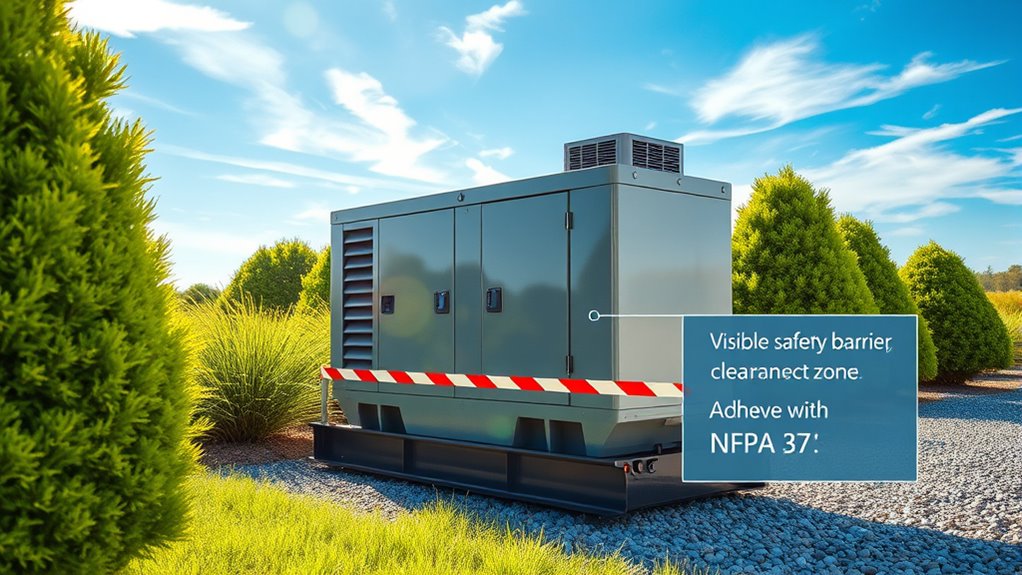

To guarantee safe outdoor generator operation, NFPA 37 recommends maintaining at least 18 inches of clearance on all sides, with a minimum of 5 feet from structures and fuel sources. Proper ventilation is vital to disperse fumes and prevent overheating. Keep fuel stored safely away from ignition sources, and make certain unobstructed access for maintenance. Following these guidelines helps protect you from hazards—continue to explore for detailed standards and best practices.
Key Takeaways
- Maintain at least 18 inches clearance on sides and back of the generator per NFPA 37.
- Ensure unobstructed access for maintenance and inspection around the generator.
- Place generators a minimum of 5 feet from structures to prevent fume buildup.
- Keep fuel sources at least 3 feet away from the generator and ignition sources.
- Follow local codes and NFPA 37 guidelines for specific clearance and installation requirements.
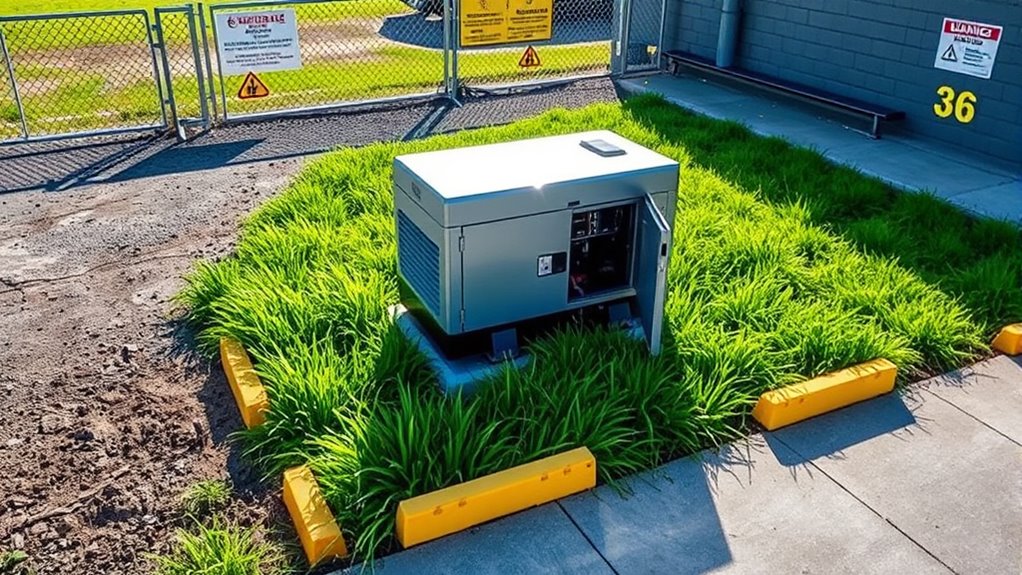
Are you aware of the clearance requirements for outdoor generators? Ensuring proper clearance isn’t just about following rules; it’s about safety and preventing hazards. One of the key aspects is understanding how fuel storage impacts generator placement. You need to store fuel safely, away from ignition sources and in compliance with fire codes. Fuel tanks should be positioned at a safe distance from the generator itself, typically a minimum of 3 feet, but always check local regulations and NFPA 37 guidelines for specifics. This buffer helps prevent accidental ignition in case of leaks or spills. Also, avoid placing fuel containers or tanks near windows, vents, or doorways to minimize fire risk and ensure safe evacuation routes. Proper fuel storage isn’t just about distance; it also involves using approved containers and maintaining proper ventilation around fuel storage areas to prevent the buildup of fumes.
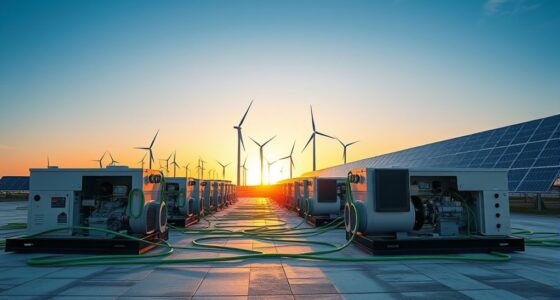
Ventilation standards are equally critical when it comes to outdoor generator placement. Generators produce carbon monoxide and other potentially dangerous gases during operation. That’s why you need to follow NFPA 37’s ventilation standards, which recommend positioning generators in well-ventilated areas away from enclosed spaces, windows, and doors. You should place your generator at least 5 feet away from structures, ensuring fumes don’t accumulate and vent safely into the open air. Proper ventilation not only prevents the buildup of harmful gases but also helps disperse heat generated during operation, reducing the risk of overheating and fire. The placement should consider prevailing wind directions to maximize dispersal and prevent fumes from drifting toward inhabited areas. Additionally, understanding curiosity’s role in safety awareness can help you stay vigilant about potential hazards during setup and operation.
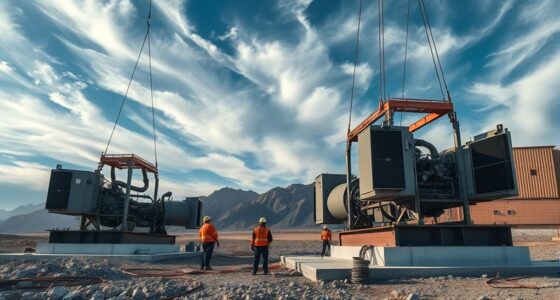
In addition to distance, clearance around the generator should accommodate routine maintenance and inspection. You’ll want unobstructed access to all sides—particularly the exhaust outlet and control panels—to ensure safe operation and quick intervention if needed. NFPA 37 emphasizes maintaining clearances of at least 18 inches on the sides and back, with more space in front for servicing. This clearance also reduces the risk of fire spreading from nearby combustibles, especially if the generator is equipped with an exhaust system. Remember, keeping these clearances and adhering to ventilation standards isn’t an optional detail; it’s essential for safe, reliable operation. Proper planning and installation based on these guidelines will help you avoid potential hazards, protect your property, and ensure your generator functions efficiently when you need it most.
Frequently Asked Questions
Do Clearance Requirements Vary by Generator Size or Capacity?
Yes, clearance requirements do vary by generator size or capacity. Larger generators typically need more space for proper fuel storage and ventilation to prevent overheating and ensure safety. You should maintain adequate clearance to allow for ventilation requirements, especially near fuel storage areas, to minimize fire risk. Always follow manufacturer guidelines and NFPA 37 standards, adjusting clearance based on generator capacity to guarantee safe operation and compliance with safety codes.
Are There Specific Clearance Distances for Portable Versus Stationary Generators?
Yes, clearance distances differ between portable and stationary generators. Portable units need less clearance but still require proper ventilation and safe fuel storage to prevent hazards. Stationary generators, often larger, demand more space for adequate ventilation and easy access for maintenance. Always make certain fuel storage is kept away from the generator and that ventilation requirements are met to prevent buildup of dangerous fumes or overheating.
How Often Should Clearance Areas Be Inspected for Compliance?
You should inspect your generator clearance areas at least monthly—yes, monthly! Imagine a tiny oversight causing a massive fire hazard. Regular maintenance checks and inspection intervals help catch hazards early. If you notice debris, obstructions, or deterioration, address them immediately. Staying vigilant guarantees your outdoor generator operates safely and complies with NFPA 37 standards, preventing disasters before they start. Don’t let your vigilance become an afterthought!
Are There Additional Clearance Requirements for Enclosed Generator Units?
Yes, enclosed generator units have additional clearance requirements. You should verify proper clearance for ventilation to prevent buildup of heat and fumes, especially around fuel storage areas. Adequate space allows for safe operation and maintenance, reducing fire risks. Keep vents unobstructed, and maintain recommended distances from combustible materials. Regularly inspect these clearances to ensure ongoing compliance with safety standards, protecting both personnel and property.
Do Local Codes Override NFPA 37 Clearance Guidelines?
Think of local codes as the city’s heartbeat, sometimes beating to a different rhythm than NFPA 37. They can override NFPA clearance guidelines, so you’ll need installation permits and safety signage to stay compliant. Always check with your local authorities before installation, ensuring your setup doesn’t just meet standards but beats in harmony with local regulations. This keeps your generator safe and your property protected.
Conclusion
Following the NFPA 37 clearance requirements for outdoor generators is like giving your equipment a safe playground. It ensures proper airflow, reduces fire risks, and keeps your setup running smoothly. Remember, these clearances aren’t just rules—they’re your shield against accidents. Stick to them diligently, and your generator will serve you reliably, just like a trusted friend. Prioritize safety, and you’ll enjoy peace of mind knowing your outdoor power source is both efficient and secure.