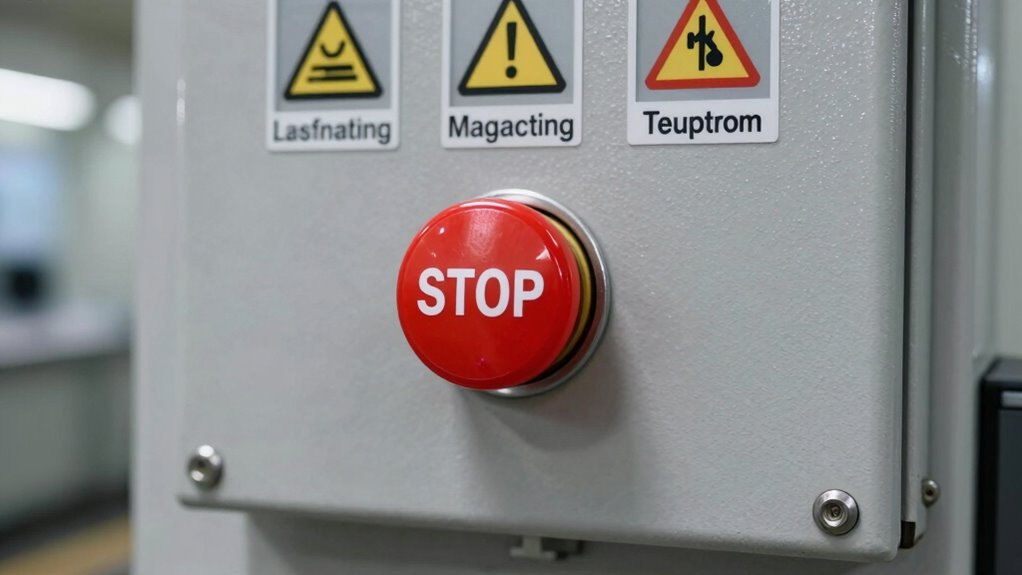

When choosing emergency stop locations, you need to guarantee they’re easy to reach from any part of the machinery, typically mounted between 1.2 and 1.7 meters off the ground. You should position them so both standing and seated operators can quickly activate them, and they must be clearly visible, large, and well-marked. Consider environmental factors like dust or moisture and use protective housing if necessary. Following industry standards and safety regulations is essential—stay tuned to learn the key details for compliance and safety.
Key Takeaways
- Emergency stop buttons should be placed within easy reach from all operational points of machinery.
- Mounting height typically ranges from 1.2 to 1.7 meters for accessibility to standing and seated operators.
- Placement must allow quick, intuitive access to ensure rapid response during emergencies.
- Locations should comply with industry standards and regulatory requirements for safety and visibility.
- Proper signage and training are essential to ensure personnel can identify and use emergency stops effectively.
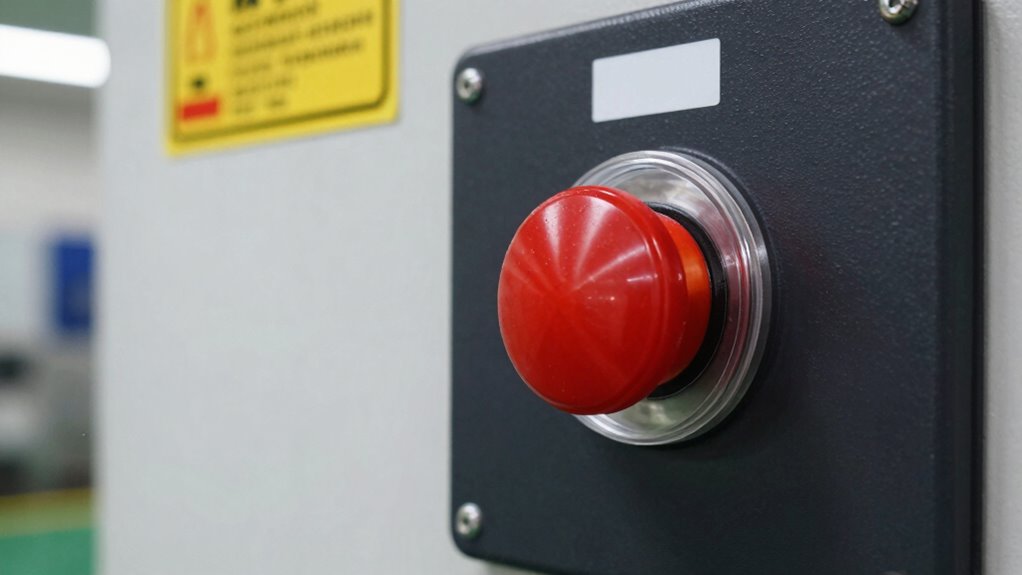
Have you ever wondered where emergency stop buttons should be located to guarantee quick, safe responses? Proper placement is essential in any safety setup, and understanding the rules around emergency stop location is key to ensuring safety compliance. When designing emergency stops, you need to prioritize accessibility, visibility, and ease of operation. The goal is to allow anyone to hit the button swiftly in an emergency, without hesitation or confusion. This means placing the emergency stop in locations that are both intuitive and reachable, no matter where a person is positioned relative to the machinery.
Emergency stop design plays a critical role here. The buttons should be large, clearly marked, and easily distinguishable from other controls. They must be mounted at a height that accommodates most users, typically between 1.2 and 1.7 meters from the floor. This height range ensures that both standing and seated operators can reach the button comfortably. It’s also important to consider the environment—if the area is prone to dust, moisture, or other hazards, the emergency stop should be enclosed in a protective housing to prevent accidental activation while remaining easy to access. Additionally, the buttons should be resistant to impacts or vandalism, especially in public or industrial spaces, to maintain their reliability. Proper emergency stop placement is crucial for quick response times during emergencies, and understanding the regulatory requirements helps ensure compliance and safety. Being aware of industry standards can further guide effective placement and design choices. Furthermore, consistent training and signage support quick recognition and use in critical moments.

Porch Shield Generator Cover for 5500-15000W, 38 x 28 x 30 inch, Black
- Compatible - More sizes for 5500w -15000w gas...
- Upgrade Material - Made of 600D polyester fabric...
- Tear Resistant & Waterproof - The high-level double...
As an affiliate, we earn on qualifying purchases.
Frequently Asked Questions
Are Emergency Stop Locations the Same Across All Industries?
Emergency stop locations aren’t the same across all industries because industry-specific safety and emergency stop design requirements vary. You need to follow industry standards and regulations to guarantee proper placement for quick access during emergencies. Some industries, like manufacturing, require more accessible stops near machinery, while others may have different protocols. Always tailor emergency stop placement to your industry’s safety guidelines, prioritizing rapid response and operator safety.
How Often Should Emergency Stop Signs Be Inspected?
You should inspect emergency stop signs at least monthly to guarantee safety protocols are effective. Studies show that regular inspections can reduce workplace accidents by up to 50%. During these checks, verify that signs are visible, unobstructed, and functioning properly. Consistent inspections help keep emergency procedures clear and reliable, so everyone knows where to act quickly in an emergency. Staying vigilant with these inspections is key to maintaining a safe environment.
Can Emergency Stops Be Automated or Remote-Controlled?
Yes, emergency stops can be automated or remote-controlled, especially through remote activation systems. You can integrate automation to enable quick shutdowns from a distance, which is useful in hazardous environments or hard-to-reach areas. When implementing remote activation, verify it complies with safety standards and is reliable to prevent accidental activation. Proper training and clear signage should accompany these systems to maintain safety and effective emergency response.
What Are the Penalties for Non-Compliance With Location Rules?
You might think safety compliance is optional, but ignoring emergency response rules can cost you dearly. Penalties for non-compliance with location rules can include hefty fines, operational shutdowns, or even legal action. These consequences highlight the importance of adhering to emergency stop regulations. By prioritizing proper placement, you guarantee rapid response times and protect lives, turning safety into a clear priority rather than an afterthought.
How Does Weather Affect Emergency Stop Accessibility?
Weather impact can considerably affect emergency stop accessibility, creating challenges in reaching controls quickly. Rain, snow, or ice may make surfaces slippery, slowing your response time. Extreme heat or cold can cause equipment to malfunction or become harder to operate. You need to stay aware of these accessibility challenges, ensuring emergency stops are always reachable despite weather conditions. Regular maintenance and strategic placement help mitigate weather-related issues, keeping safety a top priority.
Porch Shield Generator Cover for 5000-10000W, 32 x 24 x 24 inch, Black
- Compatible - More sizes for 5000w -10000w gas...
- Upgrade Material - Made of 600D polyester fabric...
- Tear Resistant & Waterproof - The high-level double...
As an affiliate, we earn on qualifying purchases.
Conclusion
In the end, knowing where to place emergency stops isn’t just a rule—it’s a lifeline. Think of it as the heartbeat of safety in your workspace, pulsing with the promise of protection. By following these guidelines, you’re not just complying with regulations—you’re safeguarding lives and fostering peace of mind. Remember, in the race against accidents, the right emergency stop location is your secret weapon—an unwavering shield in moments that matter most.

Anker SOLIX C1000 Portable Power Station, 1800W (Peak 2400W) Solar Generator, Full Charge in 58 Min, 1056wh LiFePO4 Battery for Home Backup, Power Outages, and Outdoor Camping (Optional Solar Panel)
- Charge Up in a Flash: Achieve 80% battery capacity in...
- A Decade of Power: Trust in a decade-long journey...
- Powerhouse Versatility: The Anker SOLIX C1000's SurgePad...
As an affiliate, we earn on qualifying purchases.
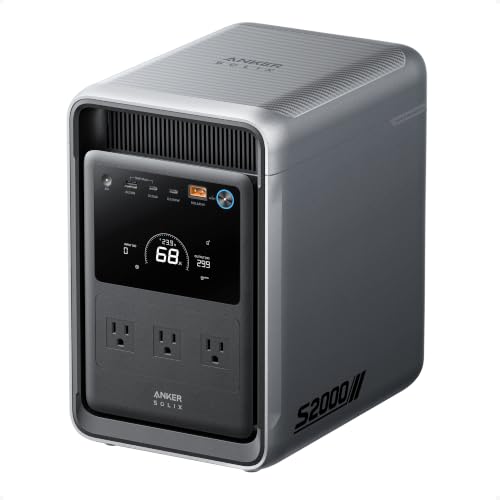
Anker SOLIX S2000 Portable Power Station, 2,010Wh, 1,500W, Home Backup, UPS
- Up to 35-Hour Fridge Backup: With 6W idle power draw...
- 10,000-Cycle LFP Battery: Powered by 314Ah LFP cells,...
- Smallest and Lightest 2kWh Power Station: 30% smaller and 25% lighter...
As an affiliate, we earn on qualifying purchases.