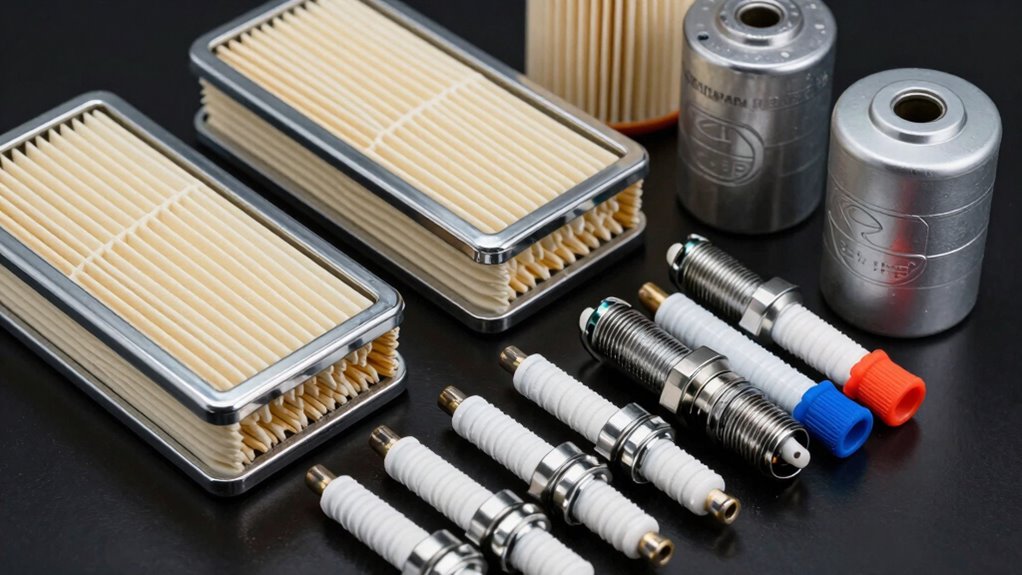

To think about air filters, oil filters, and spark plug kits together, see how they work as a team to keep your engine running smoothly. Clean air filters guarantee proper airflow, oil filters protect engine parts from contamination, and spark plugs ignite fuel efficiently. Neglecting one can affect the others’ performance and cause damage. Regular checks and replacements keep everything working harmoniously. Keep exploring to discover how proper maintenance makes your engine perform at its best.
Key Takeaways
- Regularly inspect and replace all three components to ensure optimal engine airflow, lubrication, and ignition.
- Understand that each part’s condition directly impacts overall engine performance and efficiency.
- Maintain a balanced maintenance schedule for air filters, oil filters, and spark plugs to prevent interconnected issues.
- Prioritize components based on their wear patterns and recommended service intervals for cohesive engine health.
- Recognize that proper care of these parts reduces emissions, fuel consumption, and long-term engine damage.
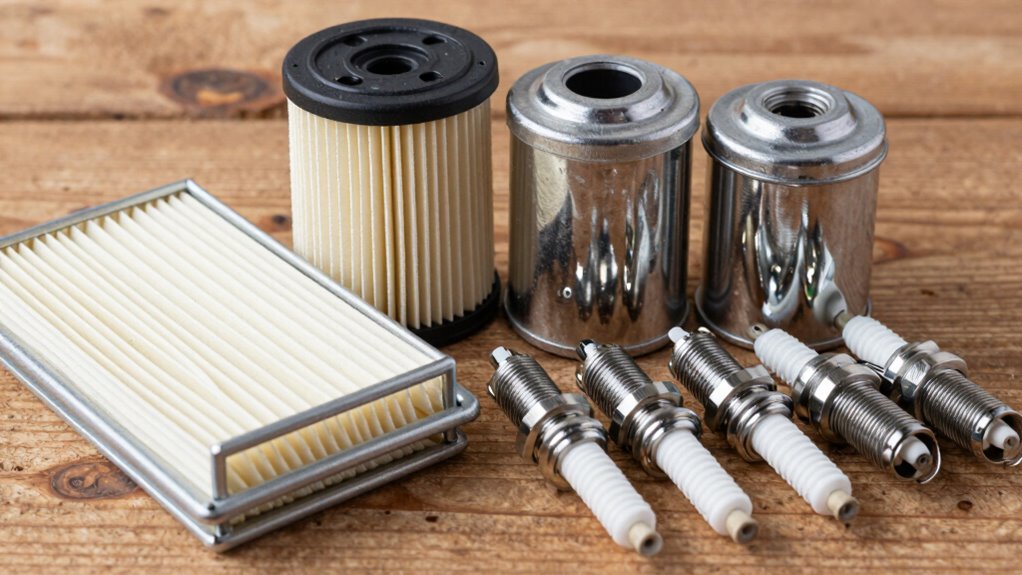
Maintaining your vehicle’s performance involves more than just occasional oil changes; it requires understanding how air filters, oil filters, and spark plug kits work together to keep your engine running smoothly. When you think about engine performance, it’s clear that these components are interconnected, each playing an essential role in ensuring your car operates efficiently. Staying on top of maintenance schedules isn’t just about following a routine—it’s about knowing how each part contributes to overall health and performance. If one component falls behind, it can impact the others, leading to decreased power, fuel efficiency, or even engine damage.
Air filters are your engine’s first line of defense against dirt, dust, and debris. When clean, they allow a steady flow of air, which is critical for proper combustion. A clogged air filter restricts airflow, causing your engine to work harder, which reduces performance and increases fuel consumption. Regularly inspecting and replacing your air filter according to your vehicle’s maintenance schedule ensures your engine receives the right amount of fresh air, maintaining ideal engine performance. Recognizing the importance of engine efficiency can help you prioritize timely replacements and avoid costly repairs.
A clean air filter ensures proper airflow, boosting engine performance and fuel efficiency. Regular checks are essential.
Oil filters work in tandem with your vehicle’s oil to keep it clean and free of contaminants. Over time, dirt and debris can accumulate in the oil, impairing its ability to lubricate moving parts effectively. When the oil filter becomes clogged, dirty oil circulates through your engine, increasing wear and risking overheating. Changing your oil filter at specified intervals is essential for preserving engine health. It also supports a smooth operation by maintaining proper lubrication, which directly impacts engine performance and longevity.
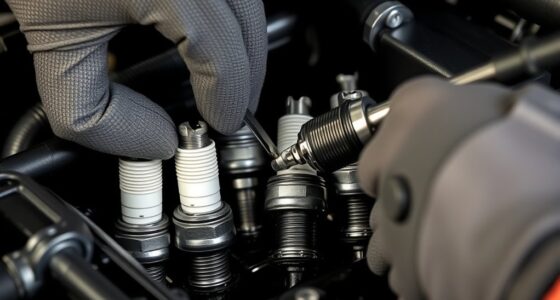
Spark plug kits are the ignition system’s spark that ignites the fuel-air mixture, powering your engine’s cylinders. Worn or dirty spark plugs misfire, leading to rough idling, poor acceleration, and reduced fuel efficiency. Regular replacement of spark plugs, following your maintenance schedules, ensures a strong, consistent spark. This not only improves engine responsiveness but also enhances overall performance and reduces emissions. When all three components—air filters, oil filters, and spark plugs—are maintained properly, they work harmoniously to deliver a reliable, efficient engine. Additionally, understanding the interconnected nature of these parts can help you better anticipate maintenance needs before issues arise.
In essence, thinking about these parts together helps you see their combined impact on your vehicle’s engine performance. By adhering to recommended maintenance schedules, you prevent problems before they start, ensuring your engine runs smoothly and efficiently. Neglecting any of these components can lead to bigger issues down the road, but with proactive care, you keep your vehicle performing at its best. Paying attention to the health of air filters, oil filters, and spark plug kits isn’t just about routine maintenance—it’s about preserving the heart of your vehicle so it keeps delivering dependable performance mile after mile.

Porch Shield Generator Cover for 5500-15000W, 38 x 28 x 30 inch, Black
- Compatible - More sizes for 5500w -15000w gas...
- Upgrade Material - Made of 600D polyester fabric...
- Tear Resistant & Waterproof - The high-level double...
As an affiliate, we earn on qualifying purchases.
Frequently Asked Questions
How Often Should I Replace All Three Filters and Spark Plugs?
You should replace your air filter every 12,000 to 15,000 miles, your oil filter with oil changes, and your spark plugs roughly every 30,000 miles. Keep in mind that filter lifespan and replacement intervals vary based on driving conditions and vehicle type. Regularly check these components for dirt and wear, and follow your vehicle’s maintenance schedule to guarantee peak performance and longevity.
Are Aftermarket Parts as Reliable as OEM for These Components?
Did you know that aftermarket parts make up nearly 30% of the auto parts market? When comparing aftermarket vs OEM for air filters, oil filters, and spark plug kits, reliability varies. Many aftermarket options are compatible and perform well, but some might cause issues due to compatibility concerns. Always check reviews and specifications to verify the parts you choose meet OEM standards, guaranteeing the best performance and longevity.
Can Mismatched Filters and Spark Plugs Affect Engine Performance?
Mismatched filters and spark plugs can definitely affect your engine’s performance. Compatibility issues may lead to improper sealing or airflow restrictions, causing reduced efficiency. Using parts that don’t match your vehicle’s specifications can result in performance impacts like rough idling, decreased power, or increased fuel consumption. To avoid these problems, always confirm your filters and spark plugs are compatible with your engine model, maintaining peak performance and longevity.
What Are Signs That My Filters or Spark Plugs Need Changing?
You’ll notice your engine struggles to breathe, like you’re trying to run through thick fog, if filters or spark plugs need changing. Your car may stall, idle rough, or lose power. Pay attention to increased fuel consumption and sluggish acceleration. Part quality and maintenance timing are key—timing your replacements right keeps your engine running smoothly, preventing buildup or misfires. Regular checks guarantee your vehicle runs like a well-oiled machine.
How Do Climate Conditions Influence Maintenance Schedules for These Parts?
Climate considerations considerably impact your maintenance planning. In dusty, dry, or hot environments, you’ll need to replace air filters more often to prevent engine strain. Cold or humid climates can accelerate oil degradation, requiring more frequent oil changes. Spark plugs may also wear faster in extreme temperatures. By understanding your climate, you can adjust maintenance schedules proactively, ensuring ideal engine performance and longevity.
Porch Shield Generator Cover for 5000-10000W, 32 x 24 x 24 inch, Black
- Compatible - More sizes for 5000w -10000w gas...
- Upgrade Material - Made of 600D polyester fabric...
- Tear Resistant & Waterproof - The high-level double...
As an affiliate, we earn on qualifying purchases.
Conclusion
Think of your car’s filters and spark plugs as the heartbeat of your engine’s symphony. Each one plays an essential role—clearing the path, fueling the fire, and keeping the rhythm steady. When you care for them, you’re tuning your machine’s soul, ensuring it runs smoothly and lasts longer. So, treat these parts as the guardians of your journey, and your vehicle will sing its song with power, grace, and enduring vibrancy.
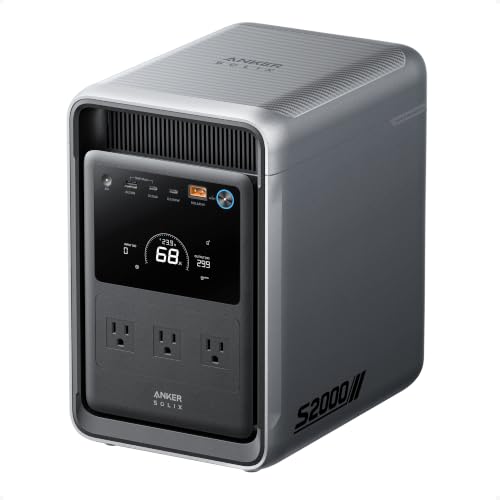
Anker SOLIX S2000 Portable Power Station, 2,010Wh, 1,500W, Home Backup, UPS
- Up to 35-Hour Fridge Backup: With 6W idle power draw...
- 10,000-Cycle LFP Battery: Powered by 314Ah LFP cells,...
- Smallest and Lightest 2kWh Power Station: 30% smaller and 25% lighter...
As an affiliate, we earn on qualifying purchases.
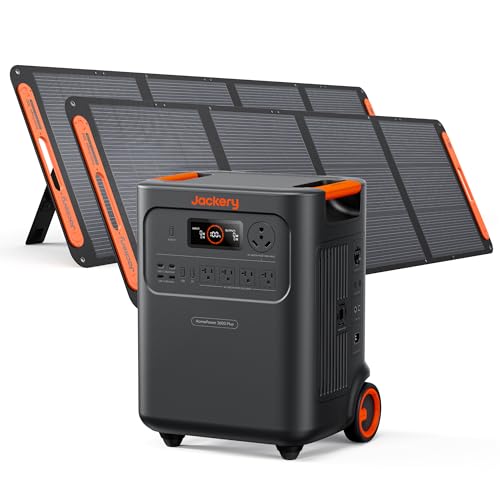
Jackery HomePower 3600 Plus Portable Power Station with 2X 200W Solar Panels, 3600W AC Output, 3584Wh LFP Solar Generator, Expandable up to 21kWh, Essential Home Backup for Home Use, Emergencies, RV
- Essential Home Backup: The Jackery HomePower 3600 Plus...
- Safe Power That Lasts: Built with high-temp resistant ceramic...
- Plug-and-Play: With its easy plug-and-play design,...
As an affiliate, we earn on qualifying purchases.