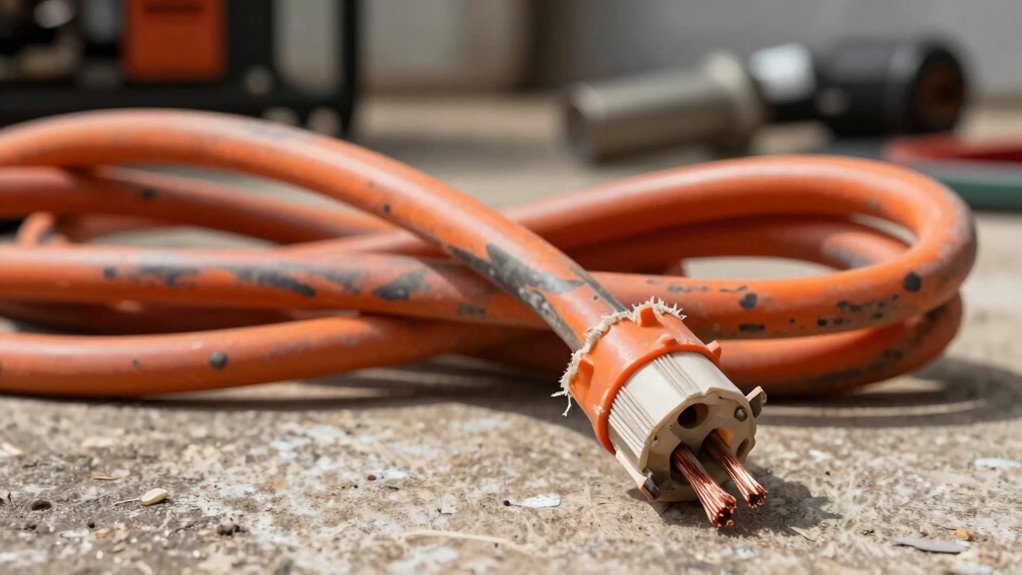

Using the wrong generator cord size can cause serious problems, like overheating, fires, and damage to your equipment. If the cord is undersized, it can’t handle the current, leading to voltage drops and potential failure. Overly thin or long cords increase the risk of insulation melting and safety hazards, which can result in injury or property damage. Choosing the right size is essential, and if you want to avoid these risks, keep going to learn more.
Key Takeaways
- Using an undersized cord causes overheating, increasing fire and safety hazards.
- Incorrect cord size leads to voltage drops, damaging equipment and reducing performance.
- Overly long or thin cords can overheat due to insufficient current capacity.
- Damaged or improperly rated cords compromise safety and may void warranties.
- Properly matching cord gauge and length ensures safe, efficient power delivery.
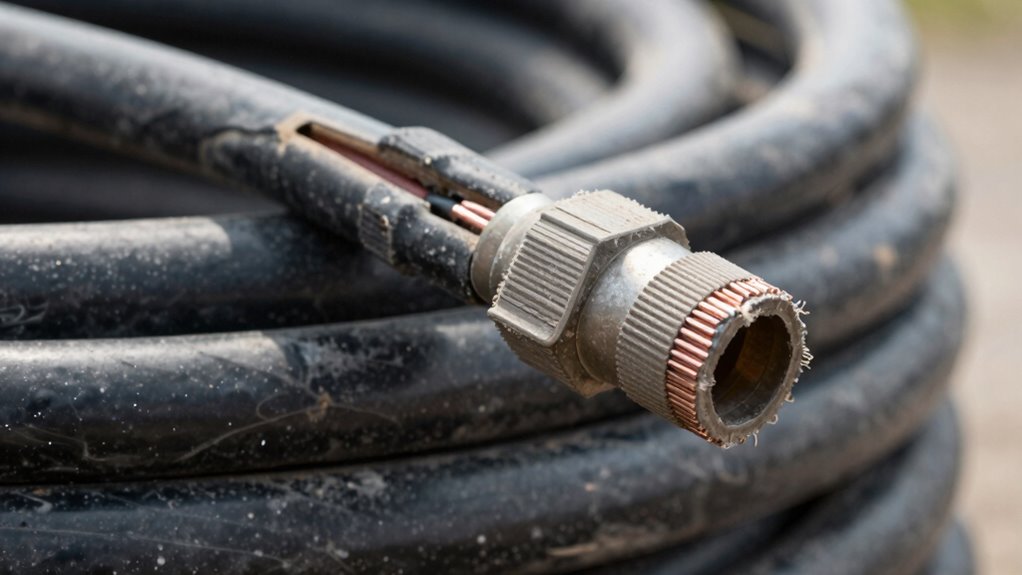
Choosing the wrong generator cord size can lead to serious safety hazards and equipment damage. When you use an improperly sized cord, you risk overloading the wire, which can cause overheating, melting insulation, and even fires. One of the key issues here is power outlet compatibility; if your cord isn’t rated for the current your generator produces, it won’t connect safely or efficiently. Ensuring the cord size matches your generator’s power output and the devices you plan to run is essential.
Using the wrong generator cord size risks safety, damage, and inefficient power connection. Always match the cord to your generator’s output.
A common mistake is selecting a cord that seems adequate but falls short in handling the power load. For example, using a thin or short cord for high-power tools or appliances can lead to voltage drops, resulting in poor performance or damage to your equipment. Conversely, a cord that’s too thick or heavy for your needs might be cumbersome and unnecessary, but safety should always be your priority. The right-sized cord ensures your power outlet compatibility remains intact, preventing overloads and reducing the risk of electrical faults.
Before you set up your generator, it’s crucial to perform a thorough safety inspection. Check the cord’s gauge rating and length—these factors directly influence how much current it can safely carry. A cord that’s too long or thin may not deliver sufficient power, leading to overheating. Always verify that the cord’s specifications meet or exceed the requirements of your generator and connected devices. Inspect for any signs of damage, such as cuts, frays, or burns, as these can compromise safety and should never be used. Regularly monitoring electrical connections and maintaining your cords can prevent potential hazards.
Properly matching your generator cord size to your equipment and outlet specifications is not just about convenience; it’s a critical safety measure. When you double-check compatibility and conduct a safety inspection, you’re reducing the risk of electrical fires, equipment failure, and personal injury. Keep in mind that using the wrong-sized cord can also void warranties or insurance coverage if an incident occurs. Always follow manufacturer guidelines and local electrical codes. Ensuring that you understand electric wire gauges and their importance can make a significant difference in safe operation. When in doubt, consult a professional to ensure your setup is safe and compliant. Making the effort to select the correct cord size and inspect it thoroughly can save you from costly repairs, dangerous accidents, and unnecessary stress—so don’t overlook these essential steps.

Porch Shield Waterproof Universal Generator Cover 32 x 24 x 24 inch - for Most Generators 5000-10000 Watt, Black
- Compatible - More sizes for 5000w -10000w gas...
- Upgrade Material - Made of 600D polyester fabric...
- Tear Resistant & Waterproof - The high-level double...
As an affiliate, we earn on qualifying purchases.
Frequently Asked Questions
How Do I Determine the Correct Generator Cord Size for My Setup?
To determine the correct generator cord size, first check your generator’s power capacity and the total wattage of what you’ll connect. Then, confirm the cord’s gauge matches these requirements for safe power delivery. Use a thicker gauge for higher power needs, and verify the cord’s compatibility with your generator’s outlet type. Proper sizing prevents overheating and ensures efficient, safe operation of your setup.
Can Using a Smaller Cord Size Cause Generator Damage?
Using a smaller power cord material can definitely cause generator damage because it may not handle the voltage compatibility needed for your setup. A thinner or less capable cord can overheat, leading to potential short circuits or fire hazards. Always choose a power cord with the correct gauge, made from quality materials, that matches your generator’s voltage requirements. This guarantees safe operation and prevents costly damage to your equipment.
What Safety Hazards Are Associated With Improper Cord Sizing?
Using an improperly sized cord is like opening a floodgate—electrical conductivity and material durability become compromised. You risk sparks, short circuits, or even fires, turning your setup into a dangerous minefield. Overheating weakens the cord’s material, increasing the risk of shock or electrocution. Ensuring correct sizing maintains electrical flow, preventing hazards while protecting you from unexpected, potentially deadly, electrical failures.
Are There Specific Regulations for Generator Cord Sizes?
Yes, there are specific regulations for generator cord sizes. You need to guarantee your cord’s wire gauge matches the voltage compatibility of your generator and appliances. Proper cord insulation is also vital to prevent electrical hazards. Regulations typically specify minimum wire gauges based on current load and distance. Always follow manufacturer guidelines and local electrical codes to assure safety, proper operation, and compliance with these standards.
How Often Should I Inspect or Replace My Generator Cords?
You should inspect your generator cords every few months, especially before heavy use or adverse weather. Look for signs like fraying, cracks, or damaged power cord materials. Replace cords if you notice wear or damage. Confirm weatherproofing techniques are intact to prevent moisture damage. Regular inspections help maintain safety, and timely replacements keep your generator functioning reliably, avoiding potential electrical hazards caused by compromised cords.
Porch Shield Waterproof Universal Generator Cover 38 x 28 x 30 inch - for Most Generators 5500-15000 Watt, Black
- Compatible - More sizes for 5500w -15000w gas...
- Upgrade Material - Made of 600D polyester fabric...
- Tear Resistant & Waterproof - The high-level double...
As an affiliate, we earn on qualifying purchases.
Conclusion
Choosing the right generator cord size isn’t just a small detail; it’s a critical decision that impacts safety, performance, and longevity. Using the correct size guarantees your generator runs efficiently, prevents overheating, and avoids potential hazards. By paying attention to cord gauge, you protect your equipment, your home, and yourself. Don’t overlook this simple step—because making the right choice means avoiding big problems today, tomorrow, and well into the future. Always prioritize proper cord sizing for peace of mind.

Jackery Explorer 300 Portable Power Station,292Wh
- Ultra-Lightweight: At only 7.5 lbs, the...
- Versatile Power for 6 Devices: Equipped with 2 AC outlets,...
- Built to Last: Upgraded with premium LiFePO4 chemistry,...
As an affiliate, we earn on qualifying purchases.

Portable Solar Generator 300W Portable Power Station with 60W Solar Panel
- Portable Generator with 60W Solar Panel Included: with a big battery pack,...
- Multiple Charging outlets for camping gear with SOS Flashlight: with 2* 300W Max AC...
- Multiple Charging Optional, Solar Panel Charger 60W Included: ZeroKor portable power bank generator...
As an affiliate, we earn on qualifying purchases.