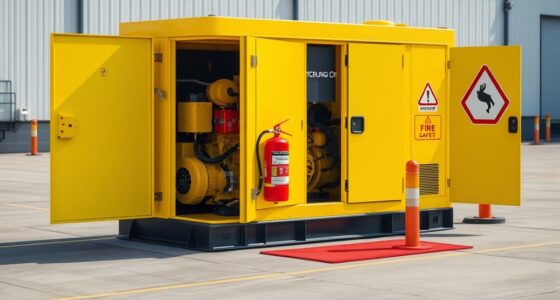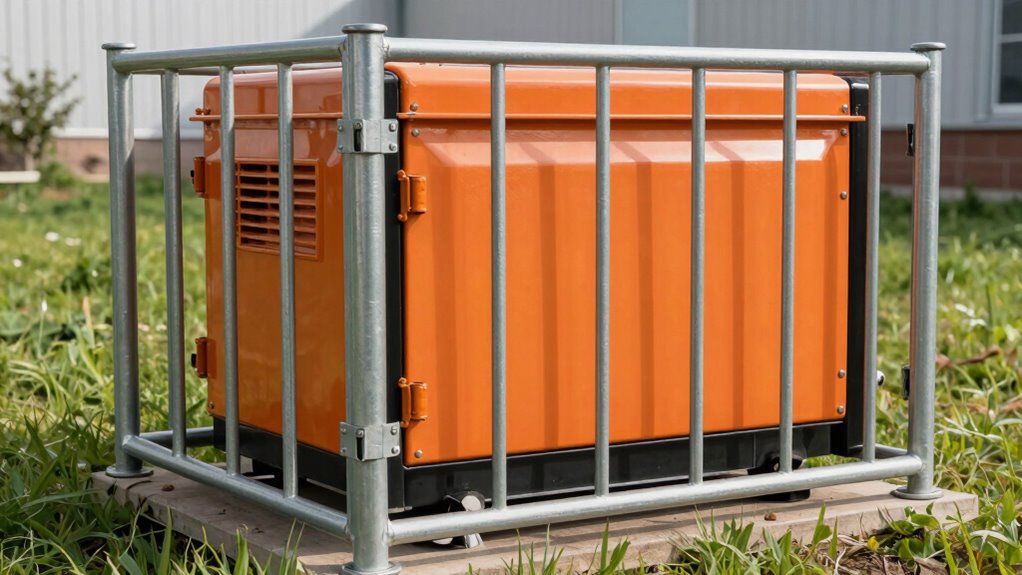

When choosing fencing and enclosures for your generator, make certain they comply with safety regulations to prevent accidents and legal issues. Opt for weather-resistant materials like galvanized steel or treated wood to withstand elements and reduce maintenance costs. A secure fence around six feet tall with lockable gates helps deter theft and unauthorized access, while allowing proper ventilation prevents heat buildup and fire risks. For more tips on creating a durable, safe enclosure, keep exploring your options.

Get backup power and energy gear delivered free with Prime
- Fast, free delivery on millions of items
- Prime Video, Amazon Music and more included
- Member-only deals all year
Key Takeaways
- Ensure fencing complies with safety regulations and manufacturer guidelines to prevent hazards and legal issues.
- Use weather-resistant, durable materials like galvanized steel or treated wood for long-term outdoor protection.
- Select fencing with corrosion resistance, especially in humid or coastal environments, to extend lifespan.
- Incorporate security features such as height, lockable gates, and proper ventilation to prevent theft and fire hazards.
- Balance functionality and aesthetics to provide safety, durability, and visual appeal for the outdoor generator area.
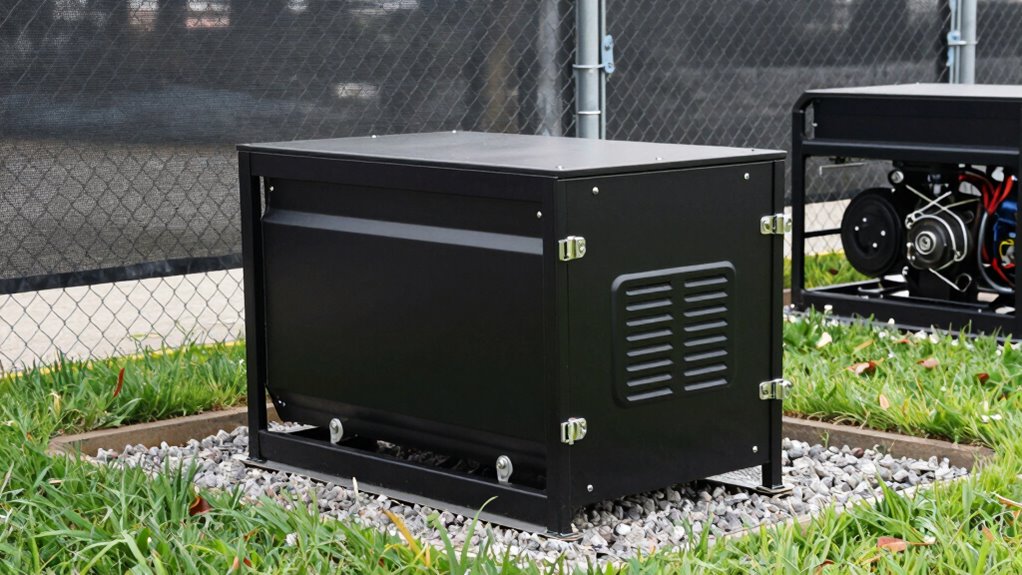
When it comes to protecting your generator, choosing the right fencing and enclosures is essential for safety and durability. Your first concern should be adhering to safety regulations that govern the installation of outdoor equipment. These regulations are designed to prevent accidents, ensure proper ventilation, and minimize fire risks. Before installing any fencing or enclosure, check local codes and manufacturer guidelines to ensure compliance. Ignoring safety standards can lead to hazardous situations, legal issues, or invalid warranties. It’s crucial to select fencing that not only meets these safety requirements but also provides a robust barrier to prevent unauthorized access or vandalism.
Material durability plays a key role in your fencing choice. Outdoor environments expose your generator to weather elements like rain, sun, wind, and snow, which can quickly weaken inferior materials. Opt for fences made from weather-resistant materials such as galvanized steel, treated wood, or heavy-duty vinyl. These materials withstand corrosion, rot, and UV damage better than cheaper alternatives, ensuring your fencing remains secure over time. Durability isn’t just about resisting the elements; it also involves resisting physical impacts, which can be vital if your generator is in a high-traffic or vulnerable area. A sturdy fence or enclosure minimizes the risk of accidental damage and provides peace of mind that your investment is protected. Incorporating outdoor environment considerations into your fencing choice can help you select materials that are best suited for your specific climate and conditions. Additionally, selecting materials with proven weather resistance can extend the lifespan of your fencing significantly, reducing maintenance costs and replacements in the long run. Choosing fencing with corrosion resistance can further enhance longevity, especially in humid or coastal environments.
When selecting fencing, consider the height and design. A taller fence, typically around six feet, helps deter theft and unauthorized tampering. The design should also allow for adequate ventilation, preventing overheating of the generator while still maintaining security. Ventilation is critical, as enclosing your generator too tightly can cause heat buildup, increasing fire hazards and reducing efficiency. Some enclosures include lockable gates or panels, adding an extra layer of security and ensuring only authorized personnel can access the equipment. Additionally, understanding fence material durability can help ensure your enclosure withstands environmental stressors over time. Properly designed fencing can also improve the overall aesthetic of your outdoor space, blending functionality with visual appeal.
Frequently Asked Questions
How High Should Generator Fencing Be for Maximum Safety?
You should build your generator fencing at least 6 feet high to guarantee maximum safety. A taller fence enhances security by preventing unauthorized access and provides noise reduction, minimizing disturbance to your surroundings. Make certain the fence is sturdy and properly installed to withstand weather and potential tampering. This height strikes a good balance between safety, security enhancement, and noise control, giving you peace of mind while protecting your generator.
Are There Specific Materials Best Suited for Generator Enclosures?
You should choose materials like steel or vinyl for generator enclosures—they’re the heavyweights in durability, guarding your equipment against weather and tampering. Steel offers unmatched strength, while vinyl provides a sleek look and requires less maintenance. Both options open doors to aesthetic flexibility, letting you match your enclosure to your property’s style. Picking the right material guarantees your generator stays protected, sturdy, and visually appealing—like a fortress tailored to your needs.
Can Generator Fencing Be Customized for Different Yard Sizes?
Yes, you can customize generator fencing for different yard sizes by tailoring the landscaping design to fit your space. Consider aesthetic considerations like color, material, and style to match your outdoor decor. You can opt for taller or shorter fences, extend or reduce the enclosure, or incorporate decorative elements. Custom fencing guarantees your generator is protected while enhancing your yard’s overall look, regardless of its size or layout.
What Maintenance Is Required for Generator Enclosures?
Your generator enclosure needs regular maintenance to stay in top shape. You should check ventilation requirements to prevent overheating and guarantee proper airflow. Also, inspect for pests that might try to invade and damage your equipment—pests can be more relentless than a thousand tiny invaders! Clean the enclosure periodically, clear vents, and seal any gaps to keep pests out and ventilation ideal, making sure your generator runs smoothly and reliably.
Are There Legal Restrictions for Fencing Around Generators?
Yes, there are legal restrictions for fencing around generators. You must consider local noise ordinances to prevent disturbing neighbors, especially since generator noise can be quite loud. Additionally, ventilation requirements are essential; fences should allow proper airflow to prevent overheating and guarantee safe operation. Check your city’s regulations, as some areas require specific setback distances or fencing types to comply with safety and noise control standards.
Conclusion
Now that you know the ins and outs of generator fencing and enclosures, you’re better equipped to protect your equipment and guarantee safety. Think about it—won’t a sturdy enclosure give you peace of mind during storms or outages? With the right fencing, you’re not just safeguarding your generator; you’re securing your home and peace of mind. So, why leave your valuable power source vulnerable when a simple enclosure can make all the difference?
Halloween Picks
halloween
As an affiliate, we earn on qualifying purchases.