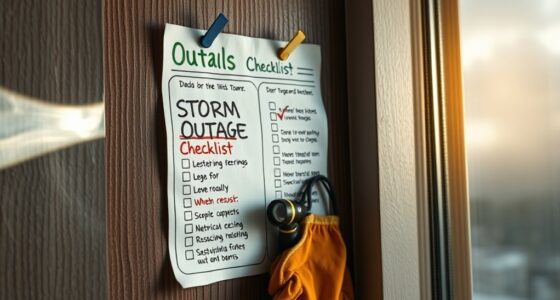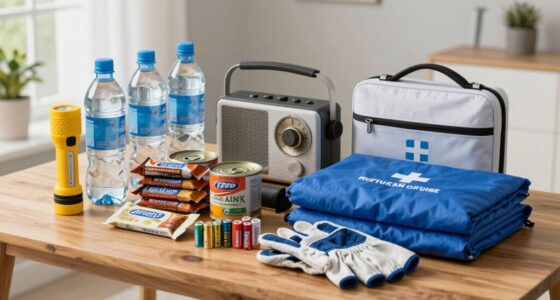

During a blackout, focus on essential appliances like your refrigerator and freezer to keep food safe, limiting door openings to conserve cold. Prioritize charging and maintaining communication devices, such as cell phones. Use backup power sources for critical devices, and turn off non-essential appliances to save energy. Consider portable options for cooking and heating, and stay organized to guarantee you can quickly access what you need. Ready to learn more about managing your power efficiently?

Get backup power and energy gear delivered free with Prime
- Fast, free delivery on millions of items
- Prime Video, Amazon Music and more included
- Member-only deals all year
Key Takeaways
- Prioritize refrigeration and freezing to prevent food spoilage by limiting door openings and using coolers if needed.
- Ensure communication devices like cell phones are charged and accessible with backup power sources available.
- Focus on essential safety devices such as battery-powered lights and backup heating options.
- Turn off non-essential appliances to conserve power and reduce overload risk.
- Use portable gas stoves or outdoor grills for cooking, avoiding electric stoves unless a generator is available.
During a blackout, knowing which appliances to prioritize can help you conserve energy, keep your essential needs met, and reduce stress. In emergencies like power outages, being prepared and making quick decisions about what to run can make a big difference. Your goal should be to maximize utility while minimizing energy drain, especially if the blackout lasts longer than expected. This is where emergency preparedness comes into play—by having a clear plan, you can avoid unnecessary chaos and ensure your most critical appliances stay operational.
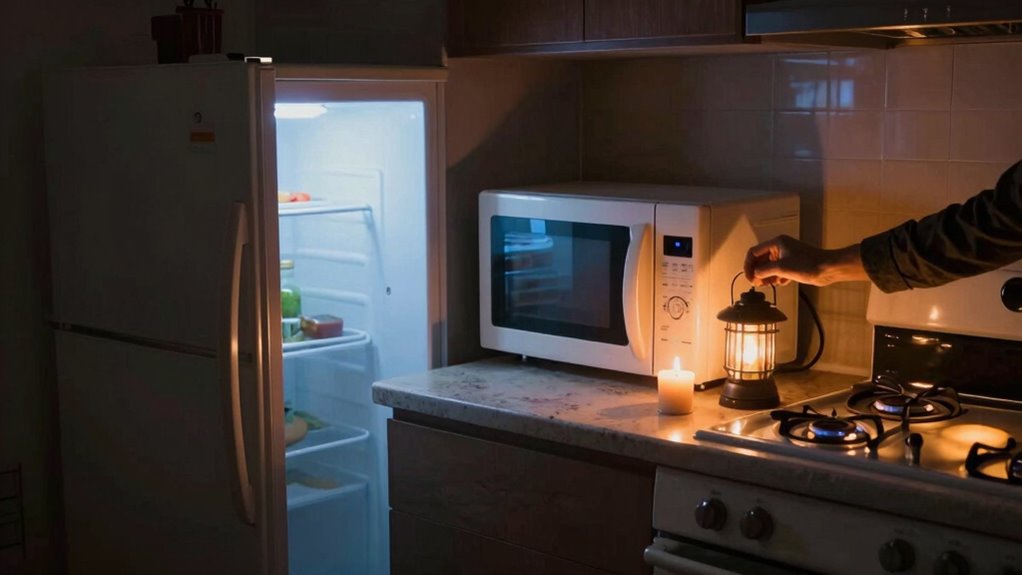
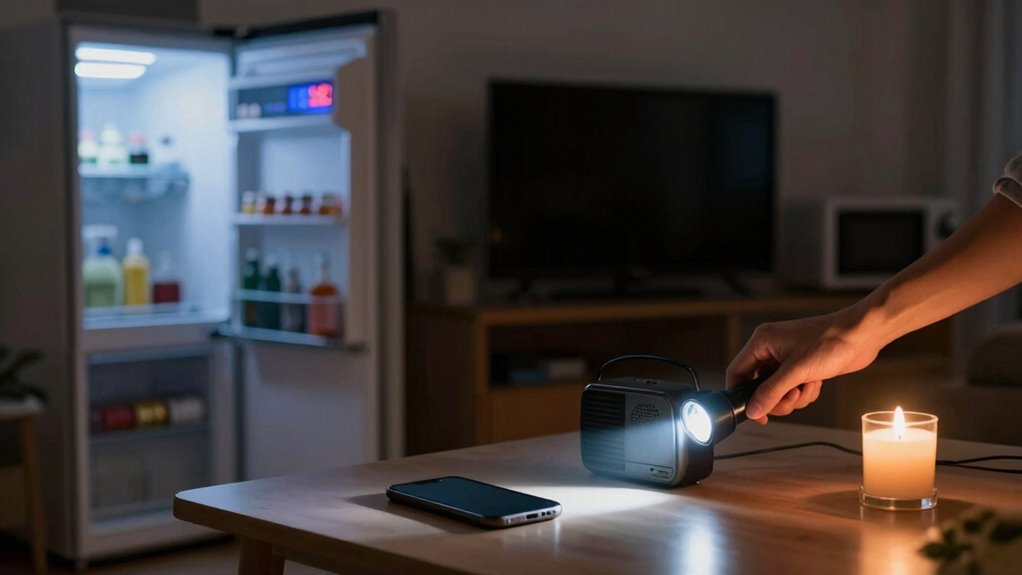
Start by identifying your essential needs. First, focus on your refrigerator and freezer. These appliances keep perishable food safe, preventing waste and unnecessary expense. To conserve power, try to limit how often you open their doors. Every time you do, cold air escapes, forcing the compressor to work harder and drain more energy. If you have coolers or ice packs, use them to help keep food cold longer, easing the burden on your fridge. Once these are secure, consider your communication devices. Keep your cell phones charged and accessible, and if you have backup power sources like a generator, use them to recharge these devices regularly. Staying connected during an outage is indispensable for emergency updates and safety.
Prioritize your fridge and freezer, limit door openings, and keep devices charged for safety and food preservation during outages.
Next, evaluate your lighting and heating needs. Use flashlights and battery-powered lanterns instead of relying on candles, which can pose fire risks. If you’re in a colder climate, prioritize heating appliances carefully—using space heaters efficiently and only when necessary to avoid draining your power sources too quickly. For cooking, if your stove is electric, avoid using it unless you have a backup generator. Instead, opt for portable gas stoves or outdoor grills, but always prioritize safety and proper ventilation. Additionally, understanding family photoshoot fails can remind you to prepare for unexpected situations and have backup plans to keep your family safe and comfortable during extended outages. Incorporating power management techniques can further extend your available energy reserves and improve your overall readiness. Being aware of power consumption can help you make smarter decisions about which devices to run and when. Proper cabling solutions and setup can prevent unnecessary failures and ensure your devices are powered efficiently.
Furthermore, having a plan for backup power sources can significantly improve your ability to sustain critical appliances and devices during prolonged outages. Power conservation is essential during a blackout. To extend your energy reserves, switch off non-essential appliances and electronics. Avoid running multiple devices simultaneously, especially those with high power consumption like washers, dryers, or electric ovens. Use power strips to turn off groups of devices at once, reducing phantom loads. Keep in mind that every appliance you prioritize should serve a critical purpose—whether it’s preserving food, maintaining communication, or ensuring safety. Staying organized and making deliberate choices can help you navigate the blackout more comfortably, reducing stress and ensuring your emergency preparedness efforts are effective. By focusing on these key appliances and conserving power, you’re better equipped to handle the situation until the power is restored.
Frequently Asked Questions
How Long Can Appliances Run on Backup Power?
Your appliances can run on backup power for as long as their battery life allows, typically ranging from a few hours to over a day, depending on the device. Efficient power management helps maximize backup time by conserving energy, so you should prioritize critical appliances first. Keep an eye on your backup system’s capacity and switch off non-essential devices to extend the runtime, ensuring essential appliances stay powered longer during a blackout.
What Safety Precautions Should I Take During a Blackout?
Did you know that nearly 60% of blackout-related injuries occur indoors? During a blackout, you should prioritize emergency preparedness by avoiding open flames and using flashlights safely. Keep communication strategies in mind—use battery-powered radios and keep your phone charged. Never touch downed power lines, and stay away from electrical appliances to prevent shocks. These precautions help protect you and guarantee safety during unpredictable power outages.
Can I Use Appliances Safely With a Generator?
You can use appliances safely with a generator if you guarantee proper generator maintenance and check appliance compatibility first. Always read your generator’s manual and avoid overloading it. Use heavy-duty extension cords rated for your appliances, and never connect the generator directly to your home’s wiring unless a transfer switch is installed. Regular maintenance keeps your generator running smoothly, reducing risks, and ensuring your appliances operate safely during a blackout.
How Do I Conserve Energy During a Blackout?
During a blackout, you conserve energy by setting appliances to energy-efficient settings and avoiding unnecessary use. Regular appliance maintenance guarantees they run efficiently, reducing power consumption. Turn off devices when not in use, unplug chargers, and limit the use of high-energy appliances like the oven or heater. This approach helps prolong your power supply and keeps your appliances in good shape, making your energy last longer during the outage.
What Signs Indicate My Appliances Are at Risk?
Signs that your appliances are at risk include sparks, sizzling sounds, or a sudden shutdown, signaling a potential power surge. You might notice flickering lights or a burning smell, which could indicate damage. These issues threaten your appliance lifespan, risking costly repairs or replacements. Stay alert for irregular behavior; early detection helps prevent severe damage during blackouts, ensuring your appliances remain safe and functional when power resumes.
Conclusion
Remember, during a blackout, your appliances are like a team in a race—some need to cross the finish line first. By prioritizing essential devices such as your fridge, lights, and communication tools, you keep your household running smoothly while conserving power. Stay calm and focused, and you’ll navigate the darkness like a lighthouse guiding ships safely ashore. With a clear plan, you’re better equipped to weather the storm until power is restored.
Fall Picks
fall essentials
As an affiliate, we earn on qualifying purchases.