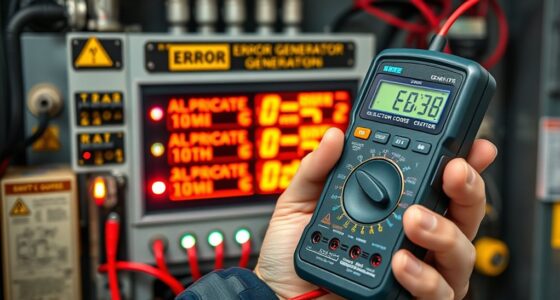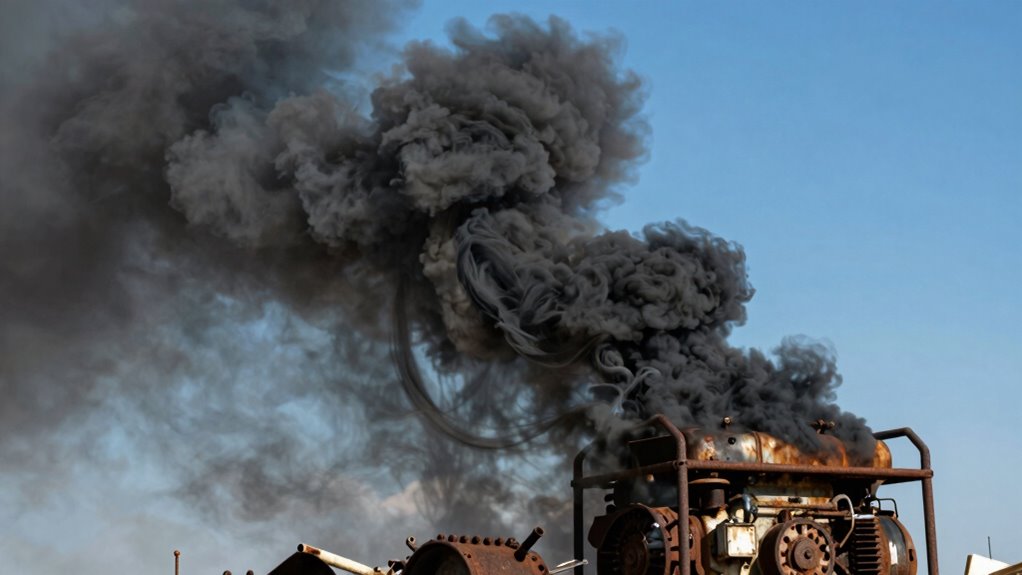

Black smoke from your generator usually means incomplete combustion, often caused by a rich fuel mixture or faulty parts like the carburetor or air filter. It can also indicate worn spark plugs or poor maintenance practices that cause the engine to run inefficiently. This leads to unburned hydrocarbons and black particles being emitted. If you want to understand the common causes and how to fix them, there’s more to discover below.
Key Takeaways
- Black smoke indicates incomplete combustion, often caused by a rich fuel mixture or faulty air intake components.
- It signifies inefficient engine operation, leading to increased emissions of unburned hydrocarbons and carbon particles.
- Common causes include dirty air filters, malfunctioning carburetors, or worn spark plugs.
- Black smoke suggests the engine is running hotter or less efficiently, risking potential damage.
- Regular maintenance and proper tuning can prevent black smoke and improve generator performance.
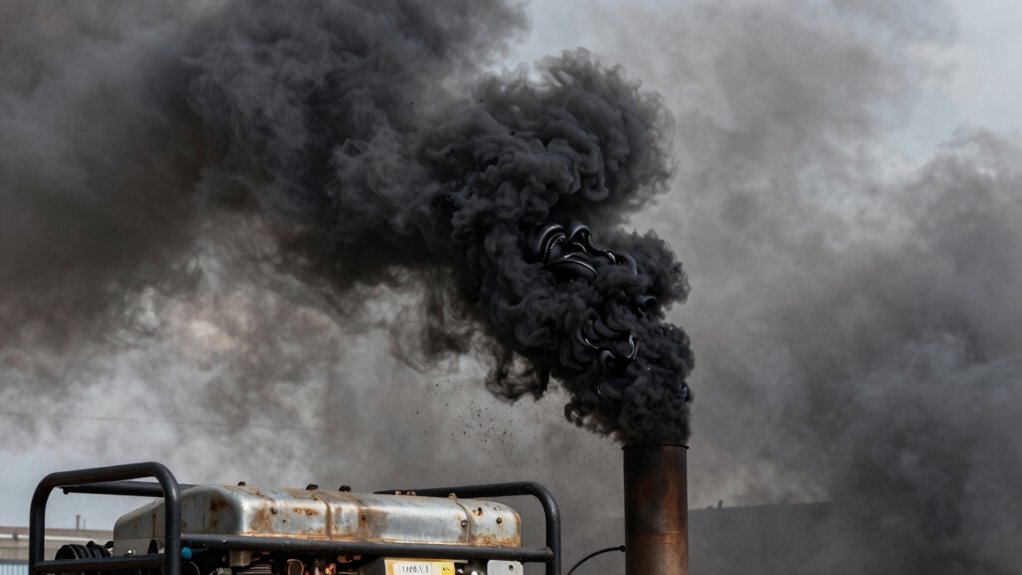
Black smoke pouring from your generator is a clear sign that something isn’t right. When you see thick, dark smoke billowing out of the exhaust, it indicates your generator isn’t running efficiently and could be releasing excessive emissions. This isn’t just a matter of environmental concern; it’s also a sign that your device isn’t operating at peak fuel efficiency. If left unchecked, it can lead to increased fuel consumption, higher operational costs, and potential damage to the engine over time. Recognizing the cause of black smoke helps you take immediate action to fix the problem and keep your generator running smoothly.
Black smoke usually signals incomplete combustion within the engine. When fuel isn’t burning properly, unburned hydrocarbons and carbon particles accumulate, creating that dense, dark exhaust. A common cause is a rich fuel mixture—meaning there’s too much fuel relative to the amount of air entering the combustion chamber. This imbalance can result from a faulty carburetor, clogged air filter, or incorrect fuel settings. When these issues occur, the engine struggles to burn fuel completely, leading to increased emission levels of pollutants and a drop in fuel efficiency. As a result, you might notice your generator consuming more fuel than usual, which adds up over time and raises your operating costs.
Black smoke indicates incomplete combustion caused by a rich fuel mixture and faulty components.
Another factor contributing to black smoke is worn or dirty spark plugs. If the spark plugs aren’t firing correctly, the combustion process is disrupted, causing incomplete burning of fuel. This can not only produce black smoke but also cause your generator to run roughly or stall. Additionally, poor maintenance—like neglecting regular oil changes—can cause the engine to run hotter or less efficiently, further amplifying emission levels and decreasing fuel efficiency. If your generator is old or has been poorly maintained, these issues are more likely to occur, making it essential to keep up with scheduled tune-ups and inspections. Proper maintenance practices are crucial for preventing these problems and ensuring optimal performance. Regularly inspecting and replacing worn parts is key to maintaining a healthy combustion process and reducing emissions.
In some cases, black smoke might also indicate a malfunctioning fuel injector or a problem with the air intake system. Fixing these issues often involves cleaning or replacing parts to restore proper airflow and fuel delivery. Doing so improves fuel efficiency, reduces harmful emissions, and ensures your generator operates at peak performance. Paying attention to black smoke isn’t just about environmental responsibility; it’s about maintaining the health of your equipment and saving money in the long run. If you notice black smoke frequently, it’s a clear sign that you need to troubleshoot and address the underlying problem promptly. Regular generator maintenance can help prevent these issues from developing in the first place. Proper engine tuning is also vital to ensure combustion remains complete and emissions stay within safe limits.

Porch Shield Generator Cover for 5500-15000W, 38 x 28 x 30 inch, Black
- Compatible - More sizes for 5500w -15000w gas...
- Upgrade Material - Made of 600D polyester fabric...
- Tear Resistant & Waterproof - The high-level double...
As an affiliate, we earn on qualifying purchases.
Frequently Asked Questions
Can Black Smoke Damage My Generator’s Engine?
Yes, black smoke can damage your generator’s engine. It indicates issues like too much fuel or poor combustion, which can lead to fouled spark plugs, clogged filters, or engine wear. During generator troubleshooting, address black smoke promptly to prevent long-term damage. Ignoring these signs can result in decreased efficiency, overheating, or engine failure. Regular maintenance and timely repairs help keep your generator running smoothly and extend its lifespan.
How Often Should I Perform Maintenance to Prevent Black Smoke?
You should perform maintenance on your generator every 50 to 100 hours of operation or as recommended by the manufacturer. Regular maintenance helps improve fuel efficiency and reduces excess exhaust emissions, which often cause black smoke. Check and replace air filters, clean or change spark plugs, and guarantee fuel quality. Staying on top of these tasks prevents black smoke, keeps your generator running smoothly, and extends its lifespan.
Does Black Smoke Indicate a Fuel Quality Issue?
Black smoke from your generator often signals a fuel quality issue or improper engine tuning. Think of it like an ancient black plague, indicating something’s seriously wrong. Fuel contamination can cause incomplete combustion, resulting in black smoke. Additionally, if your engine isn’t properly tuned, it won’t burn fuel efficiently. To fix this, check for contaminated fuel and verify your engine is correctly tuned, which helps improve performance and reduces smoke.
Is Black Smoke Harmful to the Environment?
Black smoke from a generator can be harmful to the environment because it contributes to air pollution and violates emission standards. When you see black smoke, it indicates incomplete combustion, releasing pollutants that degrade air quality. By reducing black smoke emissions, you help protect the environment and guarantee compliance with emission standards, ultimately supporting cleaner air and healthier communities. Always maintain your generator to minimize harmful emissions.
Can Black Smoke Be Fixed Without Professional Help?
Yes, you can often fix black smoke without professional help. Start by checking your fuel mixture; if it’s too rich, it causes black smoke. Also, inspect the exhaust system for blockages or leaks. Adjust the fuel mixture to the proper ratio and clean or repair the exhaust system as needed. Regular maintenance can prevent this issue, but if problems persist, consulting a professional is advisable.
Porch Shield Generator Cover for 5000-10000W, 32 x 24 x 24 inch, Black
- Compatible - More sizes for 5000w -10000w gas...
- Upgrade Material - Made of 600D polyester fabric...
- Tear Resistant & Waterproof - The high-level double...
As an affiliate, we earn on qualifying purchases.
Conclusion
So, next time you see black smoke billowing from your generator, don’t just dismiss it. It’s often a sign that something’s off—like too much fuel, clogged filters, or incomplete combustion. While some might think it’s harmless or normal during startup, persistent black smoke usually points to a problem. Investigate the cause to avoid engine damage or inefficient operation. Addressing these issues promptly keeps your generator running smoothly and extends its lifespan.

Portable Power Station 300W, 220Wh Solar Generator Backup Battery Pack Bank
- PORTABLE POWER STATION WITH ENHANCED CAPACITY: Experience the convenience with our...
- PORTABLE SOLAR POWER BANK WITH 7 OUTPUTS: This portable solar power bank...
- SOLAR GENERATOR OPTIONAL: This 300W power station power...
As an affiliate, we earn on qualifying purchases.

DARAN Portable Power Station 89.6Wh LiFePO4 Battery 100W(200W Peak) Solar Power Bank, Portable Charger Small Generator with AC Outlets & PD Fast Charging for Home/Laptop/Camping(Solar Panel Optional)
- 【SLIM & POCKETABLE】This portable power bank is about the size of a smartphone (6.5×3.3×4 inches) and weighs only 2.54 pounds. It features an ergonomic soft handle for easy portability. It easily fits into a backpack for convenient portability. Pro Tip: Fully charge and discharge the...
- 【DUAL INPUT/OUTPUT (AC + DC)】The portable power station...
- 【Ultra Fast Charging】With unique fast charging technology,the portable generator can be charged from 0-80% just in 1.5hrs. The solar power bank power station has Four methods to charging: AC wall socket fast charging,...
As an affiliate, we earn on qualifying purchases.