If you see oil pressure fault codes, it’s important to understand what they mean for your engine’s health. These codes warn you about pressure issues caused by faulty sensors, low oil levels, or worn components. Knowing how to interpret warning lights and messages helps you respond quickly and prevent serious damage. Following regulatory standards and maintenance guidelines guarantees your system stays compliant and reliable. Keep exploring, and you’ll discover how to keep your engine running smoothly.

Get backup power and energy gear delivered free with Prime
- Fast, free delivery on millions of items
- Prime Video, Amazon Music and more included
- Member-only deals all year
Key Takeaways
- Oil pressure fault codes signal engine issues, mainly caused by sensor malfunctions or pressure irregularities, aiding early detection.
- Regular maintenance, including oil checks and sensor inspections, prevents faults and ensures compliance with safety standards.
- Recognizing warning lights and messages helps prioritize urgent repairs to avoid engine damage.
- Industry standards and certifications guarantee sensor reliability, safety, and environmental compliance.
- Proper oil system upkeep extends engine lifespan, improves performance, and reduces costly repairs.
Understanding Oil Pressure Fault Codes and Their Significance
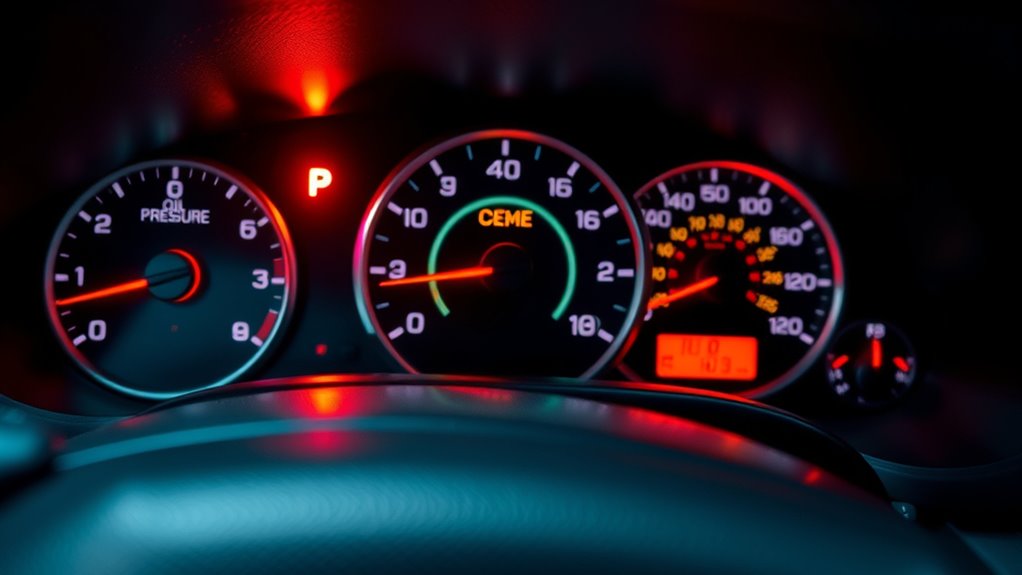
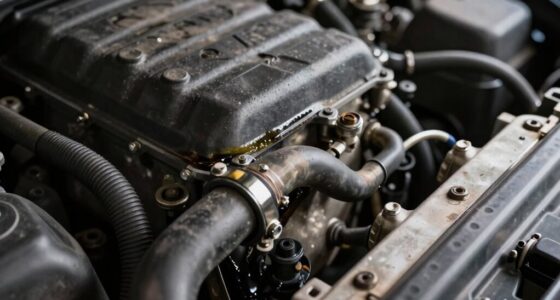
Understanding oil pressure fault codes is essential because they provide critical information about your engine’s health. When your vehicle detects an issue, it triggers fault codes stored in the onboard computer, which can be read through fault code decoding. These codes often originate from oil pressure sensors that monitor the engine’s oil flow and pressure levels. By interpreting these fault codes, you can identify specific problems, such as sensor malfunctions or pressure irregularities. Proper fault code decoding allows you to quickly understand the severity of the issue and determine whether immediate action is needed. Recognizing the significance of these codes helps prevent engine damage and ensures your vehicle runs smoothly, highlighting the importance of paying attention to oil pressure fault codes at the first sign of trouble.
Common Causes of Oil Pressure Issues in Vehicles
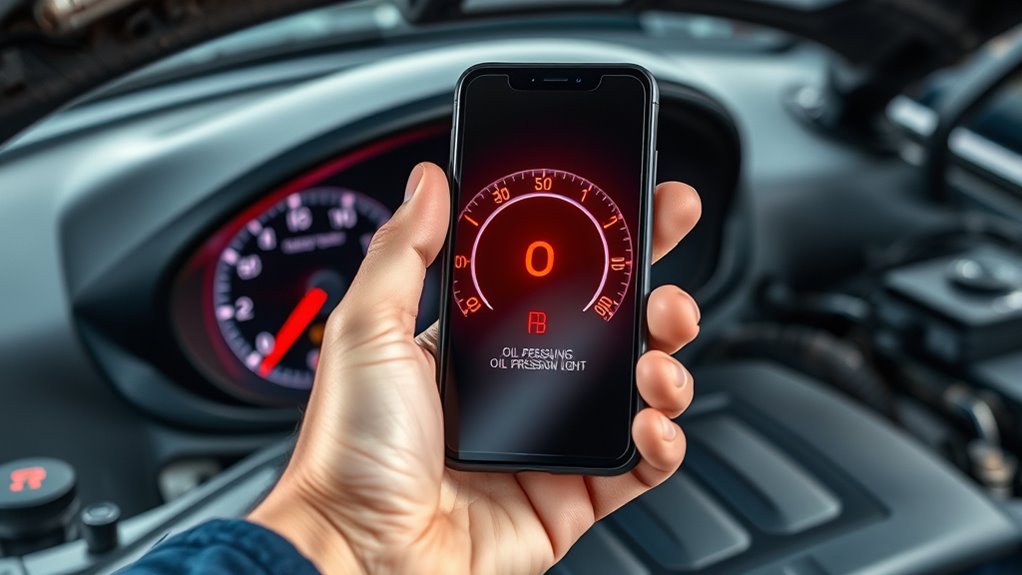
Oil pressure issues often stem from a variety of common causes that can affect your engine’s performance. One key factor is the oil pump, which may fail or become worn, reducing oil circulation and pressure. Additionally, using oil with incorrect viscosity can lead to pressure problems; too thick or too thin oil doesn’t lubricate properly. Dirty or clogged oil filters can restrict flow, causing pressure drops. Low oil levels also contribute, as insufficient oil means less lubrication and pressure. Worn engine bearings or damaged seals can cause leaks, decreasing oil pressure. Regular maintenance, such as checking oil levels, replacing filters, and using the right oil viscosity, helps prevent these issues and keeps your engine running smoothly. Proper maintenance is essential for avoiding oil pressure faults.
Interpreting Oil Pressure Warning Lights and Messages
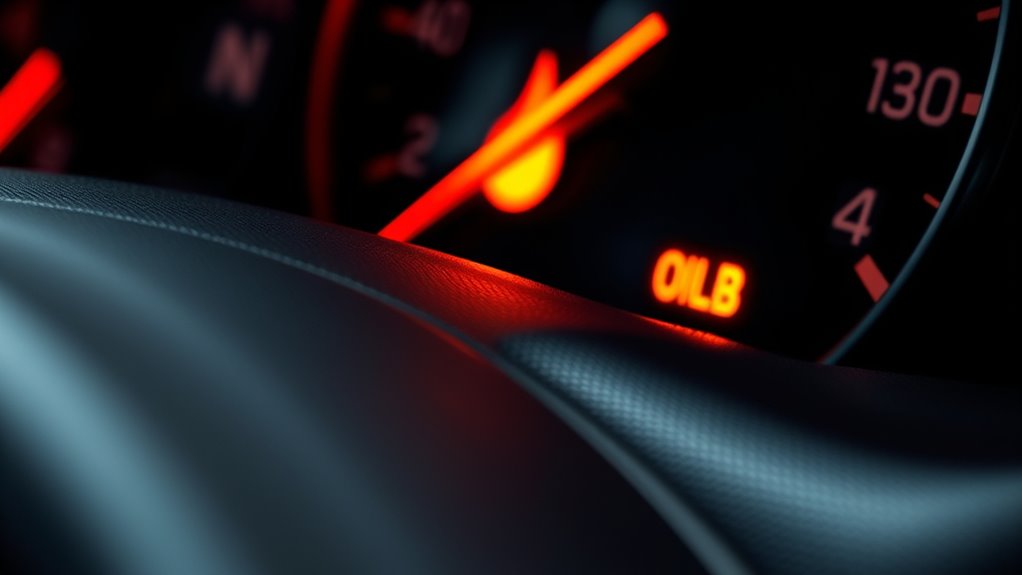
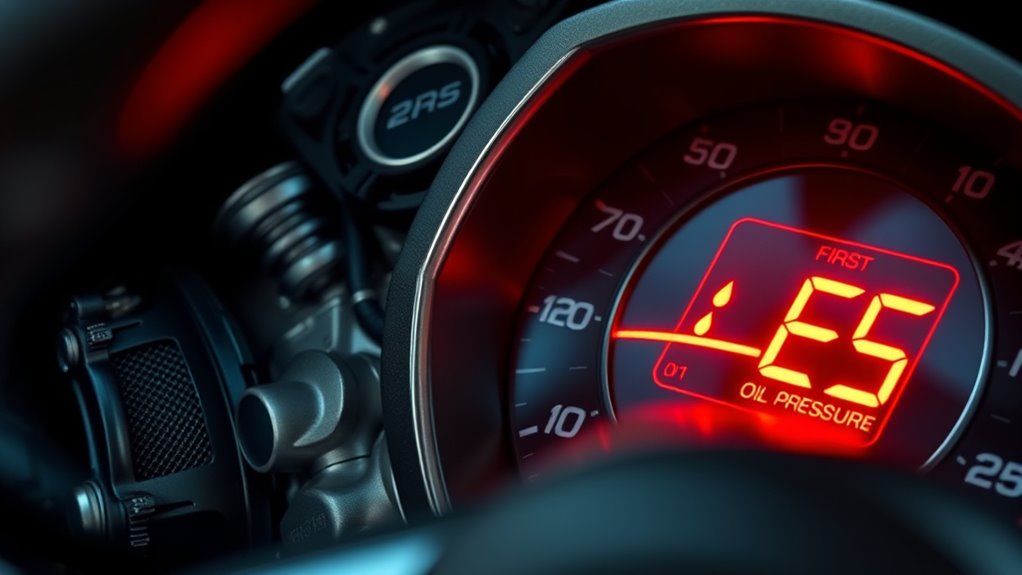
When an oil pressure warning light or message appears, it’s important to recognize what it’s telling you. Different colors and alerts indicate varying levels of urgency, so understanding them helps you respond quickly. Let’s look at how to interpret these signals to keep your engine safe. Maintaining proper digital literacy about vehicle alerts can also help in troubleshooting and understanding modern automotive systems.
Recognizing Warning Light Colors
Recognizing the colors of warning lights is crucial for quickly evaluating your vehicle’s oil pressure status. Different warning light meanings are often conveyed through color coding, helping you prioritize actions. Typically, red lights indicate urgent issues that require immediate attention, like a severe oil pressure fault. Yellow or amber lights suggest caution; your vehicle might need servicing soon but isn’t an emergency. Green or blue lights usually confirm systems are active or functioning normally. Understanding these warning light meanings ensures you respond appropriately, whether that’s pulling over immediately or scheduling maintenance soon. Additionally, some vehicles may have specific oil pressure warning light behaviors or messages that vary by make and model. By paying attention to warning light colors, you can prevent serious engine damage and stay safe on the road. Always consult your vehicle’s manual for specific color codes and their meanings.
Understanding Message Alerts
Understanding message alerts is key to responding promptly when your vehicle detects a potential oil pressure issue. These alerts help you identify problems early, such as an oil leak or a faulty oil filter, before they cause serious damage. When you see a warning message, pay attention to the details, like whether it mentions low oil pressure or a specific component. Recognizing oil pressure fluctuations can also aid in diagnosing underlying problems more effectively.
- Look for signs of oil leaks around the engine or under the vehicle, which can trigger alerts.
- Check if the oil filter needs replacing, as a clogged filter can lower oil pressure.
- Respond quickly by stopping the vehicle and inspecting the oil level and condition to prevent engine damage.
Steps to Diagnose and Fix Oil Pressure Faults

Start by checking your oil levels to guarantee they’re within the recommended range, as low oil can cause pressure issues. Next, inspect the oil pressure sensor for any signs of damage or loose connections, since faulty sensors often trigger warning lights. Addressing these simple steps can often identify or resolve the problem quickly. Additionally, reviewing holistic approaches to vehicle maintenance can help prevent future issues with oil pressure.
Check Oil Levels
To diagnose an oil pressure fault, begin by checking the oil level in your vehicle’s engine. Low oil levels can trigger pressure warnings, so verify it’s at the recommended mark. If the oil level is low, you’ll need to perform oil topping to restore proper pressure. Here are some key steps:
- Park your vehicle on a flat surface and turn off the engine.
- Remove the oil dipstick, wipe it clean, then reinsert and pull it out again to check the oil level.
- Add oil gradually if needed, ensuring you don’t overfill, and recheck the level to confirm it’s within the correct range.
Maintaining proper oil level is essential for ideal oil pressure and engine health, preventing faults before they escalate.
Inspect Oil Pressure Sensor
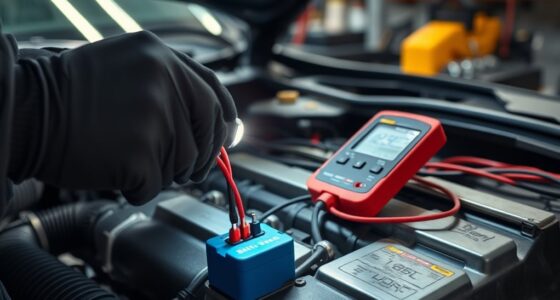
After confirming your oil level is correct, the next step is to inspect the oil pressure sensor. First, check the electrical connections for corrosion, looseness, or damage, as faulty wiring can cause false readings. Ensure the sensor’s connector is securely attached and free of dirt or debris. Next, examine the sensor itself for any signs of damage or corrosion. If you suspect the sensor might be faulty, consider testing its sensor calibration by using a multimeter or replacing it temporarily to see if the fault clears. Proper calibration guarantees accurate readings, preventing false fault codes. Addressing electrical connection issues and verifying sensor calibration can resolve many oil pressure sensor-related faults, helping you restore proper oil pressure monitoring and avoid unnecessary repairs. Additionally, understanding the color accuracy of sensors and components can aid in diagnosing calibration issues more effectively.
Regulatory Standards and Compliance Requirements for Oil Pressure Systems

Regulatory standards and compliance requirements for oil pressure systems are essential to make certain safety, reliability, and environmental protection. These standards guarantee that your systems meet legal and industry benchmarks, reducing risks and environmental impact. You must adhere to environmental regulations to prevent pollution and safeguard ecosystems. Certification standards verify that components, like sensors and pressure regulators, meet quality and safety criteria. Staying compliant not only avoids legal penalties but also enhances system performance and longevity. Key compliance areas include: creating a safe environment for operations, environmental regulations for emissions and waste management, certification standards for safety and durability, industry-specific regulations for automotive, industrial, and marine applications.
Preventive Maintenance Tips to Avoid Oil Pressure Faults

Regularly inspecting your oil pressure system is essential for preventing faults before they occur. Start by checking and replacing your oil filter regularly, as a clogged filter can restrict flow and cause pressure issues. Use the recommended engine oil type for your vehicle; using the wrong oil can lead to improper lubrication and faulty pressure readings. Keep an eye on oil levels and top off as needed to maintain proper pressure. Schedule routine oil changes, especially if you notice dark or gritty oil, which indicates contamination. Ensure your oil pressure sensor and related components are functioning correctly. Consistent maintenance helps prevent unexpected faults, extends engine life, and keeps your vehicle running smoothly. Adopting these habits minimizes the risk of oil pressure faults and costly repairs. Additionally, staying informed about AI security vulnerabilities can help in understanding and implementing safer automotive technologies.
Frequently Asked Questions
How Do Oil Pressure Fault Codes Differ Between Vehicle Makes?
Oil pressure fault codes differ between vehicle makes because of vehicle-specific diagnostics and manufacturer coding variations. You’ll notice that each automaker may assign unique codes or interpret the same code differently. This means you should consult your vehicle’s service manual or a professional scanner tailored to your make to accurately diagnose and resolve the issue. Recognizing these differences guarantees correct repairs and prevents misdiagnosis.
Can Low Oil Pressure Cause Engine Damage Immediately?
Yes, low oil pressure can cause immediate engine damage. When your oil pressure warning lights up, it indicates your engine isn’t getting enough lubrication, risking rapid wear and possible failure. Address this issue promptly to protect your engine’s longevity. Ignoring the warning can lead to costly repairs or even engine seizure, so always check your oil levels and seek professional help if you notice any oil pressure faults.
Are Aftermarket Oil Pressure Gauges Reliable for Diagnostics?
Aftermarket oil pressure gauges can be reliable for diagnostics if you choose a high-quality model. Keep in mind, gauge accuracy varies, so pick one with positive reviews and proper calibration. When installing, follow the manufacturer’s tips to guarantee proper placement and secure connections. Regularly check for leaks and verify readings against your vehicle’s specifications. With careful selection and installation, your aftermarket gauge can effectively monitor oil pressure and help prevent engine issues.
What Are the Legal Penalties for Non-Compliance With Oil Pressure Standards?
If you don’t comply with oil pressure standards, you could face legal consequences like fines, penalties, or even vehicle impoundment. Penalty enforcement varies by location, but authorities prioritize safety violations, including inadequate oil pressure. Non-compliance can lead to costly legal actions, license suspension, or mandatory repairs. It’s essential to follow the regulations to avoid these penalties and guarantee your vehicle remains legal and safe on the road.
How Often Should Oil Pressure Systems Be Inspected for Compliance?
Think of your oil pressure system as the heartbeat of your engine—you need regular checkups. You should inspect it at least every 3,000 to 5,000 miles or during oil change intervals. During these inspections, verify the pressure sensor is calibrated correctly, and look for leaks or corrosion. Regular checks keep your engine alive and prevent costly breakdowns, making sure your vehicle’s health remains strong and steady.
Conclusion
Just like catching a small leak before it floods your garage, understanding oil pressure faults keeps your vehicle running smoothly. By recognizing warning signs early, you prevent potential engine damage, much like noticing a crack in a dam before it bursts. Regular maintenance and awareness turn what seems like a coincidence—small issues—into a confident control over your vehicle’s health. Stay proactive, and your engine’s health will stay as steady as a well-oiled machine.
Halloween Picks
halloween
As an affiliate, we earn on qualifying purchases.