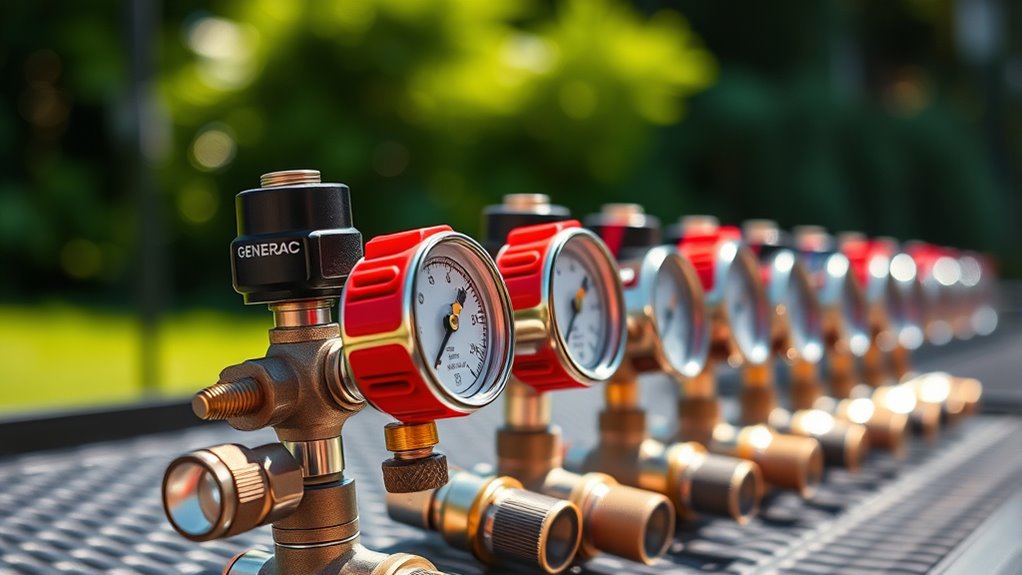

If you’re looking for a reliable Generac propane regulator, you’re likely considering options that match your generator’s needs and gas setup. The LP-Gas Equipment with Two Stage Propane Regulator stands out as the best overall for its versatility and durability, making it suitable for most residential and industrial applications. The Flame King 300,000 BTU Regulator is a strong choice for RVs and outdoor setups, thanks to its compact design and ease of use. However, tradeoffs include differences in capacity, pressure regulation, and compatibility, which can impact performance depending on your specific system. Continue reading for the full breakdown of these options and how to pick the right regulator for your needs.

Get backup power and energy gear delivered free with Prime
- Fast, free delivery on millions of items
- Prime Video, Amazon Music and more included
- Member-only deals all year
Key Takeaways
- Two-stage regulators generally offer more stable pressure control, making them ideal for generator setups requiring consistent gas flow.
- Capacity ratings (BTU/hr) are critical; choosing a regulator with insufficient capacity can cause performance issues.
- Compatibility with your existing tank fittings and connection types should be verified before purchase.
- Build quality and material durability significantly influence long-term reliability, especially in outdoor or industrial environments.
- Price varies widely; premium models tend to offer more precise regulation and durability, but may be unnecessary for small-scale use.


More Details on Our Top Picks
LP-Gas Equipment with Two Stage Propane Regulator, Back Mount, 3/4″ x 3/4″ NPT
This regulator stands out for its capacity to handle gas flows up to 1,600,000 BTU/hr, making it ideal for large-scale or commercial setups. Compared to the R622H 1st Stage Gas Regulator, it offers a higher maximum flow, but it lacks the adjustable pressure feature, limiting its versatility. Its durable brass construction and secure threaded connections ensure reliability in demanding environments. However, the limited pressure range and absence of mounting hardware mean it’s less suited for smaller or residential projects where more control and ease of installation are needed. This model is best suited for industrial or outdoor systems needing high-volume gas supply without frequent pressure adjustments.
Pros:- Handles high gas flow up to 1,600,000 BTU/hr
- Durable brass construction for long-term use
- Secure threaded connections ensure reliable installation
Cons:- Limited pressure adjustment options for precise control
- No included mounting hardware
Best for: Large-scale outdoor gas supply systems or commercial setups requiring high flow capacity
Not ideal for: Residential users or small appliances needing adjustable and easy-to-install regulators
- Connection:3/4-inch FNPT threaded
- Pressure Rating:up to 10 psig (0.69 bar); emergency up to 30 psig (2.1 bar)
- Operating Range:9 to 13 inches of water column (W.C.)
- Capacity:up to 1,600,000 BTU/hr
- Vent Size:3/4-inch NPT with screen
Our verdict“This regulator is ideal for industrial applications where high capacity and durability are priorities over fine pressure control.”
Integral Two Stage Propane Regulator – LP Gas Pressure Control for Tank, 9-13″ WC, POL x 3/4″ FNPT, 850,000 BTU, Residential Regulators
This model simplifies pressure regulation by combining two stages into a single unit, providing consistent flow up to 850,000 BTU. Unlike the R622L 2nd Stage Regulator, it offers easier installation and UL-listed safety with dual vent protection. While it excels in residential or RV settings, its limited capacity makes it less suitable for industrial or high-demand outdoor applications. Proper fitting compatibility is essential for optimal performance, which might pose challenges for some users. Overall, this regulator makes the most sense for homeowners or RV owners seeking reliable, straightforward pressure regulation without the need for high flow capacity.
Pros:- Simplifies installation by combining two stages
- Provides steady pressure up to 850,000 BTU
- UL-listed with dual vent protection for safety
Cons:- Limited to residential or RV applications
- Requires correct fitting compatibility for best performance
Best for: Homeowners or RV owners seeking reliable pressure control with easy installation
Not ideal for: Industrial or outdoor high-demand systems requiring higher BTU capacities
- Type:Two-stage propane regulator
- Inlet Pressure:up to 250 psig
- Outlet Pressure Range:9-13″ WC
- Capacity:850,000 BTU
- Inlet Connection:POL
- Outlet Connection:3/4″ FNPT
Our verdict“This regulator is perfect for residential or RV setups needing dependable pressure control with straightforward installation.”
Propane Regulator R622H 1st Stage Gas Regulator, Adjustable 4–12 PSI, 3/4″ NPT, High Capacity LP/Natural Gas for Residential, Commercial & Industrial Systems
This regulator offers a broad pressure adjustment range from 4 to 12 PSI, making it highly adaptable for diverse applications compared to the fixed-pressure LP-Gas Equipment with Two Stage Propane Regulator. Its high flow capacity of 2,500,000 BTU/hr suits demanding outdoor or commercial systems, but it’s not designed for indoor use or low-pressure setups. The inclusion of safety features like a relief valve and screened vent enhances safety in complex environments. The tradeoff is that professional installation is recommended, and its size and complexity may be overkill for simple residential needs. This pick makes the most sense for high-demand outdoor systems needing flexible pressure settings.
Pros:- Adjustable pressure from 4 to 12 PSI for versatility
- Handles high flow rates up to 2,500,000 BTU/hr
- Built-in safety features including relief valve
Cons:- Requires professional installation
- Not suitable for indoor or low-pressure systems
Best for: Outdoor commercial or industrial systems requiring adjustable pressure and high flow capacity
Not ideal for: Simple residential applications or indoor use where ease of setup is a priority
- Inlet/Outlet Connection:3/4″ NPT
- Adjustable Pressure:4–12 PSI
- Maximum Inlet Pressure:250 PSI
- Flow Capacity:2,500,000 BTU/hr
- Orifice Size:7/32″
Our verdict“This regulator is designed for demanding outdoor and industrial applications that need adjustable pressure and high flow capacity.”
R622-CFF Propane Second Stage Regulator – LP Gas Pressure Control for Tank, 9-13 inch WC, 1/2″ x 3/4″ FNPT, 1,400,000 BTU
Compared with the Integral Two Stage Propane Regulator, this second stage unit focuses solely on maintaining steady pressure after initial regulation, making it ideal for high-demand systems. Its durable brass and stainless steel construction ensure longevity in outdoor environments. While it provides consistent regulation at up to 1,400,000 BTU, it requires some technical knowledge for installation, and it’s limited to propane applications. The main tradeoff is that it doesn’t handle the high flow capacities of larger first-stage regulators, but it excels in providing stable pressure downstream, especially for large residential or commercial setups needing dependable second-stage control.
Pros:- Provides reliable, steady pressure for appliances
- Durable construction with brass and stainless steel
- Supports high BTU demand up to 1,400,000 BTU
Cons:- Installation may be complex for non-professionals
- Limited to propane applications only
Best for: Systems requiring stable second-stage regulation in outdoor, high-demand propane setups
Not ideal for: Indoor or low-demand residential applications where simpler solutions suffice
- Pressure Range:9-13 inch WC
- BTU Capacity:1,400,000 BTU
- Inlet/Outlet Size:1/2″ x 3/4″ FNPT
- Material:Brass and stainless steel
Our verdict“This regulator is best suited for high-demand outdoor setups needing dependable pressure regulation after initial control.”
Flame King 300,000 BTU Vertical Mounted 2-Stage Propane LP Regulator for RVs, Vans, Trailers, Campers, 100LB Tanks, ASME Tanks, Generators
This dual-stage regulator offers consistent pressure to RV appliances, making it ideal for mobile or high-demand setups. Its heavy-duty aluminum construction and inclusion of a rain cover provide durability and weatherproofing, unlike many simpler models. While its capacity of 300,000 BTU is lower than larger commercial models, it is perfectly suited for large RVs, food trucks, or generators. The complex installation process may be challenging for beginners, and it’s specifically designed for RVs or trailers, not stationary residential systems. Compared to the LP-Gas Equipment with Two Stage Propane Regulator, it is more portable and weather-resistant, but less suitable for static, high-volume industrial applications.
Pros:- Maintains consistent pressure with dual-stage design
- Heavy-duty aluminum construction for durability
- Includes rain cover for outdoor weather protection
Cons:- Installation can be complex for novices
- Limited capacity for very high-demand systems
Best for: RV owners and mobile high-BTU appliance users needing reliable pressure control
Not ideal for: Stationary residential or industrial systems requiring high flow or adjustable pressure
- BTU Capacity:300,000 BTU/HR
- Outlet Pressure:11-inch water column
- Inlet Connection:1/4″ female 18NPT
- Outlet Connection:3/8″-18NPT
- Material:Heavy-duty aluminum
Our verdict“This regulator provides dependable pressure control for RVs and mobile setups where weather resistance and durability matter most.”
Propane Regulator R622H 1st Stage Gas Regulator, Adjustable 4–12 PSI, 3/4″ NPT, High Capacity LP/Natural Gas Regulator for Residential, Heater, Burner, Generator, Outdoor Cooking & Industrial Systems
This high-capacity first-stage regulator stands out for its adjustable pressure range from 4 to 12 PSI, making it suitable for a variety of residential, commercial, and industrial setups. Compared to the R622-DFF 2nd Stage Propane Regulator, it offers greater flexibility in pressure adjustments, which is vital for systems requiring precise control. Its durable construction ensures reliable outdoor performance, and its compatibility with multiple gas types enhances its versatility. However, professional installation is recommended, especially to confirm system-specific settings, and it might be overkill for small-scale residential use. This model is ideal for those needing a robust, adjustable regulator capable of supporting high-demand applications across different environments.
Pros:- Adjustable pressure from 4 to 12 PSI for flexible applications
- Heavy-duty construction ensures durability outdoors
- Supports multiple gas types, including propane and natural gas
- High capacity up to 2,500,000 BTU/hr for demanding systems
Cons:- Requires professional installation for safety and proper setup
- Potentially complex setup for users unfamiliar with gas systems
Best for: Professionals or advanced users managing large or mixed-gas systems requiring adjustable, high-capacity regulators
Not ideal for: Homeowners with small or simple setups who prefer plug-and-play solutions without professional installation
- Pressure Range:4–12 PSI
- Inlet/Outlet Connection:3/4″ NPT
- Orifice Size:7/32″
- Inlet Pressure Support:up to 250 PSI
- Capacity:2,500,000 BTU/hr
Our verdict“This regulator is best suited for users who need a reliable, adjustable first-stage solution for high-capacity, multi-gas applications.”
R622-DFF Propane 2nd Stage Regulator – LP Gas Pressure Control for Tank, 9-13 inch WC, 3/4″ x 3/4″ FNPT, 1,400,000 BTU
The R622-DFF 2nd Stage Regulator excels at maintaining consistent pressure across residential propane systems, supporting up to 1,400,000 BTU. It offers a narrower pressure range of 9-13 inches WC, which makes it more suitable for stable, smaller-scale applications compared to the broader range of the Propane Regulator R622H. Its built-in safety features like a relief valve and screened vent bolster operational safety. However, proper installation by trained technicians is crucial, and limited info on long-term durability could be a concern for some buyers. This pick makes the most sense for homeowners seeking dependable second-stage control for whole-house or large appliance setups.
Pros:- Steady pressure regulation prevents surges or drops
- Supports up to 1,400,000 BTU for typical residential demands
- Built-in relief valve and screened vent improve safety
- Standard NPT fittings ensure compatibility
Cons:- Requires professional installation for correct operation
- Limited pressure range may not suit all high-demand systems
Best for: Homeowners or small-scale commercial operators needing steady, safe propane pressure regulation
Not ideal for: Users requiring highly adjustable or high-capacity regulators for industrial or outdoor heavy-duty applications
- Pressure Range:9-13 inch WC
- BTU Capacity:1,400,000 BTU
- Connection:3/4″ x 3/4″ FNPT
- Max Pressure:Less than 2 PSIG
- Safety Features:Relief valve, screened vent
Our verdict“This regulator delivers reliable, steady pressure control ideal for residential applications with moderate capacity needs.”
R622-DFF 2nd Stage Propane Regulator, 3/4″ x 3/4″ FNPT, 9-13″ W.C. Outlet Pressure, 1,600,000 BTU/hr
The R622-DFF 2nd Stage Propane Regulator with a capacity of 1,600,000 BTU/hr is tailored for large-scale industrial or commercial propane systems. Its high capacity surpasses most residential models, and its adjustable outlet pressure between 9-13 inches W.C. allows for precise control in complex setups. Unlike the R622-DFF for residential use, this model is built to withstand demanding environments but requires expert installation due to its technical specifications. Its durability and capacity make it ideal for high-volume applications, yet its size and complexity could be a barrier for smaller operations or DIY users. This regulator is best suited for professionals managing large propane systems in industrial settings.
Pros:- High capacity of 1,600,000 BTU/hr for demanding applications
- Adjustable outlet pressure for versatile use
- Durable construction suited for harsh environments
- Precise pressure regulation
Cons:- Complex installation requiring professional expertise
- Limited compatibility, only suitable for propane systems
Best for: Industrial or commercial operators needing high-capacity, durable pressure regulation
Not ideal for: Small residential users or DIY enthusiasts looking for simple, easy-to-install solutions
- Connection:3/4″ x 3/4″ FNPT
- Maximum Inlet Pressure:10 psig / 0.69 bar
- Emergency Inlet Pressure:30 psig / 2.1 bar
- Outlet Pressure Range:9 to 13 inches W.C.
- Capacity:1,600,000 BTU/hr
- Vent Size:3/4″ NPT screened
Our verdict“This regulator delivers industrial-grade performance for large propane systems where durability and capacity are priorities.”
R622L 2nd Stage Propane Regulator, 9-13 W.C Spring, 3/4″ NPT, 1,600,000 BTU/hr, LP Gas Regulator for Home and Commercial Use
The R622L 2nd Stage Propane Regulator strikes a balance between capacity and safety, supporting up to 1,600,000 BTU/hr with an adjustable outlet pressure of 9-13 inches WC. Its built-in safety relief valve adds an extra layer of security, making it suitable for both residential and light commercial applications. Compared with the Propane Regulator R622H, it features a more user-friendly design with safety enhancements, though its professional installation requirement remains. It’s a reliable choice for those who need high capacity combined with safety features, but may be complex for DIY installation and limited to specific connection sizes. Overall, it offers a versatile solution for large appliances and systems requiring consistent pressure control.
Pros:- Adjustable outlet pressure from 9-13 W.C.
- Supports up to 1,600,000 BTU/hr for large appliances
- Built-in safety relief valve enhances operational security
- Compatible with propane and natural gas
Cons:- Requires professional installation for safety and accuracy
- Complex setup may challenge DIY users
Best for: Homeowners or small business operators needing a high-capacity, safe, and adjustable regulator
Not ideal for: DIY users or those with small-scale setups seeking simple, plug-and-play regulators
- Inlet/Outlet Connection:3/4″ NPT
- Maximum Flow:1,600,000 BTU/hr
- Inlet Pressure:up to 10 PSI
- Outlet Pressure:9-13 W.C. (adjustable)
- Built-in Safety:Relief valve
- Vent Type:Screened vent
Our verdict“This regulator offers a high-capacity, safety-focused solution for those managing large propane systems at home or in small commercial settings.”
How We Picked
These products were selected based on their performance, build quality, pressure regulation stability, and suitability for generator use. We prioritized regulators that are widely compatible with common tank fittings and capable of handling a range of capacities up to 1,600,000 BTU/hr. Products with multiple stages, durable construction, and positive user feedback scored higher. The ranking balances value and premium features, ensuring options for different budgets and needs. Ultimately, the goal was to highlight regulators that reliably deliver consistent pressure and gas flow in various applications, especially for generators with built-in regulators or requiring external control.Factors to Consider When Choosing Generac Propane Regulator
Choosing the right propane regulator for your generator involves understanding key factors that impact performance, safety, and durability. To get the most from your investment, consider not only the specifications but also how the regulator will fit into your overall setup and usage patterns. The right choice depends on your capacity needs, connection types, and whether you prioritize ease of installation or long-term reliability. Here are some important factors to keep in mind:Capacity and BTU Rating
Matching the regulator’s capacity with your generator’s BTU/hr requirements is essential. An undersized regulator can cause pressure drops and reduced performance, while an oversized one may be unnecessarily expensive and complex. Always check your generator’s specifications and select a regulator rated for at least that capacity, with some margin for safety and future expansion.
Number of Stages
Two-stage regulators provide more consistent pressure regulation, especially important for sensitive generator systems that need stable gas flow. Single-stage models are simpler and less costly but may result in fluctuating pressure, potentially affecting generator performance and safety. Evaluate your setup’s stability needs when choosing between these options.
Connection Type and Compatibility
Verify that the regulator’s fittings match your tank and piping—common types include POL, FNPT, and others. Mismatched connections can lead to leaks or installation difficulties. Also, consider the overall system compatibility, including pressure inlet and outlet specifications, to ensure seamless integration.
Material Durability and Build Quality
Outdoor and industrial applications demand robust materials like brass or stainless steel to withstand corrosion and physical wear. Cheaper plastic components may save money initially but often fail prematurely. Investing in a well-constructed regulator can save costs over time by reducing maintenance and replacement needs.
Price and Value
While premium models often offer better regulation accuracy and durability, they may be unnecessary for small or infrequent use. Conversely, budget options might suffice for casual or temporary setups but could compromise safety or performance if used long-term. Balance your budget against your performance expectations and safety requirements.
Frequently Asked Questions
Does my generator have a built-in regulator, and do I need an external one?
Many generators include an internal regulator designed to control gas flow adequately for typical operation. However, in larger or more sensitive systems, an external regulator can provide more precise pressure control, especially if you use multiple appliances or have specific capacity requirements. Check your generator’s specifications to determine if an external regulator enhances safety or performance.
Can I use a standard propane regulator for natural gas appliances?
Generally, propane and natural gas regulators are not interchangeable due to differences in pressure and flow characteristics. Using a propane regulator on natural gas can result in poor performance or safety issues. Always select a regulator rated specifically for your gas type and intended application.
How do I know what capacity regulator I need for my generator?
The capacity of the regulator should match or exceed your generator’s BTU/hr rating, which indicates how much gas it consumes. For example, if your generator uses 850,000 BTU/hr, choose a regulator rated for at least that capacity to maintain stable pressure and safe operation. Overestimating slightly can provide additional safety margin.
Are two-stage regulators worth the extra cost?
In most cases, yes—especially if your generator requires consistent pressure or operates in environments with fluctuating gas demands. Two-stage regulators reduce pressure swings, resulting in better performance and safety. For small or simple setups, a single-stage regulator might suffice, but for larger systems, the extra investment pays off.
What maintenance is required for a propane regulator?
Regular inspection for leaks, corrosion, and physical damage is essential. It’s advisable to clean the regulator periodically and replace it if you notice reduced pressure, leaks, or rust. Proper maintenance extends the lifespan of the regulator and ensures safe operation, especially in outdoor or harsh environments.
Conclusion
For most users, the LP-Gas Equipment with Two Stage Propane Regulator offers the best balance of performance and durability, making it the ideal best overall choice. Those seeking value may prefer simpler, single-stage models that still deliver reliable regulation. Premium buyers should consider high-capacity, multi-stage regulators with robust construction for industrial or continuous use. Beginners or casual users will appreciate straightforward, easy-to-install options, while professionals with specific capacity needs should prioritize models with higher BTU ratings and reliable fittings. Ultimately, your choice depends on your system size, usage frequency, and safety standards—use this guide to match the right regulator to your generator setup.
As an affiliate, we earn on qualifying purchases.Evergreen bestsellers Picks
bestsellers