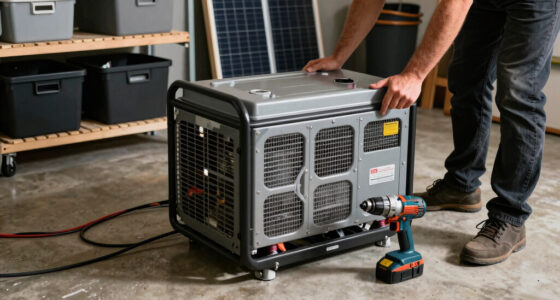

Portable inverter generators range from compact units for essentials to larger models built for heavier backup loads. My best overall pick is the WEN DF680iX, whose dual-fuel design and higher output suit buyers who need flexibility and capacity. The Westinghouse iGen8200TFc stands out for tri-fuel flexibility, while the AIVOLT 1600W is a smaller choice for lighter loads and easier transport. The main tradeoffs are output versus weight, fuel options versus simplicity, and runtime versus the load you plan to power. Read on for the full breakdown and guidance on matching a generator to your actual needs.

Get backup power and energy gear delivered free — and shop member deals
- Fast, free delivery on millions of items
- Access to Prime Big Deal Days deals on October 6–7
- Prime Video, Amazon Music and more included
Complete the kit


Key Takeaways
- The WEN DF680iX leads for buyers who want a higher-output dual-fuel model, while its size and output may be more than occasional light-duty use requires.
- The Westinghouse iGen8200TFc offers the lineup’s tri-fuel flexibility, making fuel choice its defining advantage for buyers planning around multiple supply options.
- The AIVOLT 1600W and 1750W are the compact end of this group; their portability comes with a narrower range of loads they can support.
- WEN’s DF480iX and DF360iX give buyers dual-fuel alternatives at different output levels, so the choice turns on load needs as well as fuel flexibility.
- Oxseryn appears across several output classes, from 2800W to 5000W, highlighting why buyers should compare rated output, weight, and intended use instead of choosing by brand alone.
| Oxseryn 4400-Watt Gas-Powered Inverter Generator |  | Best for RV and Home Backup Balance | Peak output: 4,400 watts | Running output: 3,400 watts | Fuel: Gasoline | VIEW LATEST PRICE | See Our Full Breakdown |
| WEN DF680iX 6800-Watt Dual-Fuel Portable Inverter Generator |  | Best for High-Output Dual-Fuel Needs | Engine: 224cc dual-fuel | Gasoline output: 6,800 surge watts; 5,100 rated watts | Propane output: 6,000 surge watts; 4,500 rated watts | VIEW LATEST PRICE | See Our Full Breakdown |
| WEN 3600-Watt Portable Inverter Generator (56360i) |  | Best Compact Pick | Engine: 149cc | Surge power: 3,600 watts | Weight: 46 pounds | VIEW LATEST PRICE | See Our Full Breakdown |
| ERAYAK 4500P 4500W Portable Inverter Generator |  | Best for Quieter Gasoline Power | Peak output: 4,500 watts | Running output: 3,500 watts | Engine: 208cc, 4-stroke | VIEW LATEST PRICE | See Our Full Breakdown |
| PowerSmart 3800-Watt Dual-Fuel Inverter Generator |  | Best for Quiet Dual-Fuel Camping | Fuel type: Gasoline and propane | Gasoline output: 3,800 starting watts; 3,300 running watts | Propane output: 3,500 starting watts; 3,100 running watts | VIEW LATEST PRICE | See Our Full Breakdown |
| AIVOLT 1600W Portable Inverter Generator |  | Best for Sensitive Electronics on the Go | Starting wattage: 1,600 watts | Running wattage: 1,260 watts | Engine: 60 cc 4-stroke OHV | VIEW LATEST PRICE | See Our Full Breakdown |
| Westinghouse iGen8200TFc Tri-Fuel Portable Inverter Generator |  | Best for Flexible Home Backup | Fuel types: Gasoline, propane, natural gas | Gasoline output: 6,600 running / 8,200 peak watts | Propane output: 5,940 running / 7,380 peak watts | VIEW LATEST PRICE | See Our Full Breakdown |
| AIVOLT 1750W Portable Inverter Generator |  | Best Compact Quiet Pick | Running wattage: 1,350 watts | Peak wattage: 1,750 watts | Fuel: Gasoline | VIEW LATEST PRICE | See Our Full Breakdown |
| Oxseryn 5000-Watt Portable Inverter Generator |  | Best for RV Loads on a Budget of Space | Fuel: Gasoline | Peak power: 5,000 watts | Fuel tank: 2 gallons | VIEW LATEST PRICE | See Our Full Breakdown |
| 3000W Portable Inverter Generator |  | Best Midrange Balance | Starting power: 3,000 watts | Running power: 2,350 watts | Engine: 97.7 cc 4-stroke OHV | VIEW LATEST PRICE | See Our Full Breakdown |
| Pulsar PGD40ISCO 4000W Portable Gas Inverter Generator |  | Best for RV Air Conditioning | Peak power: 4,000 watts | Fuel tank: 1 gallon | Runtime: Up to 4 hours at half load | VIEW LATEST PRICE | See Our Full Breakdown |
| Oxseryn 4400W Gas-Powered Inverter Generator |  | Best for Longer Light-Load Runs | Peak output: 4,400 watts | Running output: 3,400 watts | Fuel type: Gasoline | VIEW LATEST PRICE | See Our Full Breakdown |
| WEN DF480iX 4800-Watt Dual-Fuel Portable Inverter Generator |  | Best Dual-Fuel Choice | Engine: 224cc | Fuel types: Gasoline and propane | Gasoline output: 4,800 surge watts; 4,000 rated watts | VIEW LATEST PRICE | See Our Full Breakdown |
| Oxseryn 2800W Portable Inverter Generator |  | Best Compact Pick | Peak output: 2,800 watts | Running output: 2,000 watts | Engine: 79.8 cc, 4-stroke OHV | VIEW LATEST PRICE | See Our Full Breakdown |
| WEN DF360iX Quiet Dual-Fuel Portable Inverter Generator |  | Best for Flexible RV Backup | Fuel types: Gasoline and propane | Gasoline output: 3,600 surge watts; 2,900 rated watts | Propane output: 3,500 surge watts; 2,600 rated watts | VIEW LATEST PRICE | See Our Full Breakdown |
| portable inverter generator | Noise level | Runtime | Weight | Engine |
|---|---|---|---|---|
| Oxseryn 4400-Watt Gas-Powered | Under 72 dBA at 23 feet | Up to 14 hours at 25% load with ECO mode | 56 lbs | — |
| WEN DF680iX 6800-Watt Dual-Fue | 64 dB at quarter load | — | — | 224cc dual-fuel |
| WEN 3600-Watt Portable Inverte | — | — | 46 pounds | 149cc |
| ERAYAK 4500P 4500W Portable In | 60.5 dB(A) | 16 hours; load not specified | 55.12 lbs | 208cc, 4-stroke |
| PowerSmart 3800-Watt Dual-Fuel | 59 dBA at 25% load in Eco Mode | — | — | — |
| AIVOLT 1600W Portable Inverter | 57 dBA at 23 ft | Up to 8 hours at 25% load; approximately 2 hours at full load | 28 lbs | 60 cc 4-stroke OHV |
| Westinghouse iGen8200TFc Tri-F | Around 60 dBA at 25% load | Up to 17 hours at 25% load | — | 298 cc 4-stroke OHV with cast iron sleeve |
| AIVOLT 1750W Portable Inverter | 52 dBA | Up to 7 hours at 25% load | 27.6 lbs | — |
| Oxseryn 5000-Watt Portable Inv | 70 dB at 23 ft | Up to 6 hours at 50% load | 60 lbs | — |
| 3000W Portable Inverter Genera | 53–56 dB at 23 ft | — | 41.8 lbs | 97.7 cc 4-stroke OHV |
| Pulsar PGD40ISCO 4000W Portabl | 59 dB | Up to 4 hours at half load | — | — |
| Oxseryn 4400W Gas-Powered Inve | — | Up to 14 hours at 25% load | 56 lbs | 4-stroke |
| WEN DF480iX 4800-Watt Dual-Fue | 62 dB at quarter load | Up to 7 hours at half load on gasoline; up to 20 hours at half load on a 20-pound propane tank | — | 224cc |
| Oxseryn 2800W Portable Inverte | Under 58 dBA at 23 feet | Up to 9 hours at 25% load | 40 lbs | 79.8 cc, 4-stroke OHV |
| WEN DF360iX Quiet Dual-Fuel Po | — | — | — | — |
More Details on Our Top Picks
Oxseryn 4400-Watt Gas-Powered Inverter Generator
With 3,400 running watts and an RV outlet, this Oxseryn suits buyers who need more capacity than a compact campsite generator can offer. It weighs 56 pounds, close to the ERAYAK 4500P, while giving up a little peak and running output in exchange for a smaller 2-gallon tank. Its stated runtime reaches 14 hours at 25% load in ECO mode, which can stretch a light-load outing or backup shift between refills. The open-frame design and noise below 72 dBA at 23 feet make it less appealing where quiet operation matters; the PowerSmart is rated at 59 dBA at 25% load in Eco Mode. I’d shortlist this model for RV owners and households prioritizing useful output and a fuel gauge over a quieter enclosure.
Pros:- 3,400 running watts cover more than small electronics and light campsite loads
- RV port plus AC and DC outlets support varied connections
- Up to 14 hours at 25% load in ECO mode can reduce refueling on light loads
- 56-pound weight and fuel gauge aid transport and fuel checks
Cons:- Open-frame construction and noise below 72 dBA at 23 feet are less suited to quiet camping
- Gasoline-only operation offers less fuel flexibility than the dual-fuel WEN DF680iX
- Two-gallon tank may require refills during heavier or extended use
Best for: RV owners and homeowners who want midrange inverter output, an RV connection, and a fuel gauge for light backup loads
Not ideal for: Campers in noise-sensitive sites or buyers who need documented 240V output; its open frame is louder than the PowerSmart’s stated Eco Mode level
- Peak output:4,400 watts
- Running output:3,400 watts
- Fuel:Gasoline
- Runtime:Up to 14 hours at 25% load with ECO mode
- Fuel tank:2 gallons
- Noise level:Under 72 dBA at 23 feet
- Weight:56 lbs
- Outlets:2 × 120V AC, 1 × 12V DC, 1 × RV port
Our verdict“Choose this Oxseryn for RV and home backup loads when useful output matters more than quiet operation or dual-fuel flexibility.”
WEN DF680iX 6800-Watt Dual-Fuel Portable Inverter Generator
Among these five, the WEN DF680iX offers the most rated output: 5,100 watts on gasoline and 4,500 on propane, with 120V/240V bonded-neutral output. That makes it a stronger fit for larger backup loads or compatible low-power Level 2 EV charging than the 3,400-watt Oxseryn. Gasoline or propane operation gives owners a choice of fuel, and the electric start, wheels, and telescoping handle help manage a generator with this much capability. Its stated 64 dB noise level is measured at quarter load, so it is not directly comparable to every listing here. Runtime is modest on gasoline at half load, and a propane tank is not included. I’d pick it when output and fuel options outweigh the smaller, lighter form of the WEN 56360i.
Pros:- Highest rated output in this batch, with 120V/240V bonded-neutral capability
- Gasoline and propane options provide fuel flexibility
- Electric start with recoil backup and wheeled telescoping-handle transport
- CO shutdown sensor and low-oil, low-fuel, and overload protection
Cons:- Gasoline runtime is up to 6.1 hours at half load
- Propane tank is not included, and the parallel connection kit is sold separately
- More generator than small electronics or light camping loads require
Best for: Homeowners or RV users who need substantial 120V/240V output, dual-fuel flexibility, and a generator that can be wheeled
Not ideal for: Campers who prioritize a light, easily lifted unit or buyers seeking long gasoline runtime at half load
- Engine:224cc dual-fuel
- Gasoline output:6,800 surge watts; 5,100 rated watts
- Propane output:6,000 surge watts; 4,500 rated watts
- Starting method:Keyless electric start with recoil backup
- Gasoline runtime:Up to 6.1 hours at half load
- Propane runtime:Up to 9 hours at half load with a 20-pound tank
- Voltage:120V/240V bonded-neutral
- Noise level:64 dB at quarter load
- Warranty:3 years
Our verdict“Pick the DF680iX when high output, 240V capability, and two fuel choices matter more than compact size or long gasoline runtime.”
WEN 3600-Watt Portable Inverter Generator (56360i)
At 46 pounds, the WEN 56360i is the lightest specified model in this batch, making it easier to load into a vehicle or move around a campsite than the roughly 55-pound ERAYAK 4500P and 56-pound Oxseryn. Its 3,600 surge watts and clean inverter power suit electronics and moderate RV loads, while AC, TT-30R RV, 12V DC, and USB connections cover common charging needs. Fuel shutoff helps use remaining carburetor fuel before shutdown, a practical feature for storage between trips. The tradeoff is lower capacity than the 4,500-watt ERAYAK and no dual-fuel option like the WEN DF680iX. The supplied data also does not state runtime or rated output, so buyers planning long or heavier loads have fewer figures to compare.
Pros:- 46-pound body is lighter than the other specified generators in this batch
- Clean inverter power is suited to sensitive electronics
- TT-30R RV, AC, DC, and USB connections support varied devices
- Fuel shutoff helps use remaining carburetor fuel before storage
Cons:- Lower surge capacity than the ERAYAK 4500P and Oxseryn 4400
- Gasoline-only fuel information offers less flexibility than the WEN DF680iX
- Provided product data does not state runtime or rated output
Best for: Campers and RV travelers who need a relatively light generator for electronics and moderate loads
Not ideal for: Households planning heavier backup loads or buyers who need stated runtime and rated-output figures before choosing
- Engine:149cc
- Surge power:3,600 watts
- Weight:46 pounds
- AC outlets:Two three-prong 120V receptacles
- RV outlet:One TT-30R receptacle
- DC outlet:One 12V DC receptacle
- USB ports:Two 5V USB ports
- Warranty:Three years
Our verdict“Choose the WEN 56360i for transport-friendly power on camping and RV trips when loads stay moderate.”
ERAYAK 4500P 4500W Portable Inverter Generator
The ERAYAK 4500P combines 3,500 running watts with a stated 60.5 dB(A) noise level, giving it a useful middle ground between the lighter WEN 56360i and the higher-output, dual-fuel WEN DF680iX. Its 0.2%–1.2% THD is suited to sensitive electronics, and Eco Mode can help reduce fuel use and noise on lighter loads. Parallel capability can raise combined output when paired with another unit, though the parallel kit is sold separately. At 55.12 pounds it remains portable, but manual starting and gasoline-only operation limit convenience compared with the electric-start, dual-fuel WEN. The listing says runtime is 16 hours without specifying the load, so I would not treat that figure as a direct match for runtime claims measured at a stated load.
Pros:- 3,500 running watts offer more capacity than the WEN 56360i
- Stated 60.5 dB(A) noise level and Eco Mode suit quieter light-load use
- 0.2%–1.2% THD is suitable for sensitive electronics
- Parallel capability provides a path to higher combined output
Cons:- Manual start lacks the convenience of the WEN DF680iX electric start
- Gasoline-only operation provides less fuel flexibility than dual-fuel alternatives
- Parallel kit and mobility accessories are sold separately; engine oil is needed before first use
Best for: Campers and homeowners who want midrange gasoline inverter power, low stated noise, and the option to parallel a second unit
Not ideal for: Buyers who need dual-fuel operation, electric start, or a runtime figure tied to a clearly stated load
- Peak output:4,500 watts
- Running output:3,500 watts
- Engine:208cc, 4-stroke
- Fuel tank:2.25 gallons
- Runtime:16 hours; load not specified
- Noise level:60.5 dB(A)
- Weight:55.12 lbs
- Total harmonic distortion:0.2%–1.2%
- Parallel output:Two units provide 7,000 rated watts and 9,000 peak watts
Our verdict“Choose the ERAYAK 4500P for quieter, midrange gasoline power if manual starting and a separately purchased parallel kit work for you.”
PowerSmart 3800-Watt Dual-Fuel Inverter Generator
The PowerSmart is the quiet-use specialist in this group, with a stated 59 dBA at 25% load in Eco Mode and the choice of gasoline or propane. That makes it a better match for quieter campsite use than the open-frame Oxseryn 4400, whose noise rating is under 72 dBA at 23 feet. It provides 3,300 running watts on gasoline or 3,100 on propane, enough for many moderate camping and backup needs, though less than the ERAYAK 4500P’s 3,500 running watts. Propane runtime reaches up to 24 hours with a 20-pound tank, but that tank is separate, while the gasoline tank holds just 1.3 gallons. The two-year warranty is shorter than the three-year coverage listed for both WEN models.
Pros:- Dual-fuel operation allows gasoline or propane use
- 59 dBA at 25% load in Eco Mode is the lowest stated noise figure in this batch
- Up to 24 hours on a 20-pound propane tank can suit extended light-load use
- CO sensor and overload, short-circuit, and low-oil protections are included
Cons:- 1.3-gallon gasoline tank limits fuel capacity
- 24-hour propane runtime depends on a separately supplied 20-pound tank
- Two-year limited warranty is shorter than the three-year WEN warranties listed here
Best for: Campers and RV owners who value quieter Eco Mode operation and want the option to run on propane
Not ideal for: Buyers who need the highest running capacity in this batch or want long gasoline runtime without frequent refills
- Fuel type:Gasoline and propane
- Gasoline output:3,800 starting watts; 3,300 running watts
- Propane output:3,500 starting watts; 3,100 running watts
- Noise level:59 dBA at 25% load in Eco Mode
- Gasoline tank:1.3 gallons
- Gasoline runtime:Up to 8 hours at 25% load
- Propane runtime:Up to 24 hours with a 20 lb tank
- Safety features:Overload, short circuit, CO sensor, and low-oil shutdown
- Warranty:2-year limited warranty; lifetime technical support
Our verdict“Pick the PowerSmart for quieter camping with propane flexibility, provided its lower output and small gasoline tank suit your loads.”
AIVOLT 1600W Portable Inverter Generator
The AIVOLT 1600W suits buyers who value light carry weight and clean power over running several appliances. At 28 pounds and under 3% THD, it is easier to move to a campsite than the 41.8-pound 3000W Portable Inverter Generator, while its output is better matched to small electronics and modest loads than RV air conditioning or whole-home backup. The listed eight-hour runtime applies at 25% load; expect about two hours at full load, so it is not the pick for sustained heavy use. CO shutdown, low-oil shutdown, and overload protection add useful safeguards, though users still need to operate it outdoors. The parallel kit is sold separately, and engine oil is not included. Its California-use restriction also narrows where it can serve.
Pros:- 28-pound weight makes it easier to carry than the 3000W Portable Inverter Generator
- Under 3% THD is suitable for sensitive electronics
- CO detection, low-oil shutdown, and overload protection
- Parallel capable with a compatible kit
Cons:- Only 1,260 running watts limits the appliances it can support
- Runtime falls to about two hours at full load
- Parallel kit and engine oil are not included; not legal for use in California
Best for: Campers and travelers who need a lightweight source for phones, laptops, lights, and other modest loads
Not ideal for: RV owners or households needing sustained high-wattage backup, and buyers in California
- Starting wattage:1,600 watts
- Running wattage:1,260 watts
- Engine:60 cc 4-stroke OHV
- Weight:28 lbs
- Noise level:57 dBA at 23 ft
- Runtime:Up to 8 hours at 25% load; approximately 2 hours at full load
- Fuel and tank:Gas; 3.5 gallons
- Power quality:Less than 3% THD
Our verdict“Choose it for portable, clean power for small loads; skip it when you need long runtimes or high output.”
Westinghouse iGen8200TFc Tri-Fuel Portable Inverter Generator
The Westinghouse iGen8200TFc earns its place for buyers who want substantial inverter output with a choice of gasoline, propane, or natural gas. That flexibility can matter during an outage when one fuel is scarce, and its 50A outlet suits transfer-switch or interlock setups. Compared with the smaller 3000W Portable Inverter Generator, it can support a broader range of household and RV loads, but it is a much larger backup-oriented choice rather than an easy grab-and-go camping unit. Output changes by fuel: gasoline provides the highest listed running wattage, while natural gas provides the lowest. The 17-hour figure is at 25% load, and the 3.9-gallon gasoline tank may need refills during extended use. Less than 3% THD, remote electric start, and parallel capability round out a versatile package.
Pros:- Runs on gasoline, propane, or natural gas
- 50A outlet is ready for a transfer-switch or interlock setup
- Less than 3% THD for electronics
- Remote electric start and parallel capability
Cons:- Running output drops from 6,600 watts on gasoline to 5,280 watts on natural gas
- 3.9-gallon gasoline tank can require refueling during extended operation
- Around 60 dBA at 25% load is louder than the compact AIVOLT models
Best for: Homeowners with a transfer-switch or interlock setup who want fuel flexibility and backup power for multiple circuits
Not ideal for: Campers prioritizing a light, compact generator or buyers who need the same output on every fuel
- Fuel types:Gasoline, propane, natural gas
- Gasoline output:6,600 running / 8,200 peak watts
- Propane output:5,940 running / 7,380 peak watts
- Natural gas output:5,280 running / 6,560 peak watts
- Engine:298 cc 4-stroke OHV with cast iron sleeve
- Fuel tank:3.9 gallons
- Runtime:Up to 17 hours at 25% load
- Noise level:Around 60 dBA at 25% load
- Power quality:Less than 3% THD
Our verdict“Pick this for adaptable home or RV backup across three fuels, provided portability is secondary to output.”
AIVOLT 1750W Portable Inverter Generator
The AIVOLT 1750W is aimed at buyers who want a small generator that is easy to carry and less obtrusive at camp. Its 27.6-pound frame is marginally lighter than the AIVOLT 1600W, while the listed 52 dBA operation is quieter than that model’s 57 dBA rating. It also offers slightly more running power at 1,350 watts, though that modest increase does not turn it into a unit for demanding appliances. Under 3% THD supports sensitive electronics, and CO shutoff, low-oil shutdown, and overload protection cover common operating risks. The tradeoff is its 0.66-gallon tank: seven hours is specified only at 25% load, so buyers should plan around load and refueling needs. It has no stated USB outputs in the supplied specs, unlike the AIVOLT 1600W.
Pros:- 27.6-pound weight is easy to manage for a portable generator
- 52 dBA listed noise level is lower than the AIVOLT 1600W rating
- Under 3% THD for sensitive electronics
- CO shutoff, low-oil shutdown, and overload protection
Cons:- 0.66-gallon tank limits fuel capacity
- Seven-hour runtime applies only at 25% load
- Engine oil is not included
Best for: Solo campers and tailgaters who prioritize quiet operation, easy carrying, and power for light electronics
Not ideal for: Buyers who need long operation between refills, USB charging ports, or power for larger appliances
- Running wattage:1,350 watts
- Peak wattage:1,750 watts
- Fuel:Gasoline
- Tank capacity:0.66 gallons
- Runtime:Up to 7 hours at 25% load
- Noise level:52 dBA
- Weight:27.6 lbs
- Dimensions:16.9 × 9.9 × 15.7 in
- Power quality:Less than 3% THD
Our verdict“Choose this compact AIVOLT for quiet, light-duty outings; choose a larger model when runtime or appliance capacity matters more.”
Oxseryn 5000-Watt Portable Inverter Generator
The Oxseryn 5000-Watt brings more output and a 30A RV connection to this lineup, making it a better fit for larger travel loads than either compact AIVOLT generator. Its 4,000 rated watts can serve more equipment at once, but the open-frame design and 60-pound weight make it less convenient to move and less suited to quiet campsites. The listed 70 dB at 23 feet is notably louder than the Westinghouse iGen8200TFc’s roughly 60 dBA at 25% load, while its under-5% THD rating is less stringent than the under-3% figures on those models. Runtime reaches six hours at 50% load on a two-gallon tank, so extended use calls for fuel planning. ECO mode can help match engine speed to demand, but this remains a louder, heavier portable option.
Pros:- 4,000 rated watts provide substantially more capacity than the AIVOLT compact models
- 30A outlet supports an RV connection
- ECO mode adjusts engine speed to help improve fuel efficiency
- Fuel gauge helps monitor remaining fuel
Cons:- 70 dB at 23 feet is louder than the Westinghouse iGen8200TFc listing
- 60-pound open-frame unit is less convenient to carry than compact enclosed generators
- Under 5% THD is a higher distortion rating than the sub-3% alternatives
Best for: RV owners and outdoor users who need a 30A connection and higher output in a transportable open-frame unit
Not ideal for: Quiet-campground users or owners of especially sensitive equipment who prefer a sub-3% THD rating
- Fuel:Gasoline
- Peak power:5,000 watts
- Fuel tank:2 gallons
- Runtime:Up to 6 hours at 50% load
- Noise level:70 dB at 23 ft
- Weight:60 lbs
- Power quality:Less than 5% THD
- Design:Open-frame inverter generator
Our verdict“Choose it for higher-output RV and outdoor use when a 30A outlet matters more than low noise and easy lifting.”
3000W Portable Inverter Generator
This 3000W Portable Inverter Generator lands between the compact AIVOLT units and the larger Westinghouse iGen8200TFc: it supplies 2,350 running watts while weighing 41.8 pounds. That gives buyers more room for camping or RV equipment than the AIVOLT 1750W, without moving to the Westinghouse’s much higher output and three-fuel setup. Under 3% THD suits sensitive electronics, and the 53–56 dB rating with Eco Mode supports quieter use than the open-frame Oxseryn 5000-Watt, listed at 70 dB. AC, USB-A, USB-C, and 12V DC outputs cover varied charging needs, with parallel connection available for added capacity. The supplied information does not state fuel tank size or runtime, which makes planning for extended operation harder. At 41.8 pounds, it is portable but not a casual one-hand carry.
Pros:- 2,350 running watts offer more capacity than either compact AIVOLT model
- Under 3% THD for sensitive electronics
- AC, USB-A, USB-C, and 12V DC outputs cover varied devices
- 53–56 dB rating and Eco Mode support quieter operation than the Oxseryn 5000-Watt
Cons:- 41.8-pound weight is heavier than the compact AIVOLT generators
- Fuel tank capacity and runtime are not provided in the supplied product data
- Gasoline-only fuel listing offers less flexibility than the Westinghouse iGen8200TFc
Best for: Campers and RV travelers who need more capacity than a small suitcase-style generator and want several device-charging options
Not ideal for: Buyers seeking very light carry weight, multi-fuel flexibility, or confirmed long runtime for backup duty
- Starting power:3,000 watts
- Running power:2,350 watts
- Engine:97.7 cc 4-stroke OHV
- Power quality:Under 3% THD
- Noise level:53–56 dB at 23 ft
- Weight:41.8 lbs
- Dimensions:20.08 × 13.39 × 19.69 in
- Outlets:Dual 120V 20A; USB-A; USB-C; 12V DC
- Other features:Parallel connection; Eco Mode
Our verdict“Pick this for a middle ground in output and portability when you can manage its weight and do not need documented runtime figures.”
Pulsar PGD40ISCO 4000W Portable Gas Inverter Generator
The Pulsar PGD40ISCO is a focused choice for RV owners who need inverter power sized for an air conditioner up to 13,500 BTU. Its 3,200 rated watts and 4,000 peak watts give it more running capacity than the Oxseryn 2800W, while its stated 59 dB noise level suits campsites where a louder generator can be a nuisance. The tradeoff is endurance: the 1-gallon tank runs up to four hours at half load, so extended use means frequent refueling. It is parallel ready if you want the option to add another compatible unit later, but buyers seeking longer runs from a single fill should look at the Oxseryn 4400W, which lists up to 14 hours at 25% load. The Pulsar makes most sense when RV cooling is the priority.
Pros:- Rated for air conditioners up to 13,500 BTU
- 3,200 rated watts with 4,000 peak watts
- 59 dB stated noise level
- Parallel ready for added capacity with a compatible unit
Cons:- One-gallon tank and four-hour half-load runtime call for frequent refueling
- Gasoline-only operation offers less fuel flexibility than the dual-fuel WEN DF480iX
Best for: RV owners who need portable inverter power for an air conditioner up to 13,500 BTU and value quiet operation.
Not ideal for: Campers who expect to run a generator for long stretches without refueling; its stated half-load runtime is four hours.
- Peak power:4,000 watts
- Fuel tank:1 gallon
- Runtime:Up to 4 hours at half load
- Noise level:59 dB
- Air conditioner compatibility:Up to 13,500 BTU
- Parallel ready:Yes
Our verdict“Choose the Pulsar if RV air-conditioning support matters more than long runtime between refills.”
Oxseryn 4400W Gas-Powered Inverter Generator
Among these mid-capacity gas models, the Oxseryn 4400W stands out for pairing 3,400 running watts with a stated runtime of up to 14 hours at 25% load. That low-load figure can mean fewer fuel stops when powering modest essentials, though it does not describe runtime at heavier demand. Its 30A RV outlet and two 120V AC outlets make the connection options more specific than the Pulsar PGD40ISCO’s listed data, while the 56-pound weight keeps it movable for many owners. The two-gallon tank is still compact, and gasoline-only operation gives it less fuel flexibility than the WEN DF480iX. Cold-start technology, overload protection, and low-oil shutdown add practical safeguards, but the supplied specs do not state a noise level. This is a better fit for sustained light loads than for buyers prioritizing dual-fuel backup.
Pros:- 3,400 running watts for a range of small appliances and equipment
- Up to 14 hours at 25% load, according to the supplied specifications
- 30A RV outlet plus two 120V AC outlets and a 12V DC port
- Overload protection, low-oil shutdown, and cold-start technology
Cons:- Gasoline-only operation lacks the fuel choice offered by the WEN DF480iX
- Two-gallon tank is modest for a generator in this output class
- No noise level is provided in the supplied product data
Best for: RV users and household backup buyers who need a 30A connection and expect to run modest loads for extended periods.
Not ideal for: Buyers who want propane capability or a clearly stated noise level before choosing a generator.
- Peak output:4,400 watts
- Running output:3,400 watts
- Fuel type:Gasoline
- Fuel tank:2 gallons
- Runtime:Up to 14 hours at 25% load
- RV outlet:30A
- Weight:56 lbs
- Engine:4-stroke
Our verdict“Pick the Oxseryn 4400W if long light-load operation and a 30A RV outlet matter more than dual-fuel flexibility.”
WEN DF480iX 4800-Watt Dual-Fuel Portable Inverter Generator
The WEN DF480iX earns a distinct place for buyers who want to choose between gasoline and propane. On gasoline it provides 4,000 rated watts; propane lowers that to 3,600, a real capacity difference to account for when planning loads. That flexibility separates it from the gasoline-only Oxseryn 4400W, while CO shutdown protection, electric start, wheels, and a telescoping handle make it a more feature-rich option for backup and RV use. Its listed noise level is 62 dB at quarter load, louder than the Pulsar’s stated 59 dB, and the 1.9-gallon gasoline tank is not especially large. Propane’s listed runtime reaches 20 hours at half load with a 20-pound tank, but that fuel source adds a separate cylinder to transport. Choose it for fuel choice and safety features, not the quietest operation.
Pros:- Runs on gasoline or propane
- 4,000 rated watts on gasoline and 3,600 on propane
- CO shutdown protection, electric start, and automatic low-oil shutdown
- Wheels and telescoping handle support easier movement
Cons:- Rated output falls by 400 watts when using propane
- 62 dB at quarter load is higher than the Pulsar PGD40ISCO’s stated 59 dB
- Parallel connection kit is sold separately
Best for: RV travelers and backup-power buyers who want gasoline and propane options, electric start, and built-in CO shutdown protection.
Not ideal for: Buyers who need the lowest stated noise level or want the same rated output on propane as on gasoline.
- Engine:224cc
- Fuel types:Gasoline and propane
- Gasoline output:4,800 surge watts; 4,000 rated watts
- Propane output:4,320 surge watts; 3,600 rated watts
- Noise level:62 dB at quarter load
- Gasoline tank:1.9 gallons
- Runtime:Up to 7 hours at half load on gasoline; up to 20 hours at half load on a 20-pound propane tank
- Total harmonic distortion:Under 0.3% at no load; under 1.2% at full load
- Warranty:3-year limited warranty
Our verdict“Choose the WEN DF480iX if fuel flexibility and safety features outweigh its lower propane output and louder stated operation.”
Oxseryn 2800W Portable Inverter Generator
At 40 pounds, the Oxseryn 2800W is the lineup’s compact, lower-output option for buyers who want to carry a generator to a campsite or keep one ready for a few essentials. Its 2,000 running watts and under-58 dBA rating at 23 feet favor modest loads and quieter settings; the Pulsar PGD40ISCO offers substantially more rated output for RV air conditioning, but is better matched to buyers who can accept a short four-hour half-load runtime. Oxseryn lists up to nine hours at 25% load from its 1.1-gallon tank, a useful light-load figure rather than a promise for heavier use. The AC, DC, USB, and USB-C ports add charging flexibility. Its 2,000-watt running capacity limits what can be powered at once, and the supplied data says a high-altitude kit is not included for use above 4,000 feet.
Pros:- 40-pound weight makes it easier to move than the larger WEN DF480iX
- Under 58 dBA at 23 feet, according to the supplied specifications
- Up to 9 hours at 25% load
- AC, DC, USB, and USB-C output options
Cons:- 2,000 running watts restrict simultaneous use of higher-draw appliances
- High-altitude kit is not included for use above 4,000 feet
- Runtime varies with load
Best for: Campers and solo travelers who need a light generator for modest loads and want USB-C charging alongside AC power.
Not ideal for: RV owners powering air conditioning or households that need several high-wattage appliances running at once.
- Peak output:2,800 watts
- Running output:2,000 watts
- Engine:79.8 cc, 4-stroke OHV
- Fuel type:Gasoline
- Fuel tank:1.1 gallons
- Runtime:Up to 9 hours at 25% load
- Noise level:Under 58 dBA at 23 feet
- Total harmonic distortion:Less than 3%
- Weight:40 lbs
Our verdict“Choose the Oxseryn 2800W for portable, modest-load camping power when compact size matters more than RV air-conditioning capacity.”
WEN DF360iX Quiet Dual-Fuel Portable Inverter Generator
The WEN DF360iX suits RV owners who want gasoline or propane without moving up to the WEN DF480iX’s higher output class. It includes a TT-30R RV receptacle, an LPG quick connector, two USB ports, and a CO Watchdog shutdown sensor, making its connections and safety features useful for travel and backup. The compromise is capacity: rated output is 2,900 watts on gasoline and 2,600 on propane, below the DF480iX’s 4,000 and 3,600 rated watts. The supplied data gives no runtime or noise figure, so buyers cannot compare endurance or sound directly with the Oxseryn 4400W or Pulsar. Its propane output also drops, which matters when sizing loads. This is a practical fuel-flexible RV pick when its listed outlet set fits your setup and you can work within its lower output.
Pros:- Runs on gasoline or propane
- Includes a TT-30R RV receptacle and LPG quick connector
- CO Watchdog shutdown sensor
- Two USB ports and a 12V DC receptacle
Cons:- Rated output falls from 2,900 watts on gasoline to 2,600 on propane
- Lower rated output than the WEN DF480iX
- Runtime and noise figures are not provided in the supplied data
Best for: RV owners who want a TT-30R outlet, propane capability, and CO shutdown protection for moderate loads.
Not ideal for: Buyers who need higher output for larger loads or who require published runtime and noise figures to compare options.
- Fuel types:Gasoline and propane
- Gasoline output:3,600 surge watts; 2,900 rated watts
- Propane output:3,500 surge watts; 2,600 rated watts
- RV receptacle:TT-30R
- Other receptacles:Two 120V three-prong; one 12V DC
- USB ports:Two 5V
- Safety feature:CO Watchdog shutdown sensor
- Warranty:Three years
Our verdict“Choose the WEN DF360iX for moderate RV loads when propane support and its included RV connection matter more than higher output.”

How We Picked
I ranked these portable inverter generators by how well their stated output, fuel options, and format match distinct buyer needs. I gave more weight to useful versatility and a clear use case than to peak wattage alone: a compact generator can be a better fit for travel, while a higher-output unit makes more sense for demanding backup loads. Dual-fuel and tri-fuel models earn consideration for fuel choice, though added flexibility matters only if the buyer expects to use it.
I also considered portability, ease of choosing a suitable size, and lineup coverage. The ranking places broad-use options ahead of models aimed at narrower situations, then distinguishes compact, value-oriented, and specialized picks. Product names and listed wattage identify the models supplied for this roundup; details such as runtime, weight, noise, outlets, warranty, and transfer-switch compatibility should be checked against the manufacturer’s current specifications before purchase.
Factors to Consider When Choosing Portable Inverter Generators
Choosing a generator starts with the equipment you need to run and the conditions where you will use it. The following checks help translate a wattage label and a list of features into a practical decision.
Match running and starting watts to your actual loads
List the appliances you expect to power at the same time, then note both their running draw and any startup surge. Motors in refrigerators, pumps, and air conditioners can briefly demand more power when they start. A generator that covers the combined running load may still struggle if several devices start together. Avoid adding every appliance you own if you would never run them all at once; that can push you toward a heavier, larger unit without a useful benefit. Leave some headroom for startup demands and small unexpected loads. Check the manufacturer’s rated output as well as its peak figure, since peak output is not a continuous operating level.
Choose fuel flexibility only when you have a plan for it
Gasoline models keep the decision straightforward, while dual-fuel and tri-fuel designs let you use more than one fuel source. That choice can help when you already store propane or have access to another compatible fuel during an outage. Each fuel type can change available output and runtime, so compare the model’s figures for the fuel you expect to use. Do not assume that a multi-fuel label means equal performance on every fuel. Also account for safe storage, connection requirements, and fuel availability in your area. If you will use only one fuel, a simpler model may be easier to select and operate.
Treat portability as more than a wattage number
Portability depends on the generator’s actual weight, handle and wheel design, and how far it must travel between storage and use. A compact unit such as the AIVOLT 1600W may suit trips where carrying space matters, but its lower output limits what it can run. Larger models can power more demanding loads and may be harder to move or store. Check the dimensions and lifting requirements before buying, especially if one person will move the generator. Think about where it will run, too: a suitable outdoor location and safe cable routing can matter as much as getting it out of a vehicle. Choose around your real transport routine rather than the word “portable” in the product name.
Plan for runtime, refueling, and maintenance
Runtime depends on tank or fuel capacity and the load being powered, so a single advertised figure rarely describes every use case. Compare runtime estimates at similar loads where manufacturers provide them. A smaller generator may consume less fuel, but it may also need refueling sooner if pushed near its limit. For backup use, consider how you will obtain fuel and maintain safe storage through an outage. Follow the manufacturer’s maintenance schedule for oil, filters, and storage preparation. Neglecting upkeep can leave a generator unavailable precisely when you need it.
Check power quality, outlets, and connection needs
Inverter technology is often chosen for stable power suitable for electronics, but buyers should confirm the model’s specifications rather than relying on the category name alone. Make an outlet list for the devices you plan to plug in, including voltage, receptacle type, and any USB or 12-volt needs. If you want to connect a generator to household circuits, check the generator’s supported connection method and consult a qualified electrician about a transfer switch. Never improvise a connection through a household outlet. Extension cords also need the right rating and length for the load. These checks can prevent a generator from being powerful enough on paper but awkward for your setup.
Compare noise, placement, and the space you have
Noise matters at campsites, in close neighborhoods, and wherever people need to sleep, but published sound figures depend on distance and load. Compare ratings measured under similar conditions and check whether the manufacturer reports more than one operating level. A quiet-running claim does not make indoor or enclosed operation safe; generators must run outdoors, away from openings, with exhaust directed away from occupied areas. Measure storage space and leave room for safe operating placement. A larger model may solve a power shortage but create transport, storage, or neighbor concerns. Decide where it will live and run before settling on output.
Frequently Asked Questions
How much generator output do I need to keep a refrigerator running during an outage?
Check the refrigerator’s running watts and startup surge from its label or manual, then account for any other devices you plan to power at the same time. The startup demand can be much higher than steady operation, so do not size a generator from the running figure alone. A compact model may cover a refrigerator and a few small essentials, while larger loads can call for a higher-output option such as the WEN DF680iX. Compare rated output with the combined demand and leave headroom. If the appliance documentation is unclear, ask the manufacturer or an electrician before relying on a generator for it.
Is a dual-fuel generator worth choosing if I usually use gasoline?
It can be useful if propane is part of your outage or travel plan, since another compatible fuel can provide an alternative when gasoline is scarce or inconvenient to store. The benefit depends on access to that fuel and whether the model’s output on it suits your loads. Check fuel-specific output and runtime figures before comparing dual-fuel models with gasoline-only options. If you do not expect to use the second fuel, the added flexibility may not improve your day-to-day experience. Compare the WEN dual-fuel models by output and intended load rather than treating dual-fuel as a performance tier.
Can a compact 1600W generator run an air conditioner?
It depends on the air conditioner’s running draw and startup surge, along with what else is connected. Many larger air conditioners need more startup power than a 1600W unit can supply, even if their steady draw appears close to its limit. Check the appliance’s electrical specifications and the generator’s rated output, not just its peak wattage. Starting assistance may change the demand for some systems, but compatibility should be confirmed by the equipment makers. The AIVOLT 1600W is better considered for lighter loads unless your specific air conditioner’s requirements fit within its documented capacity.
Should I choose the highest-wattage generator in this roundup for home backup?
Not automatically: a higher-output generator can cover more simultaneous loads, but it may also be heavier, take more storage space, and use more fuel at a given level of activity. Start with the circuits and appliances you need during an outage, including motor startup demands. A tri-fuel model such as the Westinghouse iGen8200TFc may appeal if fuel choice is part of your backup plan, while a smaller model may be easier to move for essential loads only. Confirm the connection method and household requirements with a qualified electrician. Buy for the loads you intend to run, not the largest number on a product page.
What should I check before using an inverter generator with sensitive electronics?
Verify the model’s power-quality specifications and confirm that the device maker accepts generator power. Check that the generator can supply the combined load without operating continuously at its limit, and use properly rated cords and surge protection where appropriate. Some devices have startup demands or charging behavior that differ from their everyday consumption. Keep electronics away from moisture and dust, and follow both manufacturers’ operating instructions. Inverter technology is a useful starting point, but it does not replace checking compatibility for valuable or sensitive equipment.
Conclusion
For the broadest mix of output and fuel flexibility, I recommend the WEN DF680iX as best overall, provided its size and capacity match your plans. The Oxseryn 2800W is a reasonable value-oriented place to start if your loads are modest and you confirm its specifications suit them. For a premium-style choice centered on fuel flexibility, the Westinghouse iGen8200TFc stands out with tri-fuel capability. Beginners with lighter needs may find the WEN 3600W 56360i easier to size than a larger backup-focused model. For compact travel loads, consider the AIVOLT 1600W; for buyers who need several fuel options, look closely at the Westinghouse, and for midrange dual-fuel capacity compare the WEN DF480iX with the DF360iX. Confirm weight, runtime, outlets, and fuel-specific output before making your choice.
Fall Picks
fall essentials
As an affiliate, we earn on qualifying purchases.