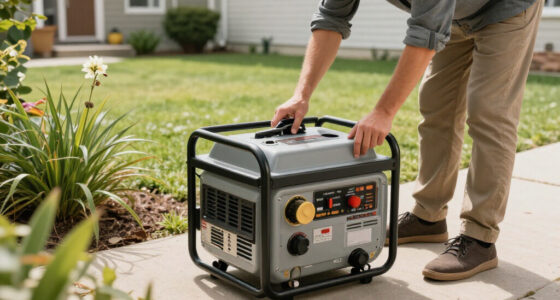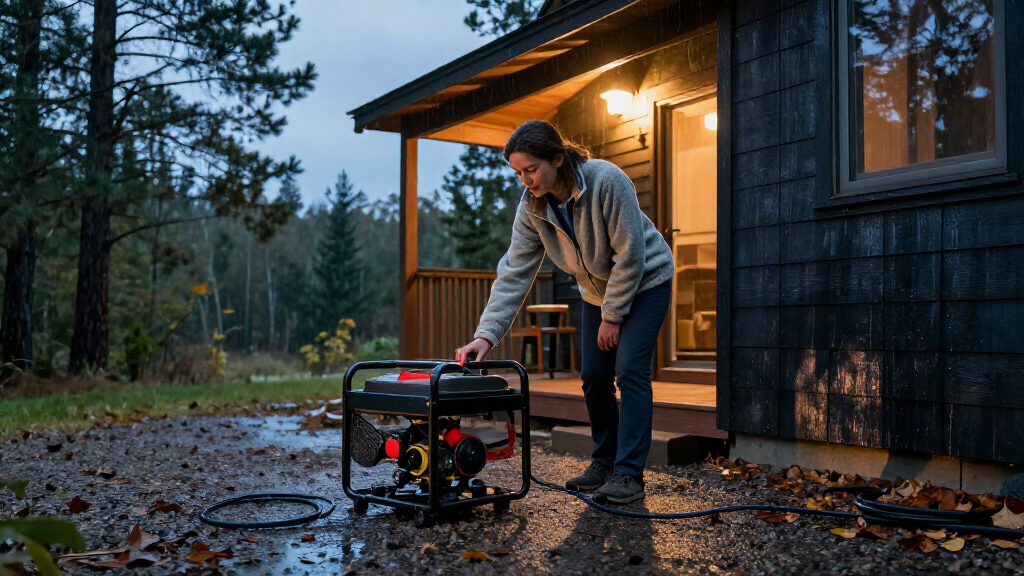
Choosing the best portable generators requires balancing raw power output with noise levels and fuel flexibility. The WEN DF680iX stands out as the best overall pick because it delivers high-wattage inverter performance without the deafening noise of traditional open-frame units. For those prioritizing silence and clean energy for sensitive electronics, the Honda EU2200i remains the gold standard for reliability, while the Jackery HomePower 3600 Plus offers a silent, indoor-safe alternative for apartment dwellers. This roundup examines the tradeoffs between gas, dual-fuel, and battery systems to help you match the right machine to your camping, RV, or emergency backup needs.

Get backup power and energy gear delivered free with Prime
- Fast, free delivery on millions of items
- Prime Video, Amazon Music and more included
- Member-only deals all year
Complete the kit


Key Takeaways
- Dual-fuel capability is now standard in mid-range models, allowing users to switch between gasoline and propane for longer shelf life and cleaner burning.
- Inverter technology has become affordable in the 3,000-watt range, making clean power for laptops and medical devices accessible to budget-conscious buyers.
- Open-frame generators still offer the best price-per-watt for heavy-duty tools, but they lack the noise restrictions and parallel connectivity of inverters.
- Battery power stations are no longer just for small electronics; models like the Jackery HomePower 3600 Plus can now run refrigerators and microwaves silently.
- CO safety sensors are emerging as a critical differentiator, with several new models offering automatic shutoffs to prevent carbon monoxide poisoning in enclosed spaces.
| WEN DF680iX 6800-Watt Dual-Fuel Portable Inverter Generator |  | Best for Dual-Fuel Home and RV Backup | Fuel type: Gasoline and propane | Gasoline output: 6,800 surge watts; 5,100 rated watts | Propane output: 6,000 surge watts; 4,500 rated watts | VIEW LATEST PRICE | See Our Full Breakdown |
| Jackery HomePower 3600 Plus Portable Power Station, 3584Wh, 3600W |  | Best for Quiet, Expandable Battery Backup | Battery capacity: 3,584Wh | AC output: 3,600W | Parallel output: Up to 7,200W | VIEW LATEST PRICE | See Our Full Breakdown |
| Champion 4000-Watt RV-Ready Portable Inverter Generator |  | Best Lightweight Pick for RV Trips | Starting wattage: 4,000 watts | Running wattage: 3,000 watts | Fuel type: Gasoline | VIEW LATEST PRICE | See Our Full Breakdown |
| PowerSmart 3800-Watt Portable Inverter Generator |  | Best Compact 120V Inverter | Starting wattage: 3,800 watts | Running wattage: 3,200 watts | Fuel type: Gasoline | VIEW LATEST PRICE | See Our Full Breakdown |
| Honda EU2200i 2200-Watt Portable Inverter Generator |  | Best for Quiet, Lightweight Campsite Power | Output: 2,200 watts | Fuel type: Gasoline | Engine: 121cc, 4-stroke | VIEW LATEST PRICE | See Our Full Breakdown |
| WEN 3600-Watt Portable Inverter Generator (56360i) |  | Best Lightweight Inverter for Electronics | Surge wattage: 3,600 watts | Running wattage: 2,900 watts | Engine: 149cc, 4-stroke | VIEW LATEST PRICE | See Our Full Breakdown |
| DuroMax XP13000EH 13,000-Watt Dual-Fuel Portable Generator |  | Best for High-Output Backup | Starting wattage: 13,000 watts | Running wattage: 10,500 watts | Engine: 500cc OHV, 4-stroke | VIEW LATEST PRICE | See Our Full Breakdown |
| Westinghouse WGen11500TFc Tri-Fuel Portable Generator with Remote Electric Start |  | Best for Long-Running, Multi-Fuel Home Backup | Starting wattage: 14,500 watts | Running wattage: 11,500 watts | Engine: 550cc, 4-stroke OHV | VIEW LATEST PRICE | See Our Full Breakdown |
| Westinghouse WGen3600cv Portable Generator with CO Sensor |  | Best for Longer Runtime at Moderate Output | Running wattage: 3,600 watts | Peak wattage: 4,650 watts | Engine: 212cc, 4-stroke OHV | VIEW LATEST PRICE | See Our Full Breakdown |
| Westinghouse WGen9500DF Dual-Fuel Portable Generator, 12,500 Peak Watts |  | Best Dual-Fuel Pick with Multiple Start Options | Peak output, gasoline: 12,500 watts | Running output, gasoline: 9,500 watts | Running output, propane: 8,500 watts | VIEW LATEST PRICE | See Our Full Breakdown |
| Oxseryn 4400-Watt Gas Inverter Generator with ECO Mode |  | Best Budget-Friendly Inverter | Peak Wattage: 4,400 watts | Running Wattage: 3,400 watts | Fuel Type: Gasoline | VIEW LATEST PRICE | See Our Full Breakdown |
| Westinghouse WGen11500DFc Dual Fuel Portable Generator with Remote Electric Start and CO Sensor | 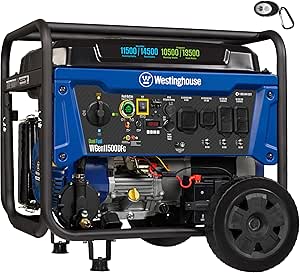 | Best High-Capacity Whole-House Backup | Peak Wattage: 14,500 watts | Running Wattage: 11,500 watts | Fuel Type: Gasoline, Propane | VIEW LATEST PRICE | See Our Full Breakdown |
| Westinghouse 6500-Watt Dual-Fuel Portable Generator with CO Sensor |  | Best Versatile Mid-Range Generator | Peak Wattage: 6,500 watts | Running Wattage: 5,300 watts | Fuel Type: Gasoline, Propane | VIEW LATEST PRICE | See Our Full Breakdown |
| Jackery Explorer 1000 v2 Portable Power Station |  | Best Silent Indoor Backup | Battery Capacity: 1,070Wh | AC Output: 1,500W | Surge Peak: 3,000W | VIEW LATEST PRICE | See Our Full Breakdown |
| Jackery Explorer 300 Portable Power Station, 292Wh |  | Best Ultra-Compact Backup | Battery Capacity: 292Wh | Peak Surge: 600W | Weight: 7.5 lbs | VIEW LATEST PRICE | See Our Full Breakdown |
| portable generator | Weight | Engine | Running wattage | Runtime |
|---|---|---|---|---|
| WEN DF680iX 6800-Watt Dual-Fue | — | 224cc | — | — |
| Jackery HomePower 3600 Plus Po | 77.2 pounds | — | — | — |
| Champion 4000-Watt RV-Ready Po | Less than 49 pounds | 149cc, 4-stroke | 3,000 watts | Up to 10 hours at 25% load |
| PowerSmart 3800-Watt Portable | 47 pounds | 143cc, 4-stroke | 3,200 watts | — |
| Honda EU2200i 2200-Watt Portab | About 51 pounds | 121cc, 4-stroke | — | 3.2 to 8.1 hours |
| WEN 3600-Watt Portable Inverte | 46 pounds | 149cc, 4-stroke | 2,900 watts | Up to 5 hours at half load |
| DuroMax XP13000EH 13,000-Watt | 234 pounds | 500cc OHV, 4-stroke | 10,500 watts | 3 hours |
| Westinghouse WGen11500TFc Tri- | — | 550cc, 4-stroke OHV | 11,500 watts | Up to 19 hours at 25% load |
| Westinghouse WGen3600cv Portab | 100.6 pounds | 212cc, 4-stroke OHV | 3,600 watts | — |
| Westinghouse WGen9500DF Dual-F | — | 457cc, 4-stroke OHV | — | Up to 12 hours |
| Oxseryn 4400-Watt Gas Inverter | 56 pounds | — | 3,400 watts | Up to 14 hours at 25% load |
| Westinghouse WGen11500DFc Dual | — | — | 11,500 watts | Up to 19 hours at 25% load |
| Westinghouse 6500-Watt Dual-Fu | — | — | 5,300 watts | Up to 14.5 hours |
| Jackery Explorer 1000 v2 Porta | 23.8 lbs | — | — | — |
| Jackery Explorer 300 Portable | 7.5 lbs | — | — | — |
More Details on Our Top Picks
WEN DF680iX 6800-Watt Dual-Fuel Portable Inverter Generator
I rank the WEN DF680iX highly for buyers who want one portable generator to cover both RV use and larger backup loads. Its gasoline rating reaches 5,100 running watts, while propane offers a lower 4,500 running watts and up to nine hours at half load with a 20-pound tank. That fuel choice can make storage and resupply more flexible than with the gasoline-only Champion 4000-Watt RV-Ready Portable Inverter Generator. The WEN also has 120V/240V and RV outlets, so it can serve a wider range of equipment than the 120V-only PowerSmart 3800-Watt. The tradeoff is its size and weight: wheels and a telescoping handle help, but it is less convenient to lift or carry than the sub-49-pound Champion. Its gasoline runtime is also limited to up to 6.1 hours at half load.
Pros:- Gasoline and propane operation gives buyers a choice of stored and readily available fuel.
- 120V/240V and TT-30R RV outlets suit a broader mix of loads than the 120V-only PowerSmart 3800-Watt.
- CO shutdown, low-oil and low-fuel shutdown, and overload protection add automatic safeguards.
- Wheels and a telescoping handle make moving it easier than carrying a generator of this output.
Cons:- Gasoline runtime is up to 6.1 hours at half load, so sustained use requires refueling.
- Its higher output and wheeled form are less convenient to lift and pack than the Champion 4000-Watt.
- The parallel connection kit is sold separately.
Best for: RV owners and households seeking portable 120V/240V backup with the option to run on gasoline or propane.
Not ideal for: Campers who need a generator they can easily lift into a vehicle, or buyers who want long gasoline runtime without refueling.
- Fuel type:Gasoline and propane
- Gasoline output:6,800 surge watts; 5,100 rated watts
- Propane output:6,000 surge watts; 4,500 rated watts
- Engine:224cc
- Noise level:64 dB at quarter load
- Gasoline runtime:Up to 6.1 hours at half load
- Propane runtime:Up to 9 hours at half load with a 20-pound tank
- Outlets:120V/240V L14-30R, two 120V NEMA 5-20R, 120V TT-30R RV, 12V DC, and two 5V USB
- Warranty:3-year limited warranty
Our verdict“Choose the WEN DF680iX if you need flexible dual-fuel operation and 120V/240V capability more than a lightweight, easy-to-carry design.”
Jackery HomePower 3600 Plus Portable Power Station, 3584Wh, 3600W
The Jackery HomePower 3600 Plus is the battery-powered alternative for buyers who value quiet operation and flexible recharging over a fuel engine. It supplies 3,600W from a 3,584Wh battery, with AC, solar, gas-generator, and hybrid charging options. That makes it more adaptable for indoor-adjacent backup or camping than the gasoline-powered Honda EU2200i, though it is also far heavier at 77.2 pounds. The wheeled luggage-style design helps on flat ground; it does not make the unit easy to lift. Capacity can expand substantially, which gives it more long-duration backup potential than the smaller Jackery Explorer 1000 v2 in this lineup. The main tradeoff is that stored energy must be replenished: solar panels are optional, and its two outlets offer less connection variety than the WEN DF680iX’s generator-style outlet set.
Pros:- Battery power avoids running a combustion engine during use.
- AC, solar, gas-generator, and hybrid charging give buyers several ways to replenish it.
- Expandable capacity supports longer backup needs than a fixed-capacity power station such as the Jackery Explorer 1000 v2.
- Wheels and a telescopic handle help move the 77.2-pound unit on suitable surfaces.
Cons:- At 77.2 pounds, it is cumbersome to lift despite its wheeled design.
- The solar panel is optional, adding a separate purchase for solar charging.
- It has two outlets, fewer connection options than the WEN DF680iX.
Best for: Homeowners and campers who want quiet battery backup, several charging routes, and the option to expand capacity.
Not ideal for: Buyers who need a light unit to carry often, many different outlet types, or dependable long-duration power without access to recharging.
- Battery capacity:3,584Wh
- AC output:3,600W
- Parallel output:Up to 7,200W
- Expandable capacity:Up to 21kWh per unit or 43kWh with multiple units
- Charging options:Hybrid AC+DC, AC, solar, and gas generator
- Hybrid charging time:2 hours
- Battery cycle life:Rated for 6,000 cycles
- Weight:77.2 pounds
- Warranty:5 years
Our verdict“Pick the HomePower 3600 Plus if quiet, expandable battery power matters more than low weight and a wide range of built-in outlets.”
Champion 4000-Watt RV-Ready Portable Inverter Generator
The Champion 4000-Watt RV-Ready earns its place as a portable generator for buyers who need useful RV output without stepping up to a heavier, higher-output machine. It provides 3,000 running watts and weighs less than 49 pounds, making it easier to carry than the WEN DF680iX or move into a campsite than the 77.2-pound Jackery HomePower 3600 Plus. The TT-30R outlet is ready for RV connections, and less than 3% THD suits sensitive electronics. Its CO Shield shutdown and Cold Start Technology add practical touches for outdoor trips. That portability comes with limits: it runs on gasoline only, starts by recoil, and the product is not recommended for emergency home backup. Buyers wanting more fuel flexibility or 120V/240V service should look to the WEN instead.
Pros:- Less than 49 pounds makes it easier to carry than the WEN DF680iX and Jackery HomePower 3600 Plus.
- The 120V TT-30R outlet is designed for RV connections.
- Less than 3% THD is suitable for sensitive electronics.
- CO Shield automatic shutoff and Cold Start Technology add useful outdoor-use features.
Cons:- Gasoline-only operation offers less fuel flexibility than the dual-fuel WEN DF680iX.
- Recoil starting requires a manual pull rather than an electric start.
- It is not recommended for emergency home backup and does not provide 120V/240V output.
Best for: RV travelers and campers who want a relatively light gasoline inverter with an RV outlet and power for sensitive electronics.
Not ideal for: Households seeking emergency home backup, buyers needing 120V/240V output, or anyone who wants electric starting or dual-fuel operation.
- Starting wattage:4,000 watts
- Running wattage:3,000 watts
- Fuel type:Gasoline
- Engine:149cc, 4-stroke
- Tank capacity:1.54 gallons
- Runtime:Up to 10 hours at 25% load
- Weight:Less than 49 pounds
- Noise level:64 dBA at 23 feet
- Outlets:120V 25A TT-30R, 120V 20A duplex, 12V automotive-style, and parallel outlets
Our verdict“Choose the Champion if a lighter, RV-ready gasoline inverter matters more than dual-fuel flexibility or home-backup versatility.”
PowerSmart 3800-Watt Portable Inverter Generator
The PowerSmart 3800-Watt is a compact choice for buyers who want more running output than the Honda EU2200i without moving up to the dual-fuel WEN DF680iX. Its 3,200 running watts and 47-pound weight make it a middle ground for campsite equipment or basic 120V needs, while a listed 59 dBA at 23 feet makes it quieter on paper than the Champion 4000-Watt’s 64 dBA figure. It also offers a twist-lock outlet, USB, and 12V DC connections, giving it more outlet variety than the Jackery HomePower 3600 Plus’s two outlets. The limits are clear: it is 120V only, runs on gasoline, and its 1.19-gallon tank can mean frequent refills during extended use. It suits portable loads, not buyers seeking broader backup coverage.
Pros:- At 47 pounds, it is easier to move than the WEN DF680iX or Jackery HomePower 3600 Plus.
- The 3,200 running watts offer more output than the Honda EU2200i’s 2,200-watt rating.
- AC, twist-lock, DC, and USB outlets cover several common portable-power needs.
- The listed 59 dBA at 23 feet is lower than the Champion 4000-Watt’s 64 dBA figure.
Cons:- 120V-only output rules out equipment that requires 240V service.
- The 1.19-gallon tank may require frequent refills during extended use.
- Gasoline-only operation is less flexible than the WEN DF680iX’s dual-fuel setup.
Best for: Campers and homeowners needing a compact gasoline inverter for 120V equipment, electronics, and occasional portable power.
Not ideal for: Buyers who need 240V service, dual-fuel flexibility, or long operation between gasoline refills.
- Starting wattage:3,800 watts
- Running wattage:3,200 watts
- Fuel type:Gasoline
- Engine:143cc, 4-stroke
- Tank volume:1.19 gallons
- Noise level:59 dBA at 23 feet
- Total harmonic distortion:Under 3%
- Weight:47 pounds
- Outlets:120V 20A duplex, 120V 30A L5-30R, 12V 8A DC, and dual 5V 2.1A USB
Our verdict“Choose the PowerSmart for compact 120V power and a useful outlet mix, but skip it if you need 240V or long runtime between refills.”
Honda EU2200i 2200-Watt Portable Inverter Generator
The Honda EU2200i is the focused pick for buyers who prioritize low noise and a compact gasoline generator over high output. Its listed 48–57 dB(A) range is quieter than the PowerSmart 3800-Watt’s 59 dBA figure, and the 2,200-watt output suits smaller campsite loads and electronics rather than larger backup demands. Bluetooth monitoring and CO-MINDER shutdown add control and a carbon monoxide safety feature; the Champion 4000-Watt offers more output and an RV-ready TT-30R connection, but is louder by its listed figure. The Honda’s 0.95-gallon tank keeps the unit compact, though runtime varies from 3.2 to 8.1 hours and refueling may interrupt longer use. Its 51-pound weight is portable, but the lighter Champion is easier to carry.
Pros:- The 48–57 dB(A) noise range is lower than the listed figures for the Champion 4000-Watt and PowerSmart 3800-Watt.
- Bluetooth connectivity supports remote monitoring and operation.
- CO-MINDER can detect carbon monoxide and shut the generator down automatically.
- A 3-year residential warranty is listed.
Cons:- Its 2,200-watt output is well below the Champion 4000-Watt and PowerSmart 3800-Watt.
- Runtime ranges from 3.2 to 8.1 hours on a 0.95-gallon tank.
- At about 51 pounds, it weighs more than the Champion 4000-Watt, and it is not available in California.
Best for: Campers and RV travelers with modest 120V loads who value quiet operation, app monitoring, and carbon monoxide shutdown.
Not ideal for: Buyers powering high-draw equipment, needing 240V output, or prioritizing the lowest carry weight and longer uninterrupted runtime.
- Output:2,200 watts
- Fuel type:Gasoline
- Engine:121cc, 4-stroke
- Fuel tank capacity:0.95 gallons
- Runtime:3.2 to 8.1 hours
- Noise level:48–57 dB(A)
- Weight:About 51 pounds
- Connectivity and safety:Bluetooth; CO-MINDER carbon monoxide detection and automatic shutdown
- Warranty:3 years residential
Our verdict“Pick the Honda EU2200i for quieter, monitored power for modest campsite loads, not for high-output backup or extended operation without refueling.”
WEN 3600-Watt Portable Inverter Generator (56360i)
The WEN 56360i is the portable-generator pick I’d favor when low carry weight and clean power matter more than long run time. At 46 pounds, it is far easier to move than the 100.6-pound Westinghouse WGen3600cv, and its inverter output is suited to sensitive electronics. The tradeoff is capacity: 2,900 running watts covers smaller loads, not the broader home-backup demands of the DuroMax XP13000EH. Its 1.6-gallon tank provides up to five hours at half load, so extended use calls for refueling more often than with the Westinghouse’s four-gallon model. Fuel shutoff and eco mode add practical maintenance and fuel-use benefits, while the separate parallel kit limits easy expansion. I’d choose it for portable, modest-power needs—not as a substitute for a high-output backup generator.
Pros:- 46-pound weight is easier to carry and store than the Westinghouse WGen3600cv.
- Inverter output has under 1.2% THD at full load for sensitive electronics.
- Fuel shutoff can help limit carburetor buildup during storage.
- Eco mode adjusts fuel use to the connected load.
Cons:- Up to five hours at half load means frequent refueling during longer use.
- Parallel connection kit is sold separately.
- 2,900 running watts is less suited to multiple large household loads.
Best for: Campers and homeowners who need a light generator for electronics, small appliances, or occasional RV use.
Not ideal for: Buyers seeking overnight runtime or enough output for broad household backup; its tank is small and running output is 2,900 watts.
- Surge wattage:3,600 watts
- Running wattage:2,900 watts
- Engine:149cc, 4-stroke
- Fuel:Gasoline
- Tank capacity:1.6 gallons
- Runtime:Up to 5 hours at half load
- Weight:46 pounds
- Noise level:65 dB at quarter load
Our verdict“Choose the WEN 56360i for clean, portable power and lighter lifting, but pick a larger tank or higher-output model for extended backup.”
DuroMax XP13000EH 13,000-Watt Dual-Fuel Portable Generator
For buyers who need substantial output rather than easy carrying, the DuroMax XP13000EH brings 10,500 running watts and a 50-amp transfer-switch-ready outlet. That makes it a stronger fit for larger backup loads than the Westinghouse WGen9500DF, which offers 9,500 running watts on gasoline. Dual-fuel operation adds a useful choice between gasoline and propane, and electric start avoids relying on a recoil pull. Its 234-pound weight, however, makes “portable” a matter of wheels and planned placement, not lifting into a vehicle. The listed three-hour runtime also gives little reassurance for long outages, particularly beside the Westinghouse WGen11500TFc’s stated 19 hours at 25% load. I’d rank this for high wattage and rugged construction, not for quiet, lightweight, or long-running convenience.
Pros:- 10,500 running watts provide more capacity than the Westinghouse WGen9500DF on gasoline.
- Gasoline and propane operation offers fuel flexibility.
- Electric start simplifies startup compared with recoil-only models.
- All-metal frame, copper windings, and no-flat tires are aimed at durable outdoor use.
Cons:- At 234 pounds, it is difficult to move without help despite its tires.
- Listed runtime is only three hours.
- Only two outlets are listed in the provided specifications.
Best for: Homeowners with a transfer-switch setup who need high starting and running output and can keep the generator on a wheeled, level surface.
Not ideal for: Campers, frequent transporters, or outage users who need long intervals between refueling; it weighs 234 pounds and lists a three-hour runtime.
- Starting wattage:13,000 watts
- Running wattage:10,500 watts
- Engine:500cc OHV, 4-stroke
- Fuel:Gasoline or propane
- Voltage:240 volts
- Runtime:3 hours
- Weight:234 pounds
- Starting system:Electric start
Our verdict“Pick the DuroMax when high output and dual-fuel flexibility outweigh its heavy frame and short listed runtime.”
Westinghouse WGen11500TFc Tri-Fuel Portable Generator with Remote Electric Start
The WGen11500TFc stands out for buyers who want three fuel choices and a long stated run time, not a generator they can carry by hand. It runs on gasoline, propane, or natural gas, and its 9.5-gallon tank supports up to 19 hours at 25% load. That makes it better suited to extended backup than the DuroMax XP13000EH, whose listed runtime is three hours, while the remote and push-button electric start offer more convenience than the recoil-only Westinghouse WGen3600cv. Output reaches 11,500 running watts, with 30-amp and 50-amp outlets for transfer-switch-ready connections. The cost of this capacity is a substantial fuel load and a large wheeled unit; an automatic transfer switch is separate. I’d choose it for flexible home backup, but not for buyers prioritizing light weight or easy transport.
Pros:- Three fuel options can help match backup plans to available supplies.
- Up to 19 hours at 25% load offers longer intervals between refueling than the DuroMax XP13000EH’s listed runtime.
- Remote and push-button electric start add convenience.
- 30-amp and 50-amp outlets support transfer-switch-ready connections.
Cons:- The 9.5-gallon tank adds substantial fuel weight for a portable unit.
- Automatic transfer switch is sold separately.
- Under-5% THD is less tightly specified than the WEN 56360i’s stated under-1.2% at full load.
Best for: Homeowners who want to power a transfer-switch setup through longer outages and value gasoline, propane, and natural-gas options.
Not ideal for: Campers or buyers who need a compact generator to load and unload often; its large fuel tank and high output favor stationary backup.
- Starting wattage:14,500 watts
- Running wattage:11,500 watts
- Engine:550cc, 4-stroke OHV
- Fuel:Gasoline, propane, or natural gas
- Tank capacity:9.5 gallons
- Runtime:Up to 19 hours at 25% load
- Total harmonic distortion:Less than 5%
- Outlets:L14-30R 30A and 14-50R 50A
Our verdict“Choose the WGen11500TFc for high-output, long-running backup with broad fuel flexibility, not for frequent transport.”
Westinghouse WGen3600cv Portable Generator with CO Sensor
The WGen3600cv is a sensible choice when runtime per tank matters more than a light chassis. Its four-gallon tank is rated for up to 14 hours, giving it a clear endurance advantage over the WEN 56360i’s five hours at half load. It also supplies 3,600 running watts and includes household, RV-ready, and L5-30R outlets, so it can serve a wider mix of connections than a basic household-only generator. The tradeoff is that it weighs 100.6 pounds and uses recoil start; the WEN is less than half that weight and offers inverter output for especially sensitive electronics. Automatic CO and low-oil shutdown add safety features, but this is still a gasoline model with manual starting. I’d pick it for a fixed backup or RV spot, not frequent solo hauling.
Pros:- Four-gallon tank supports up to 14 hours of runtime.
- Includes household, RV-ready, and L5-30R outlets.
- Automatic carbon monoxide and low-oil shutdown add protective features.
- Fuel gauge and rubber outlet covers improve day-to-day usability.
Cons:- At 100.6 pounds, it is much harder to carry than the 46-pound WEN 56360i.
- Recoil start only; no electric or remote starting method is listed.
- Gasoline-only operation offers fewer fuel choices than the DuroMax XP13000EH.
Best for: RV owners and homeowners who want moderate generator output with longer stated runtime and several outlet types.
Not ideal for: Solo campers who regularly lift their generator or buyers seeking inverter-level power quality; it weighs 100.6 pounds and is recoil-start only.
- Running wattage:3,600 watts
- Peak wattage:4,650 watts
- Engine:212cc, 4-stroke OHV
- Fuel:Gasoline
- Tank capacity:4 gallons
- Maximum runtime:Up to 14 hours
- Weight:100.6 pounds
- Starting system:Recoil
Our verdict“Choose the WGen3600cv for longer-running moderate power and useful RV connections if its weight and recoil start suit your setup.”
Westinghouse WGen9500DF Dual-Fuel Portable Generator, 12,500 Peak Watts
The WGen9500DF offers a practical middle ground between the high-capacity DuroMax XP13000EH and the tri-fuel Westinghouse WGen11500TFc. It produces 9,500 running watts on gasoline or 8,500 on propane, with remote, electric, and recoil starting—useful when a quick start matters or the battery is unavailable. Its 6.6-gallon tank is rated for up to 12 hours, a more substantial fuel reserve than the DuroMax’s listed three-hour runtime, though the Westinghouse WGen11500TFc claims longer operation at a lighter load and adds natural-gas compatibility. Household, 30-amp, and 50-amp outlets make this a flexible backup option. The tradeoff is a large 457cc engine and a substantial frame, so wheels and a handle help repositioning but do not make it easy to transport. I’d favor it for versatile home backup, not compact portability.
Pros:- Gasoline and propane operation gives users a choice of fuel.
- Remote, electric, and recoil starting provide multiple startup options.
- Household, 30-amp, and 50-amp outlets suit varied backup connections.
- Up to 12 hours of runtime from a 6.6-gallon tank.
Cons:- The 457cc engine and full-size generator format are not suited to easy carrying.
- Running output drops from 9,500 watts on gasoline to 8,500 on propane.
- Requires minimal assembly before use.
Best for: Homeowners who need substantial backup output, gasoline-or-propane flexibility, and more than one way to start the generator.
Not ideal for: Buyers who need natural-gas operation or frequent transport; the WGen11500TFc adds a third fuel option, while this model has a large engine.
- Peak output, gasoline:12,500 watts
- Running output, gasoline:9,500 watts
- Running output, propane:8,500 watts
- Engine:457cc, 4-stroke OHV
- Fuel:Gasoline or propane
- Tank capacity:6.6 gallons
- Runtime:Up to 12 hours
- Starting methods:Remote, electric, and recoil
Our verdict“Choose the WGen9500DF for high-output dual-fuel backup and flexible starting, but look to the WGen11500TFc for natural-gas capability and longer stated runtime.”
Oxseryn 4400-Watt Gas Inverter Generator with ECO Mode
This Oxseryn model targets buyers who need clean power without the premium price tag of established brands like Honda. It delivers 3,400 running watts, sufficient for most RV appliances and essential home backup needs. The ECO mode significantly extends runtime to up to 14 hours at low loads, a feature often reserved for more expensive units. However, the 56-pound weight makes it less portable than smaller inverters, and the 2-gallon tank requires frequent refueling during heavy use. Compared to the Champion 4000-Watt, it offers similar wattage but lacks brand recognition and potentially refined noise damping. It is a solid choice for cost-conscious users who prioritize raw output over brand pedigree or ultra-quiet operation.
Pros:- Delivers clean power suitable for sensitive electronics via inverter technology
- ECO mode extends runtime significantly at lower loads
- Includes a variety of outlets, including RV-ready ports
- Lower price point compared to major brand equivalents
Cons:- Heavy at 56 pounds for an inverter generator
- Small 2-gallon tank limits continuous high-output runtime
- Noise level is higher than premium competitors
Best for: RV owners and campers who need clean power for sensitive electronics but want to save money compared to premium brands.
Not ideal for: Solo campers who need ultra-lightweight gear, as the 56-pound frame is difficult to maneuver alone.
- Peak Wattage:4,400 watts
- Running Wattage:3,400 watts
- Fuel Type:Gasoline
- Runtime:Up to 14 hours at 25% load
- Weight:56 pounds
- Noise Level:Under 72 dBA at 23 feet
- Outlets:2x 120V AC, 1x 12V DC, 1x RV
Our verdict“A cost-effective inverter option for RVers who prioritize wattage and clean power over brand prestige and ultra-portability.”
Westinghouse WGen11500DFc Dual Fuel Portable Generator with Remote Electric Start and CO Sensor
The Westinghouse WGen11500DFc dominates this list in raw power, offering 11,500 running watts capable of running most home circuits simultaneously. Its dual-fuel capability allows switching between gasoline and propane, providing flexibility during fuel shortages. The remote electric start adds convenience, letting you start the unit from inside your home. While it is significantly heavier and louder than inverter models like the Jackery Explorer 1000 v2, its capacity is unmatched for whole-house backup. The integrated CO sensor addresses safety concerns common with open-frame generators. This is not a camping unit; it is a heavy-duty solution for homeowners who need to keep HVAC systems and large appliances running during outages.
Pros:- Massive 11,500 running watts support most household needs
- Dual-fuel engine offers flexibility between gas and propane
- Remote electric start provides convenience and safety
- Integrated CO sensor automatically shuts down the unit if unsafe
Cons:- Very heavy and difficult to move without assistance
- Loud operation makes it unsuitable for close-quarters camping
- Requires a transfer switch for safe home integration (sold separately)
Best for: Homeowners in areas prone to long power outages who need to run heavy loads like central AC and well pumps.
Not ideal for: Campers or tailgaters, as it is too large, heavy, and loud for recreational use.
- Peak Wattage:14,500 watts
- Running Wattage:11,500 watts
- Fuel Type:Gasoline, Propane
- Runtime:Up to 19 hours at 25% load
- Starting Method:Push-button electric and remote start
- Safety Features:CO sensor, low-oil shutdown
- Warranty:3-year limited residential
Our verdict“A powerhouse for whole-house backup that sacrifices portability for massive output and fuel flexibility.”
Westinghouse 6500-Watt Dual-Fuel Portable Generator with CO Sensor
This Westinghouse model strikes a balance between the raw power of the WGen11500DFc and the portability of smaller units. With 5,300 running watts, it handles heavy-duty jobs and RV needs effectively. The dual-fuel engine is a standout feature, allowing you to run on propane for cleaner storage or gasoline for longer runtime. It includes a CO sensor for safety, a critical feature for residential use. Compared to the Oxseryn inverter, it lacks the clean power output for sensitive electronics, so you may need additional protection. However, its robust build and included wheel kit make it easier to move than the larger Westinghouse models. It is ideal for those who want flexibility without the extreme weight of whole-house generators.
Pros:- Dual-fuel capability extends fuel options and shelf life
- Includes wheel kit for easier maneuverability
- CO sensor provides automatic safety shutdown
- Strong 5,300 running watts for heavy-duty tools and appliances
Cons:- Not an inverter, so power quality may harm sensitive electronics
- Heavier than compact inverters, requiring wheels for easy transport
- Requires assembly upon arrival
Best for: Contractors and homeowners who need a robust, flexible power source for job sites or medium-sized home backup.
Not ideal for: Users needing clean power for laptops or medical devices, as it is not an inverter generator.
- Peak Wattage:6,500 watts
- Running Wattage:5,300 watts
- Fuel Type:Gasoline, Propane
- Runtime:Up to 14.5 hours
- Voltage:120/240 V selector
- Safety Features:CO sensor, low-oil shutdown
- Warranty:3-year limited
Our verdict“A flexible, dual-fuel workhorse that balances power and maneuverability for contractors and homeowners.”
Jackery Explorer 1000 v2 Portable Power Station
The Jackery Explorer 1000 v2 is the go-to choice for silent, indoor-safe power. Unlike gas generators like the Oxseryn or Westinghouse models, it produces no fumes and operates at a mere 30 dB in quiet mode. Its LFP battery is rated for over 4,000 cycles, offering a longer lifespan than older lithium-ion units. With 1,500W AC output, it can run small appliances, CPAP machines, and multiple devices simultaneously. It lacks the raw capacity of the Westinghouse WGen11500DFc for whole-house backup, but its portability and convenience are unmatched. The app control and fast charging capabilities make it user-friendly for tech-savvy buyers. This is ideal for urban dwellers or campers who need clean, quiet power for electronics and light appliances.
Pros:- Silent operation makes it safe for indoor use
- LFP battery offers long lifespan and durability
- Fast charging via app-enabled emergency mode
- Compact and lightweight with a foldable handle
Cons:- Limited to 1,500W continuous output, restricting appliance choices
- Solar panels are sold separately and proprietary
- Cannot be refueled; limited by battery capacity
Best for: Urban apartment dwellers, campers, and professionals who need silent, fume-free power for electronics and small appliances.
Not ideal for: Users needing to run high-wattage appliances like space heaters or power tools for extended periods.
- Battery Capacity:1,070Wh
- AC Output:1,500W
- Surge Peak:3,000W
- Weight:23.8 lbs
- Charging Time:1 hour (emergency mode)
- Battery Type:LFP (LiFePO4)
- Noise Level:30 dB (quiet mode)
Our verdict“The best choice for quiet, indoor-safe power for electronics and light appliances, though it lacks the raw capacity for heavy tools.”
Jackery Explorer 300 Portable Power Station, 292Wh
The Jackery Explorer 300 is designed for minimalist power needs. Weighing just 7.5 pounds, it is easily transportable for hiking, fishing, or emergency kits. While it lacks the capacity of the Jackery Explorer 1000 v2, its 292Wh battery is sufficient for charging phones, laptops, and small lights multiple times. The LiFePO4 battery ensures durability over thousands of cycles, making it a long-term investment despite its small size. It is not suitable for running appliances like coffee makers or fans for long periods. Compared to gas generators, it offers zero noise and zero fumes, making it perfect for indoor emergencies or quiet campsites. It serves as a reliable, portable battery bank rather than a true generator replacement.
Pros:- Extremely lightweight and portable at 7.5 lbs
- Durable LiFePO4 battery lasts for thousands of cycles
- Silent and safe for indoor use
- Multiple ports allow charging several devices at once
Cons:- Very limited capacity (292Wh) for longer outages
- Low 300W output cannot handle high-wattage appliances
- Solar panel sold separately
Best for: Hikers, anglers, and apartment dwellers who need a lightweight backup for phones, laptops, and small electronics.
Not ideal for: Anyone needing to power appliances like refrigerators, space heaters, or power tools.
- Battery Capacity:292Wh
- Peak Surge:600W
- Weight:7.5 lbs
- Battery Chemistry:LiFePO4
- Charge Time:4 hours
- Dimensions:9.1 x 5.2 x 7.8 inches
Our verdict“A lightweight, silent battery backup ideal for charging small electronics on the go or during short outages.”
How We Picked
I evaluated these fifteen models based on four core criteria: power delivery consistency, fuel efficiency, noise output, and build durability. The ranking logic prioritizes versatility for the general buyer, meaning models that handle both sensitive electronics and heavy appliances scored higher than single-purpose units. I also weighed user feedback on long-term reliability and ease of maintenance, as a generator that is difficult to service loses value over time.
Special attention was given to the distinction between inverter and standard generators. While inverters cost more upfront, their ability to produce stable sine wave power and run in parallel makes them superior for modern homes and RVs. Battery units were judged on their usable capacity and recharge speed rather than just peak wattage, ensuring they meet realistic daily needs.
Factors to Consider When Choosing Best Portable Generators
Selecting a portable generator involves more than just picking the highest wattage number. You must align the machine’s capabilities with your actual load requirements and environmental constraints.Inverter vs. Standard Open-Frame Generators
The primary decision you face is whether to buy an inverter or a standard open-frame generator. Inverter generators adjust their engine speed to match the load, resulting in quieter operation and better fuel efficiency. They also produce clean power, which is safe for laptops and phones. Standard generators run at a constant speed regardless of load, making them louder and less efficient but significantly cheaper for high-wattage needs. If you need to run heavy tools like table saws or compressors, an open-frame model like the DuroMax XP13000EH offers better value. For camping or residential backup where noise matters, an inverter is the smarter choice.
Fuel Type: Gasoline, Propane, or Battery?
Fuel type dictates where and how you can use your generator. Gasoline offers the highest energy density and easiest refueling but degrades quickly if left in the tank. Propane burns cleaner and can be stored indefinitely, making it ideal for emergency preparedness, though it produces about 10-15% less power than gasoline. Battery power stations eliminate combustion entirely, allowing safe indoor use, but they require recharging and have limited runtime. Dual-fuel models bridge the gap, letting you switch fuels based on availability and storage concerns. Consider your local fuel availability and storage laws before committing to a specific type.
Calculating Your True Wattage Needs
Buyers often underestimate the power required to start appliances. Motors have a startup surge that can be two to three times their running wattage. A refrigerator might run on 700 watts but require 2,000 watts to start the compressor. You must add up the running watts of all devices you plan to use simultaneously, then add the startup watts for the largest motorized device. Choosing a generator that is too small will cause it to overload and shut down, while one that is too large may run inefficiently at low loads. Always aim for a generator with at least 20% more capacity than your calculated total to allow for growth and efficiency.
Noise Levels and Residential Restrictions
Noise is a major constraint in campgrounds and suburban neighborhoods. Many campsites enforce a 60-decibel limit at night, which excludes most standard generators. Inverter models typically operate between 50 and 60 decibels, similar to a normal conversation. If you plan to use the generator in a populated area, check the decibel rating at 25% load, not just at full capacity. Battery units are silent, making them the only option for strictly enforced quiet zones. Ignoring noise regulations can lead to fines or being asked to leave your campsite, so prioritize quieter models if this is a concern.
Parallel Connectivity and Scalability
Some generators allow you to connect two identical units together using a parallel cord. This feature doubles your available power while maintaining the noise and efficiency benefits of a single unit. It is particularly useful for RVs that need to run air conditioners or for homeowners who want redundancy. Not all inverters support this, and even among those that do, the parallel kit is often sold separately. If you anticipate needing more power in the future, choose a model with native parallel capability rather than buying a larger, single unit that runs loudly and inefficiently at low loads.
Frequently Asked Questions
Can I run a portable generator in my garage?
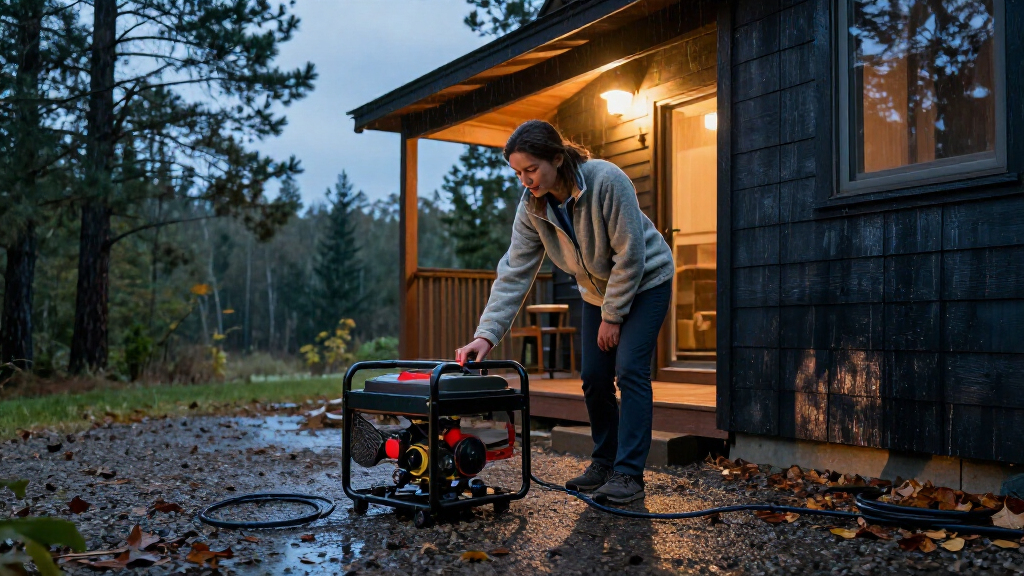
No, you should never run a gasoline or propane generator in a garage, even if the door is open. These engines produce carbon monoxide, a colorless and odorless gas that can kill in minutes. Only battery power stations or generators specifically rated for indoor use with advanced CO shutoff technology should be considered for enclosed spaces. Always operate standard generators outdoors, at least 20 feet away from windows, doors, and vents.
Is dual-fuel worth the extra cost over single-fuel gasoline?
Dual-fuel generators are worth the investment if you prioritize long-term emergency preparedness. Propane can be stored for years without degrading, unlike gasoline which requires stabilizers and rotation. While propane provides less power, having the option to burn stored propane during a gasoline shortage or supply chain disruption adds significant resilience. For casual camping where you use gas weekly, the added complexity and cost of dual-fuel may not be justified.
How do I know if my generator is powerful enough for my RV?
Check your RV’s electrical panel for the total amperage rating, usually 30-amp or 50-amp service. A 30-amp RV typically needs a generator with at least 3,500 running watts to handle the air conditioner and other appliances simultaneously. A 50-amp RV often requires 5,000 to 7,000 running watts. Look for models explicitly labeled “RV-Ready” or those with the appropriate TT-30 or TT-50 receptacles, as they are designed to handle the specific voltage and frequency requirements of RV electronics.
What is the difference between running watts and starting watts?
Running watts are the continuous power needed to keep an appliance operating, while starting watts (or surge watts) are the brief burst of power required to start motors in devices like refrigerators, freezers, and power tools. Generators are rated for both, but you must ensure the generator’s surge capacity exceeds the startup demand of your largest motorized load. If you exceed the starting wattage, the generator will overload and shut off, potentially damaging your equipment.
Do I need a transfer switch for my portable generator?
A transfer switch is highly recommended if you plan to connect your generator to your home’s electrical panel. It prevents backfeeding into the utility lines, which is dangerous for linemen and illegal in many areas. Without a transfer switch, you must use heavy-duty extension cords to power specific appliances, which is less convenient and limited in scope. Always have a licensed electrician install a manual transfer switch to ensure it meets local code requirements.
Conclusion
Choosing the right generator depends entirely on your use case. For most homeowners seeking a balance of power and quiet operation, the WEN DF680iX is the best overall choice due to its dual-fuel flexibility and inverter stability. If you need reliable, ultra-quiet power for sensitive electronics and camping, the Honda EU2200i is the best premium pick. For budget-conscious buyers who need clean power without breaking the bank, the PowerSmart 3800-Watt offers the best value. Those living in apartments or strict noise zones should opt for the Jackery HomePower 3600 Plus as the best indoor-safe solution. Finally, for heavy-duty job sites requiring maximum output regardless of noise, the DuroMax XP13000EH is the best high-capacity workhorse.