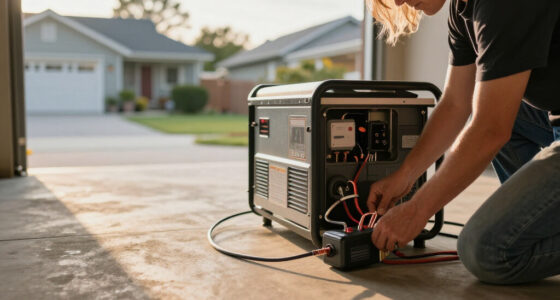
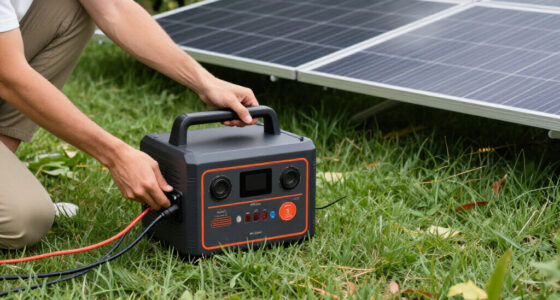
For most homes seeking portable backup power, I’d start with the DuroMax XP13000EH as the best overall pick in this lineup: its 13,000-watt class output and gasoline-or-propane operation suit a broad range of household loads. The Westinghouse WGen10500DFc is a strong alternative for buyers who want dual-fuel flexibility with a CO sensor, while the WEN DF8000X better fits a smaller essential-load setup. The main tradeoff is between higher output for more circuits and a generator that is easier to move, store, and feed. Several listed options are tri-fuel, which adds natural gas as a fuel choice but does not make them dual-fuel models. Read on for the full breakdown, including how to match generator capacity to your home and installation plan.

Get backup power and energy gear delivered free with Prime
- Fast, free delivery on millions of items
- Prime Video, Amazon Music and more included
- Member-only deals all year
Complete the kit


Key Takeaways
- The DuroMax XP13000EH is the broad-use pick: its 13,000-watt class output and two-fuel operation make it a better starting point for many households than the smaller 8,000-watt WEN.
- Fuel flexibility varies across the list: most picks run on gasoline and propane, while the Westinghouse models marked tri-fuel add natural gas; decide whether that extra fuel source is useful before comparing them as alternatives.
- Output and portability pull in opposite directions: the larger 14,500-watt-class and 20,000-watt-class models can support heavier loads, but they are less convenient to move and store than smaller units.
- Safety and control features differ even within a brand: several Westinghouse models list CO sensors and remote electric start, while other models prioritize output or a simpler feature set.
- Portable generators do not replace installation planning: a transfer switch, correctly sized wiring, safe outdoor placement, and a realistic load plan determine what a generator can power at home.
| Westinghouse WGen10500TFc 13,500-Watt Tri-Fuel Portable Generator |  | Best for Fuel Flexibility | Fuel types: Gasoline, propane, natural gas | Gasoline running wattage: 10,500 watts | Gasoline peak wattage: 13,500 watts | VIEW LATEST PRICE | See Our Full Breakdown |
| Westinghouse 4650-Watt Dual-Fuel Portable Generator |  | Best for Essential-Circuit Backup | Fuel types: Gasoline, propane | Running watts: 3,600 gasoline; 3,240 propane | Peak watts: 4,650 gasoline; 4,180 propane | VIEW LATEST PRICE | See Our Full Breakdown |
| DuroMax XP12000EH Dual-Fuel Portable Generator, 12,000 W |  | Best for 50-Amp Home Connections | Fuel types: Gasoline, propane | Starting wattage: 12,000 watts | Running wattage: 9,500 watts | VIEW LATEST PRICE | See Our Full Breakdown |
| DuroMax XP13000HX 13,000-Watt Dual-Fuel Portable Generator |  | Best High-Capacity Dual-Fuel Pick | Fuel types: Gasoline, propane | Power output: 13,000 watts | Engine: 500 cc OHV, 4-stroke | VIEW LATEST PRICE | See Our Full Breakdown |
| Westinghouse WGen10500DFc Dual-Fuel Portable Generator with CO Sensor |  | Best for Remote Starting | Fuel types: Gasoline, propane | Peak wattage: 13,500 watts | Running wattage: 10,500 watts | VIEW LATEST PRICE | See Our Full Breakdown |
| DuroMax XP13000EH 13,000-Watt Dual-Fuel Portable Generator |  | Best High-Output Dual-Fuel Pick | Fuel types: Gasoline and propane | Running wattage: 10,500 watts | Surge wattage: 13,000 watts | VIEW LATEST PRICE | See Our Full Breakdown |
| Westinghouse WGen5300DFcv Dual-Fuel Portable Generator with CO Sensor |  | Best for Smaller Backup Loads | Fuel types: Gasoline and propane | Gasoline running wattage: 5,300 watts | Propane running wattage: 4,800 watts | VIEW LATEST PRICE | See Our Full Breakdown |
| Westinghouse WGen11500TFc Tri-Fuel Portable Generator with Remote Electric Start |  | Best Fuel Flexibility | Fuel types: Gasoline, propane, and natural gas | Running wattage: 11,500 watts | Peak wattage: 14,500 watts | VIEW LATEST PRICE | See Our Full Breakdown |
| Westinghouse WGen14500TFc Tri-Fuel Portable Generator with CO Sensor |  | Best for Maximum Portable Output | Fuel types: Gasoline, propane, and natural gas | Running wattage: 14,500 watts | Peak wattage: 18,000 watts | VIEW LATEST PRICE | See Our Full Breakdown |
| Westinghouse WGen9500DF Dual-Fuel Portable Generator, 12,500 Peak Watts |  | Best for Flexible Starting | Fuel types: Gasoline and propane | Gasoline running wattage: 9,500 watts | Propane running wattage: 8,500 watts | VIEW LATEST PRICE | See Our Full Breakdown |
| Westinghouse WGen14500DFc Dual Fuel Portable Generator with Remote Electric Start and CO Sensor |  | Best High-Capacity Dual-Fuel Pick | Peak wattage: 18,000 watts | Running wattage: 14,500 watts on gasoline | Fuel types: Gasoline and propane | VIEW LATEST PRICE | See Our Full Breakdown |
| Westinghouse WGen9500DFc Dual-Fuel Portable Generator with Remote Electric Start and CO Sensor |  | Best for Balanced Home Backup | Running wattage: 9,500 watts on gasoline; 8,500 watts on propane | Peak wattage: 12,500 watts on gasoline; 11,200 watts on propane | Fuel types: Gasoline and propane | VIEW LATEST PRICE | See Our Full Breakdown |
| WEN DF8000X 8,000-Watt Dual-Fuel Portable Generator |  | Best for Lower-Demand Backup | Fuel types: Gasoline and propane | Surge output: 8,000 watts on gasoline; 7,200 watts on propane | Engine: 340cc 4-stroke | VIEW LATEST PRICE | See Our Full Breakdown |
| Westinghouse WGen20000TFc 28,000-Watt Tri-Fuel Portable Generator |  | Best for Maximum Output and Fuel Choice | Fuel types: Gasoline, propane, and natural gas | Running wattage: 20,000 watts on gasoline | Peak wattage: 28,000 watts on gasoline | VIEW LATEST PRICE | See Our Full Breakdown |
| dual fuel whole house generator | Fuel types | Engine | Runtime | Outlets |
|---|---|---|---|---|
| Westinghouse WGen10500TFc 13,5 | Gasoline, propane, natural gas | 500 cc, 4-stroke OHV | — | — |
| Westinghouse 4650-Watt Dual-Fu | Gasoline, propane | 212 cc, 4-stroke OHV | Up to 14 hours per tank | 5-20R household duplex, TT-30R 30A, L5-30R 30A |
| DuroMax XP12000EH Dual-Fuel Po | Gasoline, propane | 457 cc, 4-stroke | — | 6 total, including a transfer-switch-ready 50A outlet |
| DuroMax XP13000HX 13,000-Watt | Gasoline, propane | 500 cc OHV, 4-stroke | — | Four 120V GFCI outlets, 120V 30A, 120/240V 30A twist-lock, 120/240V 50A |
| Westinghouse WGen10500DFc Dual | Gasoline, propane | 500 cc, 4-stroke OHV | — | — |
| DuroMax XP13000EH 13,000-Watt | Gasoline and propane | 500cc four-stroke OHV | — | — |
| Westinghouse WGen5300DFcv Dual | Gasoline and propane | 274cc four-stroke OHV | Up to 14.5 hours | — |
| Westinghouse WGen11500TFc Tri- | Gasoline, propane, and natural gas | 550cc four-stroke OHV | Up to 19 hours at 25% load | 30A L14-30R and 50A 14-50R |
| Westinghouse WGen14500TFc Tri- | Gasoline, propane, and natural gas | 713cc four-stroke OHV V-twin | Up to 16 hours at 25% load | — |
| Westinghouse WGen9500DF Dual-F | Gasoline and propane | 457cc four-stroke OHV | Up to 12 hours | Two GFCI 120V 20A, one 30A L14-30R, and one 120/240V 14-50R |
| Westinghouse WGen14500DFc Dual | Gasoline and propane | 713cc 4-stroke OHV V-Twin | Up to 16 hours at 25% load on gasoline | — |
| Westinghouse WGen9500DFc Dual- | Gasoline and propane | 457cc 4-stroke OHV | Up to 12 hours | 6 total, including transfer-switch-ready and RV-ready connections |
| WEN DF8000X 8,000-Watt Dual-Fu | Gasoline and propane | 340cc 4-stroke | Up to 10.5 hours at half load | Four 120V 20A, one 120V 30A RV, one 120V/240V 30A transfer-switch-ready, and one 12V DC |
| Westinghouse WGen20000TFc 28,0 | Gasoline, propane, and natural gas | 999cc 4-stroke OHV V-Twin | Up to 15 hours at 25% load | 9 total, including two 14-50R 50A and two L14-30R 30A |
More Details on Our Top Picks
Westinghouse WGen10500TFc 13,500-Watt Tri-Fuel Portable Generator
The WGen10500TFc earns this spot for households that want more than the gasoline-or-propane choice offered by the DuroMax XP13000HX: it also runs on natural gas. That third fuel option can simplify backup planning for a home with an existing gas connection, while its 10,500 gasoline running watts and 240-volt output suit larger loads when connected through a compatible home backup setup. Remote and push-button start make it easier to start from nearby without relying on recoil alone, and the 9.5-gallon tank is rated for up to 19 hours at 25% load. The tradeoff is that this is still a 250-pound-class portable generator, not an automatic standby unit; its transfer switch is separate, and output and runtime vary by fuel and load. Choose it over the WGen10500DFc if natural-gas capability matters more than keeping to two fuels.
Pros:- Uses gasoline, propane, or natural gas for added fuel flexibility.
- 10,500 running watts on gasoline and 240-volt output support substantial home backup loads.
- Remote key fob and push-button electric start, with recoil backup.
- CO sensor and low-oil shutdown add operating safeguards.
Cons:- Transfer switch or interlock equipment is not included.
- Runtime and available output depend on fuel type and connected load.
- Large, heavy portable format takes planning for storage and positioning.
Best for: Homeowners with a compatible natural-gas connection who want a high-output portable backup option and a choice of three fuels.
Not ideal for: Buyers seeking an automatic standby generator, a light unit to move frequently, or a model that includes transfer-switch equipment.
- Fuel types:Gasoline, propane, natural gas
- Gasoline running wattage:10,500 watts
- Gasoline peak wattage:13,500 watts
- Engine:500 cc, 4-stroke OHV
- Gasoline tank capacity:9.5 gallons
- Gasoline runtime:Up to 19 hours at 25% load
- Voltage:240 volts
- Starting system:Push-button electric, remote key fob, recoil backup
- Safety features:CO sensor, automatic low-oil shutdown, overload protection
Our verdict“Pick the WGen10500TFc if natural-gas compatibility and strong portable backup output matter more than compact size or included transfer equipment.”
Westinghouse 4650-Watt Dual-Fuel Portable Generator
The Westinghouse 4650 is the lineup’s smaller-scale dual-fuel choice, not a whole-house solution for running large loads at once. Its 3,600 gasoline running watts (3,240 on propane) can suit selected essentials, such as a refrigerator, lights, and smaller appliances, provided their startup demands fit the available capacity. Compared with the DuroMax XP12000EH, it is much less suited to broad home backup, but its 120-volt output and RV-ready TT-30R outlet make it a more focused fit for essential circuits or recreational use. The four-gallon tank is rated for up to 14 hours, though actual runtime depends on load and fuel. CO and low-oil shutdown are useful safeguards, but buyers still need a safe outdoor setup and a suitable connection plan. Skip it if you expect to power major 240-volt household equipment.
Pros:- Runs on gasoline or propane.
- Up to 3,600 running watts on gasoline suits a selected essentials load.
- TT-30R and L5-30R 30A outlets add useful RV and equipment connections.
- Low-oil and CO shutdown with overload protection.
Cons:- Output is far below the WGen10500TFc and DuroMax XP12000EH for home backup.
- 120-volt configuration does not provide the 240-volt output specified for larger household loads.
- Requires fuel, routine engine maintenance, and some assembly.
Best for: Owners of smaller homes or cabins who plan to run a limited set of 120-volt essentials, plus RV users who want gasoline-or-propane operation.
Not ideal for: Households seeking broad whole-house coverage or backup for 240-volt equipment; its output and 120-volt configuration are more limited than the larger models here.
- Fuel types:Gasoline, propane
- Running watts:3,600 gasoline; 3,240 propane
- Peak watts:4,650 gasoline; 4,180 propane
- Engine:212 cc, 4-stroke OHV
- Fuel tank capacity:4 gallons
- Runtime:Up to 14 hours per tank
- Voltage:120 volts
- Outlets:5-20R household duplex, TT-30R 30A, L5-30R 30A
- Safety features:Low-oil shutdown, CO shutdown, overload protection, automatic voltage regulation
Our verdict“Choose this Westinghouse for a modest essentials-only backup plan or RV use, not for powering most of a larger home.”
DuroMax XP12000EH Dual-Fuel Portable Generator, 12,000 W
The XP12000EH is a strong fit for buyers whose backup plan centers on a transfer-switch-ready 50-amp connection. Its 9,500 running watts and 240-volt output give it more capacity for household loads than the Westinghouse 4650, while the gasoline-or-propane setup keeps fuel choice straightforward. Electric start reduces the effort of getting it running, and the all-metal frame and no-flat tires are useful when moving a machine this substantial across a driveway or yard. Against the higher-output DuroMax XP13000HX, the XP12000EH gives up some listed capacity and a stated 17-hour runtime, but it remains a capable option for many planned backup circuits. Its 224-pound weight and large footprint make frequent repositioning difficult, and the listed eight-hour runtime should not be treated as a guarantee at every load.
Pros:- 9,500 running watts and 240-volt output provide more home-backup capacity than the Westinghouse 4650.
- Transfer-switch-ready 50-amp outlet supports a suitable home connection.
- Runs on gasoline or propane and has electric start.
- All-metal frame and no-flat tires support outdoor positioning and movement.
Cons:- At 224 pounds with a 29 × 30 × 26-inch footprint, it is difficult to store or move in tight spaces.
- Listed runtime is eight hours, with actual duration dependent on load and fuel.
- Transfer-switch-ready does not mean a transfer switch is included.
Best for: Homeowners with a compatible 50-amp transfer-switch setup who need substantial dual-fuel output and can keep the generator in a fixed, accessible storage area.
Not ideal for: People who need a compact or easily carried generator, or buyers who want the highest listed capacity and longer stated runtime among the DuroMax options here.
- Fuel types:Gasoline, propane
- Starting wattage:12,000 watts
- Running wattage:9,500 watts
- Engine:457 cc, 4-stroke
- Fuel tank capacity:8.3 gallons
- Listed runtime:8 hours
- Voltage:240 volts
- Outlets:6 total, including a transfer-switch-ready 50A outlet
- Weight and dimensions:224 pounds; 29 × 30 × 26 inches
Our verdict“Choose the XP12000EH if you need a 50-amp-ready, high-output dual-fuel portable unit and have room to store its heavy frame.”
DuroMax XP13000HX 13,000-Watt Dual-Fuel Portable Generator
The XP13000HX is the DuroMax choice for buyers who want a higher-capacity gasoline-or-propane generator without stepping up to a tri-fuel model such as the Westinghouse WGen10500TFc. Its 500 cc engine, 240-volt output, and 120/240V 50A outlet make it a candidate for a properly designed home backup connection, while several household GFCI outlets offer direct connections for selected loads. CO Alert and a digital display add practical information and protection during operation. The tradeoff is physical: at 234 pounds and roughly 30 × 29 × 26 inches, it needs a planned outdoor location and is not an easy unit to reposition. The listing gives a 17-hour runtime but does not specify the load for that figure, so it is less directly comparable with the WGen10500TFc’s runtime stated at 25% load.
Pros:- Gasoline or propane operation provides fuel choice without requiring a natural-gas connection.
- 120/240V 50A outlet is suited to a compatible home backup connection.
- Four 120V GFCI household outlets support direct connections for selected appliances.
- CO Alert, electric start, and digital display add useful operating features.
Cons:- Weighs 234 pounds and occupies a large footprint.
- Does not offer the natural-gas option available on the WGen10500TFc.
- The stated 17-hour runtime does not specify a load, limiting direct comparisons.
Best for: Homeowners who want a large dual-fuel portable generator with a 50-amp home connection and can accommodate a heavy, full-size unit.
Not ideal for: Buyers who need natural-gas operation, a lightweight generator, or runtime figures tied to a clearly stated load.
- Fuel types:Gasoline, propane
- Power output:13,000 watts
- Engine:500 cc OHV, 4-stroke
- Starting system:Electric start
- Voltage and frequency:240 volts; 60 hertz
- Listed runtime:17 hours
- Outlets:Four 120V GFCI outlets, 120V 30A, 120/240V 30A twist-lock, 120/240V 50A
- Weight:234 pounds
- Dimensions:30 × 29 × 26 inches
Our verdict“Choose the XP13000HX for high-capacity gasoline-or-propane backup with a 50-amp connection, provided its size and weight fit your setup.”
Westinghouse WGen10500DFc Dual-Fuel Portable Generator with CO Sensor
The WGen10500DFc brings the same listed 10,500 running watts and 13,500 peak watts as the tri-fuel WGen10500TFc, but narrows fuel choice to gasoline and propane. That makes it the more direct fit for buyers who do not need natural-gas compatibility and still want remote starting, a 240-volt output, and up to 19 hours of gasoline runtime at 25% load. Compared with the DuroMax XP13000HX, its remote key fob and stated 25%-load runtime make everyday operation easier to plan, while its lower listed power figure may be a drawback for shoppers prioritizing maximum output. At 230 pounds, it is not casually portable, and transfer-switch or interlock equipment is sold separately. This is a portable backup source, not a complete automatic whole-house system.
Pros:- 10,500 running watts and 240-volt output support substantial planned backup loads.
- Gasoline or propane operation gives flexibility without natural-gas hardware.
- Remote key fob and push-button electric start, with recoil backup.
- Up to 19 hours at 25% load on gasoline gives a stated reference point for light-load planning.
Cons:- Transfer switch and interlock equipment are sold separately.
- At 230 pounds, it requires wheels, a suitable route, and a planned storage location.
- Compared with the WGen10500TFc, it cannot run on natural gas.
Best for: Homeowners who want high-output gasoline-or-propane backup, value remote starting, and do not need the natural-gas option of the WGen10500TFc.
Not ideal for: Buyers who want three fuel choices, included transfer equipment, or a lighter generator for frequent movement.
- Fuel types:Gasoline, propane
- Peak wattage:13,500 watts
- Running wattage:10,500 watts
- Engine:500 cc, 4-stroke OHV
- Gasoline tank capacity:9.5 gallons
- Gasoline runtime:Up to 19 hours at 25% load
- Starting system:Push-button electric, remote key fob, recoil backup
- Safety features:CO sensor, automatic low-oil shutdown, overload protection
- Weight and dimensions:230 pounds; 27.2 × 26.1 × 26.5 inches
Our verdict“Pick the WGen10500DFc for remote-start convenience and substantial dual-fuel output if natural gas is not part of your backup plan.”
DuroMax XP13000EH 13,000-Watt Dual-Fuel Portable Generator
The DuroMax XP13000EH is a strong fit when whole-house backup means running several large loads at once: its 10,500 running watts and 50-amp transfer-switch-ready outlet give it more headroom than the Westinghouse WGen9500DF, which supplies 9,500 running watts on gasoline. Gasoline and propane provide useful fuel flexibility, while the all-metal frame, copper windings, and no-flat tires prioritize a durable portable setup. The tradeoff is substantial weight: at 234 pounds, its wheels help with movement but do not make it easy to position alone. The supplied runtime figure is only three hours, so I would verify operating conditions and plan fuel logistics rather than assume it can cover a long outage without refueling. Choose it for output, not light handling.
Pros:- 10,500 running watts on a gasoline-and-propane dual-fuel platform
- 50-amp transfer-switch-ready outlet supports whole-house connection planning
- All-metal construction and copper windings are designed for durability
- No-flat tires and a foldable handle help move the heavy generator
Cons:- At 234 pounds, it is difficult to move or position without help
- Listed runtime is only three hours, limiting confidence for extended outage planning
Best for: Households with high simultaneous power demands that want strong gasoline output, propane flexibility, and a 50-amp connection for a transfer setup.
Not ideal for: Buyers who need long unattended runs, frequent solo repositioning, or a clearly stated long runtime; the listed runtime is three hours and the unit weighs 234 pounds.
- Fuel types:Gasoline and propane
- Running wattage:10,500 watts
- Surge wattage:13,000 watts
- Engine:500cc four-stroke OHV
- Voltage:240 volts
- Starting method:Electric start
- Weight:234 pounds
- Dimensions:30 × 29 × 26 inches
Our verdict“Choose the XP13000EH if you need high dual-fuel output and can accommodate its weight and short listed runtime.”
Westinghouse WGen5300DFcv Dual-Fuel Portable Generator with CO Sensor
The Westinghouse WGen5300DFcv takes a more modest approach to whole-house backup than the XP13000EH: its 5,300 gasoline running watts suit essential circuits and selective load use, rather than powering many large appliances together. That lower output can make sense for a household with a carefully planned transfer setup, and the 30-amp transfer-switch-ready outlet gives it a direct connection option. Its up to 14.5-hour runtime from a 4.7-gallon tank is more clearly suited to long stretches between refills than the XP13000EH’s listed three hours, though runtime depends on load. The included wheel kit and propane hose reduce setup friction, but some assembly is required. I would skip it if whole-house means high-demand, simultaneous operation.
Pros:- Runs on gasoline or propane
- Up to 14.5 hours of stated runtime from a 4.7-gallon gasoline tank
- 30-amp transfer-switch-ready and RV-ready outlets
- CO sensor with automatic shutdown and included wheel kit
Cons:- 5,300 gasoline running watts limit the number of large loads it can support
- 30-amp transfer connection is less suited to higher-capacity home backup setups
- Requires some assembly before use
Best for: Households prioritizing essential circuits, manageable fuel use, and a 30-amp transfer connection over high simultaneous wattage.
Not ideal for: Homes needing to run several high-draw appliances at once or expecting broad whole-house coverage; its running output is far below the larger models here.
- Fuel types:Gasoline and propane
- Gasoline running wattage:5,300 watts
- Propane running wattage:4,800 watts
- Engine:274cc four-stroke OHV
- Gasoline tank capacity:4.7 gallons
- Runtime:Up to 14.5 hours
- Voltage:120/240V selector
- Transfer connection:30A L14-30R
Our verdict“Pick the WGen5300DFcv for essential-circuit backup and longer stated runtime, not for high-capacity whole-house coverage.”
Westinghouse WGen11500TFc Tri-Fuel Portable Generator with Remote Electric Start
For outage plans that depend on whichever fuel is available, the WGen11500TFc stands apart from the dual-fuel XP13000EH and WGen9500DF: it accepts gasoline, propane, and natural gas. Natural-gas compatibility can reduce reliance on stored gasoline, while 11,500 running watts and a 50-amp outlet offer substantial capacity for a home transfer setup. Remote and push-button electric start also make startup more convenient than a recoil-only approach. Its stated 19-hour runtime applies at 25% load on the 9.5-gallon gasoline tank, so heavier use will shorten that interval. The generator is large, and the automatic transfer switch is not included. I would choose it over the higher-output WGen14500TFc when fuel choice and lower storage demands matter more than maximum wattage.
Pros:- Three fuel options add flexibility during supply interruptions
- 11,500 running watts and a 50-amp outlet suit substantial home backup loads
- Remote and push-button electric start simplify startup
- Less than 5% THD is specified for sensitive electronics
Cons:- Large engine and 9.5-gallon tank make storage and movement more demanding
- Automatic transfer switch is sold separately
- The 19-hour runtime figure is at 25% load on gasoline, not full output
Best for: Homeowners who want natural-gas, propane, and gasoline options, plus substantial output and remote starting for a transfer-switch setup.
Not ideal for: Buyers with limited storage space or those expecting an automatic transfer switch in the package; the unit is large and the switch is sold separately.
- Fuel types:Gasoline, propane, and natural gas
- Running wattage:11,500 watts
- Peak wattage:14,500 watts
- Engine:550cc four-stroke OHV
- Gasoline tank capacity:9.5 gallons
- Runtime:Up to 19 hours at 25% load
- Outlets:30A L14-30R and 50A 14-50R
- Starting methods:Remote and push-button electric start
Our verdict“Choose the WGen11500TFc if three fuel choices and remote starting matter more than compact storage or maximum output.”
Westinghouse WGen14500TFc Tri-Fuel Portable Generator with CO Sensor
The WGen14500TFc is the capacity pick in this group, with 14,500 running watts and three fuel choices. Compared with the WGen11500TFc, it provides 3,000 more running watts on the stated gasoline figures, giving a larger household more room to manage simultaneous loads. It also has remote and push-button electric start, transfer-switch-ready outlets, and a CO sensor. The cost of that extra output is a heavier-duty footprint: its 713cc V-twin engine and 10.5-gallon tank demand more storage space and fuel handling than the smaller tri-fuel model. Its up-to-16-hour runtime is specified at 25% load on gasoline, not at full demand. I would choose this for high-capacity portable backup, while buyers with moderate loads can avoid the added bulk with the WGen11500TFc.
Pros:- 14,500 running watts and 18,000 peak watts on gasoline
- Gasoline, propane, and natural-gas compatibility
- Remote and push-button electric start
- Transfer-switch and interlock-kit-ready outlets with CO and low-oil protections
Cons:- Large 713cc V-twin engine and 10.5-gallon tank require substantial storage and fuel planning
- Automatic transfer switch is sold separately
- The 16-hour runtime applies at 25% load on gasoline
Best for: Owners of larger homes who need high portable output, three fuel choices, and a transfer-switch-ready connection for planned backup.
Not ideal for: Households with moderate essential-circuit needs, tight storage, or limited ability to move a large generator; the WGen11500TFc offers less output in a less demanding package.
- Fuel types:Gasoline, propane, and natural gas
- Running wattage:14,500 watts
- Peak wattage:18,000 watts
- Engine:713cc four-stroke OHV V-twin
- Gasoline tank capacity:10.5 gallons
- Runtime:Up to 16 hours at 25% load
- Voltage:120/240 volts
- Starting methods:Push-button electric and remote start
Our verdict“Choose the WGen14500TFc when maximum portable output and three-fuel flexibility justify its larger footprint.”
Westinghouse WGen9500DF Dual-Fuel Portable Generator, 12,500 Peak Watts
The Westinghouse WGen9500DF balances substantial home-backup output with three ways to start: remote, electric, and recoil. That backup starting option distinguishes it from the WGen5300DFcv, while its 9,500 gasoline running watts place it below the XP13000EH for simultaneous loads. Gasoline and propane offer a practical two-fuel setup, and the 50-amp outlet gives it a connection point for a suitable transfer system. Its 6.6-gallon tank is listed for up to 12 hours, which is less than the WGen5300DFcv’s stated 14.5 hours, though the figures should be compared with their load conditions in mind. The VFT display helps monitor voltage, frequency, and operating hours. I would pick it for control and starting flexibility, not the longest refueling interval.
Pros:- Gasoline and propane operation with 9,500 gasoline running watts
- Remote, electric, and recoil starting provide multiple startup options
- 50-amp transfer-switch-ready outlet and RV-ready outlet
- VFT display reports voltage, frequency, and operating hours
Cons:- Up to 12 hours of runtime from a 6.6-gallon tank may require refills during long outages
- Provides less gasoline running output than the DuroMax XP13000EH
- Requires minimal assembly before use
Best for: Homeowners wanting a mid-to-high-output dual-fuel generator with remote convenience, recoil backup, and a 50-amp transfer connection.
Not ideal for: Buyers who need the highest output in this group or extended operation between refills; the XP13000EH has more running watts, and the listed runtime is up to 12 hours.
- Fuel types:Gasoline and propane
- Gasoline running wattage:9,500 watts
- Propane running wattage:8,500 watts
- Engine:457cc four-stroke OHV
- Gasoline tank capacity:6.6 gallons
- Runtime:Up to 12 hours
- Starting methods:Remote, electric, and recoil
- Outlets:Two GFCI 120V 20A, one 30A L14-30R, and one 120/240V 14-50R
Our verdict“Choose the WGen9500DF for dual-fuel home backup with multiple starting methods, provided its output and runtime match your load plan.”
Westinghouse WGen14500DFc Dual Fuel Portable Generator with Remote Electric Start and CO Sensor
For buyers prioritizing substantial backup output while keeping the choice of gasoline or propane, the WGen14500DFc is the strongest dual-fuel fit in this group. Its 14,500 running watts on gasoline give it more capacity than the WGen9500DFc, a meaningful difference for homes with several large loads to manage. Remote and push-button starting can also make startup less demanding during an outage, while the CO sensor and low-oil shutdown add useful safeguards.
The tradeoff is scale: this is a large portable unit, not a quiet, automatic standby system. Its stated 16-hour runtime applies at only 25% load, so that figure should not be treated as a full-load estimate. A transfer switch or interlock setup is also separate. I’d choose it over the WEN DF8000X when higher output matters more than a smaller-capacity option.
Pros:- High 14,500-watt gasoline running output for a portable dual-fuel model
- Runs on gasoline or propane
- Remote and push-button electric starting
- CO sensor, low-oil shutdown, and overload protection
Cons:- Transfer switch or interlock equipment is not included
- The 16-hour runtime figure is specified only at 25% load
- Large output and a 713cc engine make it a substantial portable unit
Best for: Homeowners who want high portable backup capacity, dual-fuel flexibility, and transfer-switch-ready use for multiple household circuits.
Not ideal for: Buyers seeking an automatic standby generator, a compact unit, or a clearly stated runtime at heavier loads.
- Peak wattage:18,000 watts
- Running wattage:14,500 watts on gasoline
- Fuel types:Gasoline and propane
- Engine:713cc 4-stroke OHV V-Twin
- Fuel tank:10.5 gallons
- Runtime:Up to 16 hours at 25% load on gasoline
- Voltage and outlets:120/240 volts; 7 outlets
- Power quality:Less than 5% THD
- Starting and warranty:Remote and push-button electric start; 3-year limited residential warranty
Our verdict“Choose the WGen14500DFc if you need more portable backup capacity than the WGen9500DFc and can accommodate a large generator with a separately arranged transfer connection.”
Westinghouse WGen9500DFc Dual-Fuel Portable Generator with Remote Electric Start and CO Sensor
The WGen9500DFc offers a more moderate output level than the WGen14500DFc, while still providing 9,500 running watts on gasoline and 8,500 on propane. That makes it a practical middle ground for households that need meaningful outage backup but do not want to size up to the largest dual-fuel option here. Its three starting methods—remote, electric, and recoil—give buyers alternatives if one method is inconvenient, and the listed transfer-switch-ready connection supports a home backup setup.
Compared with the WEN DF8000X, this Westinghouse supplies more running power and adds remote start, but it is also heavy at 212.1 pounds. The 6.6-gallon tank and up-to-12-hour runtime are useful reference points, though the supplied data does not specify the load for that runtime. I’d skip it if frequent repositioning is part of the plan.
Pros:- Runs on gasoline or propane, with stated output for both fuels
- Remote, electric, and recoil starting options
- Transfer-switch-ready and RV-ready connections
- CO sensor, automatic low-oil shutdown, and GFCI outlets
Cons:- At 212.1 pounds, it is difficult to move without help
- The 6.6-gallon tank is smaller than the WGen14500DFc’s 10.5-gallon tank
- The stated runtime does not identify the load level
Best for: Homeowners seeking substantial dual-fuel backup for a transfer-switch setup, with remote starting and enough output for several selected household loads.
Not ideal for: Buyers who need a generator they can move often without assistance or who require runtime estimates tied to a specific load.
- Running wattage:9,500 watts on gasoline; 8,500 watts on propane
- Peak wattage:12,500 watts on gasoline; 11,200 watts on propane
- Fuel types:Gasoline and propane
- Engine:457cc 4-stroke OHV
- Fuel tank:6.6 gallons
- Runtime:Up to 12 hours
- Starting methods:Remote, electric, and recoil
- Outlets:6 total, including transfer-switch-ready and RV-ready connections
- Weight and warranty:212.1 pounds; 3-year limited warranty
Our verdict“Pick the WGen9500DFc over the WEN DF8000X when you want more stated output and remote starting, provided its weight is manageable.”
WEN DF8000X 8,000-Watt Dual-Fuel Portable Generator
The WEN DF8000X is the lower-output choice in this batch, suited to buyers who want dual-fuel operation and a transfer-switch-ready outlet without stepping up to the Westinghouse WGen9500DFc or WGen14500DFc. Its electric start with recoil backup combines convenience with a manual fallback, and the wheel-and-handle kit helps with moving it around a property. A CO shutdown sensor is another useful safety feature for portable-generator use.
This capacity comes with a real limit: the supplied specifications give surge output, not running wattage, so I would not assume it can support the same sustained load as the Westinghouse models. Its gasoline runtime is listed as up to 10.5 hours at half load, but propane runtime is not provided. The WGen9500DFc is a better fit for households that need its higher stated running output; the WEN makes more sense when the lower capacity matches the planned circuits.
Pros:- Runs on gasoline or propane
- Electric start with recoil backup
- Transfer-switch-ready 120V/240V outlet and RV outlet
- CO shutdown sensor and wheel-and-handle kit
Cons:- Product data lists surge output but not running wattage
- Gasoline runtime is up to 10.5 hours at half load
- Propane runtime is not specified
Best for: Households with a defined set of essential circuits that want gasoline-or-propane operation, electric starting, and a transfer-switch-ready outlet.
Not ideal for: Buyers who need clearly stated high running wattage, longer documented runtime, or propane runtime information before choosing.
- Fuel types:Gasoline and propane
- Surge output:8,000 watts on gasoline; 7,200 watts on propane
- Engine:340cc 4-stroke
- Starting system:Electric start with recoil backup
- Gas tank:6.7 gallons
- Runtime:Up to 10.5 hours at half load
- Outlets:Four 120V 20A, one 120V 30A RV, one 120V/240V 30A transfer-switch-ready, and one 12V DC
- Safety feature:CO shutdown sensor
- Warranty:Three years
Our verdict“Choose the DF8000X for planned essential-circuit backup when its listed surge output suits your needs, but favor the WGen9500DFc if you need stated running-watt capacity.”
Westinghouse WGen20000TFc 28,000-Watt Tri-Fuel Portable Generator
The WGen20000TFc takes a different approach from the dual-fuel models: it adds natural gas to gasoline and propane while delivering 20,000 running watts on gasoline. That combination makes it the highest-capacity option in this batch and the only one listed with three fuel choices, which can suit a home with a natural-gas connection and a large set of backup loads. Remote and electric starting, transfer-switch or interlock connections, and less than 5% THD add practical support for home backup.
Against the WGen14500DFc, the WGen20000TFc offers greater gasoline running output and another fuel option, but it is not dual-fuel-only and its 17.2-gallon tank contributes to a bulkier package. Its up-to-15-hour runtime is specified at 25% load, not heavy demand. I’d choose it for capacity and fuel flexibility, not for easy storage or frequent movement; the automatic transfer switch is separate.
Pros:- Runs on gasoline, propane, or natural gas
- Highest stated gasoline running output in this batch at 20,000 watts
- Remote and push-button electric starting
- Less than 5% THD, CO sensor, and low-oil shutdown
Cons:- Automatic transfer switch is sold separately
- Large engine and 17.2-gallon tank make it bulky to handle
- The 15-hour runtime figure applies at 25% load
Best for: Owners of larger homes who need high portable backup output and want the option to run on natural gas as well as gasoline or propane.
Not ideal for: Buyers focused strictly on dual-fuel models, compact storage, or a generator with an included automatic transfer switch.
- Fuel types:Gasoline, propane, and natural gas
- Running wattage:20,000 watts on gasoline
- Peak wattage:28,000 watts on gasoline
- Engine:999cc 4-stroke OHV V-Twin
- Gas tank:17.2 gallons
- Runtime:Up to 15 hours at 25% load
- Voltage and frequency:240 volts; 60 Hz
- Outlets:9 total, including two 14-50R 50A and two L14-30R 30A
- Power quality and warranty:Less than 5% THD; 3-year limited residential warranty
Our verdict“Choose the WGen20000TFc over the WGen14500DFc when its extra output and natural-gas capability justify a larger tri-fuel generator.”
How We Picked
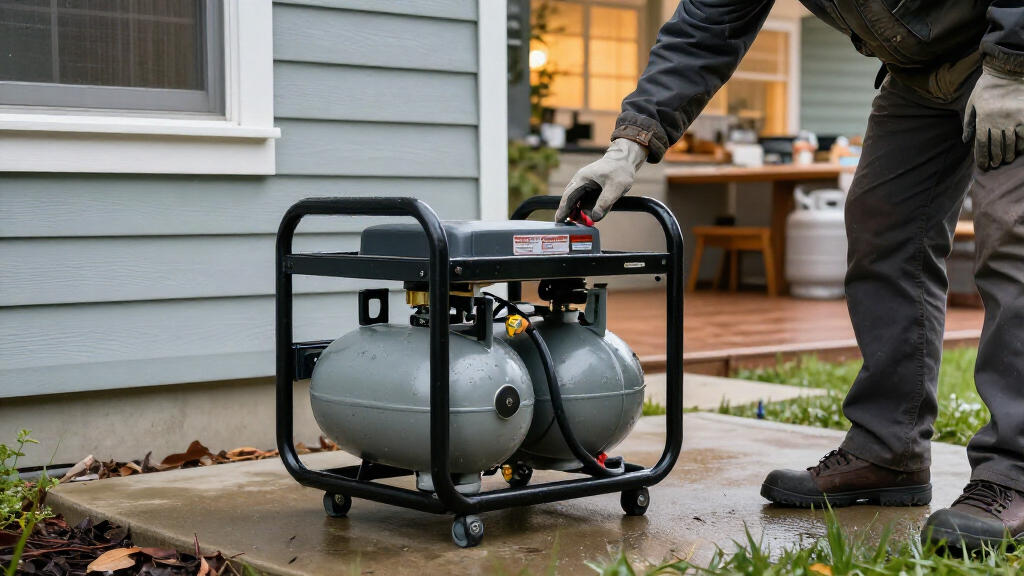
I ranked these options for the job implied by whole-house backup, not just by peak-watt claims. I weighed stated output and fuel choices against practical home use: whether a model is dual-fuel or tri-fuel, whether it includes useful controls such as electric start or a CO sensor, and how its size class may fit a home’s planned loads. A higher output rating can be valuable, but it does not by itself show that a generator can run every appliance at once.
The ranking favors a useful balance of capacity, flexibility, and household practicality. That puts the DuroMax XP13000EH ahead as a broad-use dual-fuel option, gives smaller models a place for essential-circuit buyers, and reserves the top capacity positions for homes with larger backup demands and the equipment to support them. Tri-fuel generators remain in the roundup because they may suit home backup plans, but I distinguish them from true dual-fuel picks. I also treat listed features as decision points rather than proof of installation quality or suitability for a specific home.
| dual fuel whole house generator | Fuel types |
|---|---|
| Westinghouse WGen10500TFc 13,5 | Gasoline, propane, natural gas |
| Westinghouse 4650-Watt Dual-Fu | Gasoline, propane |
| DuroMax XP12000EH Dual-Fuel Po | Gasoline, propane |
| DuroMax XP13000HX 13,000-Watt | Gasoline, propane |
| Westinghouse WGen10500DFc Dual | Gasoline, propane |
| DuroMax XP13000EH 13,000-Watt | Gasoline and propane |
| Westinghouse WGen5300DFcv Dual | Gasoline and propane |
| Westinghouse WGen11500TFc Tri- | Gasoline, propane, and natural gas |
| Westinghouse WGen14500TFc Tri- | Gasoline, propane, and natural gas |
| Westinghouse WGen9500DF Dual-F | Gasoline and propane |
| Westinghouse WGen14500DFc Dual | Gasoline and propane |
| Westinghouse WGen9500DFc Dual- | Gasoline and propane |
| WEN DF8000X 8,000-Watt Dual-Fu | Gasoline and propane |
| Westinghouse WGen20000TFc 28,0 | Gasoline, propane, and natural gas |
Factors to Consider When Choosing Dual Fuel Whole House Generators
Choosing a generator for home backup starts with the loads you need to run and the way you plan to connect it. A model’s wattage and fuel options matter, but neither can settle questions about startup surges, circuit coverage, safe operation, or whether your home’s electrical setup can accept generator power.
Size for Essential Loads, Not a Vague Whole-House Label
“Whole house” can mean keeping a few essential circuits running or attempting to power most of a home, and those plans require very different capacity. List the equipment you want during an outage, including refrigerators, pumps, heating equipment, and any medical devices, then check both running watts and startup needs. Motors and compressors can briefly demand far more power than their normal running draw. A common mistake is adding appliance labels without accounting for which loads may start at the same time. If you want to run large loads together, have an electrician help calculate the load and assess whether the generator can support that plan. A lower-output choice such as the WEN DF8000X may make sense for selected essentials, while larger models call for a careful load plan rather than assumptions based on the word “whole-house.”
Choose Fuel Options Around Your Home’s Supply
Dual-fuel models in this roundup offer gasoline and propane, while tri-fuel versions add natural gas. Gasoline can be easier to source quickly in some situations, but it needs suitable storage and periodic attention; propane can be stored for longer, though the tank and supply setup affect runtime. A natural-gas connection may reduce the need to store fuel, but only if the home has a suitable supply and a qualified professional confirms the connection can provide adequate flow. Do not assume the same generator produces equal output on every fuel. Check the manufacturer’s specifications for output and runtime by fuel type before sizing your backup plan. Choose extra fuel flexibility only when you can access and safely use that fuel during an outage.
Plan the Electrical Connection Before Buying
A portable generator does not connect to a home’s circuits safely through an ordinary wall outlet. A properly installed transfer switch or another approved connection setup helps prevent dangerous backfeeding and lets you select which circuits receive power. The generator’s outlet configuration, amperage, and voltage must match the planned installation, so compare those details with an electrician before choosing a model. Buyers sometimes select a high-wattage unit first and discover that the intended connection, cable, or panel setup does not support their plan. Installation costs and local requirements can change which generator size is practical. Treat the generator and its electrical connection as one backup-power system, not as separate purchases.
Balance Output Against Moving, Storage, and Noise
Higher capacity can support more household loads, but larger portable generators are usually harder to move and need more storage space. Check the listed weight, dimensions, wheel and handle design, and whether you can get the unit from storage to its operating location without lifting it alone. Noise also matters: a generator placed near a home or neighboring property can affect comfort, and the operating location must still meet safety guidance. A compact or lower-output model may be the better purchase if it can run your planned essentials and is easier for your household to set up. Do not select the largest unit simply because it has the highest number on its label. Match size to both the load plan and the people who will operate it.
Compare Safety and Starting Features by Model
Features such as a carbon monoxide sensor and remote electric start can make operation more convenient, but they do not remove the need to follow the manual and operate a generator outdoors, away from openings. The Westinghouse models in this list do not all share the same feature set, so check the exact model name and included controls rather than assuming features carry across a product family. Electric start can be helpful when quick startup matters, while a CO sensor is an added alert or shutdown feature, not permission to run a unit in a garage or enclosed area. Review maintenance needs too, including oil changes, filter checks, and fuel-system care. The best feature mix is the one that supports safe, regular operation by the person who will use it.
Pay More for Capacity Only When Your Plan Uses It
A larger generator can be justified when your load calculation shows that you need more output or when a specific fuel option fits your home’s infrastructure. It is less useful when your actual outage plan covers only a refrigerator, lights, communications, and a few selected circuits. Bigger models can add weight, storage demands, fuel consumption, and installation requirements without improving the experience if you cannot connect or supply them appropriately. A smaller unit may also be easier to exercise and maintain as part of a regular backup routine. Compare the generator’s rated output on your chosen fuel with the loads you expect to run, not just its peak figure. Pay for extra capacity when it solves a defined household need.
Frequently Asked Questions
Can any of these portable generators power my entire home?
That depends on your home’s electrical setup, the generator’s output on the fuel you plan to use, and which appliances run together. A large model may support many circuits, but it still may not cover every load at once, especially equipment with high startup demand. A transfer switch or another approved connection setup is needed for safe connection to household circuits. Ask an electrician to calculate your loads and confirm a compatible installation before buying. Treat “whole-house” as a backup goal to verify, not a guarantee made by the product category.
Should I choose a dual-fuel model or one of the tri-fuel models?
Choose dual-fuel if gasoline and propane cover your expected outage plan. A tri-fuel model adds natural gas as an option, which can be useful if your home has a suitable connection and the supply can meet the generator’s requirements. That added choice does not mean the generator will produce identical output on all fuels, so check the specifications for each. Nor does natural gas remove the need for safe outdoor placement or a proper electrical connection. If you cannot use natural gas at your home, the extra fuel capability may not justify choosing a tri-fuel model over a dual-fuel alternative.
How do I know whether an 8,000-watt-class generator is enough?
Start by listing the circuits and appliances you want during an outage, then total their running demand and account for startup surges. An 8,000-watt-class unit may suit a limited essential-load plan, but it may not support several large appliances at the same time. Check the generator’s output on the fuel you intend to use, since fuel choice can affect available power. Ask an electrician to review the planned loads and connection method, particularly if you want to operate pumps or heating and cooling equipment. If the plan depends on running many high-demand loads together, compare larger capacity models instead.
Does a CO sensor make it safe to run a generator in a garage?
No. A carbon monoxide sensor is an added safety feature, not a substitute for correct placement, and a generator should never be operated in a garage or enclosed space. Follow the manufacturer’s instructions for distance from the home, doors, windows, and vents, and consider how wind could carry exhaust toward openings. A CO sensor may not prevent every exposure or replace working carbon monoxide alarms inside the home. Read the manual before operation and set up the unit outdoors in a location that meets its safety guidance. If you cannot place it safely, do not run it.
What should I arrange before an outage so I can connect a portable generator to my home?
Have a qualified electrician review your panel, intended circuits, generator output, and the appropriate transfer equipment before an outage occurs. Confirm the generator has compatible outlets and that any required cables and connection hardware match the installation. Make a written load plan that identifies which appliances can run together and which need to be switched off during startup. Practice the setup using the manufacturer’s instructions, including safe outdoor placement and fuel handling. Keeping fuel and maintenance supplies ready also helps, but store and handle them according to applicable safety guidance.
Conclusion
For a broad mix of household backup needs, I’d choose the DuroMax XP13000EH as the best overall dual-fuel pick in this lineup. For buyers prioritizing output with a listed CO sensor, the Westinghouse WGen10500DFc is a strong alternative; the WEN DF8000X is the best value-style fit for a smaller essential-load plan, though I would not choose it for heavy simultaneous loads. Beginners should start with the capacity they can realistically connect, fuel, and operate, then favor a model with controls suited to their routine rather than buying the largest unit. For buyers who want access to natural gas as well as gasoline and propane, consider a tri-fuel Westinghouse such as the WGen11500TFc, but only if the home’s gas supply and installation plan support it. If your priority is maximum listed output, compare the WGen20000TFc and other large models against a professional load calculation, available storage, and safe placement before deciding.