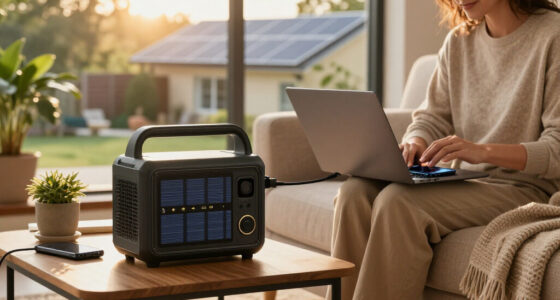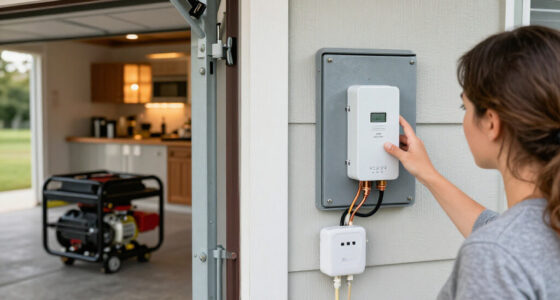
Among these home battery backup systems, I rank the ECO-WORTHY PowerMega 48V 314Ah system with a 10kW hybrid inverter as the best overall for buyers seeking substantial storage and integrated power conversion. The Anker SOLIX E10 is a standout for a more packaged, expandable home setup, while the Jackery HomePower 3600 Plus suits buyers who want a portable, simpler-to-deploy option. The main tradeoff is between an integrated system with high output and a more approachable unit that may cover fewer household loads. Battery-only bundles can offer room to tailor an installation, but they require more planning around compatible equipment. Read on for the full breakdown of what each option is best suited to.

Get backup power and energy gear delivered free with Prime
- Fast, free delivery on millions of items
- Prime Video, Amazon Music and more included
- Member-only deals all year
Key Takeaways
- The ECO-WORTHY PowerMega with a 10kW hybrid inverter ranks first because it combines a large 48V battery with power-conversion hardware, reducing the need to assemble a core system from separate components.
- The Anker SOLIX E10 and Jackery HomePower 3600 Plus fill different convenience roles: Anker is the more home-oriented expandable option, while Jackery is the portable choice for buyers who value simpler setup over a large fixed installation.
- Battery-only PowerMega products are not complete backup systems. The 16.07kWh single battery and two-pack battery bundle still call for compatible inverter and installation planning.
- The two-battery ECO-WORTHY inverter bundle targets longer backup needs than the single-battery configuration, but its larger system brings more installation and space demands.
- The ECO-WORTHY solar kit is the clearest bundled route to off-grid capability, while buyers who already own compatible solar or power equipment may prefer a battery or inverter bundle instead.
| ECO-WORTHY PowerMega 48V 314Ah LiFePO4 Energy Storage System with 10kW Hybrid Inverter |  | Best Single-Battery Integrated System | Battery chemistry: LiFePO4 | Battery capacity: 314Ah at 51.2V | Usable energy: 16.1kWh | VIEW LATEST PRICE | See Our Full Breakdown |
| Anker SOLIX E10 Power Dock and Extra Battery System |  | Best for Whole-Home Coverage and Expansion | Battery capacity: 12kWh, expandable to 90kWh | Continuous output: 7.6kW; scales to 22.8kW | Turbo output: 10kW; scales to 30kW with three units | VIEW LATEST PRICE | See Our Full Breakdown |
| ECO-WORTHY Powermega 48V 314Ah LiFePO4 Battery System (2-Pack) with 10kW Hybrid Inverter |  | Best for High-Capacity Backup | Battery chemistry: LiFePO4 | Battery quantity and capacity: 2 batteries, 314Ah each | Battery voltage: 51.2V | VIEW LATEST PRICE | See Our Full Breakdown |
| ECO-WORTHY 10,000W Off-Grid Solar Panel Kit with 48V Battery |  | Best Off-Grid Solar Bundle | System type: Off-grid solar power system | Inverter output: 10,000W continuous; 20,000W peak | Battery: 48V 314Ah LiFePO4 | VIEW LATEST PRICE | See Our Full Breakdown |
| ECO-WORTHY Powermega 51.2V 314Ah LiFePO4 Battery, 16.07kWh |  | Best Expandable Standalone Battery | Battery chemistry: LiFePO4 | Voltage and capacity: 51.2V, 314Ah | Energy: 16.07kWh | VIEW LATEST PRICE | See Our Full Breakdown |
| Jackery HomePower 3600 Plus Portable Power Station, 3584Wh, 3600W |  | Best Portable Backup | Capacity: 3,584Wh | Output: 3,600W | Parallel output: Up to 7,200W | VIEW LATEST PRICE | See Our Full Breakdown |
| ECO-WORTHY Powermega 48V 314Ah LiFePO4 Battery, 2-Pack |  | Best for Expandable Fixed Storage | Quantity: 2 batteries | Chemistry: LiFePO4 | Nominal voltage: 51.2V | VIEW LATEST PRICE | See Our Full Breakdown |
| home battery backup system | Battery chemistry | Warranty |
|---|---|---|
| ECO-WORTHY PowerMega 48V 314Ah | LiFePO4 | 10 years |
| Anker SOLIX E10 Power Dock and | — | 5 years for E10; 10 years for Dock |
| ECO-WORTHY Powermega 48V 314Ah | LiFePO4 | — |
| ECO-WORTHY 10,000W Off-Grid So | — | — |
| ECO-WORTHY Powermega 51.2V 314 | LiFePO4 | 10 years |
| Jackery HomePower 3600 Plus Po | LFP | 5 years |
| ECO-WORTHY Powermega 48V 314Ah | — | — |
More Details on Our Top Picks
ECO-WORTHY PowerMega 48V 314Ah LiFePO4 Energy Storage System with 10kW Hybrid Inverter
This package pairs a 10kW hybrid inverter with one 16.1kWh battery, making it a more complete backup setup than the standalone ECO-WORTHY 16.07kWh battery. Its 120V and 240V split-phase output can serve a wider range of household circuits than a small portable unit such as the Jackery HomePower 3600 Plus. Wi-Fi and Bluetooth monitoring, an LCD, and several battery protection features add useful visibility and safeguards. The main limitation is storage: one battery may not cover a long outage or heavy overnight use, while the ECO-WORTHY two-battery kit provides over 30kWh. Parallel connection cables are not included, so expansion involves additional planning. I’d choose this package when integrated inverter-and-battery hardware matters more than maximum storage capacity.
Pros:- Combines a 10kW hybrid inverter and 16.1kWh usable battery in one package.
- Supports both 120V single-phase and 240V split-phase output.
- Includes Wi-Fi and Bluetooth monitoring, an LCD, and multiple communication ports.
- Lists active balancing, a built-in circuit breaker, and a claimed 9,000+ cycles at 80% DoD.
Cons:- One battery provides less storage than the ECO-WORTHY two-battery kit, which exceeds 30kWh.
- Parallel connection cables are not included.
- Battery freight delivery may arrive separately from other packages.
Best for: Homeowners who want a 240V-capable inverter and substantial battery storage in one package, with the option to plan for expansion.
Not ideal for: Households needing several days of high-load backup from the start; the included single battery offers 16.1kWh, and parallel cables are not included.
- Battery chemistry:LiFePO4
- Battery capacity:314Ah at 51.2V
- Usable energy:16.1kWh
- Inverter output:10,000W
- Output voltage:120V single-phase and 240V split-phase
- Cycle life:9,000+ cycles at 80% DoD
- Monitoring and communications:LCD, Wi-Fi, Bluetooth, RS485, CAN, and RS232
- Warranty:10 years
Our verdict“Choose this integrated system if you need 240V-capable backup and 16.1kWh of storage without starting with a two-battery package.”
Anker SOLIX E10 Power Dock and Extra Battery System
The Anker SOLIX E10 stands apart from the ECO-WORTHY systems by centering the setup on a 200A Power Dock and modular expansion, rather than a single inverter-and-battery bundle. It starts at 12kWh and can scale to 90kWh, which gives homeowners a path to longer backup without choosing a large fixed battery bank at the outset. The listed ≤20ms switchover is intended to keep household loads running through an outage, while 9kW of solar input per unit supports solar charging. Its 7.6kW continuous output is below the ECO-WORTHY systems’ 10kW rating per inverter, though output can scale with additional units. This is a more configurable whole-home option, but the Power Dock and battery ship separately, and installation planning is more involved than buying a standalone battery.
Pros:- 200A Power Dock is designed for whole-home coverage.
- Capacity can expand from 12kWh to 90kWh.
- Listed switchover time is 20ms or less.
- Supports up to 9kW solar input per unit and outdoor installation.
Cons:- Continuous output starts at 7.6kW, below the 10kW rating of the ECO-WORTHY inverter systems.
- Power Dock and battery are dispatched separately.
- E10 coverage is listed at five years, while the Dock warranty is listed at ten years.
Best for: Homeowners planning a professionally integrated whole-home backup system who want modular storage growth and a 200A dock.
Not ideal for: Buyers seeking a simple, self-contained battery purchase or a higher continuous output from a single listed unit than 7.6kW.
- Battery capacity:12kWh, expandable to 90kWh
- Continuous output:7.6kW; scales to 22.8kW
- Turbo output:10kW; scales to 30kW with three units
- Solar input:9kW per unit
- Whole-home dock:200A
- Switchover time:20ms or less
- Battery type:EV-class LFP
- Warranty:5 years for E10; 10 years for Dock
Our verdict“Pick the E10 if whole-home integration and a growth path to large storage matter more than a simpler single-package setup.”
ECO-WORTHY Powermega 48V 314Ah LiFePO4 Battery System (2-Pack) with 10kW Hybrid Inverter
With over 30kWh of usable energy and a 10kW hybrid inverter, this ECO-WORTHY kit is the capacity-first choice in this group. Compared with the single-battery PowerMega system, its second 314Ah battery can support longer backup periods before recharging, which is useful for homes with sustained loads or limited solar production during an outage. The inverter also offers 120V and 240V split-phase output, unlike a battery-only purchase such as the ECO-WORTHY 16.07kWh model, which still needs compatible inverter hardware. The tradeoff is a larger, more involved installation and a 10kW inverter rating that does not increase just because the battery count doubles. Packages may arrive at different times, and the inverter exterior version is shipped randomly.
Pros:- Includes two 314Ah LiFePO4 batteries with over 30kWh of usable energy.
- Pairs the battery bank with a 10kW hybrid inverter.
- Supports 120V single-phase and 240V split-phase output.
- Includes Wi-Fi and Bluetooth monitoring, an LCD, and multiple battery protection features.
Cons:- The 10kW inverter rating does not double with the second battery.
- Multiple packages may arrive at different times.
- The inverter exterior version is shipped randomly.
Best for: Households with substantial backup needs that want more than 30kWh of storage and a 240V-capable inverter in one system.
Not ideal for: Buyers with limited installation space or modest backup loads; the second battery adds substantial capacity they may not need, while inverter output remains 10kW.
- Battery chemistry:LiFePO4
- Battery quantity and capacity:2 batteries, 314Ah each
- Battery voltage:51.2V
- Usable energy:Over 30kWh
- Inverter capacity:10,000W
- Peak output power:20,000W
- Output voltage:120V single-phase and 240V split-phase
- Battery cycle life:9,000+ cycles at 80% DoD
- Certification:UL1973
Our verdict“Choose this kit over the single-battery PowerMega when longer runtime matters more than a smaller footprint or a lower-capacity setup.”
ECO-WORTHY 10,000W Off-Grid Solar Panel Kit with 48V Battery
This kit is the clearest choice for buyers who need solar panels, battery, and inverter together, rather than backup storage alone. Its five bifacial panels provide 2,950W of rated solar capacity, paired with a 16.076kWh battery and a 10kW split-phase inverter. That makes it more ready for off-grid solar generation than the single-battery ECO-WORTHY PowerMega system, which does not include panels. The panels may produce more under suitable conditions, but their total rated capacity is modest beside a 10kW inverter, so solar replenishment will be limited by the array. Compared with the Anker SOLIX E10, this is a bundled off-grid package rather than a modular whole-home dock system. Professional installation is recommended, and the large panels need suitable mounting and site planning.
Pros:- Bundles five bifacial panels, a 16.076kWh battery, and a 10kW inverter.
- Inverter supports 120V and 120V/240V split-phase output.
- Panels have a listed conversion efficiency of 23.23%.
- System supports Wi-Fi, Bluetooth, and PC connectivity.
Cons:- The 2,950W panel array is much smaller than the inverter’s 10kW output rating.
- Professional installation is recommended, adding planning and setup requirements.
- Large panels require adequate mounting space and site preparation.
Best for: Off-grid homeowners or remote-property owners who want panels, a battery, and a split-phase inverter in one solar package.
Not ideal for: Buyers who only need outage backup or want solar generation to match a 10kW inverter; the included array is rated at 2,950W.
- System type:Off-grid solar power system
- Inverter output:10,000W continuous; 20,000W peak
- Battery:48V 314Ah LiFePO4
- Battery energy:16.076kWh
- Solar panels:5 × 590W bifacial N-type monocrystalline panels
- Total PV capacity:2,950W
- Panel conversion efficiency:23.23%
- Maximum voltage:500V
Our verdict“Choose this bundle if you need an off-grid solar package with panels included, but not if your priority is a high-output array sized close to the inverter.”
ECO-WORTHY Powermega 51.2V 314Ah LiFePO4 Battery, 16.07kWh
This ECO-WORTHY unit is a battery, not a complete backup system: buyers need a compatible inverter and an installation plan. That separation makes it more flexible than the bundled single-battery PowerMega system, which includes a 10kW hybrid inverter, but less ready to use as a home backup solution. Its 16.07kWh capacity and support for up to 15 batteries in parallel give it a substantial expansion path, with listed capacity up to 241kWh. A 200A active-balancing BMS, UL 1973 certification, touchscreen, and wireless monitoring add useful protection and status access. Compared with the two-battery ECO-WORTHY kit, this is a better fit for buyers who want to select their own inverter or expand in stages, but it leaves compatibility and system integration to the buyer.
Pros:- Provides 16.07kWh of LiFePO4 energy in one battery.
- Supports parallel expansion to 15 units and up to 241kWh.
- Includes a 200A active-balancing BMS and UL 1973 certification.
- Offers a touchscreen, Wi-Fi, Bluetooth, RS485, and CAN connectivity.
Cons:- Does not include an inverter, unlike the ECO-WORTHY PowerMega system bundles.
- Requires compatibility checks and additional system integration.
- Large freight delivery requires an address that can accommodate a pallet shipment.
Best for: Solar and backup-system owners who already have a compatible inverter or want to build a battery bank in stages.
Not ideal for: Homeowners seeking a ready-to-run backup package; this listing includes the battery only and requires compatible inverter equipment.
- Battery chemistry:LiFePO4
- Voltage and capacity:51.2V, 314Ah
- Energy:16.07kWh
- Certification:UL 1973
- BMS:200A smart BMS with active cell balancing
- Expansion:Up to 15 units in parallel; up to 241kWh
- Display and connectivity:7-inch HD touchscreen, Wi-Fi, and Bluetooth
- Communication ports:RS485 and CAN
- Warranty:10 years
Our verdict“Buy this standalone battery if you already have a compatible inverter or want staged expansion, and skip it if you need a complete backup system in one package.”
Jackery HomePower 3600 Plus Portable Power Station, 3584Wh, 3600W
The Jackery HomePower 3600 Plus suits households that want substantial backup capacity without committing to a fixed battery installation. Its 3,584Wh capacity and 3,600W output can support a range of household devices, while the wheels and telescopic handle make it easier to reposition than the ECO-WORTHY Powermega 48V 314Ah LiFePO4 Battery, 2-Pack, which is a much heavier stationary setup. Jackery also offers AC, solar, generator, and hybrid charging, giving buyers several ways to replenish power.
The tradeoff is that one unit provides 120V output only; 240V requires parallel-connected units, and its two outlets may limit simultaneous connections. Its 77.2-pound weight also makes stairs and lifting awkward despite the rolling design. Choose this for flexible, movable backup, not as a turnkey whole-home battery system.
Pros:- 3,584Wh capacity and 3,600W output provide substantial portable backup.
- AC, solar, gas generator, and hybrid AC+DC charging offer flexible replenishment.
- Wheels and a telescopic handle make it easier to move than large rack-style batteries.
- LFP battery is rated for 6,000 cycles and includes a five-year warranty.
Cons:- 240V output requires connecting units in parallel.
- At 77.2 pounds, it can be difficult to lift or move over stairs.
- Two outlets may constrain how many devices can connect directly.
Best for: Households seeking a wheeled, movable backup station for essential appliances and electronics, with multiple charging options.
Not ideal for: Buyers who need built-in 240V output from a single unit, a fixed whole-home installation, or a lightweight battery to carry up stairs.
- Capacity:3,584Wh
- Output:3,600W
- Parallel output:Up to 7,200W
- Voltage:120V; 240V in parallel
- Battery chemistry:LFP
- Expandable capacity:Up to 21kWh per unit or 43kWh with multiple units
- Charging options:Hybrid AC+DC, AC, solar, and gas generator
- Weight:77.2 lb
- Warranty:5 years
Our verdict“Choose the Jackery if you want high-capacity backup that can roll between locations; skip it if you need single-unit 240V or a stationary whole-home system.”
ECO-WORTHY Powermega 48V 314Ah LiFePO4 Battery, 2-Pack
For buyers building a fixed 48V home or off-grid battery bank, this two-battery set offers far more stored energy than the portable Jackery HomePower 3600 Plus: each ECO-WORTHY battery is rated at 16.07kWh, for 32.14kWh across the pair. The UL 1973 certification, built-in aerosol fire suppression, and 200A active-balancing BMS give the system a more installation-focused profile than a portable power station. Its RS485 and CAN connections also support inverter integration, while Wi-Fi, Bluetooth, and a touchscreen provide several ways to check battery status.
This capacity comes with substantial handling demands: each battery weighs about 280 pounds, and the listed dimensions call for careful delivery and placement planning. Unlike the Jackery, this is a battery set rather than a portable, all-in-one power station, so buyers need compatible inverter equipment. It is a stronger fit for planned stationary storage than quick, plug-and-play backup.
Pros:- Two batteries provide 32.14kWh of stated combined energy capacity.
- UL 1973 certification and built-in aerosol fire suppression add safety features.
- 200A smart BMS includes active cell balancing.
- Touchscreen, Wi-Fi, Bluetooth, RS485, and CAN support monitoring and inverter integration.
Cons:- Each battery weighs about 280 pounds and requires careful delivery and placement planning.
- A compatible inverter and system setup are needed; this is not a standalone power station like the Jackery HomePower 3600 Plus.
- The large battery dimensions require dedicated space.
Best for: Homeowners and off-grid system builders who need high-capacity 48V storage, have compatible inverter equipment, and can arrange heavy freight delivery and installation.
Not ideal for: Renters, buyers seeking a portable all-in-one power station, or households without room and equipment to handle batteries weighing about 280 pounds each.
- Quantity:2 batteries
- Chemistry:LiFePO4
- Nominal voltage:51.2V
- Capacity:314Ah per battery
- Energy capacity:16.07kWh per battery
- BMS:200A smart BMS with active cell balancing
- Safety:UL 1973-certified; built-in aerosol fire suppression
- Parallel expansion:Up to 15 units
- Weight:279.99 lb per battery
Our verdict“Choose this pair for high-capacity, expandable stationary storage if you have compatible inverter equipment and a plan for delivery and installation.”
How We Picked
I ranked these options around their usefulness as home backup systems, not just their battery capacity. My main criteria were the amount of storage disclosed, inverter inclusion and output, the completeness of the power setup, expandability, and how much extra equipment or installation planning a buyer may need. I also weighed whether each product is better suited to fixed household backup, off-grid solar use, or portable emergency power, since those roles are not interchangeable.
The integrated ECO-WORTHY system takes the top spot because its battery and 10kW hybrid inverter make a more direct foundation for home backup than a battery sold alone. The two-battery inverter bundle follows for buyers who prioritize more stored energy, though its scale and installation demands narrow its audience. Anker and Jackery rank as more convenience-oriented alternatives, while the solar kit and battery-only products serve buyers with specific system plans rather than people seeking a ready-to-use whole-home setup. I do not treat listed capacity as a guarantee of runtime; actual results depend on the loads, inverter, installation, and operating conditions.
| home battery backup system | Battery chemistry |
|---|---|
| ECO-WORTHY PowerMega 48V 314Ah | LiFePO4 |
| Anker SOLIX E10 Power Dock and | — |
| ECO-WORTHY Powermega 48V 314Ah | LiFePO4 |
| ECO-WORTHY 10,000W Off-Grid So | — |
| ECO-WORTHY Powermega 51.2V 314 | LiFePO4 |
| Jackery HomePower 3600 Plus Po | LFP |
| ECO-WORTHY Powermega 48V 314Ah | — |
Factors to Consider When Choosing Home Battery Backup Systems
Before choosing a system, I would map out the loads you want to keep running and how you expect to recharge the battery. A large capacity figure alone does not tell you whether a system can start a demanding appliance, connect to your home safely, or run through a long outage. These broader checks help separate a good component from a workable backup plan.
Match inverter output to the loads you need
Battery capacity tells you how much energy may be stored; inverter output shapes which appliances can draw power at once. Make a list of essential loads and check both their running demand and any brief startup surge, especially for pumps, refrigerators, or other motor-driven equipment. A system with substantial storage but an undersized inverter may not serve the appliances you had in mind. Avoid treating a stated maximum output as a promise that every household circuit can run together. If you want whole-home coverage, have an electrician review the transfer equipment and circuit plan before selecting a system.
Plan runtime around actual energy use
Estimate daily use for the circuits you expect to back up instead of assuming a battery will power an entire home for a set number of days. The usable energy can differ from the nameplate capacity, and inverter losses, temperature, and battery settings can affect the amount that reaches your appliances. A short list of essentials often stretches storage much further than keeping high-draw heating or cooking equipment online. Compare batteries on usable capacity when that figure is available, not only on nominal capacity. Leave room in your plan for periods when solar generation or grid charging is unavailable.
Check what is included—and what still needs buying
A battery, inverter, solar panels, and home connection hardware are separate parts of a backup setup, even when a listing uses the word “system.” Confirm whether the package includes an inverter, charge controller, cables, mounting hardware, transfer equipment, and the components needed to connect solar input. A battery-only bundle may suit someone assembling a system around existing equipment, but can create extra compatibility work for a first-time buyer. Bundled equipment can reduce coordination between parts, though it may limit the freedom to choose each component. Ask for a complete bill of materials before comparing packages.
Choose a charging plan for outages that last
Backup duration depends on how you replenish the battery as well as how much energy it stores. Grid charging can prepare a system before a storm, while solar may help maintain power through a longer outage if weather and panel placement cooperate. A solar bundle is not automatically a complete long-duration solution: check panel capacity, charging limits, available sunlight, and whether the included equipment supports your intended battery setup. Portable units can be easier to recharge or relocate, but their available solar input may differ from a fixed installation. If outages are frequent, plan for cloudy days and avoid relying on a single charging method.
Account for installation, space, and electrical safety
Large 48V battery systems and hybrid inverters need a suitable location, correct wiring, and protection matched to the installation. Check the manufacturer’s installation instructions, local electrical requirements, ventilation guidance, and whether a qualified installer is needed. A portable power station may avoid some fixed-installation work, but it usually does not connect to household circuits in the same way as a professionally installed backup system. Measure the intended space and consider access for maintenance before ordering a multi-battery package. Do not improvise connections between batteries or household wiring to make a system fit.
Pay for expansion only when your plan supports it
Adding batteries can extend runtime, but expansion is useful only when the inverter, battery management system, wiring, and charging source support the added capacity. Confirm the supported battery configuration and whether expansion must use matching models or firmware. A two-pack may make sense for a known high-energy need; it can be excess equipment for someone who only needs to keep communications and a refrigerator running. Buying a modular setup can preserve options, but future compatibility is not guaranteed across product generations. I would size for current essential loads first, then check documented expansion limits before paying for extra storage.
Frequently Asked Questions
Is a battery-only product enough to back up my home?
Usually, a battery-only product is one component of a backup setup, not a complete home power system. You may still need a compatible inverter, charging equipment, wiring protection, and a safe way to connect selected circuits. Compatibility matters: check voltage, communication support, battery limits, and the manufacturer’s approved configurations before pairing components. If you want household circuits backed up during an outage, ask an electrician to confirm the transfer equipment and installation requirements. A battery-only option makes the most sense when you already have a compatible system plan or professional support.
Should I choose one large battery or a two-battery bundle?
Choose based on the energy your essential loads use and the runtime you want, rather than battery count alone. A two-battery bundle can provide more stored energy, but it also takes more space and may add installation and wiring complexity. A single battery can be a more manageable starting point if your outage plan covers only a few key circuits. Check whether the inverter can use the full combined capacity and whether both batteries are supported in the same configuration. If your needs may grow, verify expansion rules before assuming another battery can be added later.
Can a home battery backup system run my whole house?
That depends on the inverter’s output, the home’s peak demand, and how the system is connected. Some setups are intended to support selected essential circuits, while a whole-home design must account for simultaneous loads and appliance startup surges. Large heating, cooling, and cooking loads can use stored energy quickly even when the inverter can handle their power draw. Ask an installer to review your electrical panel and estimate the loads you want active during an outage. Do not infer whole-home capability from battery capacity alone.
Will solar panels keep a battery charged during a long outage?
Solar can replenish a battery during an outage, but the amount depends on panel capacity, sunlight, shading, weather, and the system’s charging limits. A cloudy stretch can reduce production, while daytime household use leaves less energy available for charging. Check that the panels, inverter or charge controller, and battery are compatible and that the system can accept the intended solar input. For extended outages, consider how you will manage loads when solar production falls short. Solar support helps, but it does not guarantee uninterrupted power.
When is a portable power station a better choice than a fixed home battery?
A portable power station can be a better fit if you want a movable source for a few appliances, temporary work areas, or emergency essentials without committing to a fixed home installation. It is less suited to buyers who need high-output support for many household circuits or a professionally integrated backup arrangement. Check its continuous output, surge capability, available outlets, and recharge options against the devices you plan to run. A fixed battery system can offer a more direct home connection, but brings installation planning and space requirements. Decide first whether portability or household circuit coverage is the priority.
Conclusion
For most buyers planning a substantial fixed backup setup, I recommend the ECO-WORTHY PowerMega 48V 314Ah system with its 10kW hybrid inverter as the best overall pick in this lineup. The single-battery ECO-WORTHY inverter system is my best value direction for buyers who want an integrated foundation without choosing the two-battery bundle, while the two-battery inverter bundle suits homes with a stronger need for stored energy and space for a larger installation. For a more packaged, expandable home-oriented option, consider the Anker SOLIX E10; for beginners prioritizing portability and simpler deployment over whole-home integration, the Jackery HomePower 3600 Plus is the clearest fit. Buyers building around solar should look closely at the ECO-WORTHY off-grid kit, and those who already have compatible power equipment may prefer one of the battery-only PowerMega options. My premium recommendation is the two-battery ECO-WORTHY inverter bundle for buyers who can use its added storage; skip that scale if your backup plan is limited to a few essentials.