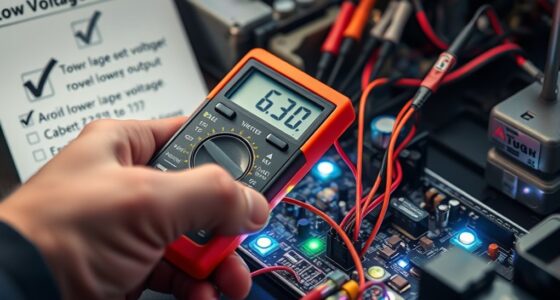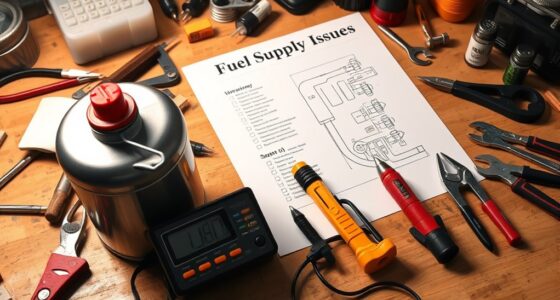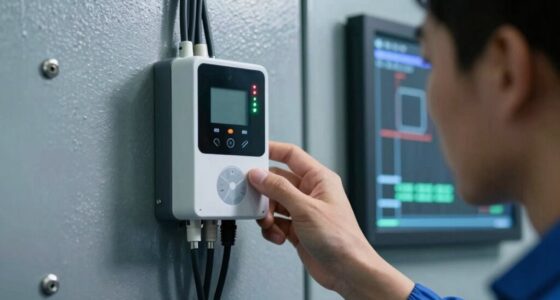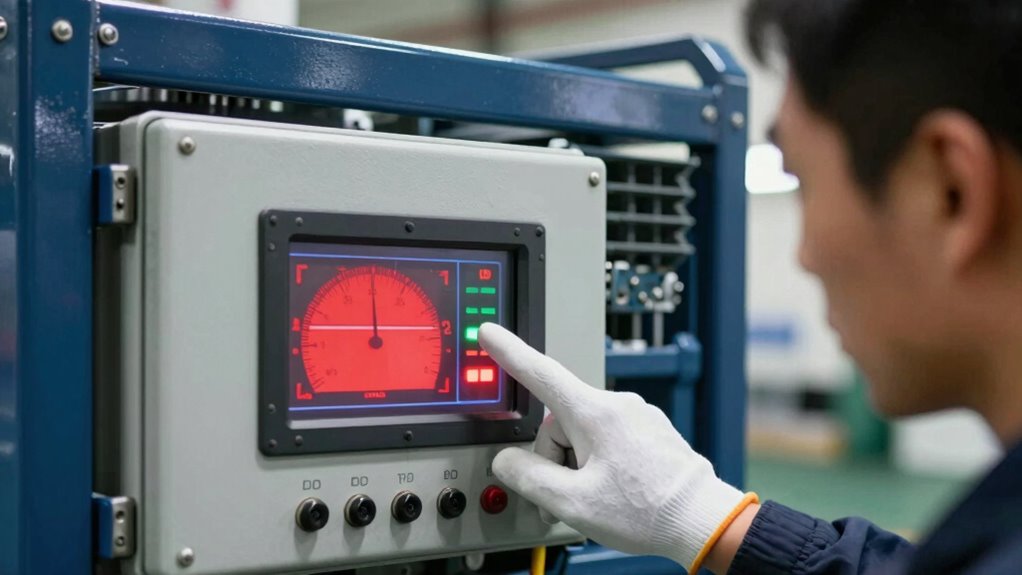
When you get a generator overspeed alarm, first stay calm and guarantee everyone’s safety. Check the fuel system for blockages or leaks, and verify the governor and throttle linkage are working correctly without damage or sticking. Inspect the control panel and sensors, cleaning contacts and testing for proper operation. Regular maintenance records can also help spot potential issues. By following these steps, you’ll better understand the cause—continue exploring to discover more solutions.

Get backup power and energy gear delivered free with Prime
- Fast, free delivery on millions of items
- Prime Video, Amazon Music and more included
- Member-only deals all year
Key Takeaways
- Verify the overspeed sensor and wiring for faults or false readings.
- Inspect the governor system for mechanical damage or misadjustment.
- Check fuel system components for blockages, leaks, or mixture issues.
- Ensure throttle linkage moves freely and returns to normal position.
- Review control panel alerts and confirm sensor calibration and proper operation.
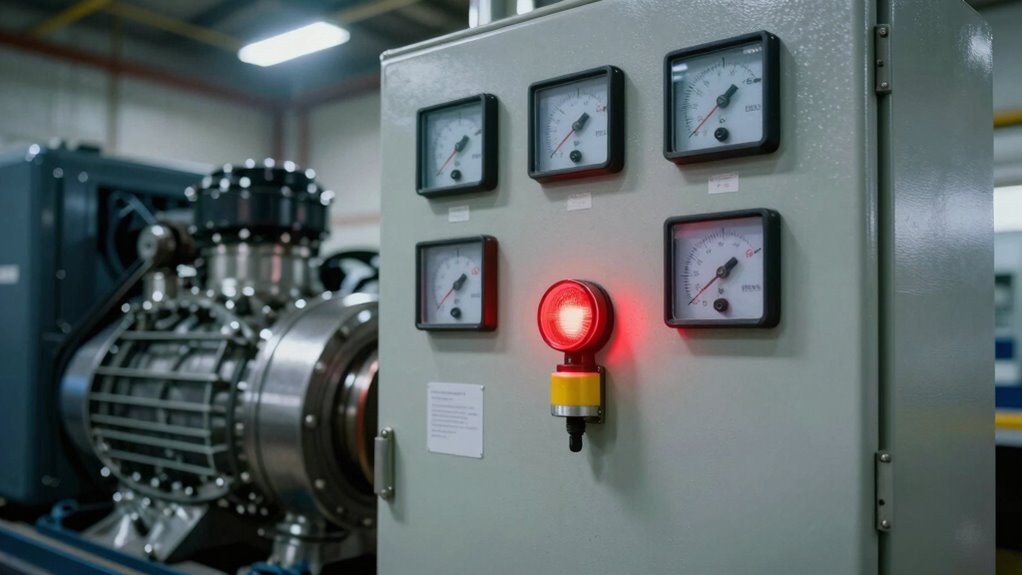
When your generator triggers an overspeed alarm, it’s crucial to act quickly to identify the root cause. This warning indicates that the engine is running faster than its safe operating speed, which can lead to serious damage if not addressed promptly. Your first step is to stay calm and follow established emergency procedures to prevent further issues. Once safety is assured, you need to check several key components to diagnose the cause of the overspeed.
Start by inspecting the fuel system. An overly rich or lean mixture can cause engine fluctuations, leading to overspeed conditions. Make sure fuel filters are clean and that there are no blockages or leaks in the fuel lines. Next, examine the governor system, which controls engine speed. If the governor is malfunctioning or stuck, it might fail to regulate engine speed properly. Look for any mechanical damage, loose links, or broken springs that could impair its function. Adjust or repair the governor as necessary to guarantee it operates smoothly. Ensuring the governor system is properly maintained can significantly reduce the risk of overspeed incidents.
You should also verify the condition of the throttle linkage. A stuck or improperly adjusted throttle can cause the engine to run beyond its intended speed. Lubricate moving parts if needed and ensure the linkage moves freely and returns to its default position when released. Additionally, check the control panel and sensors related to overspeed detection. Faulty sensors or wiring issues can sometimes produce false alarms, so inspect connections, clean sensor contacts, and test the sensors for proper operation. Regular calibration of the overspeed sensors is essential for accurate detection and response. Incorporating routine maintenance practices can help identify potential issues before alarms occur and ensure consistent performance. Furthermore, understanding the importance of proper calibration can help in maintaining precise overspeed detection and avoiding false alarms.
Routine maintenance routines are crucial in preventing overspeed incidents. Consistently scheduled inspections, lubrication, and part replacements help keep all components functioning correctly. If you haven’t performed recent maintenance, now’s the time to review your routine and perform any overdue tasks. Proper maintenance not only minimizes the chances of an overspeed alarm but also ensures your generator runs efficiently and reliably. Being familiar with environmental impact considerations can also help in maintaining your equipment responsibly and sustainably. Additionally, keeping detailed records of maintenance activities can aid in diagnosing recurring issues and improving overall reliability.
Frequently Asked Questions
How Often Should Generator Overspeed Alarms Be Tested?
You should test generator overspeed alarms at least quarterly to guarantee reliable operation. During testing, verify alarm calibration so it triggers accurately at the set overspeed threshold. Check sensor durability, ensuring sensors remain responsive and free of damage or corrosion. Regular testing helps maintain safety and equipment integrity, preventing false alarms or missed detections. Consistent maintenance and calibration keep your generator’s overspeed protection system functioning effectively, reducing risk of damage or failure.
Can Environmental Factors Cause False Overspeed Alarms?
Yes, environmental factors can cause false overspeed alarms, like noise or vibrations that set off sensors unexpectedly. You should check for environmental interference, such as dust, humidity, or extreme temperatures, which might disrupt sensor readings. Ensuring proper sensor calibration is essential to prevent false alarms. Regularly inspecting these elements keeps your generator running smoothly and helps you avoid unnecessary shutdowns caused by false triggers.
What Is the Typical Lifespan of Overspeed Sensors?
The typical lifespan of overspeed sensors varies, but generally, they last around 5 to 10 years. You should regularly check sensor calibration during routine maintenance to guarantee accuracy. Keep an eye on replacement intervals, especially if you notice false alarms or inconsistent readings. Proper calibration and timely replacement help maintain reliable operation, preventing costly damage or downtime caused by sensor failure.
Are There Preventive Maintenance Tips for Avoiding Overspeed Issues?
To prevent overspeed issues, you should regularly perform vibration analysis and lubrication maintenance. Vibration analysis helps detect early signs of imbalance or bearing wear that could lead to overspeed conditions. Proper lubrication reduces friction and wear on moving parts, minimizing the risk of overspeed alarms. Schedule routine inspections and maintenance, stay attentive to unusual vibrations, and guarantee all components are properly lubricated to keep your generator running safely and efficiently.
How Does Load Fluctuation Affect Generator Overspeed Risks?
Load fluctuation considerably impacts overspeed risks because rapid changes can overwhelm your control system, leading to instability. To mitigate this, guarantee load stability by managing how quickly loads are applied or removed. Regularly calibrate your control system to respond accurately to load shifts. If load fluctuates unpredictably, it increases the chance of overspeed, so maintaining stable loads and precise control system calibration helps prevent overspeed alarms and keeps your generator running smoothly.
Conclusion
When your generator alarms for overspeed, think of it as a red warning flag waving fiercely. You should quickly examine the governor, control systems, and mechanical components to find the culprit. Addressing the issue promptly keeps your system humming smoothly, avoiding damage like a well-tuned orchestra. Remember, catching the problem early is like putting out a small fire before it turns into an uncontrollable blaze—your best bet for keeping everything running safely and efficiently.
Columbus Day / Indigenous Peoples' Day Picks
long weekend sales
As an affiliate, we earn on qualifying purchases.