To identify fuel contamination from water and microbes, regularly inspect your fuel for signs like a cloudy or milky appearance, a foul odor, or sludge buildup. Use water detection test strips or transparent containers to check for separation in fuel samples. Look out for clogged filters, rough engine idling, or difficult starts, which suggest contamination. Staying vigilant and prompt testing can help you catch issues early—exploring further reveals how to effectively prevent and address these problems.
Key Takeaways
- Look for a cloudy, milky, or layered appearance in fuel samples or test containers.
- Use water detection test strips that change color to quickly identify water presence.
- Detect foul odors, sludge, or gel-like substances indicating microbial growth in the fuel tank.
- Monitor for engine issues like hard starting or rough idling, which suggest contamination.
- Regularly drain water and inspect filters to prevent microbial buildup and maintain fuel quality.
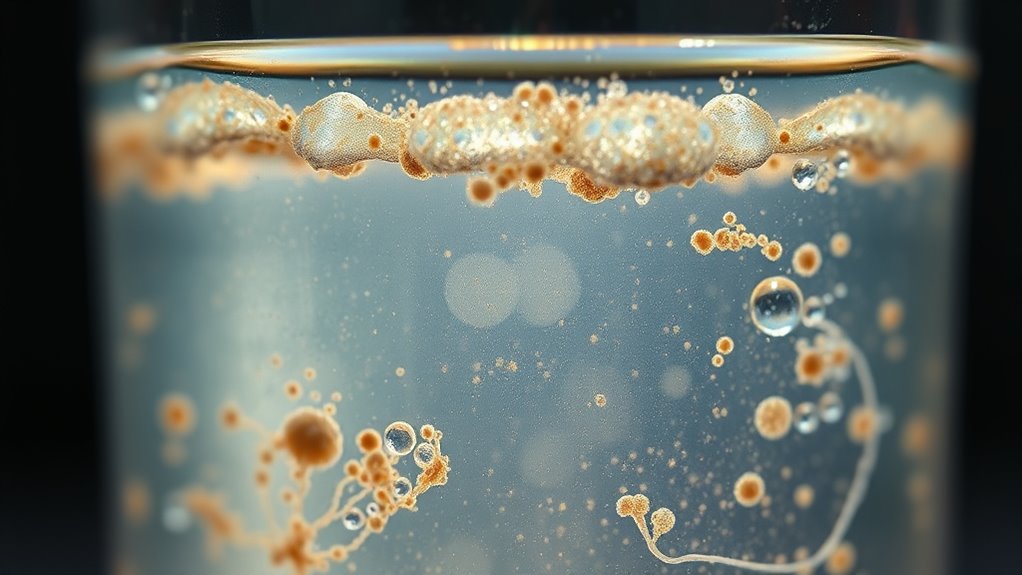
Fuel contamination from water and microbes is a common but often overlooked problem that can compromise engine performance and safety. Recognizing the signs early is vital to prevent costly repairs or breakdowns. The first step in identifying contamination is water detection. Water in your fuel can settle at the bottom of the tank, making it hard to see until it causes noticeable issues. One effective method is using a clear, transparent container or a test kit designed for water detection. By drawing a small sample from your fuel line or drain valve, you can observe whether water has separated from the fuel. If you see a distinct layer at the bottom or cloudy, milky appearance, water contamination is present. Some test strips are also available that change color in the presence of water, providing a simple, quick way to check without specialized tools. Regularly inspecting your fuel for water helps catch problems before microbes take hold. Additionally, monitoring fuel quality**** regularly can help you catch early signs of contamination and prevent further issues.
Microbial growth is a subtler threat but can be equally damaging. Once water is present, microbes such as bacteria and fungi can thrive, feeding on the hydrocarbons in fuel. This microbial activity creates a slimy, gel-like substance that clogs fuel filters and injectors, reducing engine efficiency or causing failures. To detect microbial growth, look for signs like a foul odor in the fuel, often described as musty or rotten, or the presence of sludge and discoloration in your fuel tank. If you notice these symptoms, it’s likely that microbial contamination is underway. You might also observe difficulty starting your engine or rough idling, both symptoms of compromised fuel systems. Checking for microbial growth involves inspecting the tank visually if possible, especially during routine maintenance or when refueling, and using microbial test kits if available. These kits can detect the presence of microbes by analyzing samples from your fuel.
Preventing water detection issues and microbial growth requires consistent maintenance. Regularly draining water from your fuel tank, especially after storage periods or in humid climates, reduces the likelihood of microbial contamination. Using fuel additives designed to inhibit microbial growth can provide an added layer of protection. If contamination is suspected, thorough cleaning of the fuel tank and replacing filters is often necessary to restore fuel quality. Essentially, staying vigilant about water detection and microbial growth allows you to address fuel contamination before it causes serious harm. Regular inspections, proper maintenance, and prompt action at the first signs of trouble keep your engine running smoothly and safely.
Frequently Asked Questions
Can Fuel Contamination Affect Engine Performance Without Visible Signs?
Yes, fuel contamination can affect engine performance without visible signs. Poor fuel quality caused by water or microbes can reduce engine efficiency, leading to rough running, misfires, or increased fuel consumption. Even if you don’t see obvious issues, contaminated fuel can cause subtle performance drops. Regularly checking fuel quality and maintaining your fuel system helps guarantee your engine runs smoothly and stays efficient, preventing hidden damage.
What Are the Long-Term Effects of Microbial Growth in Fuel Systems?
They say “an ounce of prevention is worth a pound of cure,” and microbial growth can cause long-term damage in your fuel system. Microbial biofilms lead to fuel degradation, clogging filters and corroding components. Over time, this can reduce engine efficiency, increase maintenance costs, and cause unexpected failures. If left unchecked, microbes can silently erode your fuel’s quality, costing you more in repairs and downtime.
Are There DIY Methods to Detect Water in Fuel?
Yes, you can do DIY detection of water in fuel using water indicators like water detection tablets or test strips. Simply add a small amount of fuel to the strip or tablet, then observe the color change. If it turns a specific color, it indicates water presence. These methods are quick, inexpensive, and easy to perform, helping you catch water contamination early before it causes engine issues.
How Often Should Fuel Be Tested for Microbial Contamination?
You should test your fuel for microbial contamination every 3 to 6 months, especially if you notice fuel system issues. Studies show that microbial growth can occur within just 30 days in warm, moist conditions. Regular fuel testing intervals using microbial detection methods help catch contamination early, preventing costly repairs. By staying proactive, you protect your equipment and ensure reliable fuel performance.
Can Contaminated Fuel Be Safely Stored for Extended Periods?
Contaminated fuel isn’t safe for extended storage because it compromises fuel stability and storage safety. When microbes or water are present, fuel can degrade, produce harmful sediments, and clog engines. To guarantee safety, you should treat contaminated fuel promptly, use stabilizers, or dispose of it properly. Storing contaminated fuel for long periods risks engine damage and environmental hazards, so regular testing and maintenance are essential for safe storage.
Conclusion
Now that you understand how water and microbes can secretly sabotage your fuel, the question remains—are you prepared to detect the signs before it’s too late? The contamination might be hiding just beneath the surface, waiting to cause unexpected failures. Stay vigilant, regularly check your fuel, and don’t let unseen threats catch you off guard. Because when microbes and water strike, the consequences could be more costly than you ever imagined. Will you be ready?