
To check and replace faulty spark plugs, start by making certain the engine is cool. Remove the spark plug wire or coil, then unscrew the spark plug with a socket wrench. Inspect the insulator and electrode for signs of wear, deposits, or damage, and measure the gap to match manufacturer specs. If needed, adjust the gap or replace the spark plug entirely. Properly installed, new or cleaned spark plugs ensure smoother engine performance; learn how to do it step-by-step.

Get backup power and energy gear delivered free with Prime
- Fast, free delivery on millions of items
- Prime Video, Amazon Music and more included
- Member-only deals all year
Key Takeaways
- Locate and access the spark plugs, ensuring the engine is cool before removal.
- Remove the ignition coil or spark plug wire carefully, grasping firmly and pulling straight out.
- Inspect the spark plug’s insulator, electrode, and deposits for signs of wear or damage.
- Measure the spark plug gap with a gap tool and adjust to manufacturer specifications if needed.
- Install new or inspected spark plugs, tightening to the proper torque, then reconnect ignition components.
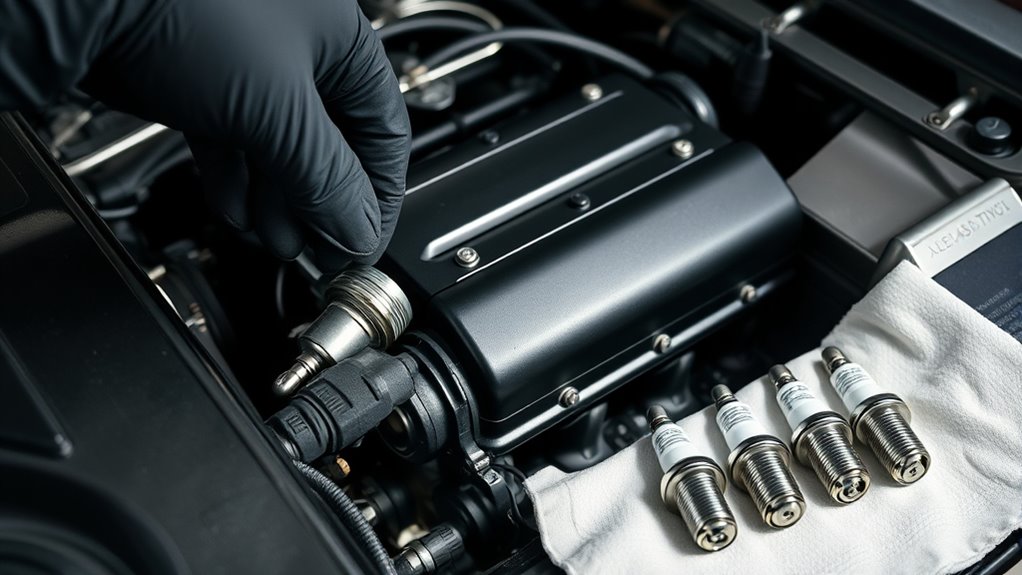
Have you ever experienced rough idling or difficulty starting your car? If so, your ignition system might be to blame. Faulty spark plugs are often the culprit behind these issues, disrupting your engine’s performance and making driving less smooth. Spark plugs play a pivotal role in igniting the fuel-air mixture inside your engine cylinders, and when they malfunction, the entire ignition system suffers. This can lead to misfires, reduced power, and poor fuel economy. The good news is that checking and replacing faulty spark plugs is a straightforward process that can restore your vehicle’s performance and reliability.
First, you’ll want to locate your spark plugs. Usually, they’re accessible once you remove the engine cover or intake components, but this varies depending on your vehicle’s make and model. Before starting, make sure your engine is cool to avoid burns. You’ll need a spark plug socket, ratchet wrench, and possibly a spark plug gap tool. Begin by carefully disconnecting the ignition coil or spark plug wire from each plug. Grasp the wire or coil boot firmly and pull straight out to avoid damaging the wire or connector.
Next, use your socket and wrench to unscrew the spark plug from the cylinder head. Once removed, inspect the plug carefully. A healthy spark plug should have a light tan or gray insulator tip and no excessive carbon buildup or oil deposits. If the electrode is worn down, chipped, or covered in deposits, it’s a sign that the spark plug is faulty and needs replacing. Pay attention to the gap size, which is the distance between the center and ground electrode. If it’s too wide or narrow, it can cause misfires and poor engine performance. Use a gap tool to measure and adjust the gap to your vehicle manufacturer’s specifications. Additionally, maintaining properly functioning spark plugs can prevent potential issues with your vehicle’s tuning and overall engine health.
Replacing spark plugs is simple but essential for maintaining prime engine performance. Insert each new or inspected spark plug into the cylinder head, screwing it in by hand initially to avoid cross-threading. Then tighten it with your wrench to the specified torque setting. Reattach the ignition coil or wire securely. Once all plugs are in place, start your engine and listen. It should run smoother, idle more evenly, and respond promptly when you press the gas pedal.
Frequently Asked Questions
Can Faulty Spark Plugs Cause Engine Overheating?
Yes, faulty spark plugs can cause engine overheating. When spark plugs foul or fail, they lead to engine misfires, which make the engine work harder and generate excess heat. This extra strain can cause your engine to overheat, risking damage. Regularly check your spark plugs to prevent fouling and misfires, ensuring smooth operation and avoiding overheating issues. Proper maintenance keeps your engine cool and running efficiently.
How Long Do Spark Plugs Typically Last?
Spark plug longevity varies, but generally, you should plan to replace them every 30,000 to 50,000 miles. Your vehicle’s manual provides specific replacement intervals, so check it regularly. Over time, spark plugs wear out, causing misfires and reduced performance. Keep an eye on your engine’s behavior, and don’t ignore signs of wear—timely replacement guarantees smooth operation and helps prevent costly repairs down the line.
Are There Different Types of Spark Plugs for Specific Engines?
Sure, there are different types of spark plugs for specific engines, because your car’s engine isn’t a one-size-fits-all hat. You’ll find spark plug materials like copper, platinum, and iridium, each suited for different engine compatibility. So, don’t just grab any plug and hope for the best; check your vehicle’s specs to make certain you’re using the right spark plug for peak performance and longevity.
What Tools Are Needed to Replace Spark Plugs?
To replace spark plugs, you’ll need a spark plug socket, which fits snugly over the plugs, and a torque wrench to tighten them properly. You might also want a ratchet wrench for leverage and a extension bar if access is tight. Make sure to disconnect the battery before starting. Using these tools guarantees a safe, efficient replacement, preventing damage and ensuring your engine runs smoothly.
Can Using the Wrong Spark Plug Damage My Engine?
Using the wrong spark plug is like giving your engine the wrong key— it can damage your ignition system and cause misfires. If you choose spark plug materials that don’t match your engine’s requirements, you risk harming components, reducing efficiency, and even causing long-term damage. Always match your spark plug type to your vehicle’s specifications to keep everything running smoothly, avoiding costly repairs down the road.
Conclusion
Remember, keeping your spark plugs in good shape guarantees your engine runs smoothly and efficiently. Regularly checking and replacing faulty plugs can prevent costly repairs down the line. Don’t wait until your car stalls or struggles to start—stay ahead of the problem. So, aren’t your vehicle’s performance and your peace of mind worth a quick inspection now? Take action today, and enjoy a more reliable, fuel-efficient ride tomorrow.
Halloween Picks
halloween
As an affiliate, we earn on qualifying purchases.