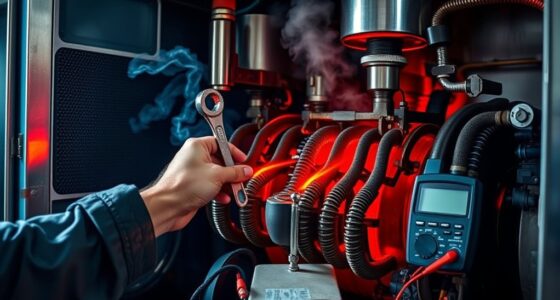
If your automatic transfer switch isn’t working, start by inspecting wiring connections for looseness, corrosion, or damage, and verify all cables are tightly secured. Check that your generator is ready and performing correctly through regular testing. If the switch still won’t activate, examine control components like sensors or modules for faults. Troubleshooting these common issues can restore proper function, and you’ll discover more ways to fix transfer switch failures as you continue exploring solutions.
Key Takeaways
- Verify wiring connections for loose, corroded, or damaged wires and ensure all are properly secured.
- Check control components and sensors for faults or malfunctions that could prevent switch activation.
- Inspect the transfer switch for signs of damage or corrosion and test its electronic or mechanical functions.
- Confirm the generator is operational and supplying proper power levels to trigger the switch correctly.
- Perform regular maintenance and testing to identify and resolve potential issues before outages occur.

When your transfer switch isn’t working properly, it can leave your backup power system vulnerable during an outage. You need to guarantee that your system operates smoothly, and that means paying close attention to routine maintenance and inspections. One key step is generator maintenance. Regularly servicing your generator helps prevent unexpected failures that could affect the transfer switch’s performance. During maintenance, check the generator’s oil levels, filters, and overall condition. A well-maintained generator is less likely to stall or malfunction when power is needed most, reducing the chances of transfer switch issues caused by a weak power source.
Regular generator maintenance prevents transfer switch failures during outages.
Another critical aspect is wiring inspection. Over time, wiring can become loose, corroded, or damaged, which might prevent the transfer switch from functioning correctly. When inspecting wiring, look for frayed cables, burnt connections, or signs of corrosion. Ensure all wires are tightly connected and that there are no exposed or damaged sections. Faulty wiring can cause inconsistent signals, preventing the switch from recognizing when to transfer power from the utility to the generator. Address any issues immediately to restore proper operation.
If you notice that the transfer switch isn’t activating during a power outage, start by checking these wiring connections. Sometimes, simple loose wires or corrosion can be the culprit. Turn off the power supply before inspecting wiring to avoid electrical shock. If you find damaged wiring, replace it promptly, following the manufacturer’s guidelines. A thorough wiring inspection can reveal underlying problems that might not be immediately obvious but could cause the switch to fail.
In addition to wiring, consider the control components of the transfer switch. Faulty control modules or sensors can prevent the switch from functioning correctly. If wiring and generator maintenance don’t resolve the issue, you might need to consult a professional to diagnose electronic or mechanical faults within the switch. Remember, regular generator maintenance and wiring inspections are your best defenses against unexpected transfer switch failures. These proactive steps help identify potential problems early, so you can address them before an outage occurs.
Ultimately, keeping your transfer switch in top condition requires consistent attention to maintenance routines. By ensuring your generator is well-maintained and conducting regular wiring inspections, you reduce the risk of failure when you need backup power the most. Taking these precautions guarantees that your entire backup system works reliably, providing peace of mind knowing your home or business is protected during power outages. Proper system maintenance procedures and adherence to manufacturer recommendations further enhance the reliability of your transfer switch and overall backup setup.
Frequently Asked Questions
How Often Should I Test My Transfer Switch for Proper Operation?
You should test your transfer switch at least once every three to six months to guarantee proper operation. Regular testing helps extend its lifespan and confirms it switches correctly during power outages. Keep in mind, the testing frequency may vary depending on your system’s usage and manufacturer recommendations. Performing these tests consistently will help you identify issues early, ensuring your transfer switch functions reliably when you need it most.
What Are Common Signs Indicating Transfer Switch Failure?
You might notice strange warning signs that hint at transfer switch failure. Transfer switch indicators such as unusual clicking sounds, failure to switch to backup power, or delayed transfer times are key warning signs. If your system doesn’t respond when needed or shows inconsistent operation, don’t ignore these clues. These signs can point to underlying issues, so staying alert helps you catch problems early and avoid unexpected outages.
Can a Transfer Switch Be Repaired or Does It Need Replacement?
You can often repair a transfer switch if it’s within its expected lifespan and the issue is minor, like a faulty relay or connection. However, if the switch is old or has extensive damage, replacing it might be the better option. Consider repair vs. replace based on the transfer switch lifespan, cost of repairs, and safety. When in doubt, consulting a professional can help determine the most reliable solution.
What Safety Precautions Should I Take When Troubleshooting?
Think of troubleshooting as steering through a storm—you need safety gear to stay protected. Always follow emergency protocols, such as shutting off power before working on the switch. Wear personal protective equipment like insulated gloves and safety glasses to shield yourself from shocks or sparks. Make certain the area is dry, keep a fire extinguisher nearby, and avoid working alone. These precautions help keep you safe while diagnosing and fixing transfer switch issues.
Are There Specific Maintenance Routines to Prevent Transfer Switch Issues?
You should follow regular maintenance schedules and conduct preventive inspections to prevent transfer switch issues. Check connections, clean contacts, and test the switch periodically to guarantee proper operation. Lubricate moving parts as recommended by the manufacturer, and replace worn components promptly. Keeping detailed records of inspections helps identify patterns and address potential problems early, reducing downtime and extending the switch’s lifespan. Consistent maintenance is key to reliable transfer switch performance.
Conclusion
By mastering simple steps and staying vigilant, you can easily troubleshoot transfer switch troubles. Remember to check connections, test components, and keep an eye out for signs of failure. With a little diligence and determination, you’ll defeat disruptions and keep your system secure. Don’t delay; diagnose and deliver dependable power. Staying savvy, swift, and solution-oriented guarantees your automatic transfer switch stays in top shape, preventing potential problems before they progress.