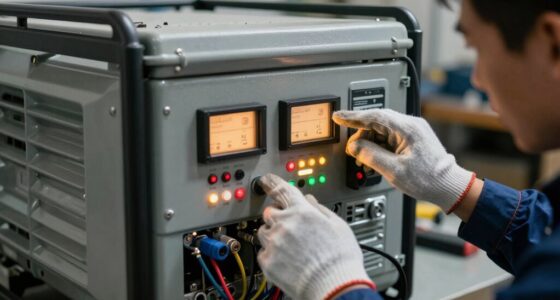

To quickly address fuel supply issues, start with a visual inspection of storage tanks for leaks, corrosion, or sediment buildup. Check fuel filters, hoses, and lines for cracks or blockages. Confirm that pumps are working correctly and that supplies from your vendor are reliable. Clean filters and tanks regularly, and verify proper fueling procedures. If problems persist, it’s wise to communicate with your supplier and review maintenance routines—there’s more to uncover that can help keep your fuel system running smoothly.

Get backup power and energy gear delivered free with Prime
- Fast, free delivery on millions of items
- Prime Video, Amazon Music and more included
- Member-only deals all year
Key Takeaways
- Regularly inspect fuel storage tanks for leaks, corrosion, and sediment buildup to prevent contamination and supply disruptions.
- Verify fuel pump and hose functionality to ensure proper delivery and prevent blockages or leaks.
- Check fuel lines for cracks, leaks, or clogs, replacing damaged components promptly to maintain efficient fuel flow.
- Maintain high-quality fueling procedures and equipment to avoid fuel contamination and ensure safety.
- Communicate proactively with fuel suppliers about supply issues and delays to coordinate timely solutions.
Fuel Supply Troubleshooting and Prevention Tips

When fuel supply issues disrupt your operations, quick and effective solutions become essential. You need to identify the root cause swiftly to minimize downtime and prevent further delays. One of the first steps is to evaluate your fuel efficiency. Are your vehicles consuming more fuel than they should? This can point to underlying problems like clogged filters, incorrect tire pressure, or inefficient engine settings. Regular maintenance tips are critical here. Checking and replacing fuel filters, ensuring your fuel injectors are clean, and verifying that your air filters are clear can substantially improve fuel efficiency. These small, proactive steps help prevent issues from escalating and keep your fleet running smoothly. Additionally, understanding digital literacy can help you better utilize diagnostic tools and maintenance apps to monitor your fuel system health more effectively.
Next, consider your fuel storage and delivery systems. Are your tanks properly maintained and free of contaminants? Dirty or degraded fuel can clog filters and injectors, leading to supply disruptions. Make sure your storage tanks are inspected regularly for leaks, corrosion, or sediment buildup. When it comes to delivery, confirm that fuel pumps and hoses are functioning correctly. Sometimes, a simple blockage or faulty pump can cause supply delays. Keeping an eye on these components and performing routine checks forms a critical part of your maintenance tips to avoid future issues.
If you’re experiencing inconsistent fuel flow, it’s worth inspecting your fuel lines for leaks or blockages. Leaks can cause a drop in fuel pressure, leading to engine performance problems and supply shortages. Replacing worn or damaged lines prevents fuel wastage and ensures steady delivery. Additionally, check your fuel valves and filters for clogs, as dirt and debris can restrict flow and cause supply interruptions. These maintenance tips are straightforward but impactful, saving you time and money in the long run.
Another quick win is to review your fueling procedures. Are you fueling your vehicles in clean, well-ventilated areas? Poor fueling practices can introduce contaminants into your fuel system, compromising fuel quality and efficiency. Using high-quality fuel and ensuring proper handling during refueling helps maintain fuel integrity. Training staff on correct fueling procedures can also prevent accidental spills or contamination.
Lastly, if your fuel supply issues persist despite these steps, consider consulting with your fuel supplier. Sometimes, the problem isn’t with your equipment but with the supply chain itself. Open communication with your supplier can help identify delays or issues beyond your control, allowing you to plan accordingly. Implementing these proactive maintenance tips and regularly reviewing your fuel efficiency practices ensures that you’re prepared to handle any supply disruptions swiftly. This approach minimizes downtime, maintains operational flow, and keeps your business moving forward efficiently.
Frequently Asked Questions
How Often Should Fuel Supply Systems Be Inspected for Quick Wins?
You should inspect your fuel supply systems at least quarterly for quick wins. Regular inspection frequency helps identify potential issues early, ensuring smooth operations. Incorporate these checks into your maintenance scheduling to prevent disruptions and address minor problems before they escalate. Consistent inspections boost system reliability, reduce downtime, and save costs in the long run. Keep a detailed log of inspections to track trends and plan future maintenance effectively.
What Are Common Signs Indicating Urgent Fuel Supply Issues?
Did you know that over 60% of fuel supply disruptions are caused by contamination or pump malfunctions? If you notice inconsistent fuel flow, unusual noises from the pump, or frequent engine stalling, these are signs of urgent issues. Fuel contamination can clog filters, while pump malfunction hampers fuel delivery. Address these problems promptly to prevent costly breakdowns and guarantee your system runs smoothly.
Can DIY Troubleshooting Resolve All Fuel Supply Problems?
DIY troubleshooting can’t resolve all fuel supply problems safely or effectively. While you can check for simple issues like clogged filters or old fuel, complex problems require professional help. Always prioritize DIY safety, especially around fuel additives, which can be hazardous if mishandled. If basic checks don’t fix the issue, it’s best to consult a mechanic to avoid safety risks or further damage to your vehicle.
Which Tools Are Essential for Quick Fuel Supply Repairs?
Ever wondered what tools you need for quick fuel supply repairs? You’ll want a basic set of wrenches and screwdrivers for pump maintenance, along with a multimeter for sensor calibration. A fuel pressure gauge helps diagnose issues swiftly. These tools let you troubleshoot efficiently and minimize downtime. Do you have these essentials ready? Ensuring you’re prepared with the right tools makes fixing fuel supply problems faster and less stressful.
How Do Weather Conditions Impact Fuel Supply Reliability?
Weather conditions greatly impact your fuel supply reliability, especially with climate change causing unpredictable patterns. Seasonal variations, like winter storms or heavy rain, can disrupt transportation and storage, leading to shortages or delays. You should monitor weather forecasts closely and plan accordingly to prevent supply issues. Adjusting logistics and maintaining extra reserves during extreme weather can help guarantee a steady fuel supply despite these climate-driven challenges.
Conclusion
By keeping this quick checklist handy, you’re like a seasoned captain steering through foggy waters, confident in your ability to spot and resolve fuel issues before they escalate. Picture the fuel tank as a essential engine heartbeat, and with each proactive step, you guarantee it keeps humming smoothly. Stay vigilant, trust your instincts, and soon, your fuel supply troubles will be just distant shadows, replaced by the steady, reassuring glow of smooth, reliable performance.
Fall Picks
fall essentials
As an affiliate, we earn on qualifying purchases.