
If your dashboard shows a warning light or the check engine light flickers, it could be an early sign of alternator trouble. You might notice electrical components acting erratically or flickering lights, even during normal driving. Ignoring these signs can lead to a dead battery or breakdown, so it’s important to get your electrical system tested promptly. Stay alert to these signals, and you’ll discover more ways to keep your vehicle running smoothly.
Key Takeaways
- Watch for dashboard warning lights, especially battery or check engine indicators, that flicker or stay illuminated.
- Notice electrical components acting erratically, such as dimming headlights or malfunctioning accessories.
- Pay attention to unusual sounds from the alternator area, like whining or grinding noises.
- Observe if the vehicle experiences difficulty starting or stalls unexpectedly.
- Regularly check for flickering or dimming interior and exterior lights during operation.
Your car’s alternator is essential for keeping everything powered, but it can start to fail without obvious signs at first. One of the earliest clues you might notice is a battery warning on your dashboard. This warning doesn’t necessarily mean your battery is dead; instead, it often indicates that your alternator isn’t charging it properly. When your alternator isn’t functioning correctly, your battery begins to drain, and the warning light appears to alert you before the problem worsens. If you see this indicator, it’s a sign to get your vehicle checked promptly, as ignoring it can lead to a dead battery and a breakdown.
A dashboard battery warning signals your alternator may be failing—get it checked early to avoid breakdowns.
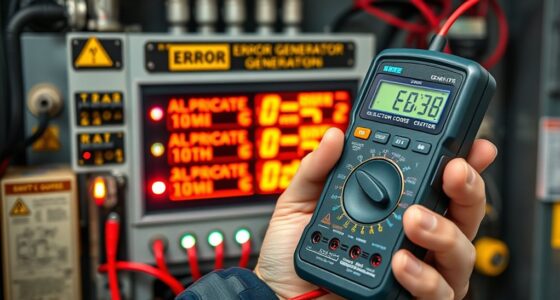
Dashboard indicators can be your first line of defense in spotting alternator trouble. Besides the battery warning light, you might notice other symbols flickering or illuminating, such as a malfunction indicator or check engine light. These alerts often point to electrical issues, which can stem from a failing alternator. Keep an eye on them, especially if they come on while driving or stay on after starting your vehicle. Sometimes, the warning lights flicker or turn on intermittently, hinting at an early stage of alternator failure. This inconsistency suggests that the alternator isn’t providing steady power, which can cause electrical components to behave erratically. Additionally, testing your vehicle’s electrical system** can help confirm if the alternator is the source of the problem. Understanding the role of the alternator in your vehicle’s electrical system can help you better recognize when it’s time for a professional inspection. It’s also helpful to know that local mechanic shops often have specialized tools to diagnose alternator issues accurately. Recognizing these signs early is crucial because early detection** can prevent more severe damage to your vehicle’s electrical components.
Being attentive to these early signs can save you from much bigger problems down the road. If you see a battery warning or notice dashboard indicators flickering, don’t ignore them. Have your vehicle inspected by a mechanic as soon as possible. Addressing alternator issues early can prevent your car from breaking down unexpectedly or leaving you stranded. Recognizing the importance of a reliable electrical system can help you understand how critical the alternator’s role is. Remember, your vehicle’s electrical system relies heavily on the alternator’s health, so staying alert to these signals keeps you ahead of potential trouble.
Top picks for "spot early sign"
Open Amazon search results for this keyword.
As an affiliate, we earn on qualifying purchases.
Frequently Asked Questions
Can a Failing Alternator Affect My Car’s Fuel Efficiency?
Yes, a failing alternator can impact your car’s fuel efficiency. When the alternator struggles, your engine works harder to charge the battery, leading to increased fuel consumption. You might notice a battery warning or electrical issues, like dimming lights or trouble starting. These signs indicate the alternator isn’t supplying enough power, so addressing the problem early can prevent further damage and help maintain maximum fuel efficiency.
How Long Do Alternators Typically Last?
An alternator’s typical lifespan varies but generally lasts between 80,000 to 150,000 miles, depending on factors like component durability and driving conditions. You might notice signs of wear earlier if your alternator faces frequent stress or poor maintenance. To guarantee longevity, keep the belt tight and check connections regularly. Proper care can extend your alternator’s lifespan, preventing unexpected breakdowns and costly repairs.
Is There a Way to Test My Alternator at Home?
Yes, you can perform DIY testing on your alternator with basic tools. Start your vehicle and use a multimeter to check the voltage at the battery terminals—healthy alternators typically produce around 13.8 to 14.4 volts. Conduct electrical diagnostics by turning on accessories; if voltage drops considerably, your alternator might be failing. Always guarantee safety precautions, and if you’re unsure, consult a professional for a thorough assessment.
What Are Common Causes of Alternator Failure?
Electrical system stress and a persistent battery warning light often signal alternator failure. Corrosion, worn-out brushes, or loose belts cause the alternator to struggle, leading to inadequate charging. Over time, heat and vibrations weaken internal components, causing failure. If you notice dimming lights or a dead battery despite a new charge, these common causes point to your alternator’s decline. Addressing these issues early can prevent unexpected breakdowns and costly repairs.
Should I Replace the Alternator Myself or See a Mechanic?
You should see a mechanic for an alternator issue rather than attempting a DIY repair, especially if you’re unfamiliar with car electrical systems. A professional inspection guarantees proper diagnosis and safety. While some experienced DIYers might replace an alternator, it involves complex steps and tools. For reliability and peace of mind, trusting a mechanic minimizes risks and guarantees the job’s done correctly, preventing further damage or breakdowns.
Conclusion
So, next time your car acts up, don’t ignore those flickering dashboard lights or strange noises — they’re probably just your alternator’s subtle hints. Ironically, the very signs that scream “something’s wrong” are the same ones most drivers brush off as minor annoyances. Catching these early can save you from a stranded mess later. After all, it’s almost poetic how your car’s tiny warning signs can save you from a costly, unexpected breakdown — if only you pay attention.