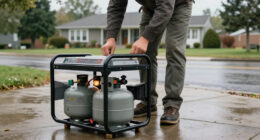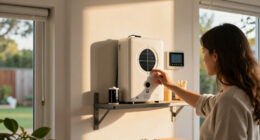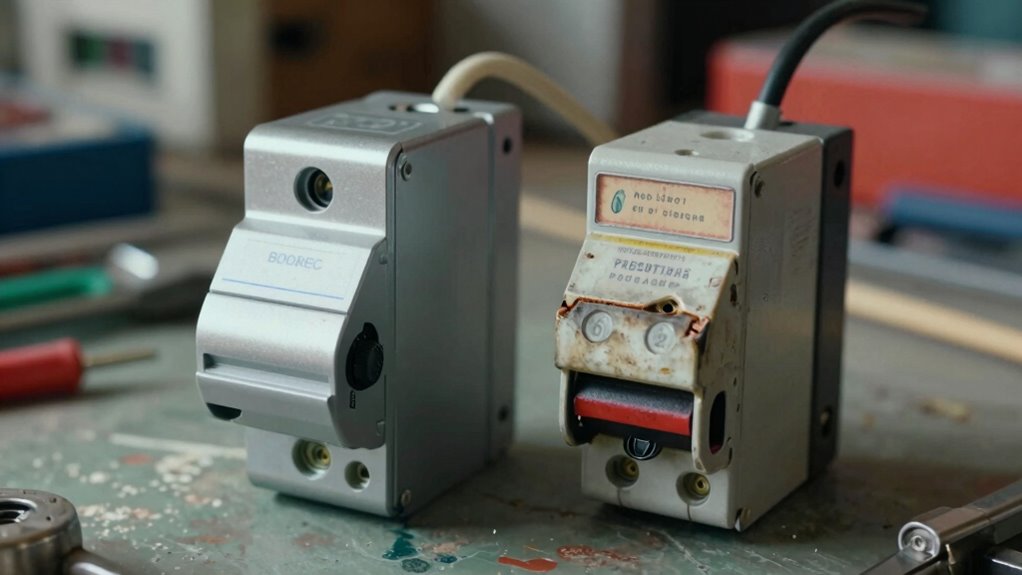
Manual transfer switches are essential for safely connecting a backup generator to your home’s electrical system during power outages. The best models offer robust construction, easy operation, and adequate capacity to handle your backup power needs. The 50A 240V Manual Transfer Switch for Whole-House and RV Applications stands out as the overall top pick because of its versatility and durability, while the Nature’s Generator 50 Amp Manual Transfer Switch provides a solid mid-range option for smaller setups. However, these switches come with tradeoffs: higher-capacity models tend to be more expensive and complex, while smaller units may lack the power capacity needed for larger homes. Keep reading for a detailed comparison to help you choose the right switch for your backup power system.

Get backup power and energy gear delivered free with Prime
- Fast, free delivery on millions of items
- Prime Video, Amazon Music and more included
- Member-only deals all year
Key Takeaways
- Higher amperage transfer switches generally support larger homes but come with increased cost and installation complexity.
- Prewired kits simplify installation but may limit customization options for specific setups.
- UL listing and safety features are critical for ensuring reliable operation and compliance with electrical codes.
- Switches with more circuits offer greater flexibility but often at a higher price point.
- Durability and weatherproofing are essential for outdoor installations, especially in harsh climates.



| manual transfer switches for home backup | Current rating | Operating voltage |
|---|---|---|
| 50A 240V Manual Transfer Switc | 50 Amps | 240 Volts |
| Nature’s Generator 50 Amp Manu | 50 A | 240 volts |
| 100A Generator Transfer Switch | 100 A | 240 volts |
| 200A Manual Generator Transfer | 200 A | 120 volts |
| Joinfworld Generator Transfer | — | — |
| Nature’s Generator 30 Amp Manu | 30 A | 120 volts |
| Connecticut Electric EmerGen B | — | — |
| VEVOR Manual Transfer Switch | — | — |
| 200 Amp Manual Generator Trans | — | — |
| 30 Amp 10-Circuit Generator Tr | — | — |
More Details on Our Top Picks
50A 240V Manual Transfer Switch for Whole-House and RV Applications
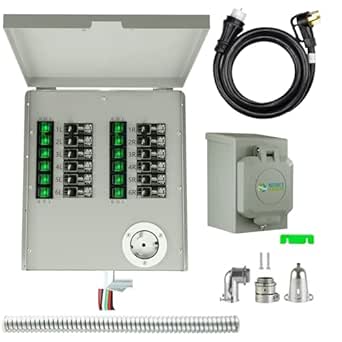
This 50A, 240V switch stands out for supporting up to 10 circuits, making it ideal for both whole-house backup and RV setups. Compared with the Nature’s Generator 50 Amp Switch, it offers greater circuit flexibility, though it is more basic in features. Its clearly marked wiring simplifies installation, which is a plus for DIY enthusiasts, but some may find it daunting without electrical experience. The compact size allows quick setup in tight spaces, and its cost-effectiveness makes it accessible. However, professional installation is recommended to ensure safety, especially for first-timers, and it’s limited to specific applications like backup power and RV use.
Pros:- Supports up to 10 circuits for flexible power distribution
- Clearly marked wires simplify wiring and maintenance
- Compact size allows easy installation and quick setup
- Cost-effective compared to higher-end models
Cons:- Requires basic electrical knowledge for safe installation
- Professional wiring recommended for safety and compliance
Best for: Homeowners or RV owners seeking a versatile, budget-friendly switch capable of handling multiple circuits with straightforward installation
Not ideal for: People lacking basic electrical skills or those needing outdoor-rated equipment without professional help
- Current rating:50 Amps
- Operating voltage:240 Volts
- Circuit support:Up to 10 circuits
- Contact type:Normally Open
- Dimensions:11.75 x 4.5 x 11 inches
Our verdict“This switch works best for those comfortable with basic electrical work and needing a versatile, cost-effective solution for backup and RV power.”
Nature’s Generator 50 Amp Manual Transfer Switch 12-Circuit 120/240V, UL Listed Non-Automatic Power Transfer Kit
This 50A, 12-circuit switch excels for users who need compatibility with various generator types, including solar, diesel, or gasoline units. Unlike the 50A 240V Switch, it includes a complete connection kit, making it easier for those who prefer a ready-to-install package, though it’s only rated for indoor use. Its rugged steel enclosure ensures durability, yet this limits outdoor deployment unless additional weatherproofing is added. The screw contacts provide a secure connection, but manual operation means no automatic switching for immediate power transfer. This makes it suitable for flexible backup setups but less ideal where outdoor or automatic features are desired.
Pros:- Supports multiple generator types with universal compatibility
- Includes complete connection kit for ease of installation
- Heavy-duty steel enclosure for durability
- Flexible circuit configuration options
Cons:- Indoor use only, not suitable for outdoor environments
- Manual operation only, no automatic switching
Best for: Homeowners or campers needing a versatile, generator-compatible switch for indoor backup power applications
Not ideal for: Users requiring outdoor installation or automatic transfer capabilities, or those with high power demands above 50A
- Current Rating:50 A
- Operating Voltage:240 volts
- Circuit Type:12-way
- Mounting Type:Wall Mount
- Enclosure Material:Steel
- Wattage:12000 watts
Our verdict“Ideal for users wanting a durable, generator-compatible switch with comprehensive installation accessories for indoor backup setups.”
100A Generator Transfer Switch, 24000W Heavy Duty Double Throw Safety Switch, 120/240V
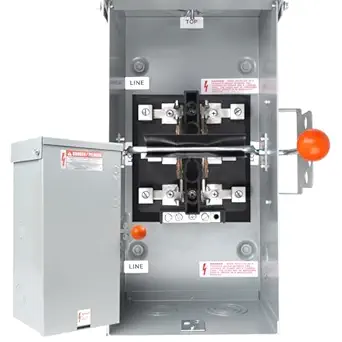
The 100A switch offers robust construction and a wide capacity, supporting larger appliances or multiple circuits. Its NEMA 3R enclosure makes it suitable for outdoor installation, setting it apart from the 50A Switch or the 50A Generator Switch that are more suited for indoor use. The rocker switch and screw-in connectors provide reliable manual operation, but wiring can be complex for those unfamiliar with electrical work, and it requires professional installation. This switch is a strong choice for those who need a durable, weather-resistant system for outdoor backup power but are prepared for the installation complexity.
Pros:- Heavy-duty construction suitable for outdoor environments
- Corrosion and weather resistance with NEMA 3R enclosure
- Reliable manual operation with simple installation
- Long-lasting with a 10-year warranty
Cons:- Requires professional installation for safety and compliance
- Limited to manual operation without automatic features
Best for: Homeowners with outdoor backup needs, especially those with high power requirements, who are comfortable with professional installation
Not ideal for: Individuals seeking a simple, plug-and-play solution or automatic switching features
- Current Rating:100 A
- Operating Voltage:240 volts
- Wattage:24000 watts
- Contact Type:Normally Closed
- Switch Type:Rocker
- Mounting Type:Wall Mount
Our verdict“Best suited for outdoor, high-capacity backup power systems where durability and weather resistance are priorities, despite installation complexity.”
200A Manual Generator Transfer Switch, Double Throw Safety Switch, 48,000W
This 200A switch is designed for the most demanding backup needs, supporting up to 48,000W of power with a galvanized steel, weather-resistant construction. It surpasses the capacity of the 100A Switch by supporting larger generators or multiple high-powered appliances. The rotary switch operation and screw terminals ensure secure wiring, but installation is complex and should be handled by a professional electrician. Its outdoor-rated features make it suitable for harsh environments, yet the manual operation means no automatic transfer. It’s a clear choice for those with critical power needs and the skill to handle its installation.
Pros:- Supports extremely high power capacity of 48,000W
- Galvanized steel, weather-resistant construction
- Reliable manual operation with clear indicators
- Suitable for outdoor harsh weather conditions
Cons:- Installation requires professional electrical expertise
- Limited to manual operation without automatic transfer
Best for: Commercial or large residential setups needing a high-capacity, outdoor-rated backup transfer switch with robust durability
Not ideal for: Home users with modest backup needs who prefer plug-and-play solutions or automatic switching
- Current Rating:200 A
- Operating Voltage:120 volts
- Wattage:48000 watts
- Contact Type:Normally Open
- Switch Type:Rotary
- Mounting Type:Wall Mount
Our verdict“Perfect for critical, high-power backup systems in outdoor settings where durability and capacity are paramount, but installation complexity is a tradeoff.”
Joinfworld Generator Transfer Switch 30A 125V
The Joinfworld 30A switch offers a straightforward, compact option for smaller backup setups, making it ideal for RVs, marine applications, or small home systems. Unlike the 50A models, it’s limited to 30A and 125V, which restricts capacity but simplifies wiring and reduces size. Its UL-listed receptacle and secure terminals promote safety, but the enclosed design isn’t fully waterproof, and some users report moderate satisfaction in reviews. This switch is perfect for those needing a simple, reliable, and lightweight solution, but it’s not suitable for high-power or outdoor installations where weatherproofing is critical.
Pros:- Easy to install with clear wiring labels
- Compact size fits tight spaces
- Suitable for RVs, boats, or small home backup systems
- Secure terminals and UL-listed receptacle for safety
Cons:- Not fully waterproof, limiting outdoor use
- Moderate customer satisfaction suggests some reliability concerns
Best for: RVers or small home users seeking a compact, easy-to-install transfer switch for low-power backup needs
Not ideal for: Users with larger power requirements or outdoor, weather-exposed applications
- Receptacle:L5-30, 30A, 125V
- Number of Items:1
- Model:POP-GSB-30A
- Part Number:POP-GSB-30A
- Rating:30A
Our verdict“Best for small-scale backup setups where simplicity and size matter most, but not for outdoor or high-capacity needs.”
Nature’s Generator 30 Amp Manual Transfer Switch 6-Circuit 120V, UL Listed Power Transfer Kit
This transfer switch stands out for supporting a wide range of generator types, including gasoline, diesel, propane, and solar, making it highly adaptable for different backup power setups. Compared with the Connecticut Electric EGS67501G2KIT, which offers similar durability and backfeeding protection, the Nature’s Generator switch is more versatile in terms of generator compatibility. The push-button operation and durable steel enclosure make it straightforward to use and reliable in various weather conditions. However, its limitation to 120V systems means it won’t support higher-voltage setups, which could be a drawback for larger homes or industrial needs. Overall, this switch makes the most sense for homeowners with diverse generator options seeking a flexible, easy-to-install solution.
Pros:- Universal compatibility with various generator types
- Supports multiple circuits for flexible load management
- Durable steel enclosure with clear status indicators
- Complete connection kit included for easy installation
Cons:- Manual operation requires user attention during transfers
- Limited to 120V systems, not suitable for higher voltage setups
Best for: Homeowners with multiple generator types who want a flexible, easy-to-install manual transfer switch
Not ideal for: Users needing support for 240V systems or larger loads, as it only supports 120V circuits
- Operation Mode:OFF-NONE-ON
- Current Rating:30 A
- Operating Voltage:120 volts
- Contact Type:Normally Open
- Connector Type:Plug In
- Switch Type:Push Button
- Circuit Type:1-way
- Mounting Type:Wall Mount
- Wattage:3600 watts
Our verdict“This switch suits homeowners with diverse generator types who prioritize flexibility and ease of installation.”
Connecticut Electric EmerGen Backup Power Manual Transfer Switch Kit – 30Amp 6-Circuit 7500 Watts
This switch provides dependable power transfer during outages with a capacity of 7,500 watts and support for 6 circuits, making it suitable for small homes or light commercial use. Unlike the Nature’s Generator model, which is more versatile but limited to 120V, the Connecticut Electric switch supports higher loads and features backfeeding protection, enhancing safety. Its durable powder-coated steel enclosure allows indoor or outdoor installation, a critical advantage for permanent setups. A potential drawback is that professional installation is recommended to ensure safety and code compliance, which could add to the initial setup cost. Overall, this product is ideal for users who value reliability and high capacity in a straightforward, weatherproof package.
Pros:- Reliable and seamless power transfer during outages
- Durable construction suitable for indoor and outdoor use
- Provides backfeeding protection for safety
- Supports multiple circuits with high capacity
Cons:- Requires professional installation for safety
- Limited to 6 circuits, not ideal for larger systems
Best for: Homeowners or small businesses needing a reliable, outdoor-capable transfer switch supporting higher loads
Not ideal for: DIY enthusiasts with limited electrical experience or those with larger, more complex setups needing more than 6 circuits
- Amperage:30 Amps
- Number of Circuits:6
- Power Capacity:7,500 Watts
- Enclosure Material:Powder-coated steel
- Indoor/Outdoor Use:Yes
- Backfeeding Protection:Yes
Our verdict“This switch fits users seeking dependable, weatherproof performance with higher load capacity for small-scale backup needs.”
VEVOR Manual Transfer Switch, 50-Amp 10-Circuit, Prewired Generator Transfer Switch Kit with CS6375 Plug Power Inlet Box, Double-Throw Switch, NEMA 3R, Mechanical Watt Meter for 12500W Generators
This model supports up to 50A and 10 circuits, making it suitable for larger homes with multiple critical loads. Its pre-wired design simplifies installation compared to the other switches, which often require more electrical expertise. The inclusion of a mechanical watt meter provides valuable real-time monitoring, a feature not present in most switches like the Connecticut Electric model. The weatherproof NEMA 3R enclosure extends its use outdoors, adding flexibility for permanent installations. The main tradeoff is that manual operation still requires user involvement during switching, and its higher amperage capacity means it’s more complex and potentially more expensive to install. Overall, this switch is ideal for homeowners with bigger loads and a need for detailed power monitoring.
Pros:- Supports high 50A load with 10 circuits
- Pre-wired for straightforward installation
- Includes mechanical watt meter for monitoring
- Weatherproof NEMA 3R enclosure for outdoor use
Cons:- Requires manual operation during switching
- Installation may need electrical expertise
Best for: Large home users or those needing extensive load management and real-time monitoring
Not ideal for: Users with modest needs or limited electrical experience, due to the complexity and higher capacity
- Amperage:50A
- Circuits:10
- Enclosure:NEMA 3R
- Generator Compatibility:12500W
- Control Method:Mechanical
- Includes:Watt Meter
Our verdict“This switch is best suited for larger properties that require detailed load control and outdoor durability.”
200 Amp Manual Generator Transfer Switch for Home, 48,000W
Designed for large homes or critical infrastructure, this 200A switch supports up to 48,000W, making it capable of powering most home loads and essential appliances simultaneously. Its galvanized steel, NEMA 3R enclosure guarantees outdoor durability, and the double-throw operation ensures safe switching between utility and generator power. Compared to smaller switches like the 30A models, this unit handles much higher loads, but it also demands professional installation due to its size and complexity. The manual operation remains straightforward, but the setup process is more involved, which could be a barrier for less experienced users. For those needing a reliable, long-term solution for whole-house backup, this switch offers unmatched capacity and durability.
Pros:- Supports high-demand appliances with 48,000W capacity
- Durable galvanized steel enclosure for outdoor use
- Secure double-throw operation for safety
- Long-lasting with minimal maintenance
Cons:- Requires professional installation
- Manual operation less convenient for frequent switching
Best for: Large households or critical facilities that require a high-capacity, outdoor-ready switch
Not ideal for: Homeowners with modest backup needs or limited electrical experience due to installation complexity
- Capacity:48,000W
- Enclosure:NEMA 3R galvanized steel
- Operation:Double-throw
- Suitable for:Indoor and outdoor use
Our verdict“This switch is ideal for large homes needing a robust, outdoor-capable backup power solution with high load capacity.”
30 Amp 10-Circuit Generator Transfer Switch Kit for Pro/Tran
This kit supports up to 10 circuits and is compatible with generators up to 7,500 watts, making it suitable for users who want comprehensive load management in a smaller system. Its durable powder-coated steel enclosure and included components ease installation for those with electrical skills. Compared with the VEVOR 50A switch, which offers higher amperage and more circuits, this model is more accessible for standard home generators, but it limits capacity to 7,500W, potentially excluding larger appliances or whole-house backup. The need for professional installation remains, but overall, it provides a reliable, well-rounded solution for smaller generator setups with multiple circuits.
Pros:- Supports up to 10 circuits for comprehensive power management
- Durable powder-coated steel enclosure
- Includes all necessary components for installation
- Compatible with generators up to 7,500W
Cons:- Requires professional installation for safety
- Limited to smaller generator capacity
Best for: Homeowners with modest backup needs seeking a multi-circuit solution compatible with smaller generators
Not ideal for: Users requiring support for larger generators or higher loads, due to its 7,500W capacity
- Circuit Support:10 circuits
- Maximum Wattage:7,500 watts
- Number of Breakers:6 single-pole 15A, 4 single-pole 20A
- Configuration:Four 20A circuits can form two 240VAC double-pole circuits
- Enclosure Material:Powder-coated steel
- Conduit Length:18 inches
Our verdict“This kit makes the most sense for smaller homes or setups needing multiple circuits with generator support up to 7,500W.”

How We Picked
These transfer switches were evaluated based on their build quality, safety features, ease of installation, capacity, and value for money. We prioritized units that meet industry standards such as UL listing and offered clear user instructions. Compatibility with common generator sizes and configurations was also a key factor, along with customer reviews highlighting reliability and ease of use. The ranking reflects a balance between performance, longevity, and affordability, ensuring options suitable for different home backup needs and budgets.Factors to Consider When Choosing Manual Transfer Switches For Home Backup
Choosing the right manual transfer switch involves understanding several key factors. It’s important to match the switch’s capacity with your generator’s power output and your home’s load requirements. Consider whether you prefer a prewired kit for faster installation or a more customizable model for complex setups. Durability and weatherproofing become critical if you plan outdoor installation. Additionally, safety features like circuit isolation and UL listing help prevent electrical hazards and ensure compliance with codes. Finally, think about your future needs—buying a slightly higher capacity switch can offer more flexibility as your backup power system evolves.Capacity and Amperage
The switch’s amperage rating determines how much power it can safely handle. For most homes, a 30A to 50A switch is sufficient for typical backup generators, but larger homes or those with high power demands may require 100A or more. Overspending on capacity that exceeds your needs can lead to unnecessary costs, while undersizing can risk overloads and safety issues. Match the switch’s capacity to your generator’s output and your household’s typical power usage for optimal performance.
Ease of Installation and Compatibility
Some transfer switches come as prewired kits, which simplify setup but may limit flexibility. Others require more DIY work but allow for tailored configurations. Check compatibility with your generator’s plug and outlet types, and verify whether the switch supports your home’s number of circuits. Proper installation is crucial for safety and reliability, so consider whether professional help is needed or if the switch includes comprehensive instructions for DIY setup.
Durability and Weatherproofing
If you plan to install the switch outdoors or in harsh weather conditions, look for units with weatherproof enclosures rated for outdoor use, such as NEMA 3R or higher. Durability also involves corrosion resistance and robust construction, which extend the lifespan of the switch. Investing in weatherproofing can prevent electrical failures and safety hazards caused by exposure to the elements over time.
Safety Features and Certification
Safety certifications like UL listing are essential indicators of a switch meeting strict quality standards. Features such as mechanical interlocks, circuit isolation, and clear labeling help prevent accidental energization of the grid or generator. These safety elements protect both your household and utility workers during maintenance or power restoration. Never compromise on safety certifications, especially for outdoor or permanent installations.
Cost and Future Flexibility
While budget constraints are real, choosing a switch that provides some room for future expansion can save money long-term. Higher-capacity switches tend to be more versatile, accommodating larger generators or increased load demands later. However, they come with higher upfront costs and sometimes more complex installation. Balance your current needs with potential future upgrades, and consider investing in a slightly larger switch if your backup power needs might grow.
Frequently Asked Questions
Can I install a manual transfer switch myself?
Yes, if you have basic electrical knowledge and experience, you can install a manual transfer switch yourself, but it’s important to follow all safety protocols and local electrical codes. Many units come with detailed instructions, and some are designed for easy DIY installation. For most homeowners, however, hiring a licensed electrician ensures proper setup and compliance with safety standards, especially for outdoor or complex systems.
What size transfer switch do I need for my home?
The size of the transfer switch depends on your generator’s power output and your home’s typical load. For average homes, a 30A to 50A switch is usually sufficient, but larger homes or those with high power appliances may need 100A or more. Check your generator’s rated wattage and compare it with the switch’s capacity to ensure it can handle your maximum load safely. Oversizing slightly can provide flexibility for future upgrades.
Are manual transfer switches safe for outdoor installation?
Manual transfer switches designed for outdoor use typically feature weatherproof enclosures rated for exposure, such as NEMA 3R. These units are built to withstand rain, snow, and other environmental factors, making them safe and reliable outdoors. It’s vital to verify the weatherproof rating before installation and ensure proper sealing and grounding to prevent electrical hazards.
How does a transfer switch differ from an automatic transfer switch?
A manual transfer switch requires you to physically switch between utility power and generator power, offering simplicity and lower cost. An automatic transfer switch, by contrast, detects power outages and switches automatically, providing seamless backup without manual intervention. The choice depends on your preference for convenience, budget, and the level of control you want over your backup power system.
What safety precautions should I follow when installing a transfer switch?
Always turn off all power sources before beginning installation to prevent electrical shock. Follow the manufacturer’s instructions carefully, and ensure the switch is grounded properly. If you’re unsure about wiring or local code requirements, hire a licensed electrician. Regular inspections and testing of the switch are also recommended to maintain safe operation and reliability during emergencies.
Conclusion
The best overall choice for most homeowners is the 50A 240V Manual Transfer Switch for Whole-House and RV Applications, thanks to its combination of capacity, durability, and ease of installation. If you’re on a tighter budget or have a smaller setup, the Nature’s Generator 50 Amp Manual Transfer Switch offers solid performance at a more accessible price. For those seeking premium features and maximum capacity, the 200A Manual Generator Transfer Switch provides unmatched power handling, suitable for large homes or demanding setups. Beginners or DIY enthusiasts will find the prewired kits more approachable, while advanced users should prioritize units with weatherproof enclosures and comprehensive safety features. Consider your current needs, future plans, and budget to select the right manual transfer switch for your backup system.
As an affiliate, we earn on qualifying purchases.Halloween Picks
halloween