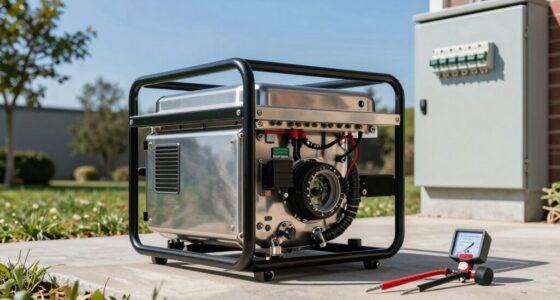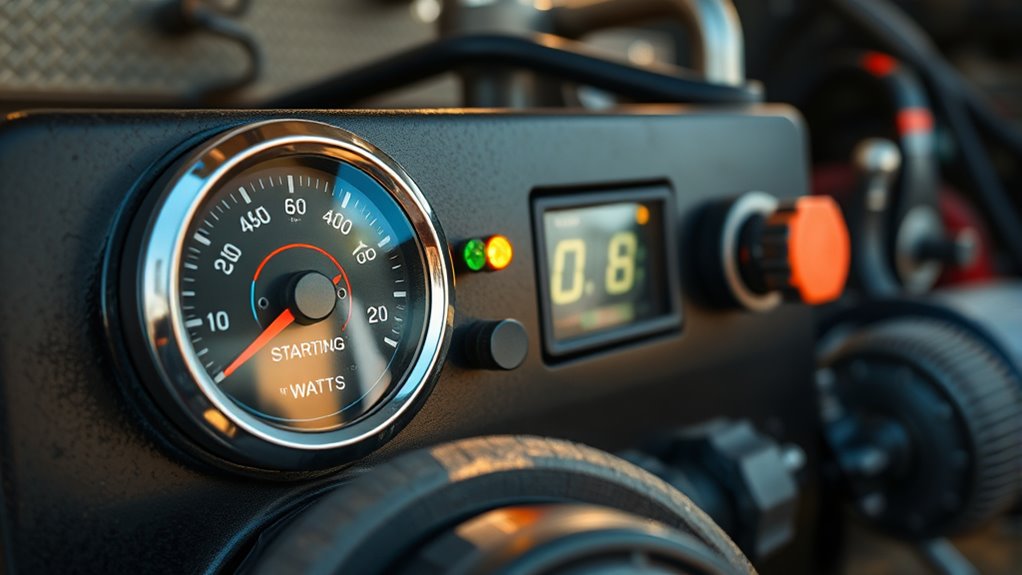

Understanding the difference between starting and running watts is key for safe generator use. Many believe starting wattage is just double the running wattage, but that’s a myth. In reality, you need to accurately know each appliance’s surge needs to prevent overloads or damage. Getting these figures right guarantees your equipment runs smoothly and safely. Want to learn how to properly size your generator and avoid common mistakes? Keep going for essentials you need.

Get backup power and energy gear delivered free — and shop member deals
- Fast, free delivery on millions of items
- Access to Prime Big Deal Days deals on October 6–7
- Prime Video, Amazon Music and more included
Key Takeaways
- Proper safety relies on understanding the actual starting and running wattage needs of your devices.
- Overestimating starting wattage can lead to unnecessary generator capacity and fuel use.
- Underestimating starting wattage risks electrical hazards like sparks, overloads, or equipment damage.
- Accurate knowledge of both wattages ensures safe operation and prevents generator overloads.
- Matching generator capacity slightly above total surge wattage optimizes safety, efficiency, and longevity.
Common Misconceptions About Starting and Running Watts
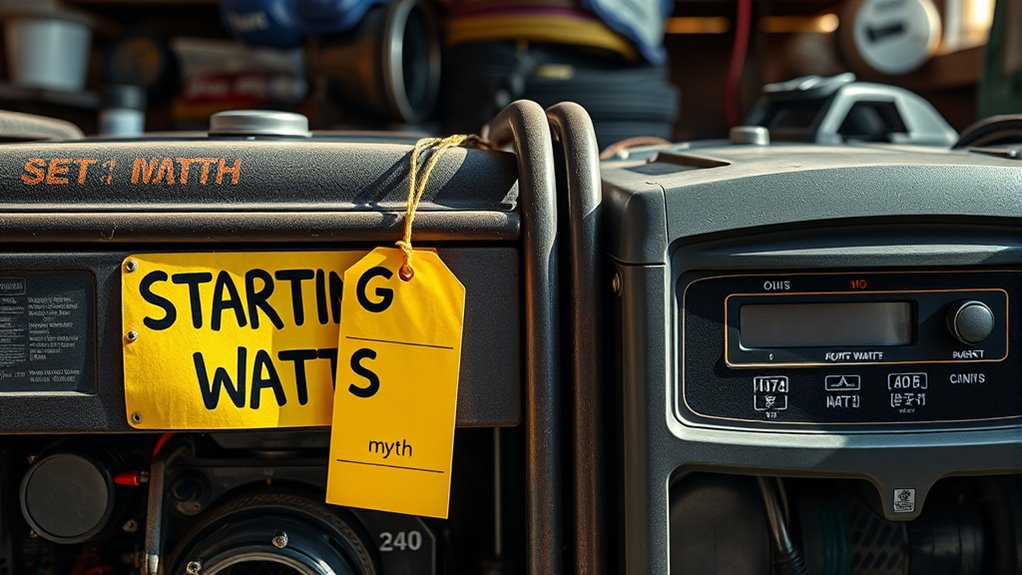
Many people believe that the starting wattage of a generator is simply double its running wattage, but this is a misconception. Proper generator sizing requires understanding the actual surge needed to start appliances, which can be markedly higher than running watts. Relying solely on doubling the running wattage risks underestimating your generator’s capacity, leading to overloads or damage. Additionally, many assume that all devices need the same surge protection, but sensitive electronics benefit from specific power surge protection to prevent damage during startup. Knowing the difference between starting and running watts helps you choose a generator that can handle initial power demands. Being aware of the power surge requirements for your devices ensures your equipment runs smoothly and prevents safety hazards caused by overloaded generators.
Why Understanding the Difference Is Crucial for Safety and Performance

Understanding the difference between starting and running watts is essential for guaranteeing both safety and ideal performance of your generator. If you underestimate the starting watt needs, you risk overloading your generator, which can cause electrical safety hazards like sparks or damage. Conversely, overestimating can lead to unnecessary fuel consumption and reduced power efficiency. Knowing these two wattages helps you select a generator that safely handles your equipment’s initial surge and maintains steady operation. Proper understanding prevents equipment failure and protects you from electrical accidents. It also ensures your generator runs efficiently, saving energy and extending its lifespan. Ultimately, grasping this difference helps you make smarter choices, guaranteeing safety during operation and optimizing power efficiency for your specific needs. Proper sizing is crucial for balancing safety and performance.
How to Choose the Right Generator Based on Your Power Needs
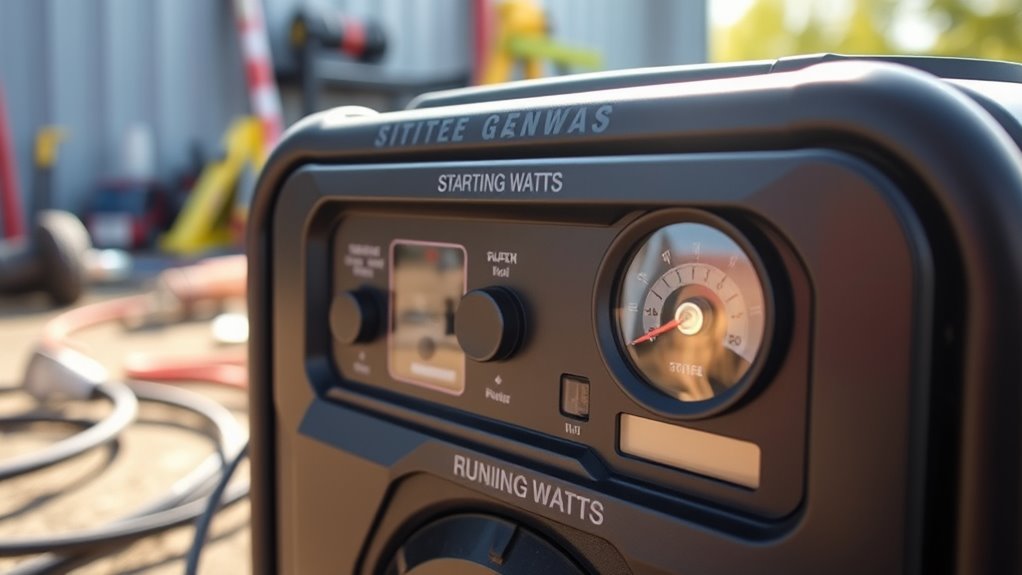
Choosing the right generator starts with evaluating your power needs accurately. Begin by listing all devices you plan to run, noting their starting and running watts. Use a power calculation to determine the total wattage required, guaranteeing you account for surge wattages of appliances with motors. This helps you select a generator capacity that’s sufficient without being excessive. If your calculations show a need of 3,500 watts, opt for a generator rated slightly higher to handle startup surges comfortably. Avoid underestimating power requirements, which can lead to overloads or damage. Conversely, choosing a generator with too much capacity may be unnecessary and less efficient. By understanding your power calculation and matching it with the right generator capacity, you ensure safe, reliable operation tailored to your needs.
Frequently Asked Questions
How Do Ambient Temperatures Affect Starting and Running Watt Requirements?
Ambient temperatures profoundly impact your generator’s wattage needs. When temperatures are low, you’ll experience temperature effects that cause wattage fluctuations, requiring more starting watts to overcome the initial resistance. Conversely, high temperatures can reduce efficiency, meaning you might need to account for slightly higher running watts. Always consider these temperature effects to guarantee your generator can handle the surge during startup and maintain steady power during operation.
Can a Generator’s Wattage Ratings Change Over Time?
Yes, a generator’s wattage ratings can change over time due to wear and tear, affecting its lifespan and causing power fluctuations. As components age, they may not deliver the same starting or running watts reliably, which can lead to unexpected shutdowns or reduced performance. Regular maintenance helps, but it’s important to observe your generator’s output to ensure it continues to meet your power needs safely.
Are There Specific Safety Features to Look for Based on Wattage Ratings?
You should look for safety features like overload protection and circuit breakers that match your wattage ratings. These features prevent your generator from overheating or damaging connected devices. Guarantee the safety features are rated for your generator’s starting and running watts, especially if you plan to power high-demand appliances. Proper safety features tailored to your wattage ratings help protect both your equipment and you during operation.
How Does Altitude Influence Starting and Running Watt Calculations?
Altitude effects can subtly influence your wattage calculations, making it wise to take into account adjustments. As you ascend to higher elevations, the air thins, causing engines and generators to work harder, which increases starting watt demands and slightly reduces running watt efficiency. By factoring in altitude effects, you guarantee your equipment operates safely and effectively. Always consult manufacturer guidelines for precise wattage adjustments, especially if you’re working at significant elevations.
What Are the Long-Term Implications of Ignoring Starting Watt Demands?
Ignoring starting watt demands can lead to battery degradation over time, as your system constantly strains to handle sudden surges. This stress accelerates equipment wear and shortens its overall lifespan. You might save money initially, but in the long run, you’ll face increased maintenance costs and more frequent replacements. To protect your investment, always account for starting watt needs, ensuring your system runs smoothly and lasts longer.
Conclusion
Now that you know the difference between starting and running watts, imagine the moment you flip the switch during a power outage—will your generator handle the surge? Choosing the right one isn’t just about numbers; it’s about safety and peace of mind. Don’t leave it to chance. Stay informed, make the smart choice, and be ready for whatever comes next. Because when it counts, knowing what matters could be the difference between power and chaos.
Fall Picks
fall essentials
As an affiliate, we earn on qualifying purchases.