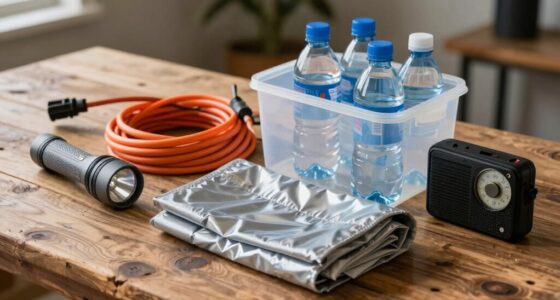
If your outage lasts longer than expected, stay calm and stay updated through official sources. Keep your food safe by limiting fridge door openings, and use coolers with ice for perishables. Conserve water and supplies, and make certain your emergency kit is ready. Use flashlights instead of candles for safety, operate generators outdoors, and check on vulnerable neighbors. Stay patient and vigilant—more helpful tips await to guide you through prolonged outages effectively.

Get backup power and energy gear delivered free with Prime
- Fast, free delivery on millions of items
- Prime Video, Amazon Music and more included
- Member-only deals all year
Key Takeaways
- Stay updated through official sources and communicate your status to family or neighbors needing assistance.
- Conserve food and water by minimizing opening refrigerators and storing supplies efficiently.
- Use alternative heat sources safely, such as space heaters, and ensure proper ventilation.
- Maintain emotional well-being by staying connected, practicing stress management, and keeping routines.
- Prepare for potential sheltering or evacuation if your home becomes unsafe or conditions worsen.

When a power outage stretches longer than expected, it can quickly become frustrating and disruptive. You might find yourself scrambling to keep your household running smoothly, especially if the outage persists into the night or longer. That’s why being prepared with solid emergency preparedness plans is essential. Knowing what to do and how to stay safe can make a stressful situation more manageable. Power outage safety isn’t just about protecting your electronics but also about ensuring your well-being and that of your family.
First, stay calm and assess your situation. Check if your neighbors are experiencing similar outages—this helps determine whether it’s a localized problem or something larger. Keep your phone charged using a portable charger if possible, so you can stay informed through news updates or emergency alerts. It’s a good idea to have a battery-powered radio on hand, providing vital information during extended outages. During this time, avoid opening your refrigerator or freezer unnecessarily, as each opening allows cold air to escape and shortens the time food stays safe. If the outage is prolonged, plan to use perishable foods quickly or consider alternative storage options like coolers with ice.
Stay calm, check neighbors, keep devices charged, and limit fridge openings to preserve food safety.
Your focus should shift toward maintaining safety and comfort. Use flashlights instead of candles to reduce fire hazards, and keep a supply of fresh water for drinking and sanitation. Power outage safety also means being cautious with generators. If you use one, operate it outdoors away from windows and doors to prevent carbon monoxide poisoning. Never run a generator inside your home or garage. Make sure you have enough supplies—batteries, non-perishable food, medications, and warm clothing—so you don’t have to venture out unnecessarily during dangerous conditions. Additionally, understanding natural environments and how they can influence your area during outages, such as potential storm impacts, can help you prepare more effectively. Being aware of potential storm impacts can help you anticipate problems and act accordingly. Recognizing the importance of power outage safety can help you take proactive steps to protect yourself and your loved ones.
If the outage persists, consider making arrangements for additional support. Check on vulnerable neighbors or family members who may need extra assistance. Keep a list of emergency contacts handy, including local utilities, emergency services, and community resources. Stay informed about the outage’s progress through official channels, and follow any guidance or advisories issued. If you have a plan for extended outages, stick to it. This might include relocating to a community shelter if your home becomes unsafe or uninhabitable. Furthermore, knowing emergency communication strategies can ensure you remain connected and informed throughout the situation.
Ultimately, managing a long-lasting power outage demands patience, preparedness, and vigilance. By thinking ahead and prioritizing power outage safety, you protect yourself and your loved ones from preventable hazards, ensuring that everyone stays as safe and comfortable as possible until power is restored.
Frequently Asked Questions
How Can I Stay Updated on Outage Progress?
You can stay updated on outage progress through emergency communication channels like official alerts, emails, or text messages from your service provider. Many companies also offer outage tracking tools on their websites or apps, providing real-time status updates. Regularly checking these sources guarantees you’re informed about the outage’s progress and estimated resolution time. Staying connected through these channels helps you plan accordingly and reduces frustration during prolonged outages.
Are There Backup Power Options During Long Outages?
During long outages, you can use backup power options like portable generators or alternative energy sources. Portable generators provide immediate power for essential appliances, while solar panels or battery systems offer sustainable solutions. Make sure to operate generators outdoors for safety, and keep extra fuel or batteries handy. These options help you maintain crucial functions until the power is restored, ensuring safety and comfort during extended outages.
Should I Notify My Neighbors About the Outage?
Yes, you should notify your neighbors about the outage. Clear neighbor communication helps everyone prepare and stay safe. Use community alerts or group chats to share information quickly, especially if the outage might last longer. Keeping your neighbors informed allows them to take necessary precautions, check on vulnerable residents, and coordinate resources. Staying connected fosters a supportive community during extended outages, ensuring everyone remains safe and informed.
How Can I Protect Sensitive Electronics During an Outage?
Did you know that nearly 80% of electronic damage during power surges occurs during outages? To protect sensitive electronics, use surge protectors and unplug devices during outages. Battery backups, or uninterruptible power supplies (UPS), provide emergency power and safeguard your devices from sudden surges. This way, you prevent data loss and damage, keeping your electronics safe until power is restored.
What Should I Do if I Suspect a Safety Hazard?
If you suspect a safety hazard, take immediate action by following safety precautions, such as avoiding contact with damaged equipment or exposed wiring. Use hazard detection tools if available, and evacuate the area if necessary. Turn off power if safe to do so, and alert others nearby. Contact emergency services or a qualified professional to assess and address the hazard, prioritizing safety to prevent injuries or further damage.
Conclusion
Remember, even in the longest outages, you hold the lantern that guides you through the darkness. Like a steadfast ship braving stormy seas, your patience and preparedness are your anchors. Stay calm, adapt, and keep your spirit resilient. The outage may be a temporary shadow, but your resourcefulness is the shining light that will lead you back to brighter days. Trust in your strength—dawn always follows night.
Halloween Picks
halloween
As an affiliate, we earn on qualifying purchases.