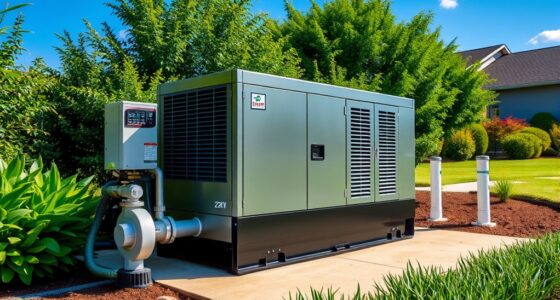

Power factor correction improves your electrical system’s efficiency by balancing reactive and active power, which helps reduce energy losses and lowers your energy bills. Installing capacitor banks supplies the reactive power needed to counteract inductive loads like motors and transformers, preventing voltage drops and system strain. This not only saves costs but also prolongs equipment life and boosts capacity. Understanding these benefits can help you optimize your power system for better performance—keep exploring to learn more.

Get backup power and energy gear delivered free with Prime
- Fast, free delivery on millions of items
- Prime Video, Amazon Music and more included
- Member-only deals all year
Key Takeaways
- Power factor correction reduces reactive power, improves voltage stability, and enhances overall system efficiency.
- Capacitor banks supply leading reactive power to balance inductive loads’ lagging reactive power.
- Correcting power factor decreases energy losses, lowers electricity bills, and prevents utility penalties.
- Proper reactive power management prevents equipment overloads, reduces wear, and extends device lifespan.
- Implementing power factor correction ensures compliance, cost savings, and improved electrical system performance.

Have you ever wondered why some electrical systems operate more efficiently than others? It all comes down to how well they manage power flow, especially when it involves reactive power. When electrical systems draw more reactive power, they create a mismatch between voltage and current, leading to lower power factor. This inefficiency results in higher energy costs and excessive load on your equipment. One effective way to improve this situation is through power factor correction, which often involves installing capacitor banks. These devices are vital because they supply the reactive power that your system needs, reducing the burden on your main power source.
Capacitor banks work by providing leading reactive power, which counteracts the lagging reactive power caused by inductive loads like motors, transformers, and fluorescent lighting. When reactive power is properly managed, your system’s power factor improves, meaning the voltage and current are more aligned. This alignment minimizes energy losses in the distribution system, enhances voltage stability, and reduces the strain on electrical infrastructure. As a result, you see a direct impact on your electricity bills—less reactive power means less wasted energy and lower demand charges from your utility provider.
Proper reactive power management improves power factor, reduces energy losses, and lowers electricity costs.
By installing capacitor banks, you fundamentally smooth out the power flow, ensuring that your electrical system operates closer to its ideal power factor of 1. This correction process makes your equipment run more efficiently and helps prevent issues related to overloading and overheating. It also extends the lifespan of your electrical devices because they’re not subjected to unnecessary stress caused by reactive power imbalances. In addition, power factor correction enhances the capacity of your existing electrical system, allowing it to handle increased loads without needing costly upgrades. This is especially valuable in industrial settings where large motors and heavy machinery are common.
Furthermore, maintaining a high power factor through capacitor banks isn’t just about cost savings; it’s also a matter of compliance. Many utilities impose penalties for low power factors, so investing in power factor correction equipment can help you avoid extra charges. It’s a proactive approach that ensures your operations stay efficient and compliant with utility standards. Understanding reactive power and how it influences your electrical system’s performance reveals the importance of power factor correction. By addressing reactive power issues head-on, you optimize energy use, reduce costs, and improve the reliability of your entire electrical infrastructure.
Frequently Asked Questions
How Does Power Factor Correction Affect Equipment Lifespan?
Power factor correction can extend your equipment’s lifespan by reducing electrical stress and preventing overheating. When you improve the power factor, your equipment experiences less strain, which enhances durability. This also boosts electrical reliability, minimizing the risk of failures and downtime. By maintaining a stable power supply, you help guarantee your devices operate efficiently and last longer, saving you money on repairs and replacements over time.
What Are the Common Methods of Implementing Power Factor Correction?
A stitch in time saves nine, and that’s true with power factor correction. You can implement it through capacitor banks, which are most common and cost-effective, or use synchronous condensers for larger setups. Capacitor banks are installed at key points to improve efficiency, while synchronous condensers adjust reactive power dynamically. Both methods help reduce energy losses and improve equipment performance, making your system more reliable and energy-efficient.
Can Power Factor Correction Improve Overall Energy Efficiency?
Yes, power factor correction can improve your overall energy efficiency by reducing reactive power in your system. When reactive power decreases, electrical efficiency increases because less energy is wasted in maintaining unnecessary magnetic fields. This means your equipment operates more effectively, consumes less energy, and lowers energy costs. By implementing power factor correction, you optimize your electrical system, ensuring smoother operation and better energy utilization for your needs.
What Are the Costs Associated With Power Factor Correction?
Think of power factor correction as planting a seed—initial costs matter. You’ll face installation costs for equipment like capacitors and possible upgrades, along with ongoing maintenance expenses to keep everything running smoothly. While these costs can add up, they often pay off through reduced energy bills and improved efficiency. So, you weigh the upfront investment against long-term savings, much like tending a garden for future blooms.
How Do Industry Standards Regulate Power Factor Correction?
Industry standards regulate power factor correction through strict compliance and regulatory standards set by organizations like IEEE and IEC. You must guarantee your equipment meets these standards to avoid penalties and maintain efficiency. These regulations specify acceptable power factor levels, testing procedures, and installation practices, guiding you to optimize your power systems. By adhering to these standards, you guarantee industry compliance, improve energy efficiency, and prevent costly fines or operational issues.
Conclusion
By now, you see how power factor correction can boost efficiency and save costs. Think of it as fixing a leaky faucet—you prevent waste and keep everything running smoothly. Remember, a stitch in time saves nine; addressing power issues early guarantees your system stays healthy and efficient. So, don’t wait until inefficiency drips into bigger problems—make power factor correction a priority today.
Fall Picks
fall essentials
As an affiliate, we earn on qualifying purchases.