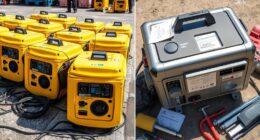

When planning your microgrid with standby generators, you’ll improve power reliability and community resilience during outages. You’ll need to contemplate regulatory rules, safety standards, and cost-effectiveness to ensure smooth implementation. Balancing initial investment with long-term savings helps protect critical infrastructure and supports continuous operations. Incorporating strategic features like fuel efficiency and scalability ensures sustainable growth. If you want to understand how to optimize your microgrid design for maximum benefits, keep exploring these key strategies.
Key Takeaways
- Incorporate regulatory standards early to ensure compliance and streamline permitting processes.
- Conduct cost-benefit analysis to balance upfront investments with long-term resilience benefits.
- Design scalable, fuel-efficient systems that support community needs and future expansion.
- Prioritize critical infrastructure protection and community resilience in microgrid planning.
- Evaluate long-term economic and social impacts to maximize community benefits and energy security.

Have you ever wondered how communities can guarantee reliable power even during outages? Microgrid planning with standby generators provides an effective solution by creating localized power systems that can operate independently from the main grid when necessary. Before installing these systems, it’s essential to conduct a thorough cost benefit analysis. This analysis helps you weigh the upfront costs of purchasing and installing standby generators against the long-term savings from avoided outages, reduced downtime, and enhanced resilience. It’s not just about financial considerations; you also need to evaluate the social and economic impacts, such as the protection of critical infrastructure, healthcare facilities, and businesses. By understanding the true value of a microgrid with standby generators, you make more informed decisions that balance initial investments with future benefits.
Microgrid planning with standby generators ensures reliable power and resilience during outages.
Regulatory compliance is another vital factor in microgrid planning. Different regions have specific rules and standards that govern the installation and operation of standby generators and microgrids. Ensuring your system meets local, state, and federal regulations not only prevents legal issues but also guarantees safety and reliability. You’ll need to navigate codes related to emissions, noise levels, grid interconnection, and safety protocols. Staying compliant often involves obtaining permits and passing inspections, which can seem intimidating but ultimately safeguards your investment and community interests. Incorporating regulatory requirements into your planning process ensures your microgrid is built to last, meets environmental standards, and is ready for potential future upgrades or expansions.
When you combine a detailed cost benefit analysis with a clear understanding of regulatory compliance, you set a solid foundation for successful microgrid implementation. This approach allows you to identify the most cost-effective solutions that meet all legal and safety standards. It also helps you prioritize features such as fuel efficiency, maintenance needs, and scalability. By proactively addressing these issues, you reduce the risk of unexpected expenses down the line and ensure your microgrid remains reliable and compliant as regulations evolve. Furthermore, considering these factors early in planning can streamline the approval process, saving you time and resources. Incorporating reliable energy sources into your planning ensures your microgrid can operate efficiently and sustainably over the long term.
Ultimately, planning a microgrid with standby generators isn’t just about installing equipment; it’s about creating a resilient, sustainable energy system tailored to your community’s needs. By carefully analyzing costs and benefits and ensuring regulatory adherence, you can develop a reliable power solution that provides peace of mind during outages and contributes to a more resilient infrastructure. It’s an investment that pays off by safeguarding essential services, supporting economic stability, and enhancing overall community resilience in the face of power disruptions.
Frequently Asked Questions
How Do Standby Generators Impact Overall Microgrid Cost?
Standby generators can increase your microgrid costs initially, but they offer benefits like improved fuel efficiency and noise mitigation. Efficient generators reduce fuel expenses over time, saving money in the long run. Noise mitigation features help you meet local regulations and minimize disturbance to your community. While they add to upfront expenses, their operational savings and compliance advantages make them a worthwhile investment for a reliable, cost-effective microgrid system.
What Are the Key Maintenance Requirements for Standby Generators?
You need to regularly inspect and maintain your standby generators to guarantee peak fuel efficiency and noise reduction. Change oil and filters, check coolant levels, and test starting systems monthly. Keep fuel fresh and clean to avoid efficiency drops. Additionally, listen for unusual noise, which can indicate mechanical issues. Scheduling professional servicing annually helps prevent costly breakdowns, keeping your generator reliable and quiet when you need it most.
How Do Standby Generators Affect Microgrid Reliability?
Standby generators boost your microgrid reliability by providing backup power during outages. Some worry about fuel storage limitations, but proper planning guarantees enough fuel to cover outages, maintaining stability. Noise mitigation measures also minimize disruptions, making your system more resilient and community-friendly. With reliable standby generators, you can confidently ensure continuous power, even during unexpected events, therefore strengthening your microgrid’s overall dependability and performance.
What Environmental Considerations Are Involved With Standby Generators?
You need to take into account emission standards and noise pollution when using standby generators. These generators emit pollutants that must meet regulatory limits to prevent environmental harm. Additionally, their noise can disturb nearby communities, so you should choose models with noise-reduction features and install sound barriers if needed. Balancing reliable power with environmental impact helps ensure your microgrid remains sustainable and compliant with local regulations.
How Does Standby Generator Sizing Influence Microgrid Performance?
Think of your standby generator as the heart of your microgrid. If you size it too large, it’s like overpumping blood—wasting fuel and reducing efficiency. If it’s too small, it can’t handle load demands, causing instability. Proper sizing ensures ideal load balancing, improves fuel efficiency, and keeps your system reliable. When your generator fits just right, your microgrid runs smoothly, responding seamlessly to changing energy needs.
Conclusion
As you plan your microgrid with standby generators, you’ll find that thoughtful integration isn’t just about backup power — it’s about creating a resilient system. Coincidentally, the right balance guarantees reliability when you need it most, often when you least expect it. By carefully designing your setup, you’ll experience peace of mind, knowing your energy needs are covered. Ultimately, your proactive approach turns unpredictable outages into manageable moments, making your microgrid a true asset in any situation.