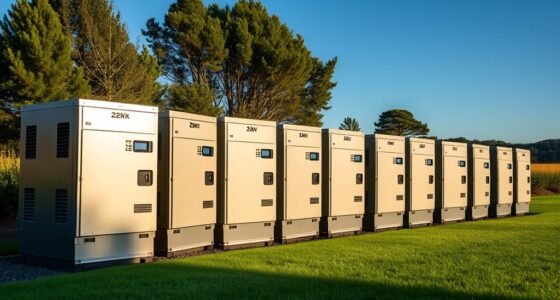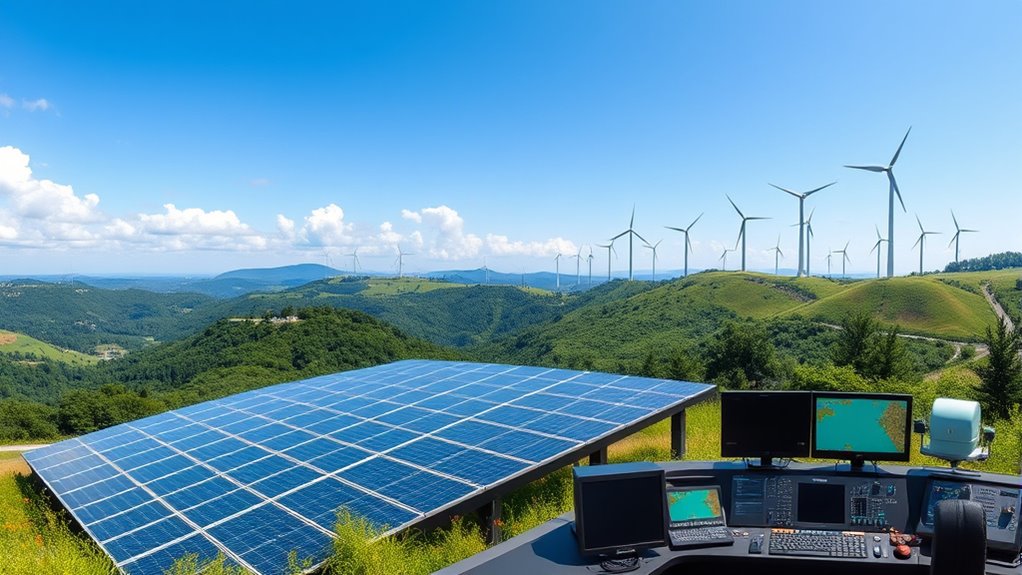

When considering environmental regulations in power planning, you need to focus on complying with standards for emissions, site selection, and renewable integration. These rules shape your project’s design, technology choices, and location decisions, helping you meet legal requirements and promote sustainability. Staying aware of evolving standards can prevent delays and fines while supporting cleaner energy goals. Exploring further will reveal how these regulations can actually guide you toward more innovative and responsible power solutions.

Get backup power and energy gear delivered free with Prime
- Fast, free delivery on millions of items
- Prime Video, Amazon Music and more included
- Member-only deals all year
Key Takeaways
- Assess applicable national and local environmental standards early in project planning to ensure compliance.
- Incorporate renewable energy sources to meet regulatory mandates and promote sustainability.
- Design emission control measures to adhere to pollutant limits and avoid penalties.
- Evaluate site-specific environmental impacts, including water use and habitat preservation requirements.
- Stay updated on evolving regulations to optimize project design and avoid legal or operational issues.

Environmental regulations play a pivotal role in shaping how power projects are planned and developed today. When you’re designing a new power plant or expanding an existing one, you must consider these rules to ensure your project aligns with national and local standards. One of the key aspects is renewable integration, which involves incorporating renewable energy sources like solar, wind, and hydro into the existing power grid. Regulations often encourage or even mandate the increased use of renewables to reduce reliance on fossil fuels, aiming to lower greenhouse gas emissions. As you plan, you’ll need to evaluate how your project can seamlessly integrate these sources while maintaining grid stability and efficiency. This might mean investing in advanced grid management technologies or developing hybrid systems that combine renewables with traditional power generation.
Environmental regulations shape power project planning, emphasizing renewable integration and grid stability to promote sustainable energy development.
At the same time, emission standards are critical in guiding your project’s environmental impact. Many regulations set strict limits on pollutants such as sulfur dioxide, nitrogen oxides, and particulate matter, which are common byproducts of fossil fuel combustion. These standards are designed to minimize air pollution and protect public health. When you’re working on a power project, you’ll need to incorporate emission control technologies like scrubbers, filters, or catalytic converters to meet these standards. Failure to comply can lead to hefty fines, project delays, or even the shutdown of your facility. So, understanding the specific emission standards applicable in your jurisdiction is essential, and proactively planning for compliance can save you time and money down the line.
Moreover, environmental regulations often influence the site selection and operational practices for power projects. For example, you might face restrictions related to water usage, habitat preservation, or noise levels, all of which can impact your project’s feasibility. Incorporating renewable energy sources not only helps meet emission standards but also aligns with policies that promote cleaner, sustainable energy production. These policies often come with incentives or subsidies, making renewable integration financially attractive. Conversely, non-compliance with environmental standards can lead to legal challenges, reputational damage, and increased operational costs.
Ultimately, considering these regulations from the outset of your planning process ensures your project is both environmentally responsible and economically viable. Staying informed about evolving standards and proactively implementing solutions will position your project for success while contributing positively to the broader goal of sustainable energy development.
Frequently Asked Questions
How Do Environmental Regulations Vary by Region?
You’ll notice that environmental regulations vary by region due to different regional policies and priorities. Regulatory diversity influences how power planning adapts, with some areas imposing strict emissions limits or renewable energy mandates, while others have more lenient rules. This regional policy variation impacts your planning decisions, requiring you to tailor projects to meet local standards, ensuring compliance and optimizing resource use across diverse regulatory landscapes.
What Are the Economic Impacts of Environmental Compliance?
You face higher costs as you implement pollution control and pay for carbon pricing, which can squeeze profit margins. These regulations often lead to increased investment in cleaner technologies, but the upfront expenses may slow expansion. Yet, they can also boost innovation and open new markets. As you adapt, you’ll weigh short-term costs against long-term gains, knowing that compliance shapes both your bottom line and the environment’s health.
How Do Regulations Affect Renewable Energy Integration?
Regulations encourage renewable energy integration by setting technology standards that promote cleaner options and requiring carbon offsetting for emissions. You’ll find these rules push you toward investing in advanced, environmentally friendly tech, making renewables more viable. They create incentives for innovation, reduce emissions, and guarantee cleaner power sources. While sometimes adding costs, these regulations ultimately guide you toward sustainable solutions that benefit both the environment and long-term energy security.
What Are the Penalties for Non-Compliance?
If you don’t comply with environmental regulations, you face significant penalties like environmental fines and increased compliance costs. These fines can be hefty and damage your reputation, while higher compliance costs may lead to increased operational expenses. To avoid these consequences, you should prioritize understanding and adhering to regulations, invest in cleaner technology, and implement effective monitoring systems. Staying compliant helps protect your organization from financial and legal risks.
How Do Regulations Influence Long-Term Power Grid Planning?
You find that regulations substantially influence long-term power grid planning by encouraging technological innovation and guaranteeing policy enforcement. As you develop your plans, you must prioritize compliance with environmental standards, which often leads to adopting cleaner energy sources and modern technologies. These regulations help shape a sustainable future, guiding investments and infrastructure development. By aligning your strategies with policy enforcement, you ensure resilience, efficiency, and environmental responsibility in your power grid.
Conclusion
As you navigate power planning, remember that ignoring environmental regulations is like building a house on shifting sands—you may get by temporarily, but the foundation won’t hold. Take California’s shift to cleaner energy—by embracing regulations, they reduced emissions by 40% over a decade. Just as a tree grows stronger with deep roots, sustainable policies strengthen our energy future. When you consider environmental rules, you’re planting seeds for a resilient, lasting power system that benefits everyone.
Columbus Day / Indigenous Peoples' Day Picks
long weekend sales
As an affiliate, we earn on qualifying purchases.