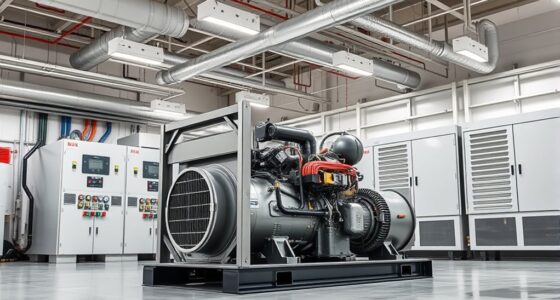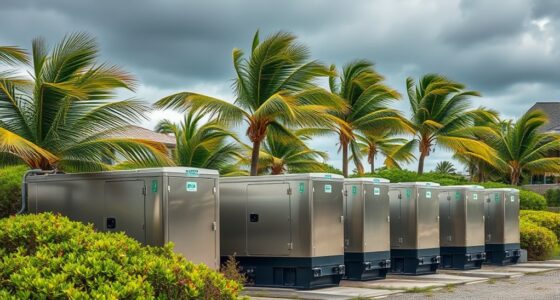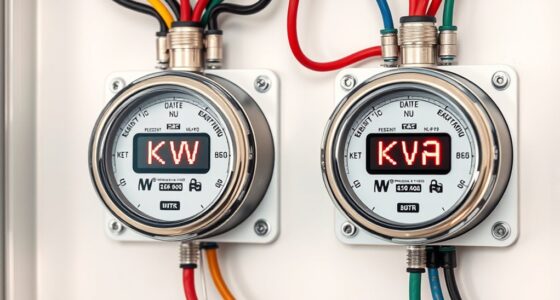

To calculate your home’s generator size, list essential appliances and their wattages, then add them up, considering starting surges. Include lights, chargers, and systems like HVAC and sump pumps. Add a 20-25% buffer for future needs and surges. Proper sizing guarantees your generator handles your demands safely and efficiently. Keep in mind that installation and fuel efficiency also matter; continue exploring to find the best fit for your home.

Get backup power and energy gear delivered free with Prime
- Fast, free delivery on millions of items
- Prime Video, Amazon Music and more included
- Member-only deals all year
Key Takeaways
- List essential appliances and their wattage ratings to determine total power requirements.
- Add a 20-25% buffer to account for surge demands and future power needs.
- Consider both running wattage and starting surge wattage for appliances.
- Ensure generator capacity matches or exceeds the total calculated load.
- Factor in installation, size, and fuel efficiency for a safe, reliable backup solution.
When choosing a generator for your home, determining the right size to meet your power needs without overspending or underestimating is essential. You want a generator that can handle your important appliances and systems during a power outage, but one that’s too large might waste fuel and increase costs unnecessarily. To do this effectively, you need to carefully assess your household’s energy demands and consider factors like fuel efficiency and installation considerations.
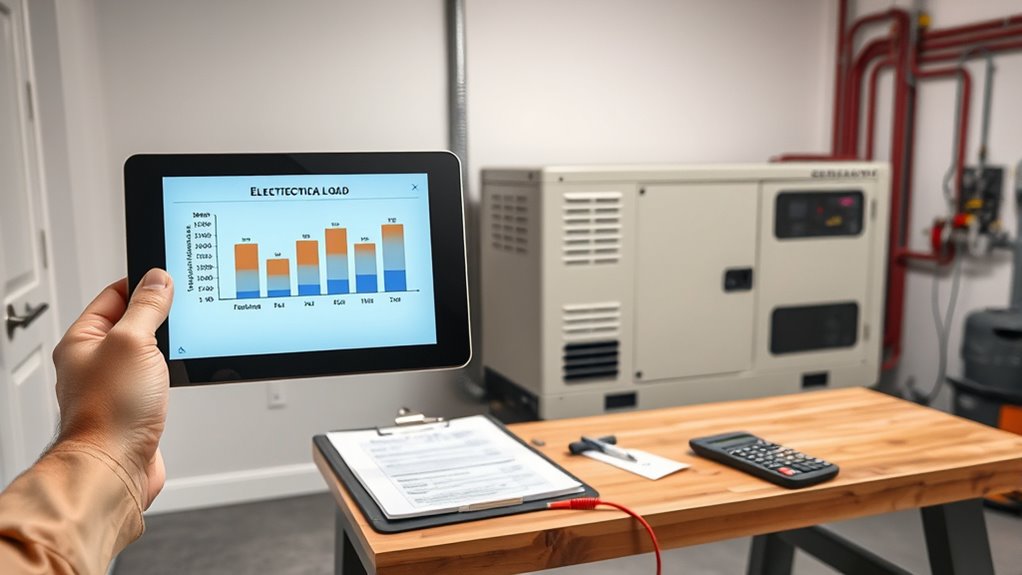
Start by making a list of the appliances and systems you want to power during an outage—fridge, sump pump, heating or cooling units, lights, and chargers. Check their wattage ratings, which are usually listed on labels or in user manuals. Add these wattages together to get a total load requirement. Keep in mind that appliances don’t always run at their maximum wattage continuously; some have surge requirements. It’s wise to add a buffer of about 20-25% to your total wattage to guarantee your generator can handle starting surges and future needs, preventing overloads.
List your essential appliances’ wattages and add a 20-25% buffer for safe, reliable backup power.
Fuel efficiency plays a key role in choosing the right generator size. A larger generator may run more efficiently at higher loads, but it also consumes more fuel even when running at partial capacity. Conversely, a smaller generator might struggle to power all your essentials simultaneously or may overload easily, leading to potential damage or frequent shutdowns. Striking the right balance ensures you get the best fuel use without sacrificing power or risking overloads. When evaluating models, look for those with good fuel efficiency ratings at your expected load. Some generators feature economy modes that optimize fuel consumption during partial loads, which can save money in the long run.
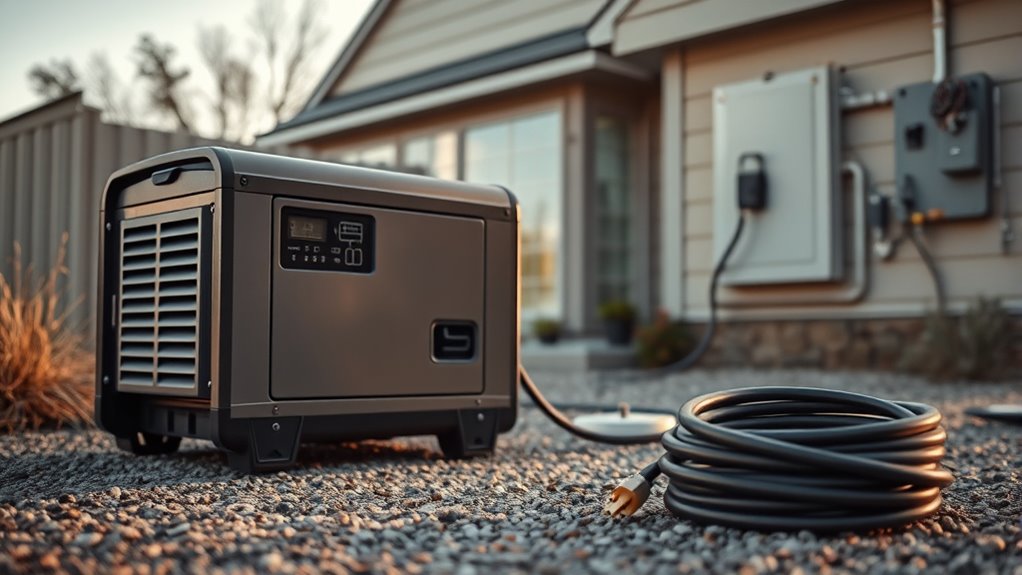
Proper sizing is critical to ensure your generator can meet your needs without unnecessary waste or risk. Installation considerations also influence your choice. Larger generators might require a dedicated transfer switch, professional installation, or specific permits, adding to upfront costs. Smaller units are often portable and easier to install but may not provide enough power during extended outages. You should also think about where you’ll install the generator—ventilation, proximity to your home, noise levels, and access for refueling—all impact your selection. Proper installation guarantees safety, compliance with local codes, and reliable operation. Neglecting these considerations can lead to increased costs or safety hazards.
Frequently Asked Questions
How Often Should I Service My Home Generator?
You should service your home generator at least once a year to guarantee it stays reliable. Follow a regular maintenance schedule, especially before storm seasons or prolonged outages. If your generator has a higher capacity, more frequent inspections might be necessary. Regular servicing helps prevent breakdowns, extends its lifespan, and guarantees peak performance during emergencies. Always consult your manufacturer’s guidelines for specific maintenance intervals based on your generator’s capacity.
Can I Install a Generator Myself Safely?
Thinking about DIY installation for your generator? While it might seem doable, is it really safe? Generator safety is essential, and improper installation can cause electrical hazards or damage your home. Unless you’re trained in electrical work, it’s best to avoid DIY installation. Hiring a professional ensures your generator is installed correctly and safely, giving you peace of mind during power outages. Don’t risk it—trust the experts to handle your generator safety.
What Is the Lifespan of a Typical Home Generator?
A typical home generator lasts about 10 to 15 years with proper maintenance. You’ll want to factor in maintenance costs, which can include oil changes, filter replacements, and inspections to keep it running smoothly. Fuel efficiency also impacts lifespan; a more efficient generator uses less fuel and experiences less wear and tear, helping it last longer. Regular upkeep guarantees you get the most out of your investment.
How Noisy Are Residential Generators During Operation?
You might think a generator’s noise levels are a minor detail, but they can be surprisingly loud. Residential generators typically produce between 60 and 80 decibels, comparable to a vacuum or city traffic. Luckily, soundproofing options are available to keep the noise down. So, while your generator hums away, you can enjoy peace and quiet, rather than feeling like you’re living next to a construction site.
Are There Any Government Rebates for Installing a Home Generator?
Yes, you might qualify for government rebates when installing a home generator, especially if you combine it with solar incentives. Check your local programs, as rebate eligibility varies by region and project type. These incentives aim to encourage energy independence and resilience. To maximize benefits, verify your installation meets all requirements and paperwork is properly submitted. Contact your local energy authority for specific details and application guidelines.
Conclusion
Now that you know how to calculate your home’s generator size, you’re ready to keep the lights on no matter what. Imagine a power outage hitting like a thunderstorm, but your generator kicks in smoothly, protecting your entire home like a fortress. By choosing the right size, you secure your comfort and safety are never left in the dark. It’s a small step that guarantees your home stays a haven, no matter how fierce the storm.
Fall Picks
fall essentials
As an affiliate, we earn on qualifying purchases.