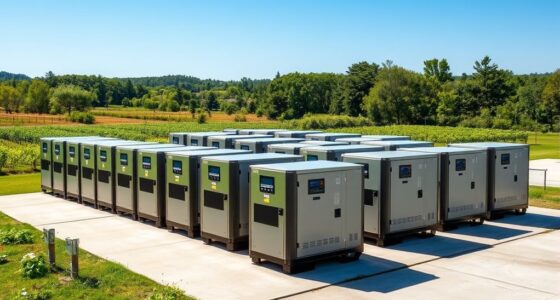

Performing a critical load analysis for facilities involves accurately measuring and estimating the electrical demands of all essential systems. You identify peak loads, analyze fluctuations, and determine the right sizes for circuit breakers, transformers, and backup power sources. This process helps prevent overloads, guarantees safety, and keeps necessary equipment operational during outages. By understanding your facility’s specific needs, you can improve reliability and safety—if you keep exploring, you’ll discover how to effectively implement these strategies.
Listen free for 30 days with Audible
Thousands of audiobooks and originals — cancel anytime.
As an affiliate, we earn on qualifying purchases.
Key Takeaways
- Collect detailed data on all electrical loads, including equipment specifications and operational patterns.
- Calculate current and peak power requirements for each system during normal and peak conditions.
- Analyze load distribution and identify potential overload points to ensure proper circuit and equipment sizing.
- Implement load management strategies to balance demand and prevent system overloads or failures.
- Document findings and develop recommendations for safety measures, backup power needs, and future capacity planning.

Understanding the crucial load your facility can handle is indispensable for guaranteeing safety and operational integrity. When you know the maximum electrical capacity your building can support, you can prevent overloads that might compromise safety or cause costly outages. Critical load analysis helps you determine the amount of power your facility requires during normal operations and peak conditions. This insight is fundamental for designing a reliable power distribution system that meets your facility’s needs without risking overloads or electrical failures. Proper analysis ensures that your building’s safety measures are aligned with the electrical demands placed on it, reducing the chance of fire hazards, equipment damage, or system shutdowns.
Knowing your facility’s critical load ensures safety, prevents overloads, and maintains reliable power distribution.
In the context of building safety, knowing your critical load allows you to implement appropriate safeguards. For example, if your power distribution system is pushed beyond its capacity, it can lead to overheating or electrical faults. By conducting a thorough load analysis, you identify potential weak points in your power distribution network before they become dangerous. This proactive approach helps you plan for sufficient circuit protection, backup power sources, and emergency shutdown procedures. It also ensures that safety systems, such as fire alarms and emergency lighting, are supplied reliably during power fluctuations or outages. When you understand your critical load limits, you can design your electrical infrastructure to accommodate future growth or changes, maintaining safety and compliance with electrical codes.
Performing a critical load analysis involves detailed measurements and calculations. You gather data on all electrical devices, machinery, lighting, HVAC systems, and other equipment to estimate their power requirements. Then, you analyze how these loads fluctuate during different operational modes. This data-driven approach allows you to develop an accurate profile of your facility’s power needs. With this information, you can select appropriately rated circuit breakers, transformers, and distribution panels, ensuring that no component is overstressed. You also identify opportunities to optimize energy efficiency, reducing unnecessary strain on your electrical system. When your power distribution is properly balanced and within safe limits, you minimize risks associated with overloading, which can lead to costly downtime or dangerous conditions. Additionally, implementing safety features such as automatic shut-off devices can further enhance system protection.
Additionally, understanding your critical load supports better planning for emergencies. If you need to implement backup generators or uninterruptible power supplies (UPS), knowing your load capacity helps you size these systems correctly. This ensures critical systems stay operational during outages, preserving safety and operational continuity. It also allows you to develop maintenance schedules and monitor your electrical system’s health more effectively. By regularly reviewing your critical load, you stay ahead of potential issues that could threaten your building safety or disrupt your operations. In essence, performing a thorough critical load analysis is an investment in the resilience and safety of your facility, helping you maintain smooth, safe, and compliant power distribution at all times.
Frequently Asked Questions
How Often Should Critical Load Analysis Be Updated?
You should update your critical load analysis at least every 1 to 3 years, depending on your facility’s renewal frequency and any changes in operations. Regular updates assure data accuracy, helping you identify new risks or loads. If your facility undergoes significant modifications or upgrades, update the analysis sooner. Keeping your data current guarantees reliable assessments, supporting your facility’s safety and efficiency over time.
What Are Common Mistakes in Performing Load Analysis?
You often make mistakes by relying solely on outdated load assumptions, which can lead to inaccurate results. Don’t forget to include adequate safety margins; overlooking them might cause underestimating actual loads. Make certain your analysis considers real-time data and variability, rather than fixed values. Also, avoid rushing through calculations—double-check all inputs and assumptions to prevent errors that could compromise facility safety and performance.
How Does Climate Impact Critical Load Calculations?
Climate variability considerably impacts critical load calculations because environmental factors like temperature fluctuations, humidity, and extreme weather events affect equipment performance and energy needs. You might assume these factors are negligible, but they can cause underestimations or overestimations in your analysis. Investigate how changing climate patterns influence load demands over time, ensuring your calculations remain accurate and resilient under future environmental conditions.
What Software Tools Are Best for Load Analysis?
You should consider software tools like ETAP, SKM PowerTools, or EasyPower for load analysis. These programs excel in load estimation and equipment sizing, helping you accurately determine electrical demands. They streamline the process, offering detailed calculations and simulations that guarantee your facility’s power system is reliable and efficient. By using these tools, you can optimize your load management and ensure your equipment is properly sized for current and future needs.
How to Prioritize Loads During System Failures?
During a system failure, you prioritize loads by identifying critical facilities first, like hospitals or data centers, guaranteeing they receive power without delay. For example, in a hospital, backup generators automatically prioritize life-support systems over lighting or administrative areas. This load prioritization supports failure management by maintaining essential operations. Always have a clear hierarchy, and test your backup plans regularly to ensure critical loads get power first when failures occur.

Porch Shield Generator Cover for 5500-15000W, 38 x 28 x 30 inch, Black
- Compatible - More sizes for 5500w -15000w gas...
- Upgrade Material - Made of 600D polyester fabric...
- Tear Resistant & Waterproof - The high-level double...
As an affiliate, we earn on qualifying purchases.
Conclusion
Performing a critical load analysis is like tending a delicate garden—you must understand each element’s weight to prevent collapse. When you carefully assess your facility’s limits, you’re planting the seeds for resilience and safety. With every calculation, you’re nurturing a strong foundation that withstands storms and surprises. Remember, knowing your load capacity isn’t just numbers; it’s the sun and rain that ensure your facility’s growth and longevity. Protect it, and it will flourish.

GenArmor Generator Tent Cover while Running, 100% Waterproof Heavy Duty Tarps Generator Enclosure, Portable Outdoor Generator Sheds for outside for Most 4000w~13000w Generators Grey
- 【SAFELY RUN ANY WEATHER】Safely run your portable generator...
- 【HEAVY-DUTY CONSTRUCTION】GenArmor’s patented design fuses heavy-duty tarpaulin with...
- 【EASY REFUELING ACCESS】The flip-top design lets you refuel...
As an affiliate, we earn on qualifying purchases.

Generac 10kW Whole Home Generator, Transfer Switch & Cellular Capability
- Whole House Protection: Keep your family comfortable and...
- Lowest Total Cost Of Ownership: Electronic fuel & ignition control...
- Remote Monitoring & Control: Built-in Cellular Connectivity allows you...
As an affiliate, we earn on qualifying purchases.
Flea & tick season Picks
flea and tick prevention
As an affiliate, we earn on qualifying purchases.