
When specifying generator ratings for data centers, you need to guarantee the capacity exceeds your maximum load by 20-30% to handle future growth and transient surges. Focus on both power output (kW or kVA) and power quality to support sensitive equipment. Proper ratings help prevent equipment stress, reduce maintenance, and ensure reliable operation during outages. For detailed guidance on balancing capacity, power quality, and maintenance, keep exploring these key considerations.
Key Takeaways
- Ensure generator capacity exceeds data center peak load by 20-30% to accommodate growth and transient surges.
- Specify power ratings in kW or kVA aligned with critical equipment requirements for reliable operation.
- Consider power quality ratings to maintain consistent voltage and frequency, protecting sensitive data center hardware.
- Match generator ratings with maintenance plans to promote longevity and reduce downtime through proper load management.
- Account for future expansion and load spikes when selecting generator capacity to ensure scalable, uninterrupted power supply.
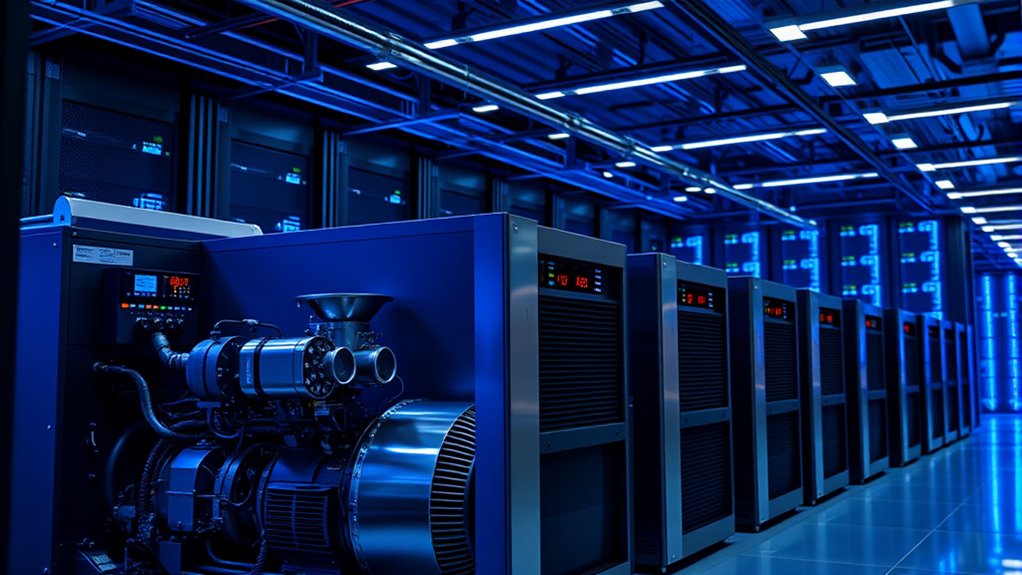
When selecting a generator for a data center, understanding the appropriate ratings is essential to guarantee reliable power supply during outages. The right generator ensures your infrastructure stays operational, but choosing one with the correct ratings involves more than just capacity. Power quality plays a fundamental role here, as data centers require clean, stable electricity that prevents equipment malfunctions or data corruption. Hence, you need to consider not only the generator’s power output but also its ability to deliver consistent voltage and frequency. A generator that falls short on power quality can cause disruptions, even if it has sufficient capacity, leading to potential hardware damage or system instability. Additionally, proper ratings help you plan maintenance scheduling effectively. By knowing the generator’s load capacity and operational limits, you can develop a maintenance routine that minimizes downtime and extends equipment lifespan. For example, running a generator near its maximum capacity continuously can accelerate wear, so selecting a generator with adequate headroom allows for easier maintenance and better reliability.
Understanding the generator’s rated power output, usually expressed in kilowatts (kW) or kilovolt-amperes (kVA), is essential. This rating indicates the maximum continuous load it can support without risking overloads or compromising power quality. For data centers, it’s wise to select a generator with a capacity that exceeds your maximum expected load—typically by 20-30%—to accommodate future growth and ensure stability during sudden load spikes. Beyond capacity, it’s important to evaluate the generator’s ability to handle transient loads and short-term surges, which are common during startup of large equipment. Proper ratings also influence your maintenance scheduling; a generator operating close to its maximum capacity may require more frequent inspections and servicing, whereas a slightly oversized unit offers more flexibility and reduces operational strain.
Furthermore, selecting a generator with high power quality and robustness ensures consistent performance over time, reducing the likelihood of unexpected failures and costly repairs. When you select a generator with appropriate ratings, you’re also making a choice that simplifies maintenance scheduling—less stress on components, fewer unexpected failures, and predictable service intervals. This proactive approach minimizes downtime and ensures your data center’s power supply remains steady and reliable during outages. Ultimately, understanding these ratings empowers you to make informed decisions that balance capacity, power quality, and maintenance, securing your data center’s resilience for the long haul.
Frequently Asked Questions
How Do Ambient Temperature Changes Affect Generator Performance?
Ambient temperature changes directly impact your generator’s performance. When temperatures rise, your generator may overheat if cooling requirements aren’t met, reducing efficiency or causing shutdowns. Cooler ambient temperatures help your generator operate more reliably and efficiently, lowering cooling needs. Conversely, high temperatures increase cooling demands and strain your system. Monitoring ambient temperature allows you to adjust cooling systems proactively, ensuring your generator maintains ideal performance regardless of external conditions.
What Safety Margins Should Be Included in Generator Capacity?
You should include safety margins of at least 10-20% above your calculated load, ensuring reliable power during peak demand or unexpected surges. Don’t overlook the importance of considering fuel efficiency and noise mitigation, which directly impact operational safety and comfort. Overcoming objections about space or cost, these margins protect your data center from outages, helping you maintain continuous operation without risking overloads or excessive noise disruptions.
How Often Should Generator Capacity Be Reviewed or Updated?
You should review your generator capacity at least annually, especially after significant changes in load or infrastructure. Conduct regular load testing to verify performance and identify potential issues. Incorporate capacity planning insights to make sure your generators can handle peak demands. Staying proactive with these reviews helps prevent outages, improves reliability, and ensures your data center remains resilient and prepared for future growth.
Are There Specific Standards for Generator Ratings in Different Regions?
You might think all regions follow the same rules, but regional regulations and industry standards vary widely. In some areas, strict safety and reliability standards guide generator ratings, while others may have more flexible requirements. You should always check local codes and industry standards to guarantee your data center’s generator capacity meets regional regulations. This helps prevent costly fines and ensures your backup power system operates effectively during outages.
How Does Generator Sizing Impact Overall Data Center Energy Efficiency?
You realize that proper generator sizing impacts your data center’s energy efficiency by optimizing fuel use and reducing waste. When you size generators correctly, they operate at ideal loads, improving fuel efficiency and lowering costs. Additionally, appropriately rated generators help with noise mitigation, minimizing disruptions. This balance ensures your data center runs smoothly, conserving energy and maintaining a quiet environment, ultimately enhancing overall operational efficiency.
Conclusion
In summary, selecting the right generator ratings ensures your data center stays operational during outages. For example, a hypothetical data center that underestimates its power needs might experience downtime, risking data loss and revenue loss. By accurately specifying generator ratings based on your facility’s load, you guarantee seamless backup power. Remember, proper planning and understanding your power demands aren’t just technical details—they’re critical to your data center’s reliability and success.