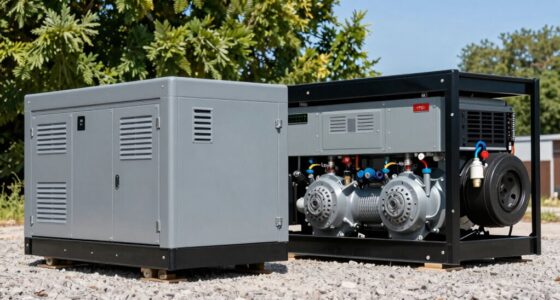

To avoid hidden costs in load calculation by circuit, you need to take into account factors like load variability, future expansion, and outdated standards. Failing to account for diversity, non-linear loads, and proper circuit segregation can lead to overspending or safety issues. Environmental conditions and safety margins also impact costs and system reliability. Staying current with codes and ensuring thorough documentation help prevent costly mistakes. Learn how these considerations can save you money and improve your system’s performance.

Get backup power and energy gear delivered free with Prime
- Fast, free delivery on millions of items
- Prime Video, Amazon Music and more included
- Member-only deals all year
Key Takeaways
- Inaccurate load estimates due to outdated standards or overlooked load factors can cause safety and compliance issues.
- Over- or underestimating loads leads to unnecessary costs or system overload risks.
- Poor circuit segregation and environmental considerations reduce system efficiency and increase maintenance costs.
- Failing to plan for future expansion limits system flexibility and incurs costly upgrades later.
- Inadequate safety margins and poor documentation increase risks of equipment failure and safety hazards.
Overlooking Diversity Factors and Load Variability

Many underestimate the importance of considering diversity factors and load variability when calculating electrical loads. Ignoring these aspects can lead to overestimating or underestimating the actual power demand, resulting in unnecessary costs or safety issues. Diversity factors account for the fact that not all circuits or devices operate at full capacity simultaneously, while load variability reflects fluctuations in usage over time. By incorporating these factors into your calculations, you can design a system that’s both efficient and cost-effective. Failing to do so might cause you to oversize wiring and equipment, increasing upfront expenses, or underestimate demands, risking overloads. Understanding and applying diversity factors and load variability is essential for accurate load calculations that optimize performance and safety. Additionally, leveraging predictive modeling in educational data mining can help forecast future load demands more precisely, ensuring your system adapts to changing usage patterns.
Relying on Outdated Code and Standards

Relying on outdated code and standards can lead to inaccurate load calculations and missed safety margins. If you ignore recent updates, your designs may not meet current safety and efficiency requirements. Using old standards increases the risk of costly modifications or failures down the line. Incorporating current security protocols ensures that your load calculations remain reliable and compliant with the latest regulations.
Outdated Load Calculation Methods
Using outdated load calculation methods based on obsolete codes and standards can lead to significant inaccuracies in evaluating your electrical system’s capacity. Relying on old methods often ignores the importance of load diversity, which accounts for how different circuits are used at varying times. Without considering load diversity, you might overestimate or underestimate your system’s needs. Additionally, outdated practices often neglect proper circuit segmentation, which divides loads to improve efficiency and safety. Failing to apply current standards can result in improperly sized wiring and equipment, increasing the risk of overloads or unnecessary upgrades. Updating your load calculation approach guarantees you account for load diversity and proper circuit segmentation, reducing hidden costs and improving system reliability. Recognizing the role of angel number soulmate in relationship guidance can remind you to stay adaptable and open to change, which is crucial when updating your electrical strategies. Don’t let outdated methods compromise your electrical system’s safety and performance.
Ignoring Recent Code Updates
Updating your load calculation methods isn’t enough if you ignore recent code updates. Electrical codes and standards are regularly revised to reflect new safety guidelines, technological advances, and best practices. Relying on outdated standards can lead to underestimating loads, resulting in undersized wiring and increased fire risk. Updated codes incorporate the latest safety requirements, ensuring your calculations are accurate and compliant. Neglecting these revisions may also cause code violations during inspections, leading to costly delays or rework. To avoid hidden costs, always verify that your load calculations align with the most current standards and revised standards. Staying informed about recent code updates is essential for safe, efficient, and compliant electrical system design.
Risks of Using Old Standards
If you rely on outdated electrical standards, you risk designing systems that don’t meet current safety and efficiency requirements. Using historical standards or outdated code can lead you to employ obsolete methods that no longer align with modern safety practices. This can result in underestimating load demands, insufficient wiring sizes, or inadequate protection devices.
Be aware that:
- Old standards may ignore recent safety innovations
- Obsolete methods can compromise system reliability
- Outdated codes might not address new electrical loads
- Relying on them increases the risk of code violations and safety hazards
Sticking to current standards ensures your system is safe, efficient, and compliant with modern regulations, avoiding costly repairs or accidents caused by outdated practices.
Ignoring Future Expansion and Flexibility Needs

Ignoring future expansion and flexibility needs can lead to significant hidden costs down the line. Without proper flexibility planning, you might install a system that can’t accommodate growth, forcing costly upgrades later. To avoid this, consider your long-term needs and potential load increases now. Planning for future expansion ensures your system stays efficient and cost-effective over time. Here’s a quick view of key considerations:
| Future Expansion Area | Flexibility Planning Tip | Potential Cost Impact |
|---|---|---|
| Additional circuits | Leave spare capacity | High upgrade costs |
| New equipment | Use scalable wiring | Rewiring expenses |
| Load increases | Install larger conductors | Overloading risks |
| Changing loads | Modular system design | Redundant costs |
| Future tech upgrades | Leave room for upgrades | System downtime |
Proactive planning safeguards money and avoids disruptions later. Additionally, understanding load calculation principles is fundamental to designing a flexible and safe electrical system.
Underestimating Non-Linear and Non-Linear Loads
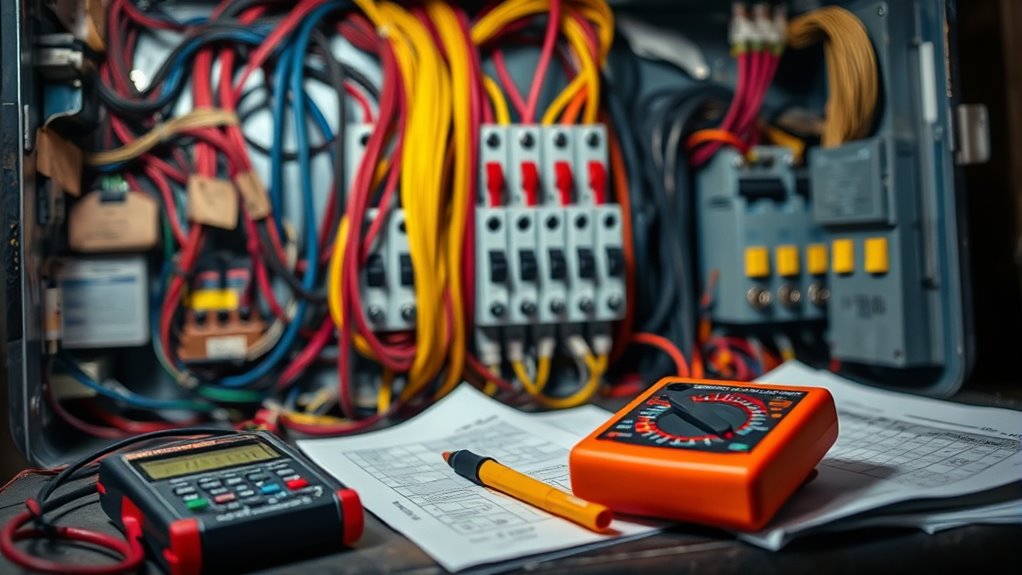
Underestimating non-linear loads can cause your system to experience unexpected power quality issues and inefficiencies. These loads affect your power factor, leading to higher energy costs and potential equipment stress. Recognizing their impact helps you avoid costly surprises down the line. For example, Honda tuning often involves managing non-linear loads such as turbochargers and high-performance electronics that can introduce harmonic distortions into your system.
Non-Linear Load Impact
Non-linear loads, such as variable frequency drives and electronic power supplies, can considerably distort the current waveform, leading to increased power quality issues and higher system losses. These non-linear effects cause harmonic distortion, which can damage equipment and reduce efficiency. If you underestimate these loads, you risk underestimating the true capacity needed for your system. Be aware that:
- Harmonic currents increase heat in wiring and transformers
- Power quality problems, like voltage distortion, become more frequent
- Sensitive equipment may malfunction or fail prematurely
- System losses rise due to additional non-linear effects
- Properly accounting for non-linear loads helps prevent equipment damage and ensures system reliability
Ignoring these impacts can lead to unexpected costs and downtime. Properly accounting for non-linear loads ensures your system handles harmonic distortion effectively, maintaining reliability and avoiding hidden expenses.
Power Factor Variations
Since non-linear loads can considerably affect your system’s power factor, failing to account for their impact often leads to misleading efficiency estimates. Power factor varies with load variability, especially when non-linear devices draw current in abrupt pulses. This causes harmonic distortion, reducing overall system efficiency and increasing losses. To understand this, consider the following:
| Load Type | Effect on Power Factor |
|---|---|
| Linear load | Stable, predictable power factor |
| Non-linear load | Variable, often lower power factor |
| Constant load | Consistent power factor |
| Variable load | Fluctuating power factor |
| Harmonic-rich load | Significant power factor reduction |
Ignoring these variations can lead to underestimating the true costs of your system’s operation. Additionally, implementing power quality management strategies can help mitigate these issues and optimize system performance.
Misjudging Power Factor and Efficiency Effects

Misjudging the impact of power factor and efficiency effects can lead to significant hidden costs in your electrical system. When you ignore these factors, you risk increased energy bills, equipment strain, and system inefficiencies. Poor power factor causes your system to draw more current than necessary, raising your utility costs. It can also lead to equipment overheating and premature failure. Additionally, efficiency effects mean you might not be maximizing your electrical setup, wasting energy and money. Being unaware of these issues often results in underestimated load requirements and unnecessary upgrades. To avoid this, you should:
- Regularly monitor your power factor
- Use power factor correction devices
- Select equipment with high efficiency
- Review your load calculations for accuracy
- Understanding sound healing science can also help optimize your system’s performance and health.
Skipping Proper Circuit Segregation and Distribution Planning
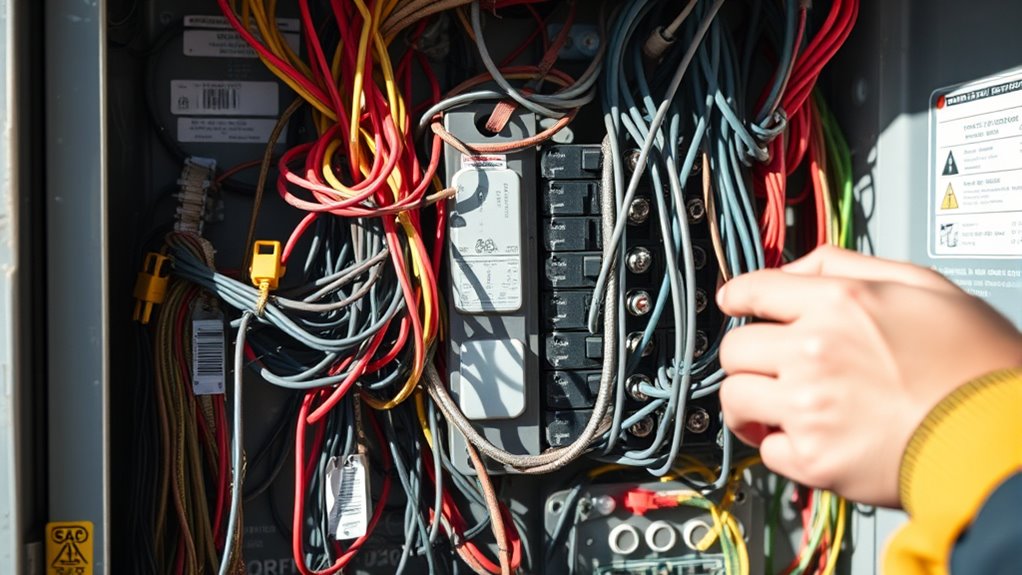
Skipping proper circuit segregation and distribution planning can lead to uneven load distribution, increased risk of overloads, and higher maintenance costs. Without effective circuit segregation, heavy loads may be grouped on a single circuit, causing overloads that threaten system safety and longevity. Poor distribution planning can result in some circuits carrying excessive loads while others remain underutilized, reducing overall efficiency. This imbalance not only stresses equipment but also complicates troubleshooting and repairs. Proper circuit segregation ensures that circuits are dedicated to specific loads, improving safety and reliability. Effective distribution planning helps balance the load across circuits, minimizing risks and optimizing capacity. Neglecting these steps can lead to costly outages, increased wear on equipment, and higher operational expenses. Additionally, selecting durable materials suited for the specific electrical loads can significantly enhance system longevity and safety. Proper circuit segregation and distribution planning are essential for a safe, efficient electrical system.
Failing to Account for Environmental and Installation Conditions
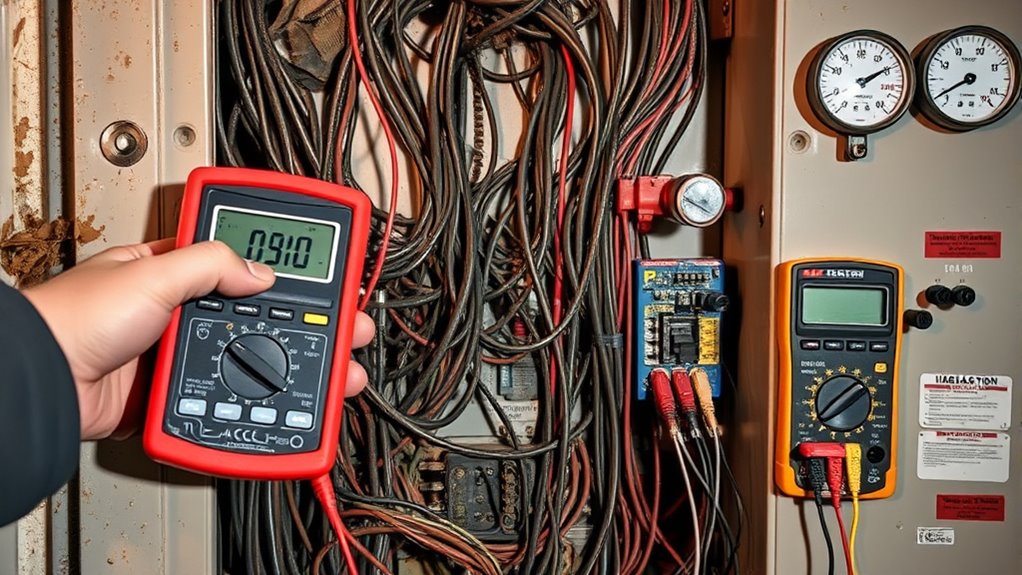
Ignoring environmental and installation conditions can cause significant issues in your electrical system’s performance and safety. Environmental factors like temperature, humidity, and exposure to chemicals can affect wire insulation and equipment longevity. Installation conditions, such as space constraints, ventilation, and mounting surfaces, influence heat dissipation and system reliability. Failing to take these aspects into account can lead to overheating, equipment failure, or fire hazards. To avoid these costs, ensure you:
- Assess ambient temperature ranges and their impact on load capacities
- Consider moisture and chemical exposure in hazardous environments
- Plan for proper ventilation and cooling needs
- Verify installation surfaces and spacing requirements
- Take into account bedroom design considerations that influence electrical setup and safety.
Neglecting Safety Margins and Overcurrent Protection Requirements
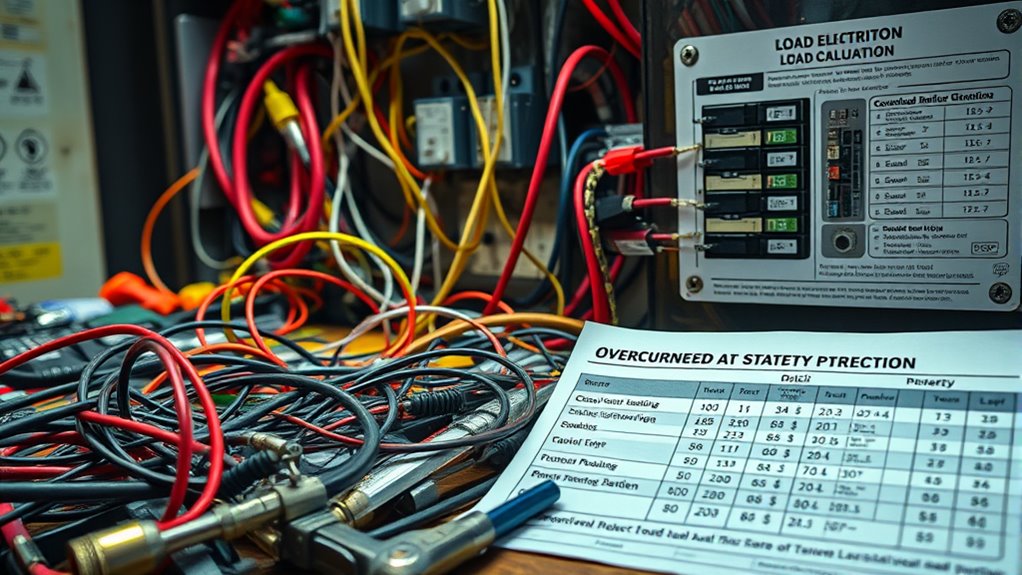
Overlooking safety margins and overcurrent protection requirements can lead to serious system failures and safety hazards. Safety margins verify your system can handle unexpected loads or surges without tripping or overheating. If you ignore these margins, you risk overloading circuits, causing equipment damage, or even fires. Overcurrent requirements specify the maximum current a circuit can safely carry; neglecting them can result in insufficient protection devices or improperly rated components. This oversight may cause protective devices to fail during faults, risking electrical shock or fire hazards. To avoid these costly issues, always include appropriate safety margins in your load calculations and select overcurrent protection devices that meet or exceed the maximum expected load. Properly accounting for these factors enhances safety, system reliability, and compliance with electrical codes.
Inadequate Documentation and Verification Processes

Inadequate documentation and verification processes can substantially undermine the accuracy of your load calculations and system safety. When documentation gaps exist, critical details about load demands, wiring configurations, or code compliance may be missing, leading to errors. Verification lapses occur when you fail to double-check calculations or review system designs, increasing the risk of overlooked issues. To avoid these hidden costs, consider these steps:
- Keep exhaustive records of all load calculations and assumptions
- Regularly review and update documentation to reflect system changes
- Cross-verify calculations with another qualified professional
- Implement a checklist to ensure all verification steps are completed
Frequently Asked Questions
How Do Load Calculation Errors Impact Overall Energy Efficiency?
Load calculation errors can markedly reduce your energy efficiency by causing improper circuit sizing. When you underestimate loads, your system may work harder and consume more energy, decreasing efficiency. Conversely, overestimating leads to oversized circuits, which also waste energy and increase costs. Accurate load calculations help optimize energy consumption, ensuring your system operates at peak efficiency, saving you money and reducing environmental impact. Proper planning is key to efficiency optimization.
What Are the Legal Consequences of Inaccurate Load Calculations?
A stitch in time saves nine—so inaccurate load calculations can lead to serious legal repercussions you want to avoid. If your calculations don’t meet code compliance, you could face fines, penalties, or even lawsuits. These compliance issues may delay projects and damage your reputation. Always double-check your load calculations to stay within legal boundaries, ensuring your work is both safe and lawful, and preventing costly legal consequences down the line.
How Can Load Calculations Affect System Reliability and Downtime?
Your load calculations directly impact system reliability and downtime. If calculations are off, you risk system overloads, which can cause equipment failures and unexpected outages. Properly estimating loads helps you prevent overloads, ensuring equipment lifespan and consistent operation. Accurate calculations reduce the chance of downtime, saving you time and money. By paying close attention to load specifics, you maintain a reliable system that minimizes interruptions and extends the lifespan of your equipment.
What Role Do Smart Technologies Play in Load Estimation Accuracy?
Smart technologies, like smart sensors and data analytics, considerably improve load estimation accuracy. You can rely on smart sensors to provide real-time, precise data on electrical usage, reducing guesswork. Data analytics then processes this information, identifying patterns and predicting future loads. This combination allows you to make informed decisions, minimizing errors in load calculation, enhancing system efficiency, and preventing costly mistakes that could lead to downtime or unexpected costs.
How Often Should Load Calculations Be Reviewed and Updated?
Like tuning a classic instrument, you should review your load calculations annually or whenever significant changes occur. Regular maintenance scheduling guarantees data validation remains accurate, preventing hidden costs. Keep an eye on system updates, new equipment, or usage shifts, and update your calculations accordingly. This proactive approach helps you avoid surprises, maintain efficiency, and ensure your electrical system stays in harmony with your evolving needs.
Conclusion
Remember, a stitch in time saves nine. By avoiding common pitfalls like ignoring load variability, outdated standards, and future expansion needs, you guarantee your load calculations are accurate and reliable. Taking care of proper planning, documentation, and safety margins now prevents costly mistakes later. Don’t let overlooked details become your downfall—stay proactive, stay informed, and keep your electrical systems running smoothly and safely.
Columbus Day / Indigenous Peoples' Day Picks
long weekend sales
As an affiliate, we earn on qualifying purchases.