
To prepare for severe weather-related outages, gather non-perishable food, water, batteries, flashlights, and first aid supplies. Create a clear communication plan with your family, including backup devices like radios or satellite phones. Secure outdoor items and reinforce windows to prevent damage. Sign up for local alerts and monitor weather updates frequently. Keep your supplies updated and practice emergency procedures regularly. Staying proactive helps minimize risks — continue exploring ways to make sure you’re fully ready.
Key Takeaways
- Build a comprehensive emergency kit with food, water, batteries, and first aid supplies in an accessible location.
- Establish and share a communication plan using backup devices and printed contact lists.
- Secure outdoor items, reinforce windows and doors, and install surge protectors to minimize home damage.
- Sign up for local alerts, monitor trusted weather sources, and stay informed about evolving weather conditions.
- Regularly practice emergency plans, keep supplies updated, and ensure all family members understand safety procedures.
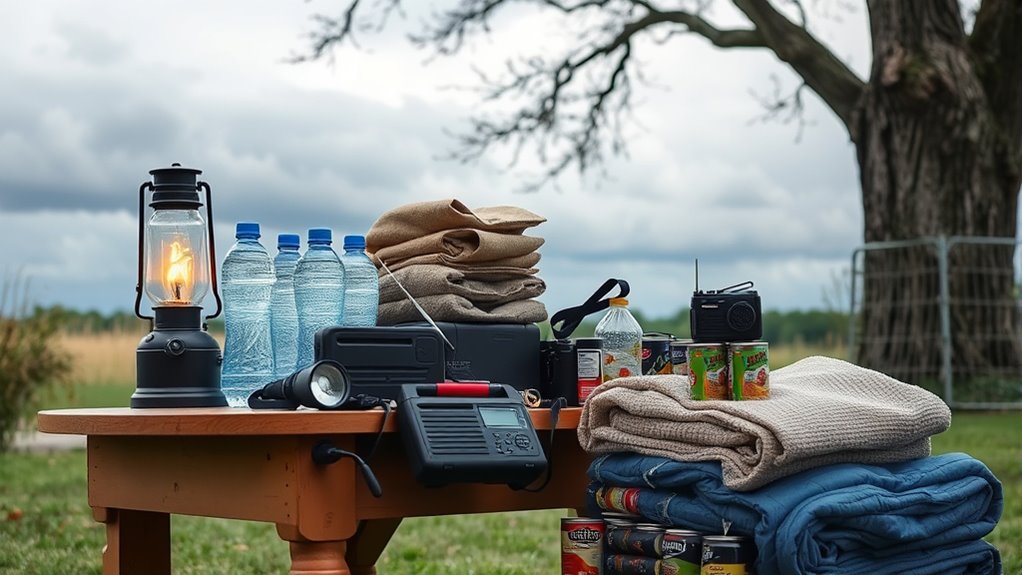
Severe weather events like hurricanes, snowstorms, and tornadoes can cause prolonged power outages that disrupt daily life. When the power goes out unexpectedly, it can affect everything from your ability to cook and stay warm to staying connected with loved ones and emergency services. That’s why preparing in advance is essential. Building a well-stocked emergency kit ensures you have necessary supplies like non-perishable food, water, batteries, flashlights, and first aid items readily available. Keep your emergency kit in a designated, accessible spot so you can grab it quickly during an emergency.
Prepare an emergency kit with essentials like food, water, and batteries to stay safe during power outages.
In addition to your kit, establishing a solid communication plan is indispensable. Know how you’ll stay in touch if phone lines or internet go down. Share your plan with family members and neighbors, making sure everyone understands how to reach each other and where to meet if evacuation becomes necessary. Consider investing in backup communication devices such as battery-powered radios or satellite phones, which can help you stay informed about weather updates and emergency instructions even when traditional networks are down. Having a list of emergency contacts printed out and stored in your kit can also save time and reduce stress during chaos.
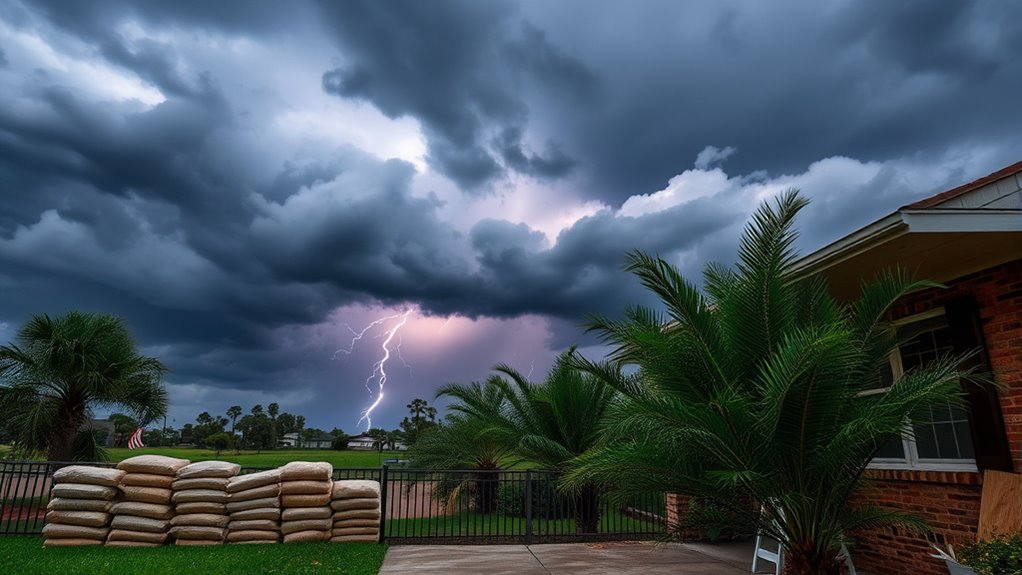
Preparing your home is another key step. Secure loose outdoor items that could become projectiles in high winds, and reinforce windows and doors if a storm is imminent. Install surge protectors to safeguard electronic devices from power surges when electricity is restored. Keep extra blankets, warm clothing, and portable chargers for your mobile devices on hand to maintain comfort and connectivity. Planning ahead for these needs can make a significant difference in how well you cope with extended outages.
Finally, stay informed about the weather forecasts and alerts specific to your area. Sign up for local emergency notifications, and follow trusted weather sources on social media. This early warning system allows you to prepare your home and family before the storm arrives, reducing panic and confusion. Additionally, investing in home entertainment projectors with backup power options can provide a source of distraction and comfort during long outages. Remember, preparation isn’t just about having supplies—it’s about having a clear plan, practicing it with your family, and staying flexible as situations evolve. By taking these steps, you can minimize the impact of severe weather outages and keep yourself and your loved ones safe and connected during even the most challenging conditions.
Frequently Asked Questions
How Can I Protect My Electronic Devices During an Outage?
To safeguard your electronic devices during an outage, you should use a power bank essentials to keep your devices charged and ready. Additionally, connect your devices to surge protector usage to prevent damage from sudden power surges when electricity returns. Avoid overloading outlets, and unplug devices when not in use. These steps help ensure your electronics stay safe and functional during power interruptions.
What Should I Include in a Severe Weather Emergency Kit?
Think of your emergency kit as a lifeboat in a storm. You should include emergency food and water to keep you afloat, a first aid kit to heal wounds, flashlights with extra batteries for guiding your way, and blankets to stay warm. Add a whistle, batteries, and personal essentials like medications. This kit guarantees you’re prepared to weather any storm, anchored by safety and hope.
How Can I Stay Informed About Weather Updates?
You can stay informed about weather updates by subscribing to weather alert systems through your phone or local alerts. Keep your emergency communication devices, like a NOAA weather radio, charged and nearby. Regularly check trusted weather websites and apps for real-time updates. Make sure your emergency communication plan includes how you’ll receive alerts, so you’re ready to act quickly when severe weather strikes. Staying informed helps you stay safe.
What Are the Signs of a Developing Severe Storm?
You can spot signs of a developing severe storm by watching for rapid storm formation, darkening skies, and increasing wind speeds. Keep an eye on weather alerts, which notify you of evolving conditions that could lead to severe storms. Listen for thunder or see lightning, and note any hail or sudden drops in temperature. Staying alert to these signs helps you respond quickly and stay safe during severe weather events.
How Do I Plan for Power Outages With Children or Pets?
Imagine a cozy, safe space where your loved ones feel secure. To plan for power outages with children and pets, guarantee child safety by having flashlights, extra batteries, and comforting items on hand. Keep your pets comfortable with food, water, and a familiar blanket. Have a family emergency kit ready, and establish a communication plan. Staying prepared helps you protect your family’s well-being during unexpected outages, offering peace of mind.
Conclusion
By taking these steps, you’re building a sturdy shield against severe weather outages. Think of your preparations as a lighthouse guiding you safely through a storm—bright, steady, and reliable. When severe weather hits, you’ll be ready to weather the storm with confidence, knowing you’ve done everything possible to keep your power on and your loved ones safe. Stay proactive, stay prepared, and let your readiness shine through the darkest weather.