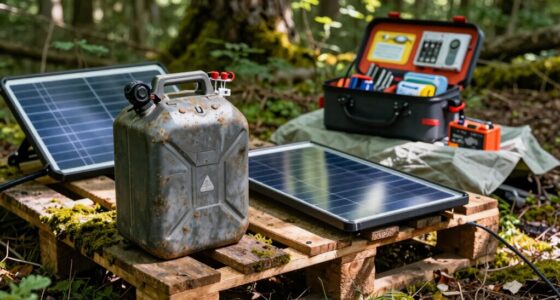
To prevent fuel contamination, start by using high-quality fuel stored in clean, sealed containers away from sunlight and heat. Add compatible stabilizers and station with fuel additives to keep it stable and clean. Regularly drain water and contaminants from tanks and filters, inspect for leaks or rust, and use proper filtration systems. Maintaining these simple steps helps keep your equipment running smoothly—continue to explore how these practices can keep your fuel reliable longer.
Key Takeaways
- Use high-quality fuel and compatible additives to keep fuel clean, stable, and prevent degradation.
- Store fuel in sealed, cool, dry containers and regularly inspect tanks for leaks or contamination.
- Drain water from tanks and filters frequently to prevent rust, microbial growth, and phase separation.
- Incorporate filtration systems and add stabilizers for long-term storage to maintain fuel integrity.
- Follow manufacturer guidelines and keep detailed records of fuel management and maintenance activities.
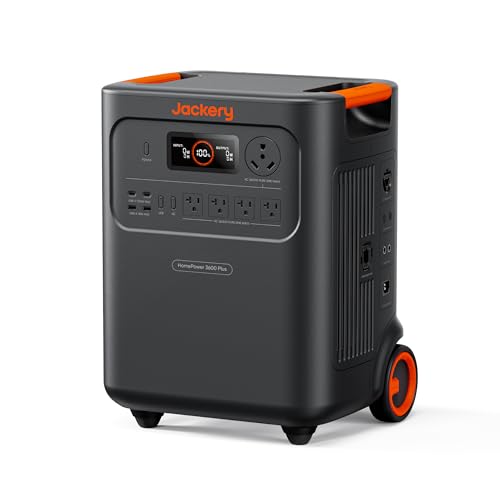
Jackery HomePower 3600 Plus Portable Power Station, 3600W AC Output, 3584Wh LFP Solar Generator, Expandable up to 21kWh, Essential Home Backup for Home Use, Emergencies, RV (Solar Panel Optional)
- Essential Home Backup: The Jackery HomePower 3600 Plus...
- Safe Power That Lasts: Built with high-temp resistant ceramic...
- Plug-and-Play: With its easy plug-and-play design,...
As an affiliate, we earn on qualifying purchases.
Effective Fuel Management and Storage Practices
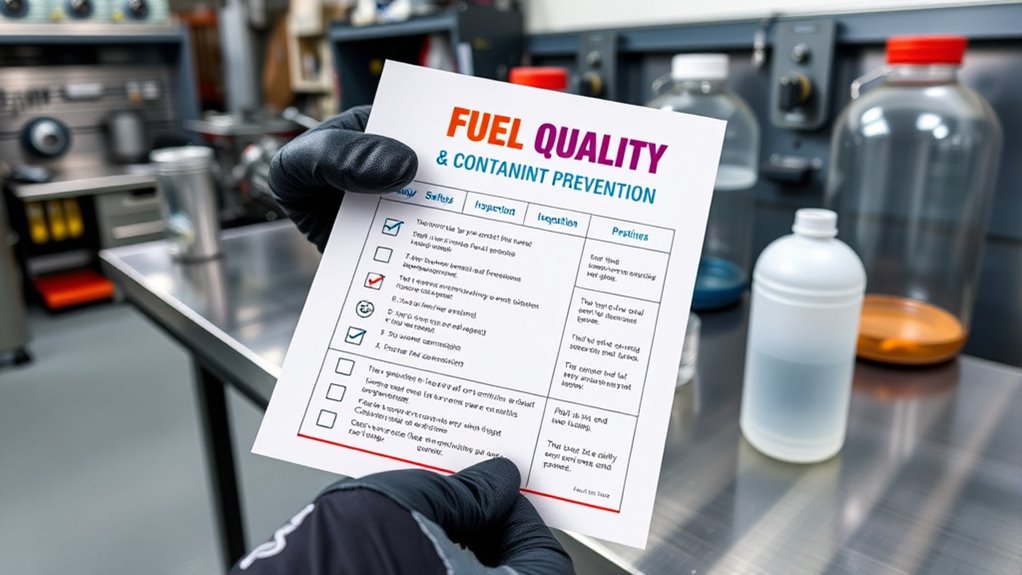
Maintaining fuel quality is essential to make certain your equipment runs smoothly and to prevent costly contamination issues. One effective way to do this is by understanding how to properly use fuel additives and follow proper storage procedures. Fuel additives are chemicals added to fuel to improve its performance, stability, and cleanliness. They can help prevent problems like fuel degradation, microbial growth, and the buildup of deposits that can clog filters and injectors. When choosing fuel additives, make sure they’re compatible with your equipment and suited for your specific fuel type. Using the right additives can extend the life of your fuel, keep it cleaner longer, and reduce maintenance needs.
Proper fuel additives and storage practices are key to keeping your equipment running smoothly and preventing costly contamination.
Equally important is implementing proper storage procedures. How you store fuel directly impacts its quality over time. Always store fuel in clean, sealed containers designed for fuel storage, and avoid using old or damaged containers. Keep storage tanks in cool, dry, well-ventilated areas away from direct sunlight, heat sources, and moisture, which can accelerate fuel breakdown. Regularly inspect tanks and containers for leaks, corrosion, or contamination. Maintaining a consistent inventory system helps ensure that older fuel gets used first, preventing it from sitting unused for extended periods and degrading. If you plan to store fuel for more than a few months, consider adding stabilizers to keep it fresh and inhibit oxidation.
Proper storage procedures also involve managing water contamination. Water can enter tanks through condensation or leaks and cause rust, microbial growth, and phase separation, all of which harm fuel quality. Drain water regularly from tanks and filters, and keep tanks tightly sealed to prevent moisture ingress. Additionally, avoid topping off tanks to reduce the chance of introducing dirt and water. When transporting fuel, use approved containers and always secure them properly to prevent spills and contamination. Incorporating fuel filtration systems can further help remove impurities before they reach your equipment.
Combining the use of fuel additives with disciplined storage procedures creates a robust defense against fuel contamination. Always follow manufacturer instructions for additives and storage recommendations, and keep detailed records of fuel purchases, additives used, and maintenance activities. This systematic approach helps catch issues early before they impact your equipment’s performance. By staying vigilant about these practices, you’ll ensure your fuel remains clean, stable, and ready to power your machinery efficiently. Investing time in proper fuel handling and storage isn’t just good practice—it’s necessary to protect your investment and keep your operations running smoothly.

Anker SOLIX C1000 Gen 2 Portable Power Station, 1,024Wh, 2,000W, Camping
- 49 Min UltraFast Recharging: With upgraded HyperFlash tech, fully...
- 2,000W Output via 10 Ports: Delivers 2,000W (3,000W peak) and...
- Compact and Portable: Easily carry, store, and move...
As an affiliate, we earn on qualifying purchases.
Frequently Asked Questions
How Often Should I Test My Fuel for Contamination?
You should test your fuel for contamination at least every three to six months, especially if you store fuel for long periods. Regular fuel testing helps with contamination detection early, preventing engine issues or damage. If you notice signs like fuel discoloration or engine trouble, do a test immediately. Consistent testing guarantees your fuel remains clean, safe, and reliable, reducing unexpected maintenance costs and extending your equipment’s lifespan.
What Are the Signs of Fuel Degradation?
Did you know that fuel degradation can reduce engine efficiency by up to 15%? You’ll notice signs like discoloration, a swollen or gunky appearance, or a foul smell in your fuel. Using fuel additives and following proper storage guidelines helps prevent degradation. If your fuel looks or smells off, it’s time to test or replace it to keep your engine running smoothly and avoid costly repairs.
Can Contaminated Fuel Damage My Engine?
Yes, contaminated fuel can damage your engine. It can cause engine corrosion, leading to rust and wear on internal parts. Additionally, fuel additives in contaminated fuel may not work properly, reducing engine efficiency. Over time, these issues can result in costly repairs or even engine failure. To protect your engine, always check fuel quality and prevent contamination by using clean fuel and proper storage methods.
Are There Specific Storage Conditions to Prevent Microbial Growth?
Ever wondered how to keep your fuel pristine? To prevent microbial growth, you should store fuel in a cool, dry, and well-ventilated area, away from direct sunlight and moisture. Guarantee containers are airtight and sealed tightly. Regularly inspect storage conditions for leaks or water accumulation. Proper storage conditions create an inhospitable environment for microbes, helping to maintain fuel quality and prevent costly engine issues. Do you follow these best practices?
How Do I Safely Dispose of Contaminated Fuel?
To safely dispose of contaminated fuel, you should contact a licensed hazardous waste disposal facility. Do not pour it down drains or onto the ground. Before disposal, consider adding fuel additives designed to stabilize or treat the fuel, which can sometimes reduce hazards. Always follow recommended disposal methods to prevent environmental damage and health risks. Properly managing contaminated fuel guarantees safety and compliance with environmental regulations.

Jackery Solar Generator 300 and 40W Solar Panel,292Wh,300W AC
- Ultra-Lightweight: Weighing only 7.5 lbs, the...
- Versatile Power for 6 Devices: Equipped with 2 AC outlets,...
- Built to Last: Upgraded with premium LiFePO4 chemistry,...
As an affiliate, we earn on qualifying purchases.
Conclusion
By following these simple fuel management and storage tips, you can keep your fuel clean and free from contamination. Some might think it’s too complicated or time-consuming, but with just a little effort, you’ll save money and avoid costly engine issues later. Don’t wait for problems to happen—stay proactive, check your fuel regularly, and keep your equipment running smoothly. Proper maintenance now guarantees reliable performance whenever you need it.

Porch Shield Waterproof Universal Generator Cover 32 x 24 x 24 inch - for Most Generators 5000-10000 Watt, Black
- Compatible - More sizes for 5000w -10000w gas...
- Upgrade Material - Made of 600D polyester fabric...
- Tear Resistant & Waterproof - The high-level double...
As an affiliate, we earn on qualifying purchases.