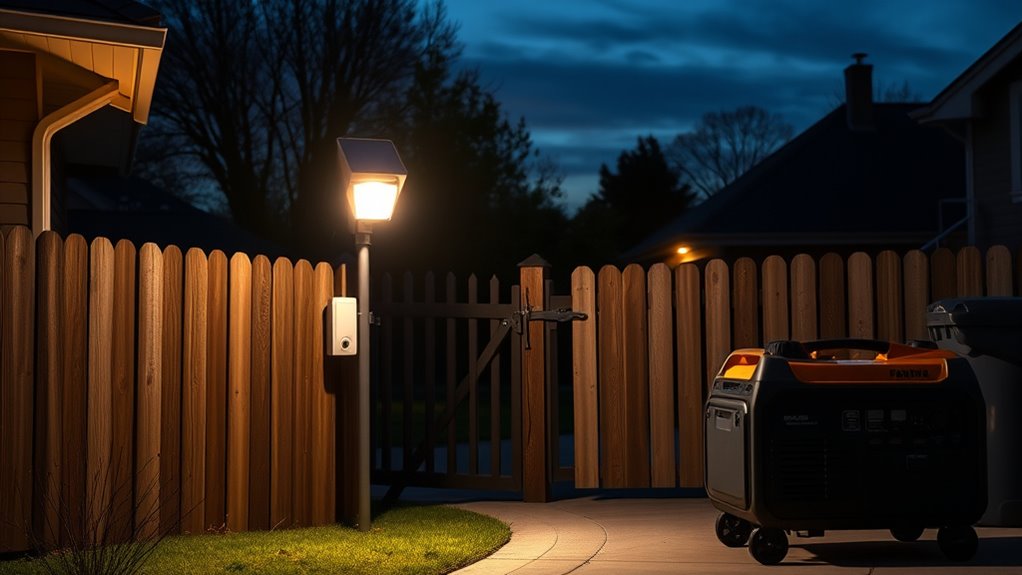

To secure your home during blackouts, lock all doors and windows tightly, and reinforce entry points with deadbolt locks and sturdy frames. Use battery-powered or backup-powered security cameras and bright outdoor motion-activated lighting to deter intruders. Keep emergency supplies accessible, charge your devices, and consider a generator for critical systems. Stay informed with battery-powered radios or alerts and establish communication plans with neighbors. Continue exploring ways to maximize your security and preparedness during outages.

Get backup power and energy gear delivered free with Prime
- Fast, free delivery on millions of items
- Prime Video, Amazon Music and more included
- Member-only deals all year
Key Takeaways
- Reinforce doors, windows, and security devices with deadbolts and backup power sources.
- Install bright outdoor lighting and security cameras with backup batteries to deter intruders.
- Prepare emergency supplies and ensure backup power for critical appliances and communication devices.
- Develop an emergency plan, including safe meeting points and neighborhood support systems.
- Regularly test security systems and update safety measures to maintain effectiveness during blackouts.

When a blackout hits, your home and property can become vulnerable to theft, vandalism, and other threats. Without power, security systems may fail, leaving your home unprotected. That’s why prioritizing home security and emergency preparedness is essential during outages. Preparing in advance can make all the difference in safeguarding your property and ensuring your safety.
Start by reinforcing physical security. Make sure all doors and windows are locked tightly, even if they seem secure. Consider installing deadbolt locks and reinforcing door frames to prevent forced entry. If you have security cameras, ensure they are battery-powered or have backup power sources, so they continue recording even when the power’s out. Bright outdoor lighting, especially motion-activated lights, can deter intruders from approaching your home under the cover of darkness. Keep spare batteries for flashlights, portable lights, and your security devices, so you’re not left in the dark or without a way to see clearly.
Reinforce doors, windows, and security cameras with backup power to stay protected during outages.
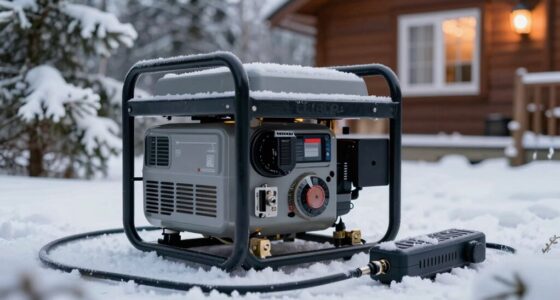
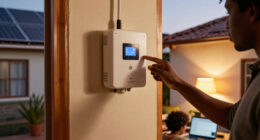
Emergency preparedness extends beyond just physical measures. Create a plan for how you’ll respond during a blackout. Keep a supply of non-perishable food, water, and essential medications easily accessible. Charge your cell phone and portable power banks beforehand, so you stay connected and can contact emergency services if needed. Consider investing in a generator or alternative power sources to maintain critical appliances and security systems. If you use smart home security features, check whether they have backup options or manual controls to operate them during outages. Additionally, understanding how to properly store emergency supplies ensures your resources remain safe and effective when needed most.
Communication is essential, so inform family members or neighbors about your emergency plan. Establish a safe meeting point and ensure everyone knows how to contact each other if cell service becomes unreliable. Keep a list of emergency contacts, including local authorities, utility companies, and neighbors who can assist during an outage. Additionally, consider setting up a neighborhood watch or coordinating with neighbors to keep an eye on each other’s homes. This collective effort enhances your home security and creates a community safety net.
Finally, stay informed about weather conditions and outage updates through a battery-powered radio or mobile alerts. Knowing the expected duration of a blackout helps you plan your emergency preparedness measures accordingly. By taking these steps, you can greatly reduce the risks associated with power outages and better protect your home and loved ones. Remember, being proactive with home security and emergency preparedness isn’t just about reacting to a blackout—it’s about preventing potential threats and ensuring your safety during any disruption.
Frequently Asked Questions
How Can I Protect My Digital Security During Blackouts?
During blackouts, you can protect your digital security by ensuring your digital passwords are strong and unique, reducing the risk of unauthorized access. Make sure to regularly update and store these passwords securely offline. Additionally, keep online backups of important files stored in a secure, encrypted location, so you don’t lose critical data if your devices are affected. These steps help maintain your digital safety even when power is out.
What Are the Best Hiding Spots for Valuables During a Blackout?
You should consider hidden safes or discreet storage options like false walls, floor compartments, or furniture with hidden compartments. These spots keep valuables out of sight, making it harder for intruders to find them during a blackout. Choose locations that blend seamlessly into your home’s decor, and make certain safes are sturdy and securely anchored. This way, your valuables stay protected while maintaining discretion during power outages.
How Do I Secure Outdoor Lighting Without Electricity?
To secure outdoor lighting without electricity, you can use solar-powered lighting that charges during the day and turns on automatically at night. Install these along pathways, near entrances, or around your yard for continuous illumination. Additionally, keep manual outdoor lights, like battery-operated lanterns or flashlights, nearby for backup during extended blackouts. This way, your property remains lit and secure even when the power’s out.
What Emergency Contacts Should I Have During a Blackout?
Think of your emergency contacts like a lifeline during a blackout. You should have numbers for local police, fire department, medical services, and your utility company. Keep your emergency kits accessible, and stay connected with your neighborhood watch group. These contacts guarantee you can quickly get help or report issues, keeping you safe and informed when power’s out. Make certain everyone in your household knows these essential numbers.
How Can I Prevent Fires Caused by Backup Power Sources?
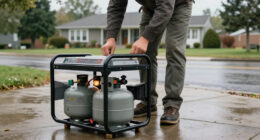
To prevent fires caused by backup power sources, prioritize generator safety and practice fire prevention. Always place your generator outdoors in a well-ventilated area, away from windows and doors. Never overload it, and keep flammable materials far from the exhaust. Regularly inspect cords and connections for damage, and turn off the generator before refueling. Following these steps helps reduce fire risks and keeps your home safe during blackouts.
Conclusion
While blackouts can leave your home vulnerable, they also offer a chance to slow down and reassess your security measures. Instead of feeling helpless, use the darkness as a reminder to strengthen your defenses and prepare for future outages. Just as night reveals hidden stars, these moments reveal what needs improvement. By staying alert and proactive, you turn a potential risk into an opportunity for better protection—transforming uncertainty into empowerment.
Columbus Day / Indigenous Peoples' Day Picks
long weekend sales
As an affiliate, we earn on qualifying purchases.