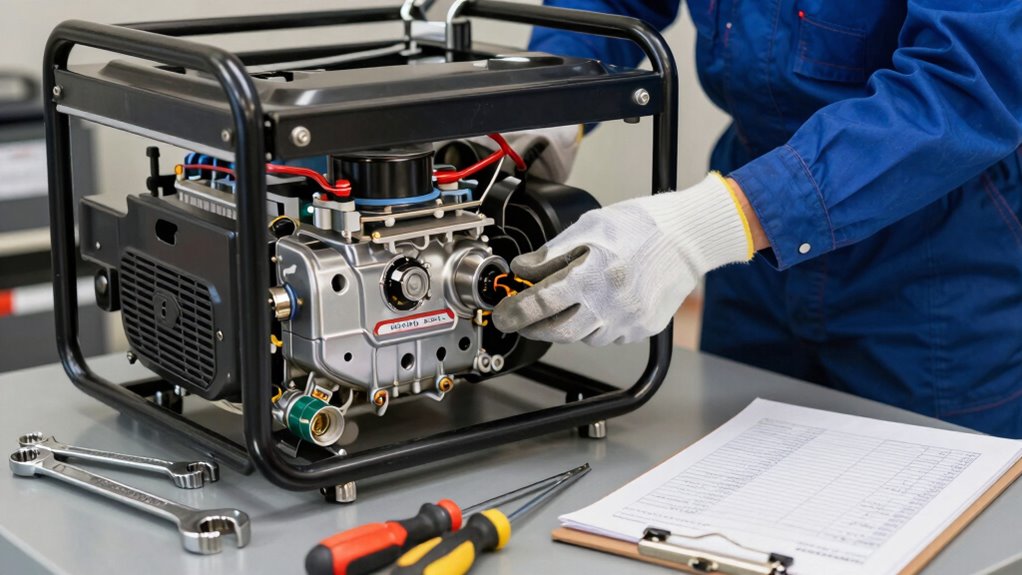

To plan maintenance for low-use generators, regularly inspect and stabilize the fuel to prevent varnish buildup, and run the generator under load every few months to guarantee it’s working properly. Store it in a dry, ventilated area with a breathable cover, and elevate it to prevent rust. Keep detailed logs of all maintenance tasks and checks. Staying consistent with these steps guarantees longevity and reliability—you’ll learn more tips to keep your generator in top shape.

Get backup power and energy gear delivered free with Prime
- Fast, free delivery on millions of items
- Prime Video, Amazon Music and more included
- Member-only deals all year
Key Takeaways
- Schedule regular fuel stabilization and run the generator under load every few months to prevent engine issues.
- Perform routine inspections of oil, filters, and battery health, even if the generator is rarely used.
- Store the generator in a clean, dry, well-ventilated area with a breathable cover to prevent rust and dust buildup.
- Keep detailed maintenance logs to track inspections, replacements, and operational checks over time.
- Follow manufacturer guidelines for maintenance intervals and procedures, adjusting for low usage frequency.
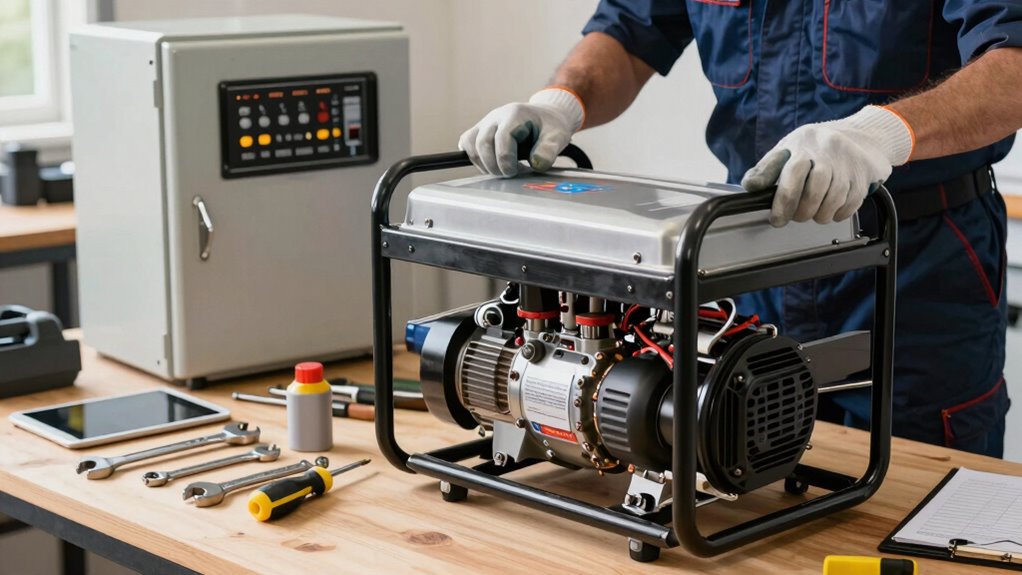
Even if your low-use generators sit idle most of the time, regular maintenance is crucial to guarantee they’re ready when you need them. These machines may not run daily, but neglecting their upkeep can lead to unexpected failures when emergencies strike. One of the most critical aspects of maintenance for infrequent use is proper fuel management. Over time, fuel can degrade, causing gum and varnish buildup that clogs filters and injectors. To prevent this, you should regularly inspect the fuel system, topping off tanks with fresh fuel and adding fuel stabilizer if the generator isn’t used often. This helps assure the fuel remains clean, preventing costly repairs and guaranteeing the generator runs smoothly. Incorporating fire pits or outdoor ovens into your maintenance routine can also help you identify potential issues with other outdoor equipment that shares similar storage and upkeep needs.
Regular fuel checks and stabilizer use ensure your low-use generator stays reliable when needed most.
Storage considerations are equally important. When the generator is not in use for extended periods, it’s imperative to store it correctly. Keep it in a clean, dry, well-ventilated area to avoid moisture buildup, which can cause rust and corrosion. Elevate the generator off the ground if possible, to prevent exposure to water or dirt. Cover it with a breathable cover that shields it from dust, debris, and pests, but allows air circulation to prevent condensation. Regularly inspecting the storage environment helps you catch any issues early, maintaining the generator’s longevity.
In addition to fuel management and storage considerations, establishing a maintenance schedule tailored to low-use generators makes a significant difference. This schedule should include periodic oil changes, inspecting and replacing filters, testing battery health, and checking for leaks or corrosion. Even if the generator has a low runtime, you should run it under load at least once every few months. This exercise helps keep all parts lubricated and verifies that the system functions correctly. When you run it, listen for unusual noises and observe the exhaust for smoke, which can indicate underlying problems needing attention.
Documentation is a practical way to stay organized. Keep detailed records of all maintenance tasks, inspections, and parts replacements. These logs help you track the generator’s condition over time and identify patterns that could signal impending issues. When performing maintenance, follow the manufacturer’s guidelines precisely to avoid voiding warranties or causing damage.
Ultimately, planning maintenance for low-use generators isn’t complicated—it’s about consistency and attention to detail. By managing fuel properly, considering storage environments, and following a routine maintenance schedule, you’ll guarantee your generator is always ready to operate when it’s truly needed. Proper maintenance not only extends the lifespan of your equipment but also provides peace of mind during power outages or emergencies.
Frequently Asked Questions
How Often Should I Perform Maintenance on a Low-Use Generator?
You should perform maintenance on your low-use generator at least every six months. During this, check the generator storage conditions and guarantee it’s stored in a dry, clean area. Don’t forget battery maintenance—test the battery, clean terminals, and recharge if needed. Regular inspections help prevent issues, keep the generator ready, and extend its lifespan. Even if seldom used, consistent maintenance ensures reliable performance when you need it most.
What Specific Parts Require Inspection for Infrequent Generator Use?
You’d think infrequent use keeps parts safe, but actually, you need to check the oil levels and battery health regularly. The oil can degrade, and the battery might drain without activity, causing starting issues when needed. Inspect spark plugs, fuel system, and coolant levels too. Ironically, neglecting these checks risks unexpected failures, so don’t ignore those tiny details—they’re essential for your generator’s readiness when it finally gets called into action.
How Can I Prevent Fuel Degradation in Low-Use Generators?
To prevent fuel degradation in your low-use generator, you should add fuel stabilizers before storage. These stabilizers slow down fuel breakdown and keep it fresh longer. Also, follow proper storage techniques: fill the tank to prevent moisture buildup, store the generator in a cool, dry place, and run it periodically to circulate stabilized fuel. Regularly check and replace fuel as needed to guarantee reliable operation when you need it.
Is It Necessary to Run the Generator Periodically, Even if Unused?
Yes, you should run your generator periodically, even if unused, to prevent issues like fuel degradation and battery drain. During storage, keep the generator in a dry, clean place and perform battery maintenance to guarantee reliable startup. Running it briefly helps circulate oil, prevents corrosion, and keeps the fuel fresh. Regular operation ensures your generator remains ready when you need it, reducing long-term maintenance problems.
What Tools or Equipment Are Essential for Low-Use Generator Maintenance?
Don’t put all your eggs in one basket when maintaining your generator. Essential tools include fuel stabilizers to keep fuel fresh and prevent gumming, and a multimeter for battery maintenance. You’ll also need basic hand tools like wrenches and screwdrivers for inspections and part replacements. A portable fuel tester and a clean cloth for wiping down surfaces are also handy. These tools help guarantee your generator stays reliable during critical moments.
Conclusion
Regular maintenance keeps your low-use generator ready when you need it most. Did you know that generators stored properly and maintained regularly can last up to 20% longer? By sticking to a scheduled plan, you prevent costly breakdowns and guarantee reliability during emergencies. So, don’t neglect those quiet periods—invest a little time now, and your generator will be there for you when it counts. Stay proactive, stay prepared.
Fall Picks
fall essentials
As an affiliate, we earn on qualifying purchases.