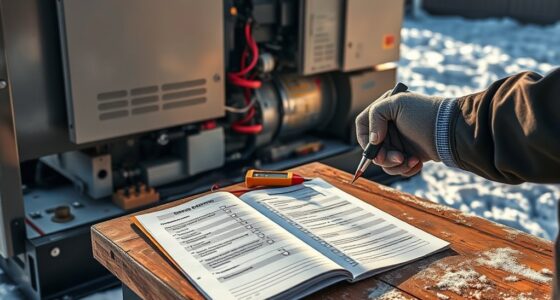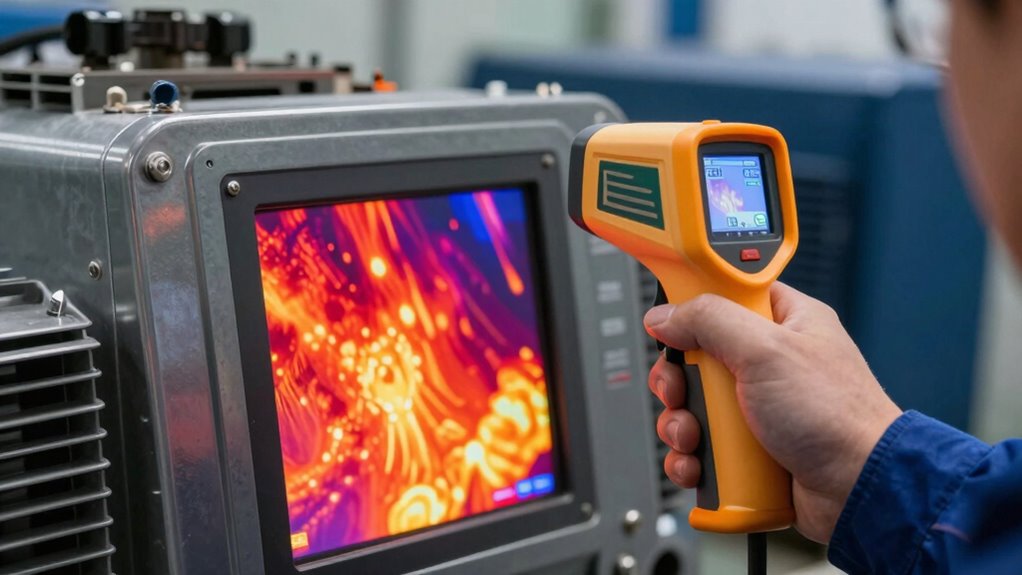
Infrared thermometers are essential tools for inspecting generators, allowing quick, contactless temperature readings that help identify overheating issues early. The best models combine accuracy, durability, and ease of use, with the Fluke 62 Max standing out as the overall top pick thanks to its wide temperature range and rugged build. The Etekcity Laser Thermometer offers a budget-friendly option with reliable performance, while the Extech 42570 provides dual laser targeting for precise measurements in complex setups. Choosing the right infrared thermometer involves balancing factors like range, targeting, and durability, which can be challenging given the variety on the market. Keep reading for a detailed breakdown of the top options and what matters most when selecting your ideal tool.

Get backup power and energy gear delivered free with Prime
- Fast, free delivery on millions of items
- Prime Video, Amazon Music and more included
- Member-only deals all year
Complete the kit


Key Takeaways
- The Fluke 62 Max is the most versatile with its broad temperature range and rugged IP54 rating, making it ideal for harsh environments.
- Dual laser targeting improves measurement accuracy in cluttered generator setups, as seen with the Extech 42570 and Klein IR5.
- Budget options like the Etekcity deliver reliable readings but lack some durability features found in premium picks.
- Ease of use features, such as auto-hold and backlit displays, significantly reduce measurement errors in low-light or tricky conditions.
- Higher price points generally offer greater accuracy, durability, and advanced targeting, which are worth considering for professional maintenance.
| Fluke 62 Max Industrial Infrared Thermometer, -22 to +932°F Range, Laser Targeting, IP54 Rating |  | Best Overall for Tough Environments | Temperature Range: -22°F to 932°F | Accuracy: ±1°C or 1.5% of reading | Laser Targeting: Yes | VIEW ON AMAZON | See Our Full Breakdown |
| Etekcity Infrared Thermometer Laser Temperature Gun 774 |  | Best for Versatile Household and Outdoor Use | Temperature Range: -58°F to 842°F | Distance Spot Ratio: 12:1 | Emissivity: 0.1-1.0 | VIEW ON AMAZON | See Our Full Breakdown |
| Extech 42570 Dual Laser Infrared Thermometer, 50:1, Type K |  | Best for High-Temperature Industrial Applications | Temperature Range: -58°F to 3992°F | Laser Targeting: Dual lasers | Distance-to-Target Ratio: 50:1 | VIEW ON AMAZON | See Our Full Breakdown |
| Fluke 59 Max+ Infrared Thermometer, Yellow, 10:1 DTS Ratio |  | Best for Budget-Conscious Industrial Use | Temperature Range: -22°F to 932°F | DTS Ratio: 10:1 | Response Time: 500 milliseconds | VIEW ON AMAZON | See Our Full Breakdown |
| Klein Tools IR10 Infrared Thermometer with Dual Targeting Laser, 20:1 |  | Best for Versatile, Demanding Jobsite Use | Optical Resolution: 20:1 | Temperature Range: -40°F to 1200°F | Dual Laser Targeting: Yes | VIEW ON AMAZON | See Our Full Breakdown |
| TempPro TempScan Infrared Thermometer Gun for Pizza Oven Griddle HVAC |  | Best for Versatile, High-Range Measurements | Temperature Range: -58°F to 1022°F | Response Time: <500ms | Emissivity Adjustment: 0.1–1.0 | VIEW ON AMAZON | See Our Full Breakdown |
| Klein Tools IR1 Infrared Thermometer with Targeting Laser, Auto-Hold |  | Best for Durable, Mid-Range Measurements | Measurement Range: -4°F to 752°F | Optical Resolution: 10:1 | Fixed Emissivity: 0.95 | VIEW ON AMAZON | See Our Full Breakdown |
| Klein Tools IR5 Dual Laser 12:1 Infrared Thermometer with Backlit Display |  | Best for Precise, Adjustable, Dual Laser Targeting | Temperature Range: -22°F to 752°F | Optical Resolution: 12:1 | Emissivity: 0.1–1.0 | VIEW ON AMAZON | See Our Full Breakdown |
| infrared thermometers for generator inspection | Temperature Range | Response Time |
|---|---|---|
| Fluke 62 Max Industrial Infrar | -22°F to 932°F | — |
| Etekcity Infrared Thermometer | -58°F to 842°F | 0.5 seconds |
| Extech 42570 Dual Laser Infrar | -58°F to 3992°F | 100 milliseconds |
| Fluke 59 Max+ Infrared Thermom | -22°F to 932°F | 500 milliseconds |
| Klein Tools IR10 Infrared Ther | -40°F to 1200°F | — |
| TempPro TempScan Infrared Ther | -58°F to 1022°F | <500ms |
| Klein Tools IR1 Infrared Therm | — | — |
| Klein Tools IR5 Dual Laser 12: | -22°F to 752°F | — |
More Details on Our Top Picks
Fluke 62 Max Industrial Infrared Thermometer, -22 to +932°F Range, Laser Targeting, IP54 Rating
The Fluke 62 Max stands out for its rugged design and reliable accuracy in demanding settings, making it the top choice for generator inspections where durability matters. Its IP54 rating and drop resistance of 3 meters ensure it can handle dust and water exposure typical of industrial sites. Compared to the Klein IR10, it offers a slightly narrower temperature range but excels in environmental resilience. Its laser targeting and 10:1 distance-to-spot ratio promote precise measurements on large or complex surfaces. However, its focus on surface temperature limits its versatility for applications needing higher temperature ranges or more advanced features. This pick makes the most sense for technicians working in harsh conditions who need a dependable, durable tool.Pros:- Durable with IP54 dust and water resistance
- Drop resistant up to 3 meters for tough environments
- Accurate laser targeting with 10:1 ratio for precise measurement
Cons:- Limited to surface temperature measurements only
- Requires 1 AA battery, which may need replacing over time
Best for: Industrial maintenance technicians working in dusty, wet, or rugged environments.
Not ideal for: Home users or hobbyists needing a lightweight, budget-friendly option for occasional use.
- Temperature Range:-22°F to 932°F
- Accuracy:±1°C or 1.5% of reading
- Laser Targeting:Yes
- Distance to Spot Ratio:10:1
- Water and Dust Resistance:IP54
- Drop Resistance:3 meters
Our verdict“A durable, accurate infrared thermometer ideal for industrial environments with challenging conditions.”
Etekcity Infrared Thermometer Laser Temperature Gun 774
The Etekcity Lasergrip 774 offers a user-friendly, multi-purpose design that suits both home and outdoor tasks, making it a flexible choice outside industrial settings. Its -58°F to 842°F range covers most household and maintenance needs, with an easy-to-read bright LCD display. The adjustable emissivity and compact size make it simple to operate for non-professionals. In comparison with the Fluke 59 Max+, it provides a broader temperature range but lacks the ruggedness and industrial durability of the Fluke. Its limited to non-contact surface measurements and relatively basic features mean it’s less suited for professional generator inspections where environmental durability and precision are critical. This model makes sense for DIY enthusiasts or maintenance personnel handling less harsh environments.Pros:- Bright LCD display for clear readings in low light
- Adjustable emissivity for diverse materials
- Compact and lightweight for easy handling
Cons:- Not intended for human temperature measurement
- Limited to surface temperature readings only
Best for: Homeowners, outdoor enthusiasts, and maintenance workers needing a versatile, easy-to-use tool.
Not ideal for: Industrial technicians requiring high durability and environmental resistance in tough conditions.
- Temperature Range:-58°F to 842°F
- Distance Spot Ratio:12:1
- Emissivity:0.1-1.0
- Response Time:0.5 seconds
- Batteries:2 x AAA
- Display Type:Bright LCD
Our verdict“A practical, easy-to-use infrared thermometer suited for household, outdoor, and light maintenance tasks.”
Extech 42570 Dual Laser Infrared Thermometer, 50:1, Type K
The Extech 42570 provides an extensive temperature range up to 3992°F, making it ideal for high-heat industrial tasks like furnace or engine testing. Its dual laser targeting enhances measurement precision, especially over large distances, which sets it apart from the Fluke 62 Max’s single laser. The 50:1 distance-to-spot ratio allows for measuring small hot spots from afar, but its bulkier design is less convenient in tight spaces typical of generator panels. The complex feature set, including a Type K input and software, might require some familiarity for effective use. While it excels in extreme temperature measurement, its size and learning curve may be drawbacks for field technicians who prioritize portability and simplicity. This makes it suitable for experienced professionals needing maximum temperature range and accuracy.Pros:- Extremely wide temperature range up to 3992°F
- Dual laser targeting for precise measurements over large distances
- Fast response time for real-time readings
- Includes Type K input and software for advanced analysis
Cons:- Bulkier and less portable for tight spaces
- Learning curve for complex features
Best for: Industrial engineers, HVAC specialists, or automotive professionals handling high-temperature environments.
Not ideal for: Field technicians requiring a lightweight, straightforward tool for routine generator inspections.
- Temperature Range:-58°F to 3992°F
- Laser Targeting:Dual lasers
- Distance-to-Target Ratio:50:1
- Type K Input:Yes
- Response Time:100 milliseconds
- Includes:Type K probe, USB cable, software
Our verdict“A high-performance infrared thermometer suited for extreme temperatures and professional environments with complex measurement needs.”
Fluke 59 Max+ Infrared Thermometer, Yellow, 10:1 DTS Ratio
The Fluke 59 Max+ offers solid performance for a budget-friendly price, with a temperature range comparable to the Fluke 62 Max. Its 10:1 distance-to-spot ratio is adequate for many electrical and mechanical inspections, but less precise over larger distances compared to the Extech 42570. Its IP40 rating provides basic dust protection, which may be limiting in dusty generator environments. The large backlit LCD makes readings easy, yet the device’s plastic construction and limited environmental protection mean it’s less robust than the Max or industrial-grade options. This model suits small to medium maintenance tasks where durability isn’t the primary concern, but it falls short in harsh industrial conditions. It’s a good entry-level choice for those starting out in generator diagnostics.Pros:- Accurate laser technology for precise measurements
- Large, easy-to-read backlit LCD display
- Lightweight and portable for easy handling
Cons:- Limited protection rating (IP40), less dust resistant
- Plastic build less durable for harsh environments
Best for: Maintenance technicians on a budget needing reliable surface temperature readings in controlled environments.
Not ideal for: Heavy-duty industrial inspections in dusty, wet, or hazardous environments where durability is critical.
- Temperature Range:-22°F to 932°F
- DTS Ratio:10:1
- Response Time:500 milliseconds
- Protection Rating:IP40
- Display Type:Large backlit LCD
- Power Source:1 AA battery
Our verdict“A cost-effective infrared thermometer suitable for basic maintenance tasks in controlled environments.”
Klein Tools IR10 Infrared Thermometer with Dual Targeting Laser, 20:1
The Klein IR10 combines dual laser targeting and a broad measurement range from -40°F to 1200°F, making it highly adaptable for diverse generator inspection scenarios. Its ability to measure via infrared or a K-type probe adds flexibility for different applications. The 20:1 optical resolution and high ingress protection (IP54) with a rugged drop resistance of 3 meters make it suitable for tough jobsite conditions. Compared to the Fluke 62 Max, the IR10 offers more advanced features like auto scan and max/min calculations, but its complexity might be overwhelming for occasional users. Its price isn’t specified, but its feature set and durability make it a worthwhile investment for professionals demanding versatility. This model suits experienced technicians who need a durable, multi-function tool in demanding settings.Pros:- Dual laser targeting and wide measurement range
- Versatile IR and K-type probe measurement
- High ingress protection (IP54) and drop resistance
- Advanced features like auto scan and max/min/avg
Cons:- Complex features may require learning curve
- Price not specified, potentially higher for basic users
Best for: Professional technicians requiring a durable, multifunction tool with high versatility for generator and equipment inspections.
Not ideal for: Casual users or hobbyists looking for a simple, straightforward measurement device.
- Optical Resolution:20:1
- Temperature Range:-40°F to 1200°F
- Dual Laser Targeting:Yes
- Emissivity Range:0.1-1.0
- Drop Protection:9.8 ft (3 m)
- Ingress Protection:IP54
Our verdict“A highly durable, versatile infrared thermometer designed for demanding professional environments with complex measurement needs.”
TempPro TempScan Infrared Thermometer Gun for Pizza Oven Griddle HVAC
This model stands out for its extensive temperature range of -58°F to 1022°F, making it well-suited for generator inspections where high temperatures can occur. Compared with the Klein IR5, which maxes out at 752°F, the TempPro offers greater flexibility for monitoring hot spots in large generators and related equipment. Its adjustable emissivity helps improve accuracy across different surfaces, but this feature can be complex for beginners. The LCD display provides clear readings, including MAX/MIN/AVG functions, which are valuable for detailed assessments. However, its reliance on batteries and lack of waterproofing could pose challenges in outdoor or rugged environments. Overall, this pick makes sense for technicians needing a broad temperature scope and adaptable settings, but those seeking a more rugged, battery-free device should look elsewhere.
Pros:- Wide temperature range up to 1022°F for high-heat applications
- Adjustable emissivity for surface-specific accuracy
- Fast response time (<500ms) for quick readings
- User-friendly LCD display with multiple measurement modes
Cons:- Requires batteries, which can run out during critical inspections
- Not waterproof, limiting outdoor use
- Emissivity adjustment may be complex for new users
Best for: Professionals performing detailed generator inspections requiring high-temperature measurement and emissivity adjustment.
Not ideal for: Field technicians working in wet or harsh environments expecting waterproof or battery-free operation.
- Temperature Range:-58°F to 1022°F
- Response Time:<500ms
- Emissivity Adjustment:0.1–1.0
- Display Type:Digital LCD
- Power Source:2 AAA batteries (included)
- Size:3.74 inches
Our verdict“This thermometer is ideal for experienced technicians needing versatile, high-temperature measurements with adjustable settings.”
Klein Tools IR1 Infrared Thermometer with Targeting Laser, Auto-Hold
The Klein IR1 excels in durability and ease of use, offering accurate readings from -4°F to 752°F, which is sufficient for most generator inspections. Its laser targeting simplifies aiming at specific components, and the auto-Hold feature helps maintain readings without constant pressure. Compared to the Klein IR5, which offers dual laser targeting, the IR1’s single laser makes it slightly less precise in complex setups but still highly reliable for standard tasks. Its fixed emissivity of 0.95 simplifies operation but can limit accuracy on non-standard surfaces. The device’s robust drop protection makes it suitable for rough environments, although its maximum temperature is lower than the TempPro, limiting its use in high-heat scenarios. This model makes sense for field technicians who prioritize durability and straightforward operation over ultra-high temperature ranges.
Pros:- Durable construction with drop protection up to 6.6 ft
- Laser targeting for precise measurement from a distance
- Auto-Hold feature for easier readings in awkward positions
- Includes pouch and batteries for immediate use
Cons:- Limited temperature range up to 752°F, not suitable for extremely hot components
- Fixed emissivity may reduce accuracy on certain surfaces
- Not designed for medical or human use
Best for: Field technicians needing a durable, reliable tool for routine generator checks and maintenance.
Not ideal for: Specialists who need to measure very high temperatures or require emissivity adjustments for diverse surfaces.
- Measurement Range:-4°F to 752°F
- Optical Resolution:10:1
- Fixed Emissivity:0.95
- Drop Protection:6.6 ft
- Includes:Pouch and batteries
Our verdict“This device offers a solid balance of durability and accuracy for everyday generator inspections, especially in rugged environments.”
Klein Tools IR5 Dual Laser 12:1 Infrared Thermometer with Backlit Display
The Klein IR5 offers a more advanced targeting system with dual lasers and a wider temperature range of -22°F to 752°F, making it suitable for detailed generator assessments. Its dual laser targeting allows precise measurement of specific components, reducing errors in complex setups compared to single-laser models like the IR1. With a 12:1 optical resolution, it provides better measurement precision over larger distances. The adjustable emissivity from 0.1 to 1.0 enhances accuracy on various surfaces, but understanding how to calibrate it can be challenging for less experienced users. Its drop protection and backlit display make it versatile in different environments, although the maximum temperature still falls short of the TempPro’s high-end range. This model is best for professionals requiring detailed, accurate readings in diverse conditions.
Pros:- Dual laser targeting for precise measurement areas
- Wide temperature range suitable for most generator tasks
- Adjustable emissivity for surface-specific accuracy
- Backlit display for use in low-light conditions
Cons:- Requires understanding of emissivity adjustments for accuracy
- Limited maximum temperature compared to some industrial models
- Requires some familiarity with laser targeting for optimal use
Best for: Inspection professionals needing high precision and flexibility for detailed generator analysis.
Not ideal for: Casual users or those working in extremely hot environments exceeding 752°F, where the range is insufficient.
- Temperature Range:-22°F to 752°F
- Optical Resolution:12:1
- Emissivity:0.1–1.0
- Drop Protection:6.6 ft
- Includes:Pouch and batteries
Our verdict“This thermometer is well-suited for experienced technicians needing precise, adjustable measurements in challenging environments.”

How We Picked
The products in this roundup were selected based on their performance in generator inspection scenarios, focusing on accuracy, durability, ease of use, and value for money. We prioritized models with a wide temperature range, rugged construction, and reliable targeting features, since generator environments can be tough. The ranking reflects a balance between professional-grade features and affordability, ensuring options suit both casual users and industrial technicians. Additional considerations included user interface simplicity and maintenance requirements, which influence long-term usability and reliability.| infrared thermometers for generator inspection | Temperature Range |
|---|---|
| Fluke 62 Max Industrial Infrar | -22°F to 932°F |
| Etekcity Infrared Thermometer | -58°F to 842°F |
| Extech 42570 Dual Laser Infrar | -58°F to 3992°F |
| Fluke 59 Max+ Infrared Thermom | -22°F to 932°F |
| Klein Tools IR10 Infrared Ther | -40°F to 1200°F |
| TempPro TempScan Infrared Ther | -58°F to 1022°F |
| Klein Tools IR1 Infrared Therm | — |
| Klein Tools IR5 Dual Laser 12: | -22°F to 752°F |
Factors to Consider When Choosing Infrared Thermometers For Generator Inspections
Choosing the right infrared thermometer for generator inspections requires understanding several key factors. The ideal model should provide accurate readings across a broad temperature range, especially in high-heat environments typical of generators. Durability and environmental resistance are also vital, as tools often face dust, moisture, and rough handling. Additionally, features like dual laser targeting enhance measurement precision in complex setups, while ease of use can save time during inspections. Considering these factors helps ensure you select a device that delivers reliable, consistent performance over time.Temperature Range and Accuracy
Generator inspections demand thermometers that can measure high temperatures accurately. Look for models with a wide temperature range, preferably from -22°F up to over 900°F, to cover all possible scenarios. Accuracy is equally important; a device with ±2°F or better guarantees reliable readings. Keep in mind that some budget options may have narrower ranges or less precise sensors, which could lead to missed overheating issues or false alarms.
Durability and Environmental Resistance
Generators are often located in harsh environments, exposed to dust, moisture, and vibrations. Choosing a thermometer with an IP54 or higher rating ensures resistance to dust and splashes. Rugged construction, rubberized grips, and impact resistance extend the device’s lifespan and prevent damage during rough handling. Failing to consider durability can result in frequent replacements or inaccurate readings due to environmental interference.
Targeting and Focus Features
Precise targeting is essential when measuring specific components within a generator. Dual laser targeting helps focus on small or distant parts, reducing measurement errors. Models with adjustable focus or higher laser distance-to-spot ratios improve accuracy, especially in cluttered or hard-to-reach areas. Overlooking targeting capabilities can lead to inconsistent readings and misdiagnoses of thermal issues.
Ease of Use and Display
User-friendly interfaces, such as backlit screens and auto-hold functions, simplify measurements in dimly lit or awkward positions. Quick response times and straightforward controls reduce inspection time, while features like auto shut-off save battery life. Choosing a device without these conveniences can slow down diagnostic workflows and increase the chance of errors.
Price and Value
While higher-priced models tend to offer greater durability and advanced features, budget options can still be effective for occasional inspections. Consider your inspection frequency and environment; investing in a more robust device makes sense for professional use. Conversely, casual or hobbyist users may prioritize affordability, accepting some tradeoffs in durability or range. Balancing cost and features is key to getting the best value for your specific needs.
Frequently Asked Questions
Can I use a standard infrared thermometer for generator inspections?
While a standard infrared thermometer can provide quick temperature readings, not all models are suitable for generator inspections. Generators often operate at high temperatures and in dusty or moist environments, so you need a device with a wide temperature range and good environmental resistance. Additionally, models with dual laser targeting improve measurement accuracy in complex setups. Choosing a thermometer designed for industrial or high-heat environments ensures more reliable and durable performance.
How important is the laser targeting feature for generator inspections?
Laser targeting significantly enhances measurement precision, especially when diagnosing specific components like coils, bearings, or cooling fins. In generator environments, clutter and hard-to-reach areas make accurate targeting challenging. Dual laser or adjustable focus features help ensure you’re measuring exactly the part you intend to, reducing errors and false readings that could lead to missed overheating issues or unnecessary downtime.
Should I prioritize durability over accuracy?
Both durability and accuracy are vital, but their importance depends on your use case. For frequent, professional inspections in tough environments, durability can be more critical since a broken device delays work and increases costs. However, if your inspections are occasional or in less harsh conditions, prioritizing accuracy might be more beneficial to catch thermal issues early. Ideally, find a balance where the device is rugged enough for your environment without sacrificing measurement precision.
What features make a thermometer easier to use during generator inspections?
Features like a backlit display, auto-hold, and quick response times make inspections more efficient. Auto-hold prevents measurement errors when holding the trigger, while backlighting ensures visibility in poorly lit areas. A high laser distance-to-spot ratio allows measurement from a greater distance, reducing the need for awkward positioning. These usability enhancements help prevent mistakes and speed up the diagnostic process.
Is it worth paying more for a dual laser infrared thermometer?
Investing in a dual laser model typically provides more accurate targeting, especially in complex or cluttered generator setups. The increased precision reduces measurement errors and improves diagnostic confidence. While these models are generally more expensive, the added accuracy and ease of use often justify the higher cost for professional technicians or critical inspections. For casual users, a single laser or simpler model may suffice, but for reliable, repeatable results, dual laser options are preferable.
Conclusion
For those performing frequent, professional generator inspections, the Fluke 62 Max offers unmatched versatility and durability, making it the best overall choice. Budget-conscious users or hobbyists will find the Etekcity Infrared Thermometer provides reliable performance at a lower price point. If you prioritize precision and advanced targeting, the Extech 42570 with dual lasers makes a compelling case. Beginners or occasional inspectors should lean toward models with simple interfaces and good durability, while industrial technicians should consider premium options with broad ranges and rugged features. Matching your specific needs with these strengths ensures effective, reliable generator diagnostics.
Columbus Day / Indigenous Peoples' Day Picks
long weekend sales
As an affiliate, we earn on qualifying purchases.