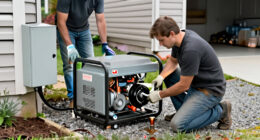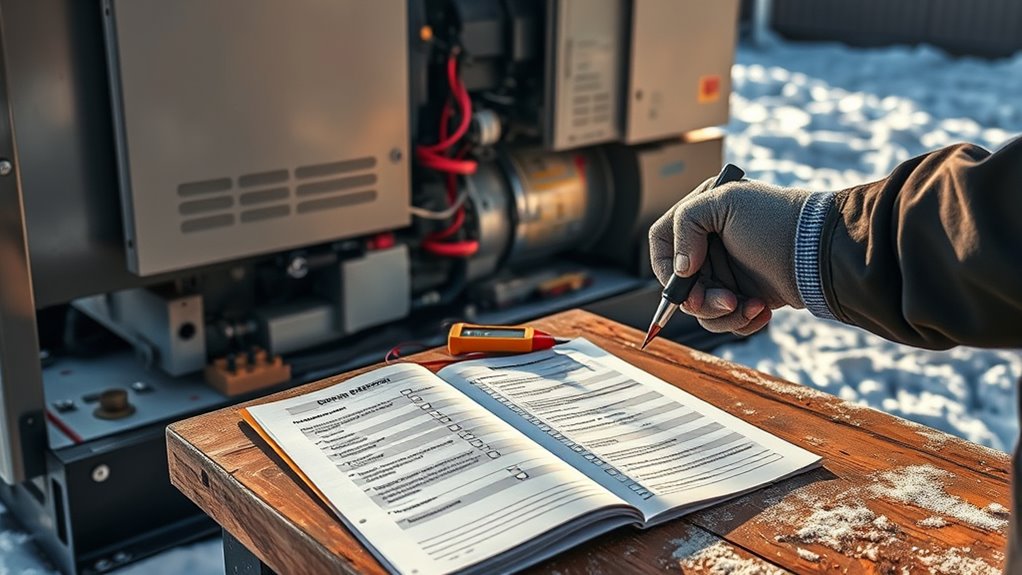

Before you start winterizing your standby generator, inspect and clean it thoroughly, removing debris from vents and ensuring proper airflow. Check all fluids like oil and coolant, topping up or replacing as needed. Test your battery’s charge and examine electrical connections for corrosion. Fuel tanks should be full with stabilizer added to prevent freezing and fuel degradation. Confirm proper ventilation and clearance around the unit. Following these steps will help you prepare effectively for winter challenges. Keep going to learn the complete checklist.
Key Takeaways
- Conduct a thorough inspection of the generator’s exterior, vents, and surroundings for debris and obstructions.
- Check and top off all fluids, including oil, coolant, and fuel, ensuring they are clean and stable.
- Test the battery voltage, clean terminals, and secure electrical connections before shutting down.
- Verify proper ventilation and clearance according to local codes to prevent health hazards and ensure safe operation.
- Schedule professional maintenance and review emergency procedures to prepare for winter conditions.
Inspect and Clean the Generator
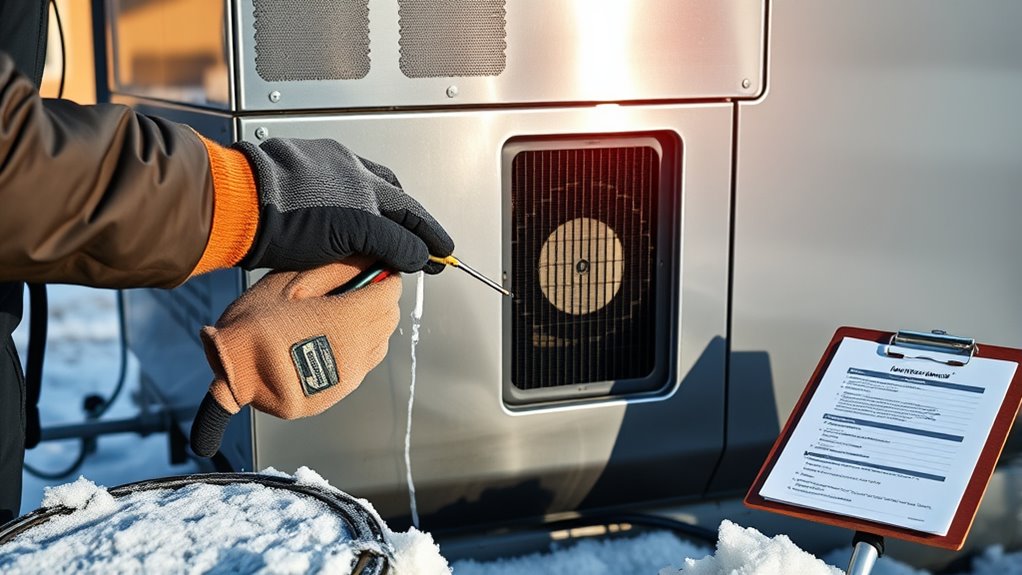
Before winter sets in, you should inspect and clean your standby generator to make sure it operates smoothly when needed. Start by checking for any debris, dust, or dirt that may have accumulated on the exterior and vents. Clear away obstructions to ensure proper airflow. Follow safety precautions by disconnecting the power source before inspecting internal components. Look for signs of corrosion or wear, especially on electrical connections. Use troubleshooting tips to identify any loose wires or damaged parts. Clean the air filters and ensure they’re free of debris to maintain ideal performance. Proper cleaning prevents overheating and prolongs the generator’s lifespan. Regular inspections help catch potential issues early, ensuring your generator is ready to function reliably during winter outages. Incorporating preventive maintenance practices can further enhance the longevity and reliability of your generator.
Check and Replace Fluids
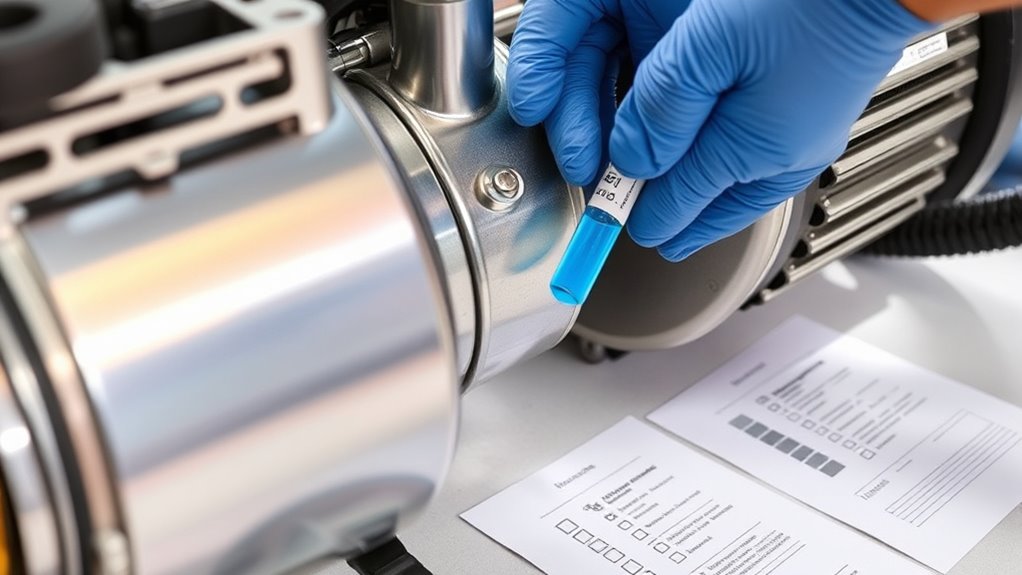
After inspecting and cleaning your generator, it’s time to check and replace the fluids to guarantee it runs smoothly during winter. First, verify the oil levels using the dipstick; if the oil is low or dirty, drain and replace it with fresh oil suitable for cold weather. Next, perform a coolant check to ensure the system has the right mixture and level to prevent freezing. Use the table below for quick reference:
| Fluid Type | What to Do |
|---|---|
| Oil | Check level, change if dirty or low |
| Coolant | Inspect level, top up or replace if needed |
| Fuel | Ensure tank is full and stable |
| Hydraulic Fluid | Check for proper levels and quality |
| Transmission Fluid | Verify levels, replace if necessary |
Keeping these fluids in check helps your generator operate reliably all winter. Additionally, reviewing risk management strategies can help prevent unexpected breakdowns during the cold season.
Test the Battery and Electrical System
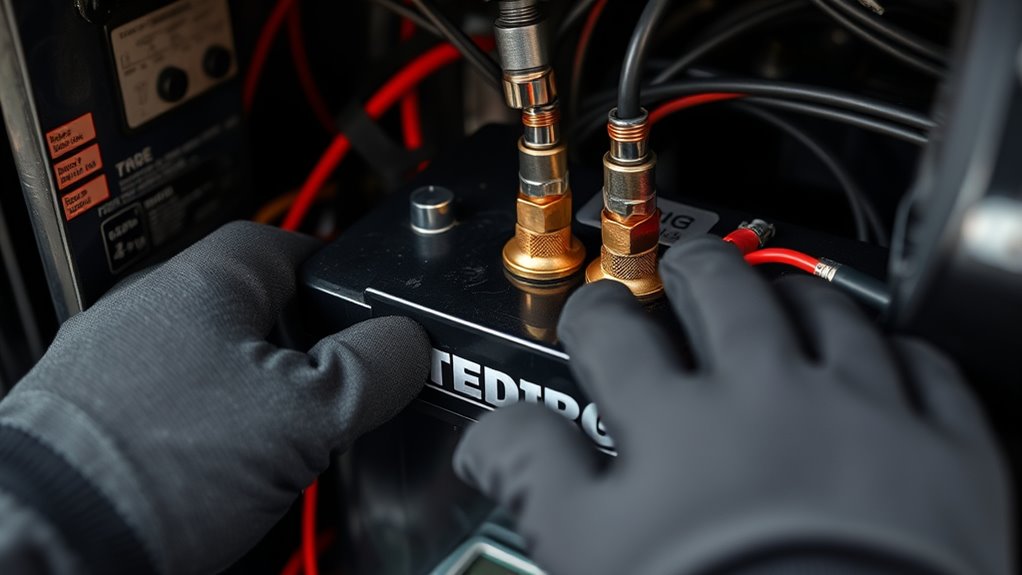
Is your generator’s battery ready to start when you need it most? Proper battery maintenance is essential for reliable operation, especially before winter. Test the battery’s voltage with a multimeter—ideally, it should read around 12.6 volts for a fully charged lead-acid battery. Check for corrosion on terminals and clean as needed. Ensure the electrical system is functioning correctly by inspecting wiring for damage or loose connections. Always prioritize electrical safety: disconnect the battery before working on it, wear insulated gloves, and avoid shortcuts. Additionally, inspecting Kia Tuning components can help identify any electrical issues that may affect your generator’s performance.
Verify the Fuel System and Add Stabilizer

Make sure your fuel tank has enough clean fuel for winter operation, and check the quality to prevent gumming or clogging. Adding stabilizer helps keep the fuel fresh and prevents issues during storage. Follow the manufacturer’s instructions to add the right amount of stabilizer properly. Incorporating sound therapy techniques into routine maintenance can also promote a more relaxed and stress-free process.
Fuel Level and Quality Check
Before winter arrives, ensuring your generator’s fuel level and quality is vital. Check the fuel composition to confirm it’s suitable for cold weather, and inspect storage conditions to prevent contamination or degradation. Old or contaminated fuel can cause starting issues or engine damage during winter. Make sure your fuel tank is filled to prevent moisture buildup and keep the system ready for emergencies. Proper fuel storage is essential to avoid issues related to fuel stability and maintain reliable operation.
Key points to think about:
- Keep fuel fresh by using proper storage containers
- Avoid storing fuel in extreme temperatures
- Consider adding a fuel stabilizer if fuel has been stored for over a month
Regularly verifying these factors helps maintain your generator’s reliability and guarantees it’s prepared when you need it most.
Add Stabilizer Properly
How can you guarantee your fuel remains reliable during winter? The key is adding a quality fuel stabilizer to prevent fuel degradation. First, make sure your fuel tank is nearly full to minimize moisture buildup. Then, add the recommended amount of fuel stabilizer, following the manufacturer’s instructions. Proper mixing is essential—run the generator for a few minutes after adding the stabilizer to ensure it circulates throughout the fuel system. This process helps prevent gum and varnish formation, which can clog fuel lines or carburetors during storage. Double-check that the stabilizer’s dosage is correct for the amount of fuel in your tank. Properly stabilized fuel will keep your generator ready for use when you need it most, even after months of inactivity. Additionally, understanding fuel volatility can help you choose the best stabilizer for your needs and ensure reliable operation in cold weather.
Examine and Replace Air Filters

Regularly examining and replacing the air filters in your standby generator is essential to guarantee peak performance during winter months. A clean air intake ensures proper airflow, preventing strain on the engine and reducing the risk of breakdown. During filter replacement, inspect the filter for dirt, debris, or damage—these can obstruct airflow and impair efficiency. If the filter looks clogged or worn, replace it promptly to maintain excellent operation. Additionally, maintaining optimal AI safety measures helps prevent malfunctions caused by environmental factors or system vulnerabilities.
Inspect the Exhaust System for Blockages

To guarantee your standby generator runs smoothly during winter, it’s vital to inspect the exhaust system for blockages. An exhaust blockage can cause dangerous fumes to build up or reduce the generator’s efficiency. Begin with a thorough vent inspection, checking for debris, nests, or corrosion that may obstruct airflow. Clear any obstructions you find, ensuring the exhaust pipe is unobstructed and securely attached. Look for signs of rust or damage that might compromise the system’s integrity. Pay close attention to any soot buildup or unusual odors around the exhaust area. Regular inspection helps prevent dangerous exhaust blockage issues and ensures ideal performance. Keeping the exhaust system clear is essential for safe, reliable operation during winter storms and power outages. Additionally, consulting with professional services can ensure your system remains in optimal condition and adheres to safety standards.
Ensure Proper Ventilation and Clearance

Ensuring proper ventilation and clearance around your standby generator is essential for safe and efficient operation. Adequate ventilation requirements prevent dangerous buildup of carbon monoxide and overheating, while following clearance guidelines guarantees easy access and reduces fire risk. You should keep the area clear of debris and obstructions that could hinder airflow or maintenance. Make sure the generator is installed in a well-ventilated space, avoiding enclosed or tightly sealed areas. Check local codes for specific ventilation requirements and clearance distances. Proper ventilation not only safeguards your health but also prolongs your generator’s lifespan. Additionally, adopting powerful marketing strategies can help communicate the importance of these safety measures to homeowners effectively.
Schedule Regular Testing and Maintenance

You should perform routine checks on your generator to catch issues early and keep it prepared to run. Scheduling professional servicing guarantees all components stay in top condition, especially before winter storms hit. Regular testing and maintenance are key to reliable operation when you need it most. Additionally, preventative measures can help identify potential problems before they lead to failure.
Perform Routine Checks
Have you scheduled your standby generator’s routine checks and maintenance? Regular testing guarantees it’s ready when needed. Start by inspecting the generator location to confirm it’s clear of debris and obstructions. Always follow safety precautions before handling any parts or fluids. During checks, verify oil and coolant levels, and inspect for leaks or corrosion. Run the generator briefly to ensure it starts smoothly and runs quietly.
Remember:
- Keep the generator in a clean, dry environment
- Check battery connections and charge
- Test the transfer switch for proper operation
Routine checks help prevent unexpected failures, especially during winter storms. Staying proactive with maintenance keeps your generator reliable and safe to operate.
Schedule Professional Servicing
Scheduling professional servicing for your standby generator is essential to keep it operating reliably year-round. Regular professional inspection ensures any potential issues are caught early, preventing unexpected failures during winter storms or outages. Seasonal maintenance, including oil changes, filter replacements, and fluid checks, helps maintain peak performance. By scheduling routine testing, you confirm the generator starts smoothly and functions correctly when needed most. A professional service provider can also verify that safety features and ventilation systems are in proper working order. Don’t wait until the cold season hits—regular servicing keeps your generator ready and reduces the risk of costly repairs. Making these appointments now ensures peace of mind, knowing your backup power system is prepared for winter’s challenges.
Prepare Emergency Supplies and Documentation

Are you prepared to handle an emergency during winter power outages? Making sure you have essential supplies and documentation ready is vital. Keep a well-stocked emergency kit with items like flashlights, batteries, and warm clothing. Create and review your emergency plans, making certain everyone knows what to do. Keep your contact information, including local emergency services and utility companies, easily accessible. Consider storing digital copies of important documents like insurance policies, generator manuals, and medical records in a secure cloud or USB drive.
- Maintain an updated list of emergency contacts
- Keep copies of essential documents in a waterproof container
- Practice your emergency plan regularly to guarantee everyone’s preparedness
Being organized now can save you time and stress during a power outage.
Frequently Asked Questions
How Often Should I Winterize My Standby Generator?
You should winterize your standby generator at least once a year, ideally during seasonal preparation in fall. Follow your maintenance schedule to guarantee it’s ready before winter storms. Regular winterization helps prevent issues caused by cold weather, like fuel gelling or battery failure. If you experience extreme conditions or use your generator more frequently, consider additional inspections or maintenance checks during the season. Staying proactive keeps your generator reliable year-round.
What Signs Indicate My Generator Needs Repairs Before Winter?
You should check your generator for signs like unusual noises, difficulty starting, or inconsistent power output, which indicate it needs repairs before winter. Regular generator maintenance guarantees it’s ready for emergencies and helps prevent breakdowns during power outages. Addressing issues early improves your emergency preparedness, especially in harsh winter conditions. If you notice any of these signs, schedule repairs promptly to keep your standby generator reliable when you need it most.
Can I Winterize My Generator Myself or Hire a Professional?
You can definitely tackle winterizing your generator yourself with some DIY tips, but don’t underestimate the complexity—it’s not just a simple task. If you’re unsure or want peace of mind, hiring professional services is wise; they bring expertise and guarantee your generator’s ready for the coldest storms. Whether you DIY or hire out, make sure you follow proper procedures to keep your generator running flawlessly all winter long.
How Long Does the Winterization Process Typically Take?
The winterization process usually takes about 1 to 3 hours, depending on your generator’s size and complexity. During this time, you’ll focus on generator storage and fuel preservation techniques, such as draining or stabilizing fuel and inspecting the unit. You can do it yourself if you’re comfortable with basic maintenance, but hiring a professional guarantees everything is done correctly, especially for more complex systems or extensive fuel preservation needs.
Are There Specific Safety Precautions for Winterizing a Generator?
You should prioritize generator safety by disconnecting it from power sources and wearing protective gear. Be cautious of winter hazards like ice and snow that can cause slips or damage. Guarantee proper ventilation to avoid carbon monoxide buildup. Always read the manufacturer’s safety instructions, and never work on the generator if you’re unsure or if conditions are unsafe. Taking these precautions keeps you safe during winterizing and prevents potential accidents.
Conclusion
By following this winterizing checklist, you’ll keep your standby generator ready to spring into action when needed. Think of it as giving your backup power system a cozy blanket—protecting it from winter’s harsh embrace. Regular maintenance guarantees it’s always prepared, so you won’t be left in the cold during a power outage. Stay proactive, keep everything in check, and your generator will be as reliable as a trusted friend through the winter months.