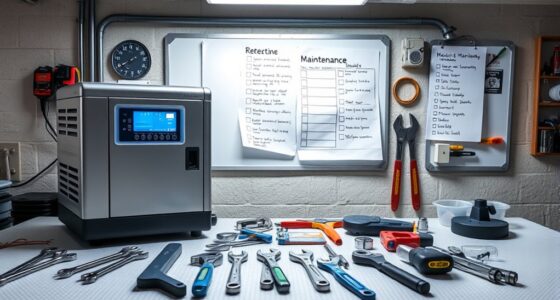
During your annual generator service, you should inspect the fuel system for clogs or dirt, making certain injectors and carburetors are clean. Check the oil and coolant levels, replace oil filters, and top off fluids to prevent overheating. Examine the air filters, spark plugs, and electrical connections to verify they’re functioning properly. Also, test the battery and load capacity to catch issues early. Keep going to discover detailed steps that help keep your generator running smoothly.
Key Takeaways
- Inspect and clean fuel injectors, carburetors, and air filters to ensure efficient fuel combustion and optimal fuel economy.
- Check and tighten or replace mufflers, exhaust systems, and mounting brackets to reduce noise levels and prevent mechanical issues.
- Change engine oil, replace filters, and verify coolant levels to prevent overheating and ensure smooth engine operation.
- Test electrical components, including spark plugs and connections, for proper ignition and system reliability.
- Conduct load testing and battery checks to assess generator performance and ensure dependable startup and operation.
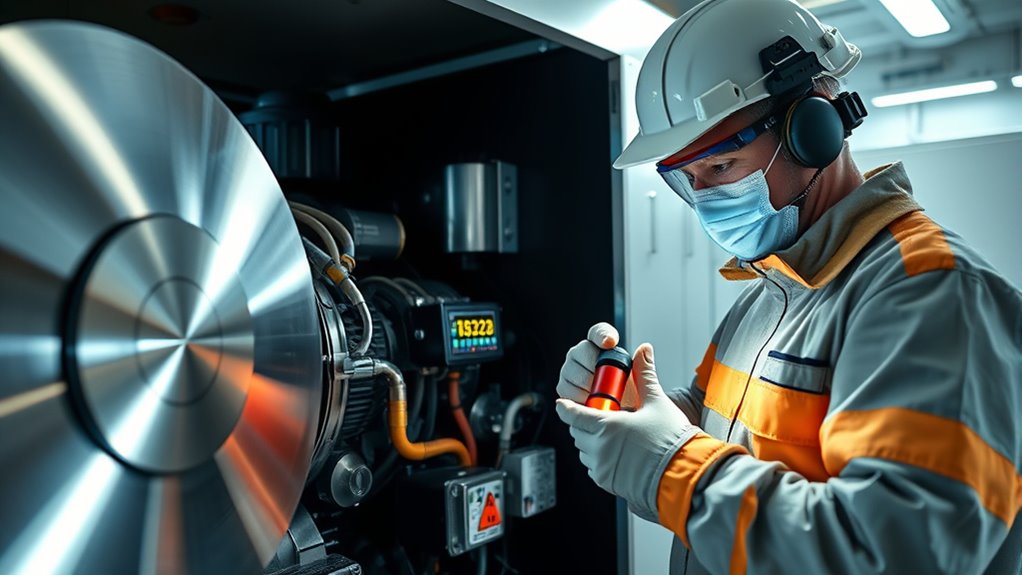
Regularly scheduled annual generator service is vital to guarantee your backup power system operates reliably when you need it most. During this inspection, paying attention to key components can help maximize your generator’s performance and longevity. One important aspect to evaluate is fuel efficiency. Over time, fuel injectors and carburetors can become clogged or dirty, which reduces how efficiently the generator uses fuel. When these parts aren’t functioning properly, you might find yourself wasting fuel and increasing operational costs. During your service, a technician will clean or replace these components to guarantee the generator burns fuel cleanly and efficiently, saving you money and reducing emissions.
Noise reduction is another critical factor that often gets overlooked. Generators can become noisier as parts wear or become loose, which can be disruptive, especially if your generator is located near living or workspaces. During annual inspections, technicians check the muffler, exhaust system, and mounting brackets to identify any loose or damaged parts that could cause excess noise. Tightening or replacing worn components not only reduces noise but also helps prevent further damage. Properly maintained noise control ensures your generator operates smoothly and quietly, minimizing disturbance to your environment.
While inspecting the fuel system and noise-related components, it’s also vital to examine the oil and coolant levels. Old or contaminated oil can impair engine performance, increase wear, and decrease fuel efficiency. During service, the oil is changed, and filters are replaced to maintain ideal lubrication. Coolant levels are checked and topped off as needed to prevent overheating, which could lead to engine failure. These simple steps keep your generator running smoothly and help prevent costly repairs down the line.
The air intake and filtration system should also be inspected thoroughly. Dirty or clogged air filters restrict airflow, limiting engine performance and increasing fuel consumption. Replacing dirty filters ensures the engine breathes properly, maintaining efficiency and reducing unnecessary strain. Additionally, inspecting the spark plugs and electrical connections ensures reliable ignition and smooth operation, which directly impacts fuel efficiency and overall performance.
Finally, a thorough inspection involves checking the battery health and testing the entire system under load. A well-maintained battery guarantees quick startup and reliable power when needed. Testing the generator under load reveals potential issues before a power outage occurs, giving you peace of mind that your backup system will function properly. By staying on top of these inspections annually, you maximize your generator’s fuel efficiency, reduce noise pollution, and extend its lifespan, ensuring it’s ready whenever you need backup power most. Additionally, implementing automation technologies can help monitor performance remotely, alerting you to issues before they become critical.
Frequently Asked Questions
How Often Should I Schedule Generator Inspections?
You should schedule generator inspections at least once a year to guarantee reliable operation. Incorporate routine maintenance during these checks, such as testing safety precautions and inspecting critical components. Regular inspections help identify potential issues early, preventing unexpected failures during emergencies. By staying proactive with your generator’s upkeep, you ensure it remains in ideal condition, providing peace of mind and safety when you need it most.
What Signs Indicate Generator Failure?
When your generator starts making unusual noise or shows reduced fuel efficiency, it’s a red flag that something’s off. You should also watch for difficulty starting, excessive vibrations, or warning lights. These signs indicate potential failure and should be checked promptly. If ignored, it’s like putting all your eggs in one basket—risking costly repairs or downtime. Regular inspections help catch issues early before they turn into big problems.
Can I Perform Maintenance Myself or Hire a Professional?
You can perform basic DIY maintenance like checking oil levels, cleaning air filters, and inspecting belts, but for extensive servicing, it’s best to hire a professional. Professional servicing ensures thorough inspection, proper testing, and safety compliance. While DIY maintenance can keep your generator running smoothly, scheduled professional inspections help prevent unexpected failures and extend your generator’s lifespan. Always follow manufacturer guidelines and consult a professional if you’re unsure about any step.
What Is the Typical Lifespan of a Generator?
Ever wonder how long your generator lasts? Typically, a well-maintained generator has a lifespan of about 10 to 15 years. Regular maintenance can extend its life, ensuring it stays under warranty and remains fuel-efficient. Don’t overlook routine inspections or neglecting repairs—they’re key to longevity. By caring for your generator, you maximize its lifespan, protect your investment, and keep it running smoothly when you need it most.
How Do I Prepare My Generator for Seasonal Changes?
To prepare your generator for seasonal changes, first check and change the oil to guarantee fuel efficiency. Inspect and clean the air filters to boost performance and reduce noise. Drain any old fuel to prevent clogging, and add fuel stabilizer if storing for a while. Test run it to verify smooth operation, and consider installing noise reduction accessories if needed. This keeps your generator reliable and quiet year-round.
Conclusion
Regularly servicing your generator is essential—did you know that neglected maintenance can reduce its lifespan by up to 30%? By inspecting key components annually, you guarantee reliable power when you need it most and potentially save hundreds on costly repairs. Don’t wait for a breakdown; stay proactive. A quick annual check-up keeps your generator running smoothly, giving you peace of mind and protecting your investment for years to come.