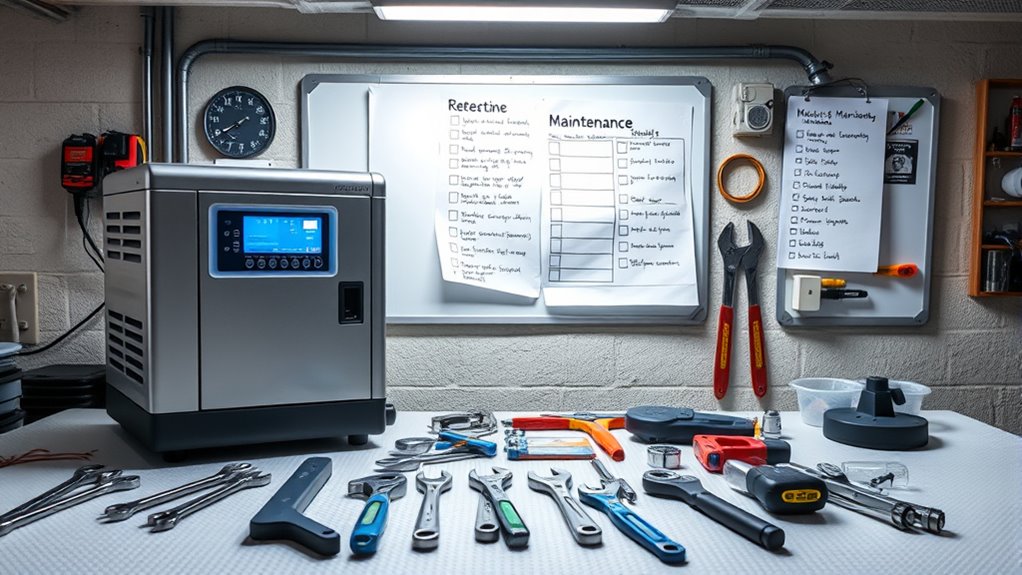

Each month, you should inspect your standby generator’s fuel quality, checking for contamination and replacing old fuel if needed. Test and clean the battery, ensuring terminals are corrosion-free and voltage is above 12.6V. Check for leaks, loose connections, and wear on belts or hoses, and verify oil levels. Run the generator briefly to confirm proper operation. Staying on top of these tasks keeps your system reliable; if you continue, you’ll discover more essential tips.

Get backup power and energy gear delivered free — and shop member deals
- Fast, free delivery on millions of items
- Access to Prime Big Deal Days deals on October 6–7
- Prime Video, Amazon Music and more included
Key Takeaways
- Inspect and replace old fuel to prevent contamination and ensure smooth generator operation.
- Test battery voltage, clean terminals, and verify electrolyte levels for reliable startup.
- Check for leaks, loose connections, and wear on belts and hoses during system inspection.
- Run the generator monthly to verify proper function and automatic transfer switch operation.
- Review overall system components, including oil levels, warning lights, and noise levels, for readiness.
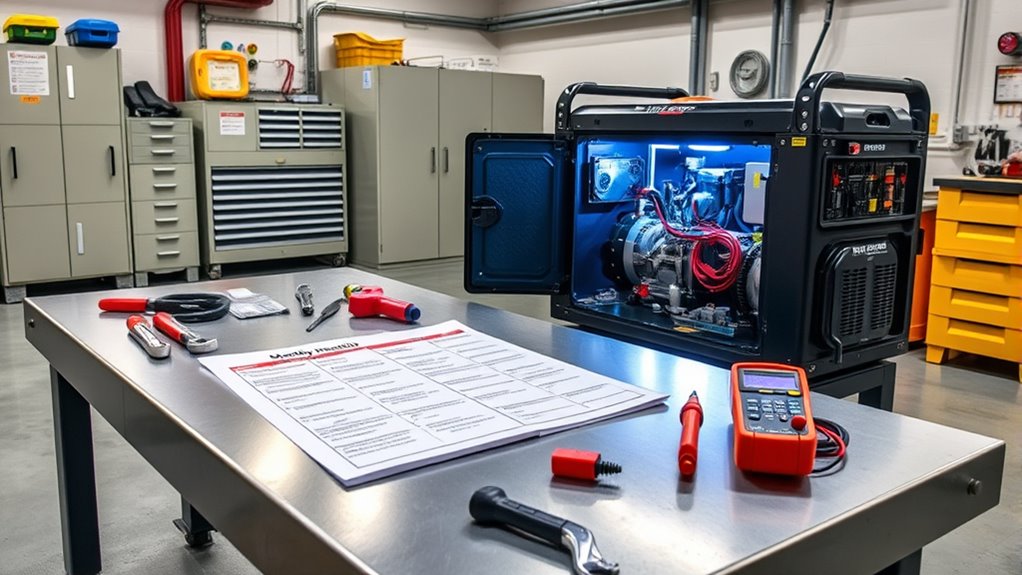
Regular maintenance is essential to guarantee your standby generator operates reliably when you need it most. One of the key aspects of this is ensuring that the fuel quality remains high. Over time, fuel can degrade, leading to poor combustion and potential engine issues. During your monthly checks, inspect the fuel supply and consider draining and replacing old fuel if it’s been sitting for an extended period. Using fresh, clean fuel helps your generator run smoothly and reduces the risk of clogs or damage to the fuel system. Also, check for any signs of contamination, such as water or debris, which can impair performance. Maintaining good fuel quality isn’t just about preventing breakdowns; it also extends the lifespan of your generator.
Regularly check and replace old fuel to ensure your generator runs smoothly and lasts longer.
Another critical part of your monthly checklist involves battery testing. The battery provides the initial power needed to start your generator, so it’s essential to confirm it’s in good condition. Test the battery voltage with a multimeter—ideally, it should read around 12.6 volts or higher for a fully charged battery. If the voltage is low, consider charging the battery or replacing it if it’s old or showing signs of wear. Look for corrosion on the terminals, as this can interfere with electrical flow. Clean any corrosion with a mixture of baking soda and water, then tighten the connections. Don’t forget to check the battery’s electrolyte levels if it’s not sealed. Keeping the battery in top shape ensures your generator can start immediately during an outage, avoiding delays and potential failures.
In addition to fuel quality and battery health, you should also verify the generator’s overall condition. Check for leaks, loose connections, or signs of wear on belts and hoses. Ensure the oil level is adequate and top it off if necessary, following the manufacturer’s specifications. Listen for abnormal noises when running a test cycle, and observe the system for any warning lights or error messages. Regularly inspecting and maintaining these components helps identify problems early before they escalate, saving you costly repairs down the line.
Finally, don’t forget to test the transfer switch and ensure it operates correctly. Run your generator on a scheduled basis, ideally once a month, to confirm it kicks on automatically if needed. This routine keeps all parts functioning together and verifies your system’s readiness. Additionally, understanding fuel stability and how to maintain it can prevent unexpected failures during outages. By combining fuel quality checks, battery testing, and general inspections during your monthly maintenance, you can keep your standby generator reliable, efficient, and ready to protect your home or business when the power goes out.
Frequently Asked Questions
How Long Should a Standby Generator Run During Testing?
You should run your standby generator for about 20-30 minutes during testing to guarantee it operates smoothly. During this time, make sure to use fuel stabilizers to prevent fuel degradation and check your battery maintenance, ensuring the battery stays charged and free of corrosion. This test helps identify potential issues early, so regular testing keeps your generator reliable when you need it most.
What Are Common Signs of Generator Failure?
Think of your generator as a vigilant guard dog; sudden loud noises or strange sounds like knocking signals trouble. You might notice it struggling to start, which hints at battery lifespan issues. Excessive generator noise or difficulty in powering up can indicate failure. Keep an ear out for irregular sounds and monitor the noise levels, as these are common signs your generator could be failing and needs attention before it’s too late.
Can I Perform Maintenance Myself or Need a Professional?
You can perform a DIY inspection if you’re comfortable with basic maintenance tasks, like checking fluid levels and inspecting for corrosion. However, for more complex issues or routine servicing, it’s best to hire a professional. Regular professional servicing guarantees your standby generator stays reliable and compliant with safety standards. Always follow safety precautions, and don’t hesitate to seek expert help when needed to keep your generator in top condition.
How Often Should Fuel Be Replaced or Treated?
Did you know that untreated fuel can degrade in just 30 days, risking generator failure? You should replace or treat your standby generator’s fuel every 30 to 60 days to guarantee fuel stability. Using fuel additives can extend shelf life and prevent phase separation. Regularly treating or replacing fuel keeps your generator reliable, especially during emergencies, and helps avoid costly repairs caused by stale or contaminated fuel.
What Is the Recommended Storage Method for Spare Parts?
You should store spare parts in a clean, dry, and temperature-controlled environment to prevent corrosion and damage. Label each item clearly for efficient inventory management, and organize them systematically to ensure quick access during emergencies. Regularly review your spare parts inventory to identify shortages or expired items. Proper spare parts storage helps maintain readiness, reduces downtime, and prolongs the lifespan of your generator by guaranteeing essential components are always available when needed.
Conclusion
By staying on top of your standby generator’s monthly maintenance, you’re gently ensuring it’s always ready to serve you when needed. Think of it as giving your dependable partner a quick check-up, keeping everything running smoothly behind the scenes. A little attention now means fewer surprises later, allowing you to enjoy peace of mind. With this simple routine, you’re quietly safeguarding your comfort and convenience—making sure everything runs seamlessly, even when life throws a curveball.
Fall Picks
fall essentials
As an affiliate, we earn on qualifying purchases.